#AI
263 articles tagged with #AI
Build a Cricket Win Predictor and Learn Machine Learning
A comprehensive guide to build a cricket win predictor and learn machine learning — written for learners at every level.
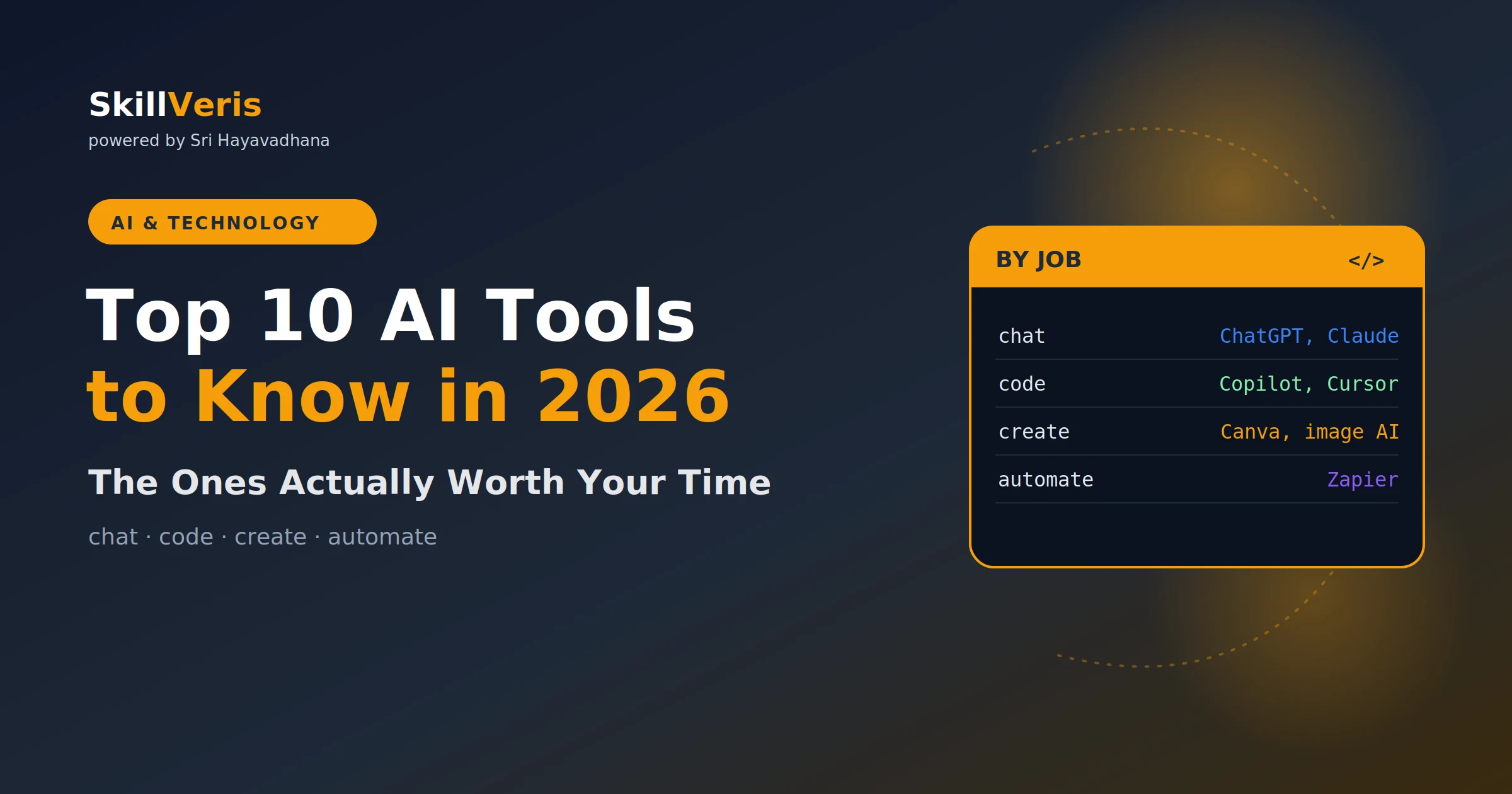
Top 10 AI Tools You Must Know in 2026
The best AI tool depends on the job — this roundup covers ten must-know tools for chat, coding, design, and productivity.
What Is Artificial Intelligence? A Beginner's Guide
A comprehensive guide to what is artificial intelligence? a beginner's guide — written for learners at every level.
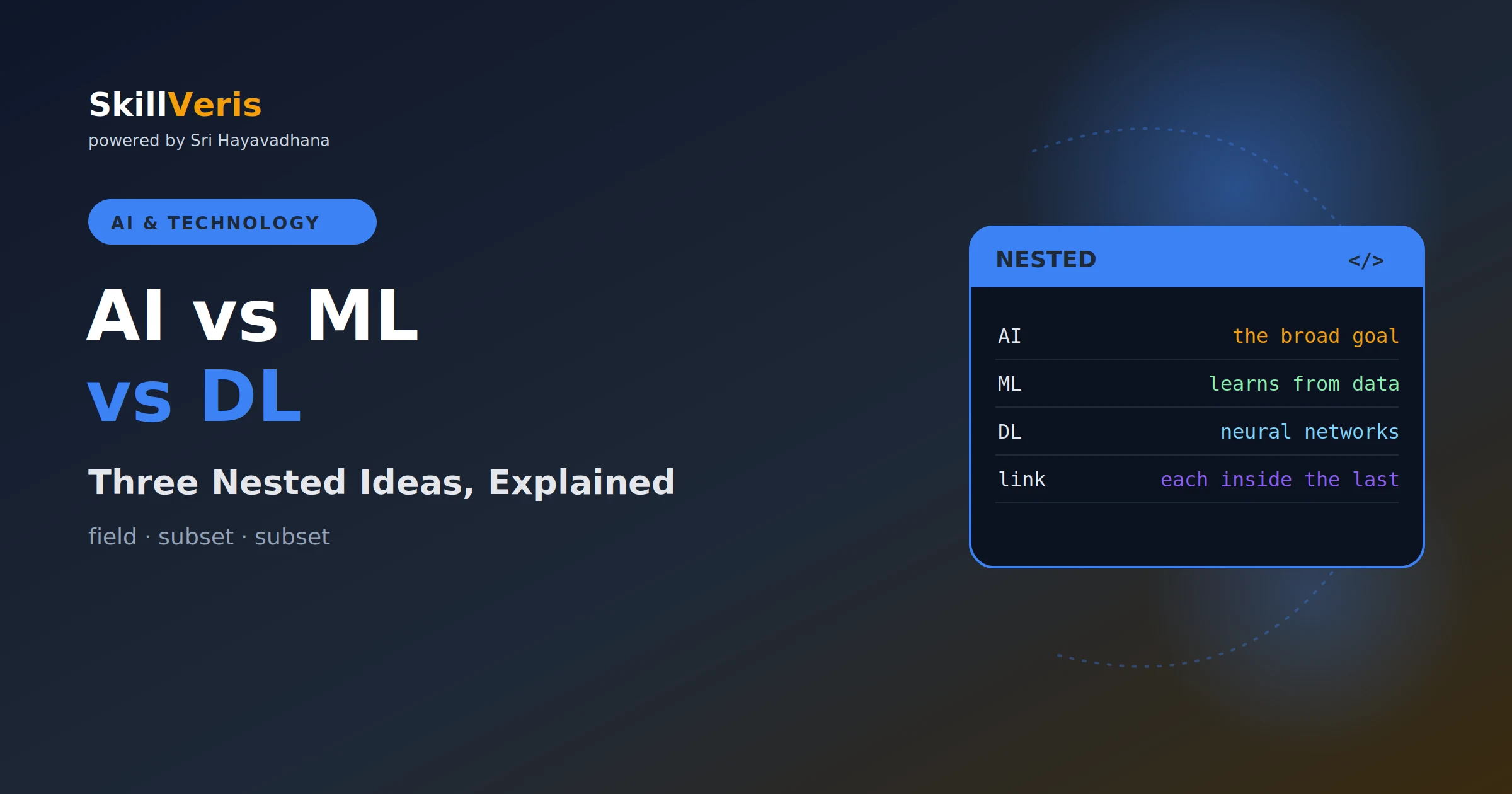
Machine Learning vs Deep Learning vs AI Explained
A comprehensive guide to machine learning vs deep learning vs ai explained — written for learners at every level.
How ChatGPT Works: Explained Simply
A comprehensive guide to how chatgpt works: explained simply — written for learners at every level.
Claude vs ChatGPT vs Gemini: Which Is Best?
A comprehensive guide to claude vs chatgpt vs gemini: which is best? — written for learners at every level.
How an AI Mentor Can Accelerate Your Learning
A comprehensive guide to how an ai mentor can accelerate your learning — written for learners at every level.
AI Mentor vs Human Mentor: Pros and Cons
A comprehensive guide to ai mentor vs human mentor: pros and cons — written for learners at every level.
The Biggest AI Breakthroughs This Year
A comprehensive guide to the biggest ai breakthroughs this year — written for learners at every level.
Large Language Models (LLMs) Explained for Beginners
An LLM predicts the next piece of text, one token at a time — this guide explains how ChatGPT, Claude, and Gemini actually work.
Generative AI Explained: From Text to Images
Generative AI creates new content from patterns it learned — understand how text generation, image synthesis, and more work.
AI Agents Explained: The Next Big Thing
An AI agent acts to achieve a goal, not just answers a question — learn how agentic AI works and why it matters.
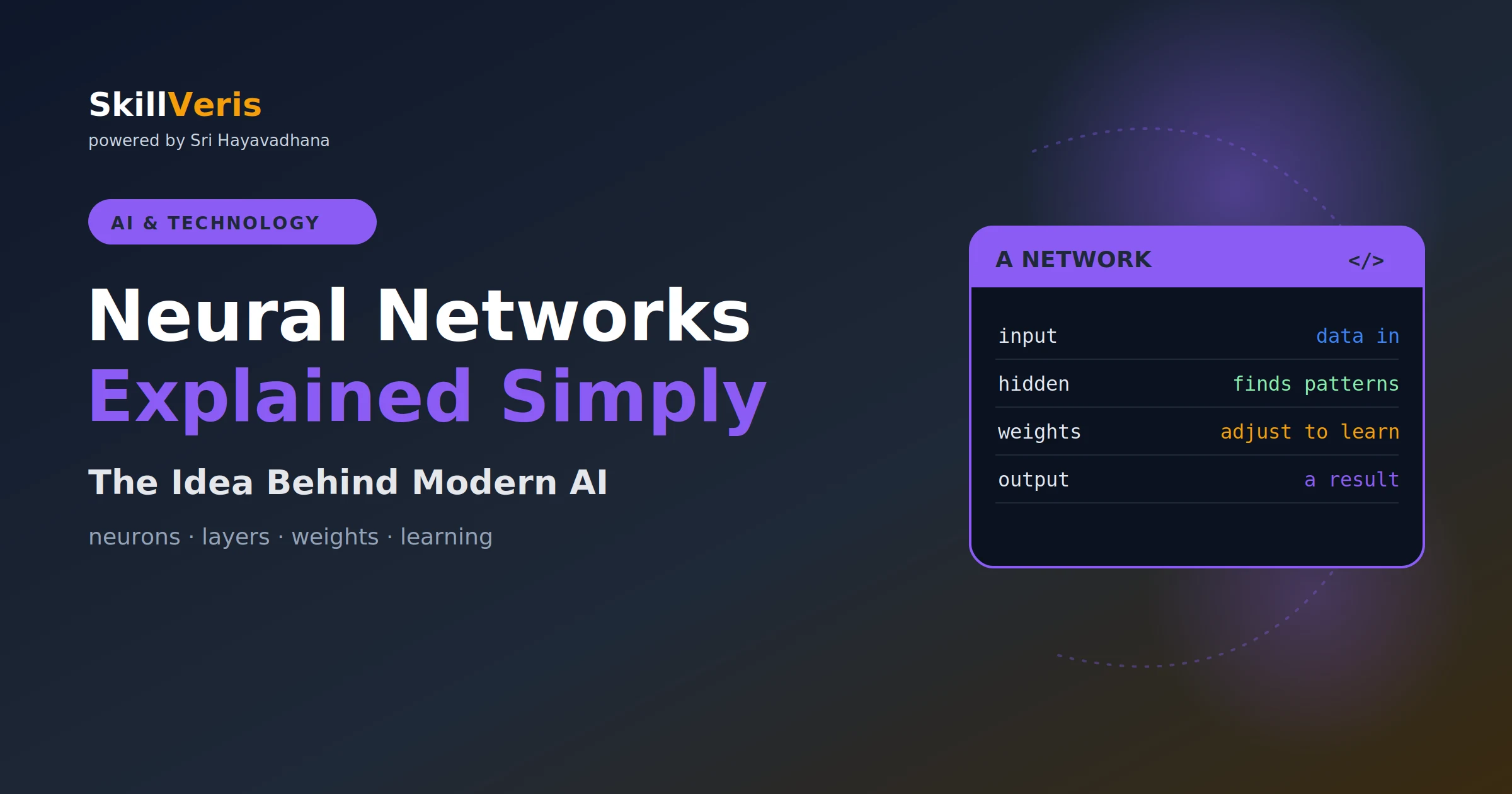
Neural Networks Explained with Simple Analogies
Neural networks are webs of simple units trained to recognise patterns — explained here without any maths.
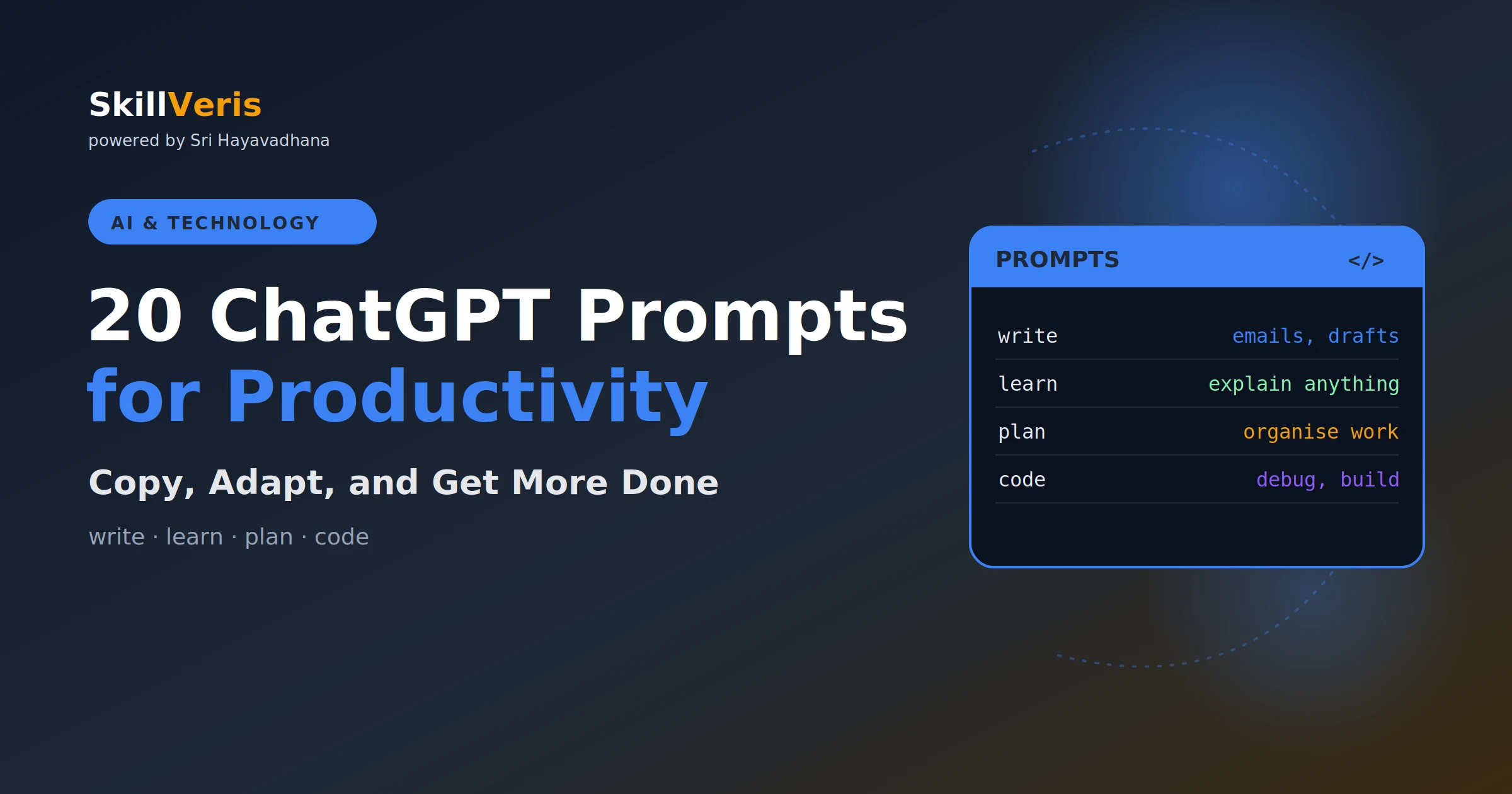
20 ChatGPT Prompts to Boost Your Productivity
Great prompts share four parts: role, task, context, and format — here are 20 ready-to-use prompts for daily work.
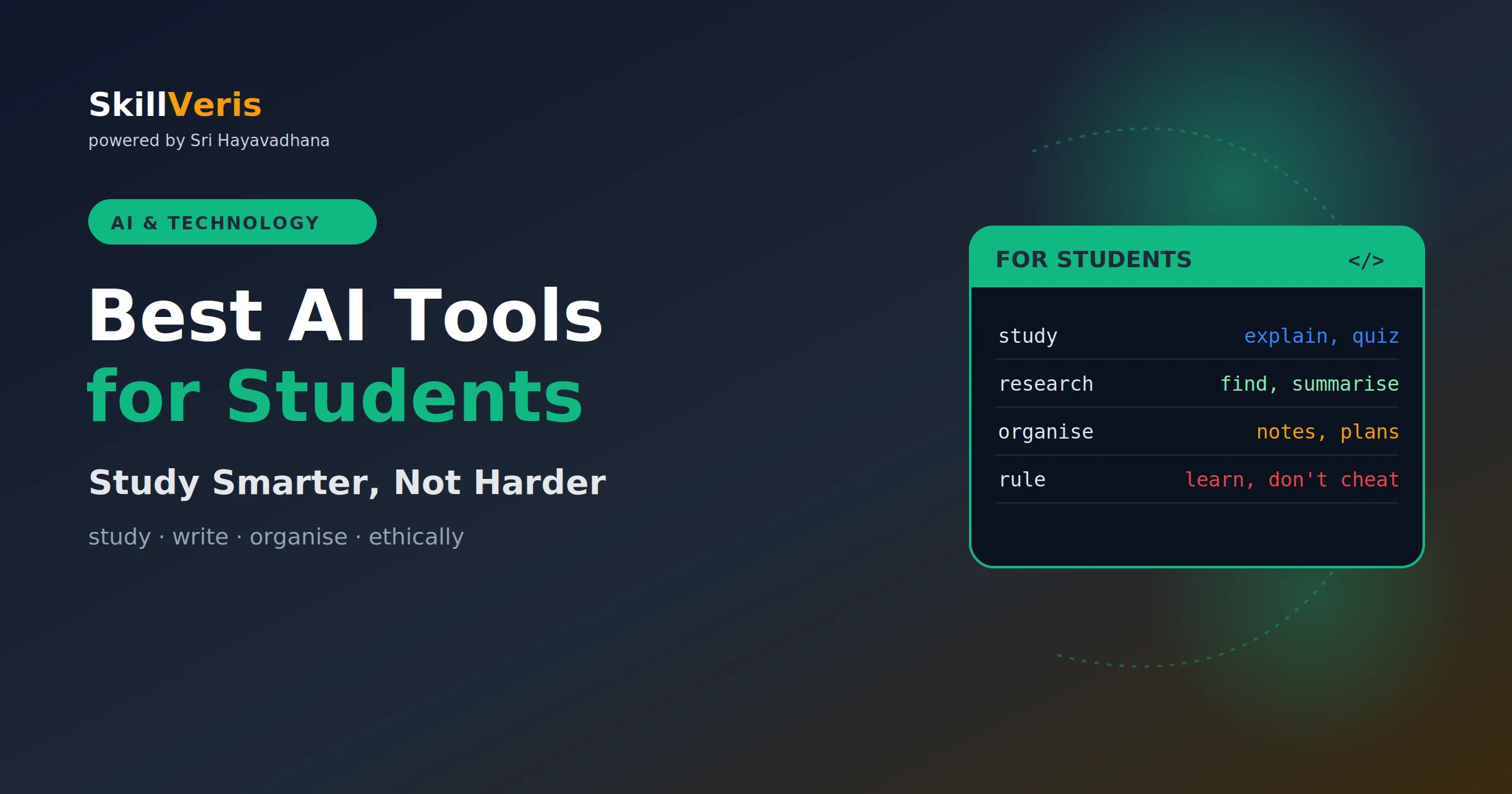
Best AI Tools for Students in 2026
Used wisely, AI tools help you understand faster and study smarter — here are the best options for students in 2026.
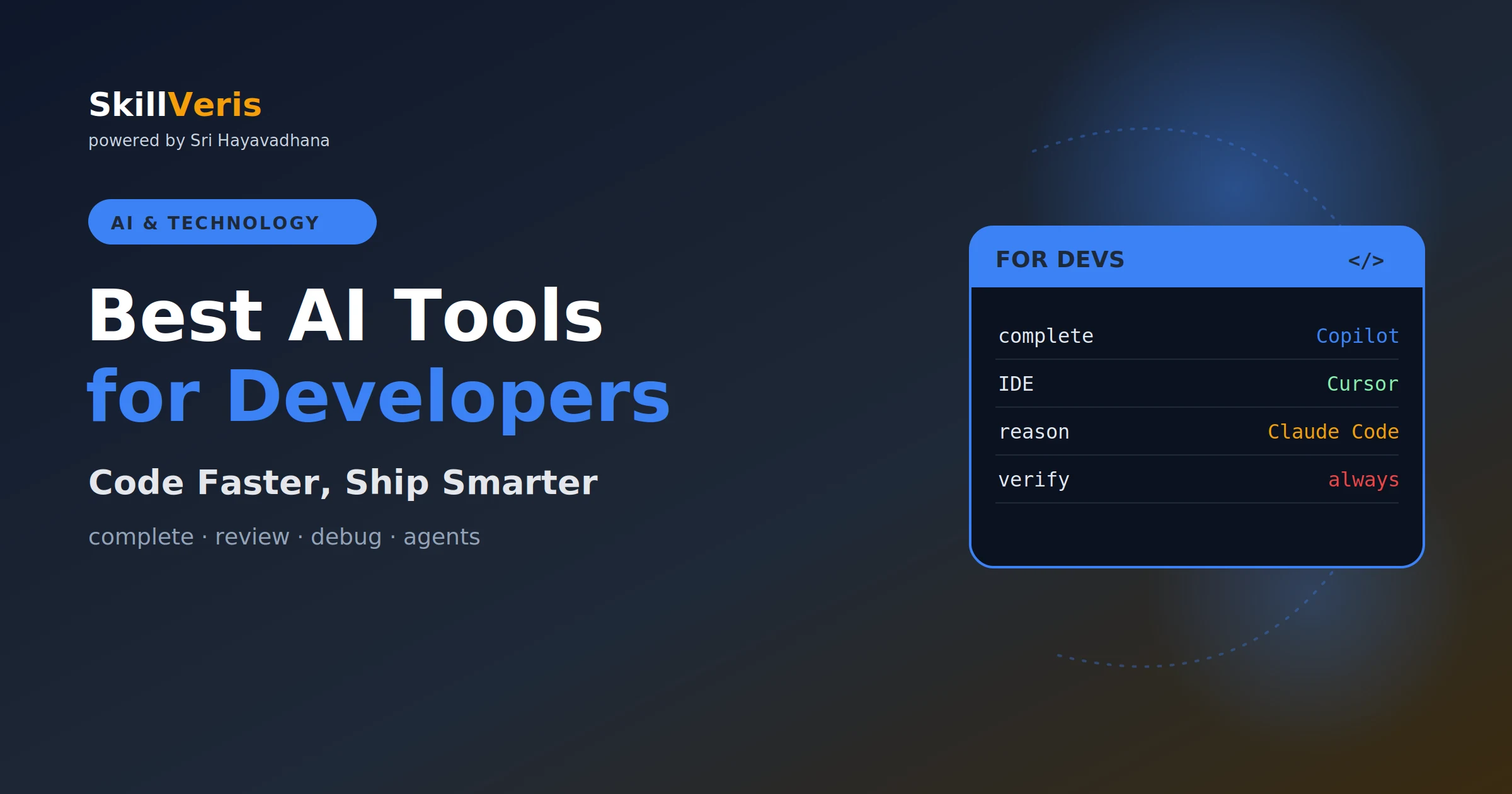
Best AI Tools for Developers in 2026
GitHub Copilot, Cursor, and more — the standout AI tools that developers are using daily in 2026.
AI vs Human Jobs: What's Really at Risk?
AI mostly automates tasks, not whole jobs — an honest look at which roles are most exposed and which are safe.
How AI Recommendation Systems Work
Streaming apps know what you'll like because of content-based and collaborative filtering — here's how.
What Is Computer Vision? Real-World Examples
Computer vision lets machines interpret images — from medical scans to self-driving cars, explained simply.
Natural Language Processing (NLP) for Beginners
NLP is AI for human language — learn how machines read, understand, and generate text.
RAG Explained: How AI Answers From Your Data
RAG lets AI answer from your private documents instead of just its training data — here's how it works.
AI Ethics: Bias, Fairness and Responsibility
As AI makes more decisions affecting people, fairness, transparency, and accountability become essential.
How to Become an AI Engineer (Roadmap 2026)
A clear, step-by-step roadmap from Python foundations to deploying AI systems in production.
AI Agents Explained: How They Actually Work
AI agents are transforming what software can do autonomously — from booking travel to writing and running code. This guide explains the agent loop, tool use, memory systems, and how frameworks like LangChain, CrewAI, and OpenAI Assistants implement them.
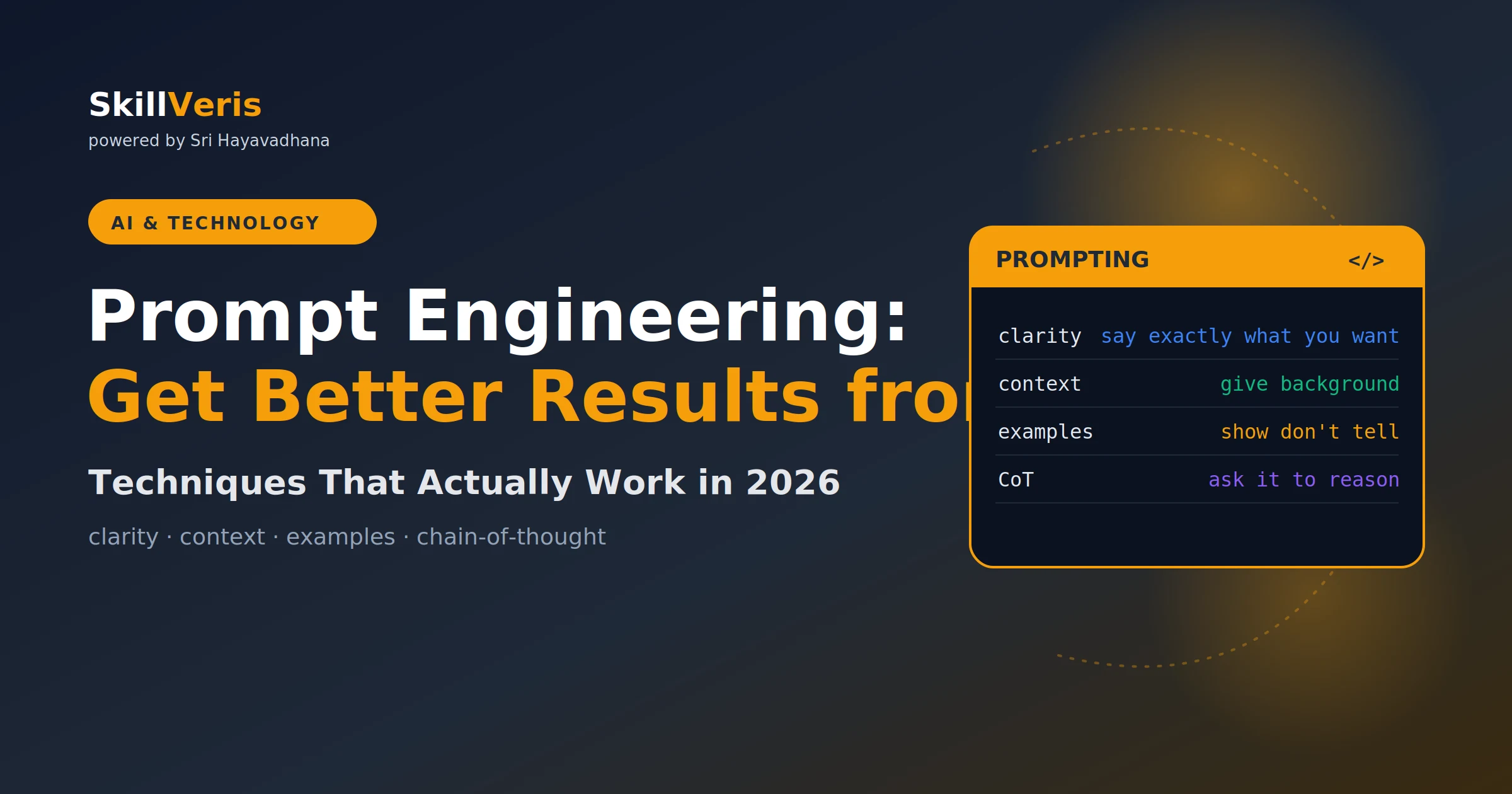
Prompt Engineering: Get Better Results from Any LLM
The difference between a mediocre AI output and an excellent one is usually the prompt. This guide covers the techniques that consistently produce better results: clarity, context, examples, chain-of-thought, system prompts, and output formatting — with real before/after examples.
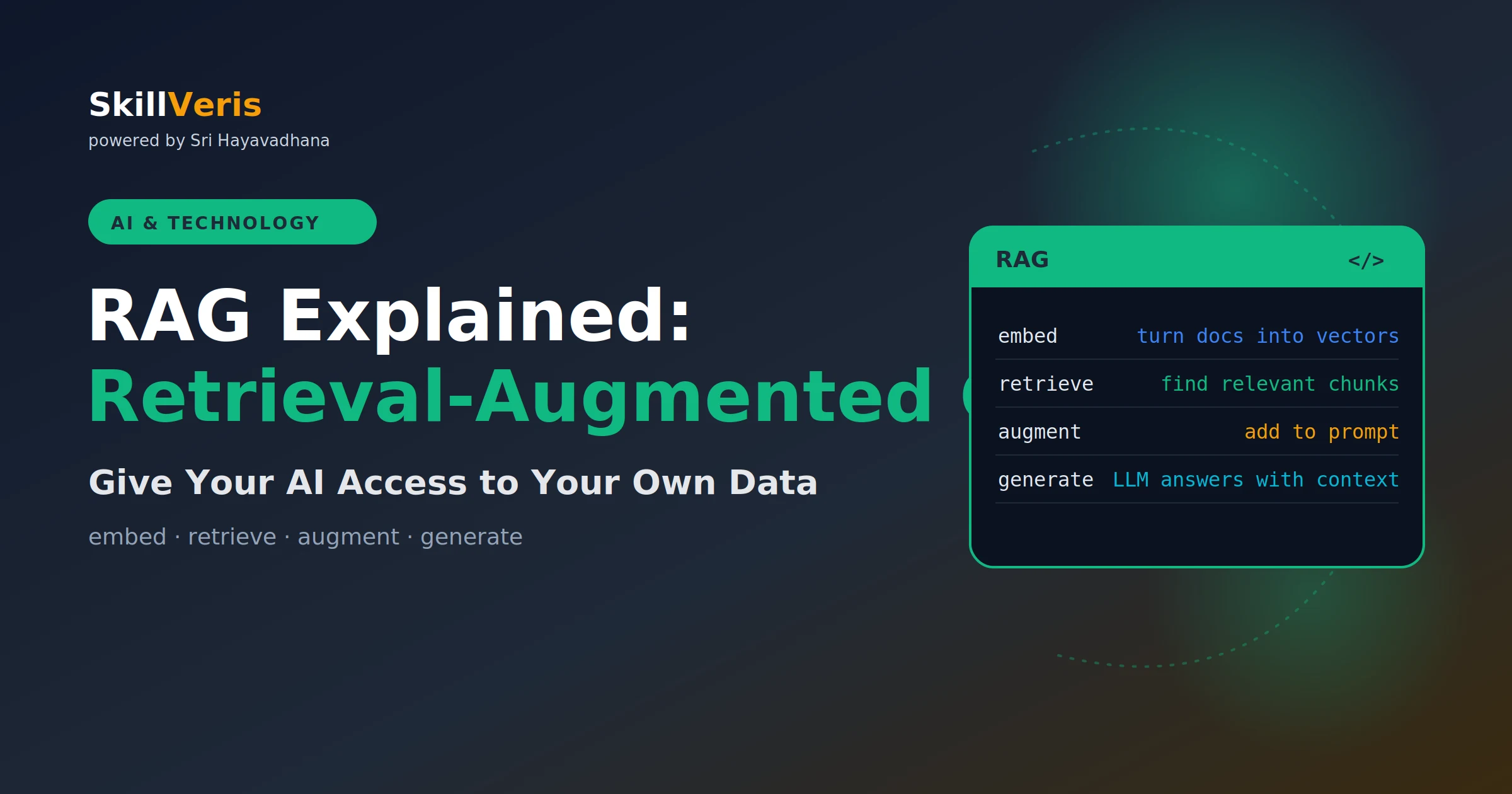
RAG Explained: Retrieval-Augmented Generation
RAG is how you give an LLM access to your own private data without training a new model. This guide explains the full pipeline — chunking, embeddings, vector search, and augmented generation — with a working Python example using open-source tools.
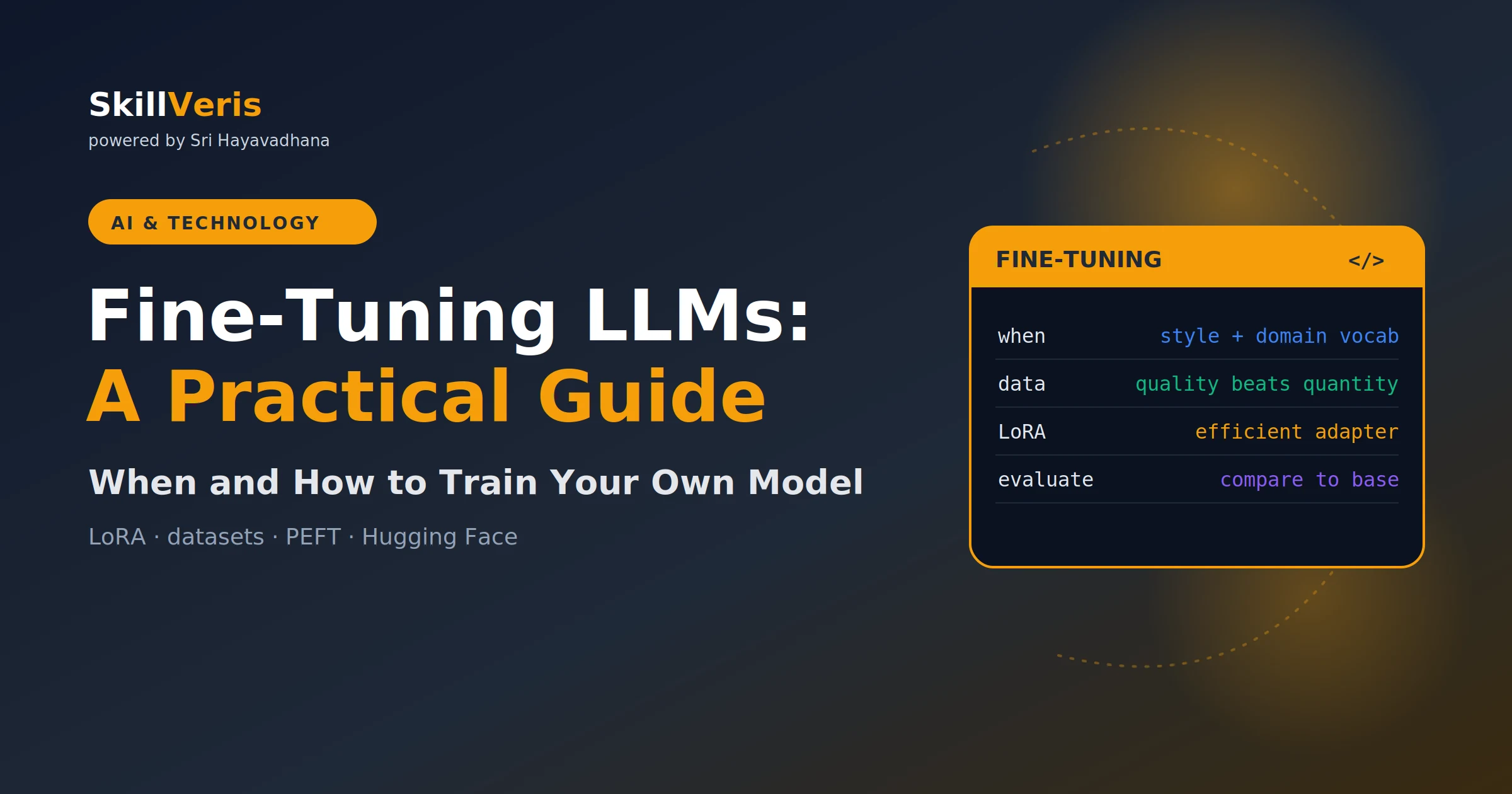
Fine-Tuning LLMs: A Practical Guide
Fine-tuning lets you adapt a pre-trained language model to your specific domain, style, or task — without training from scratch. This guide explains when fine-tuning is the right choice, how LoRA makes it affordable, and how to run a fine-tuning job with Hugging Face PEFT.
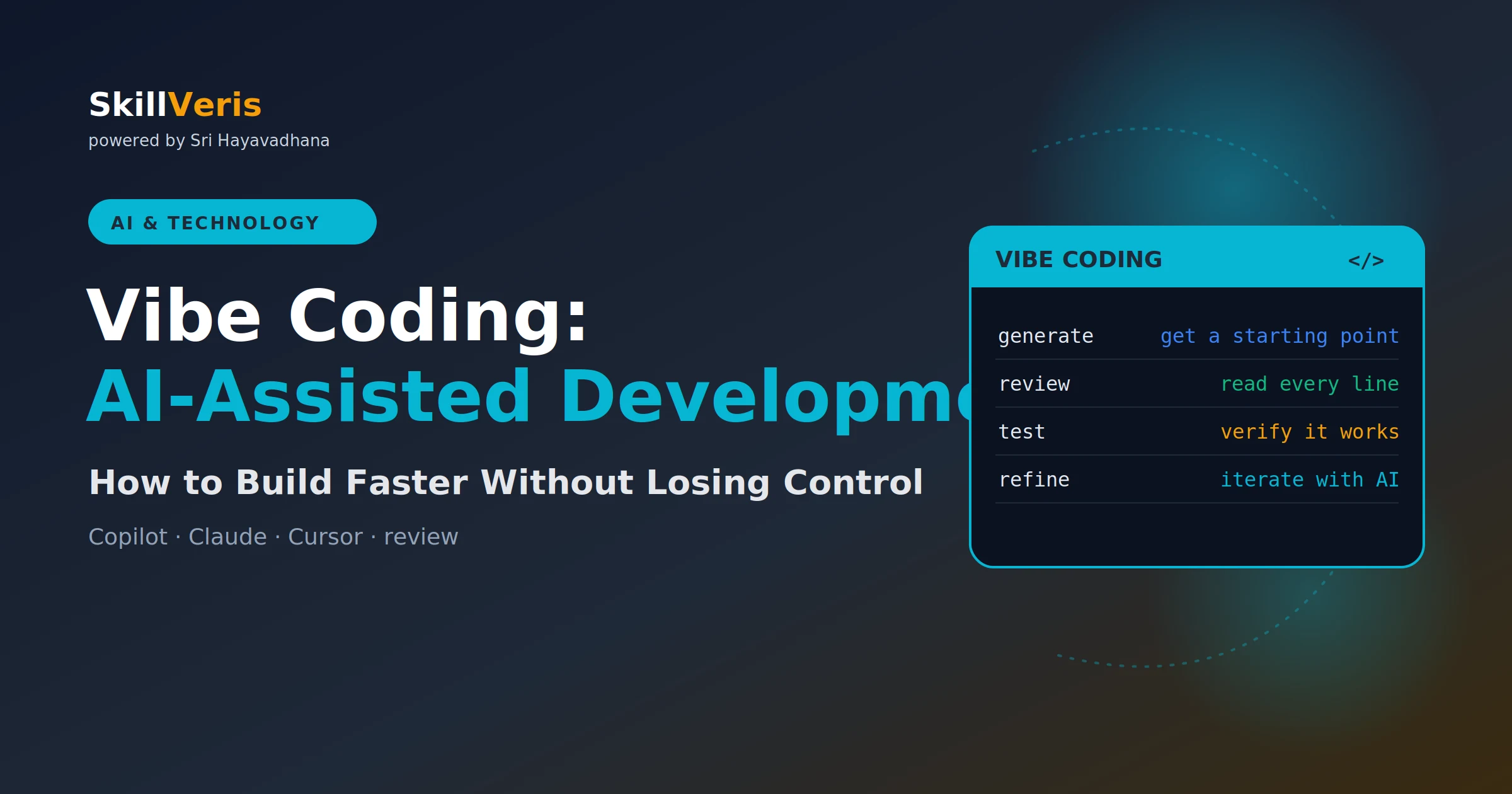
Vibe Coding: How to Build Faster with AI Without Losing Control
AI coding tools have shifted from autocomplete to full code generation, multi-file refactoring, and autonomous debugging. This guide explains how to use tools like Copilot, Cursor, and Claude Code effectively — including the critical skill of reviewing AI-generated code before shipping it.
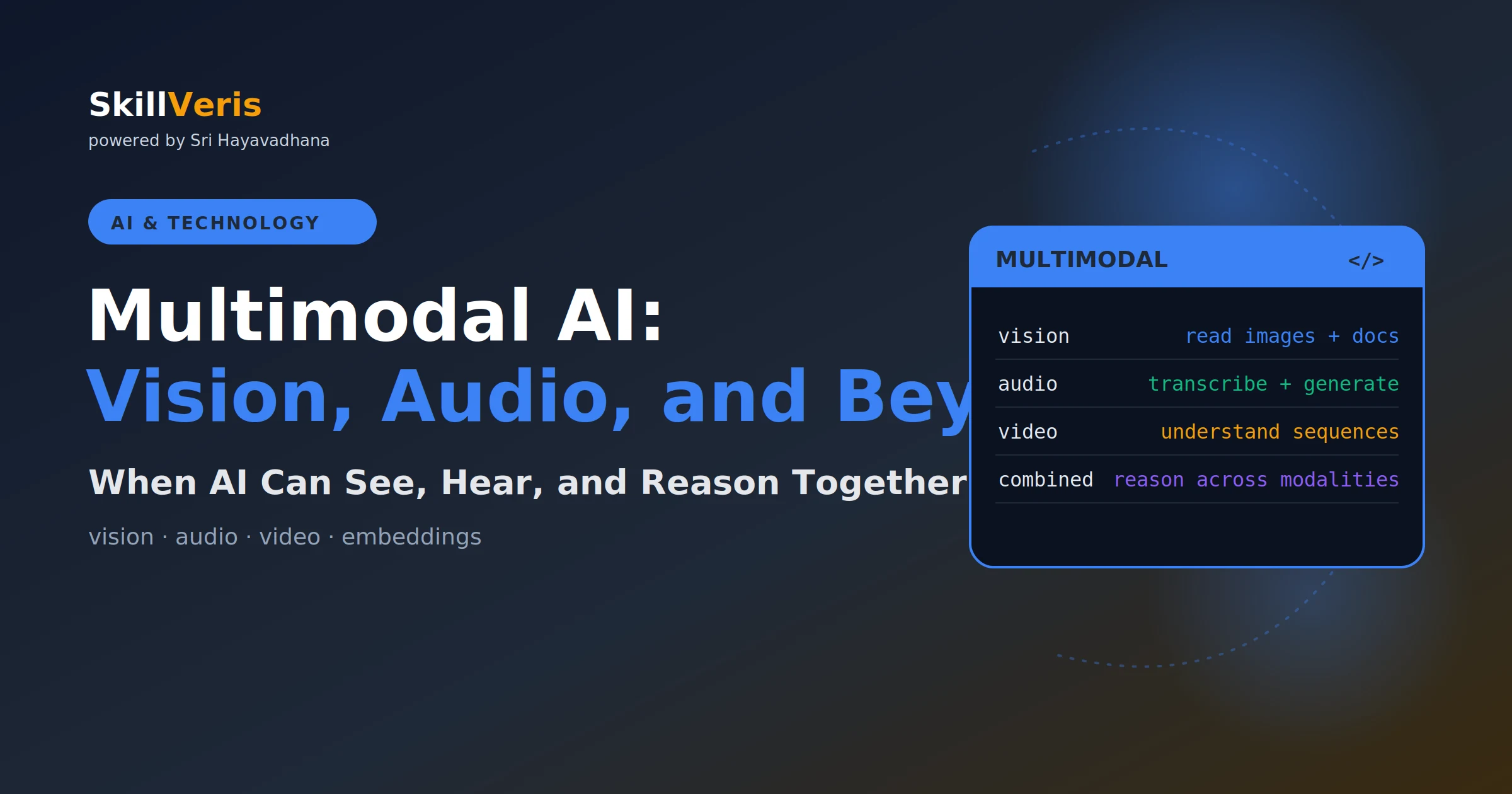
Multimodal AI: Vision, Audio, and Beyond
Modern AI models can see, hear, and reason across text, images, audio, and video simultaneously. This guide explains how multimodal AI works, what's possible in 2026, and how to use vision and audio capabilities in real applications.
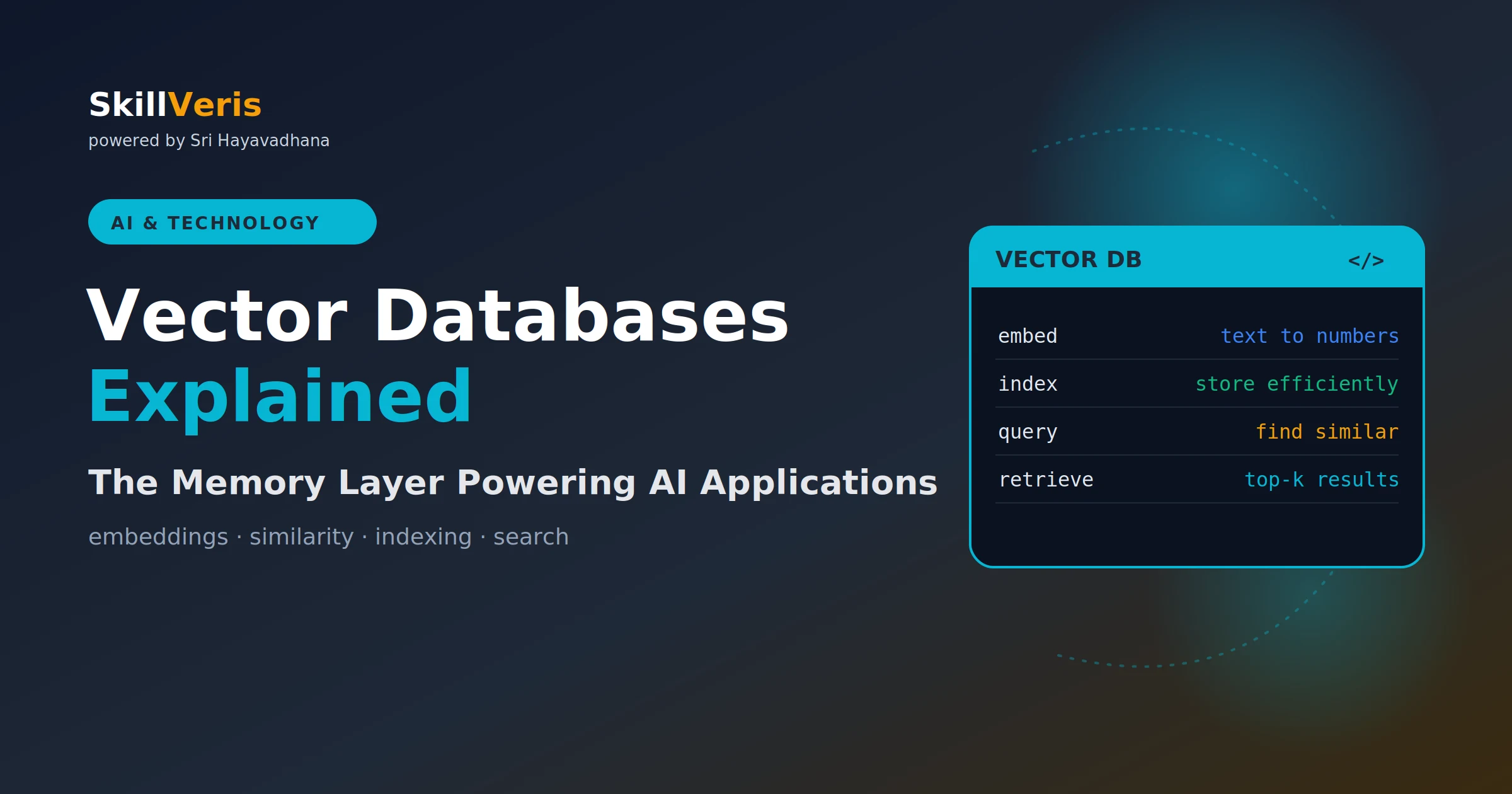
Vector Databases Explained: The Memory Layer Powering AI Apps
Vector databases are the storage layer behind RAG systems, semantic search, and AI- powered recommendations. This guide explains what they are, how they differ from traditional databases, and how to choose and use one in a real application.
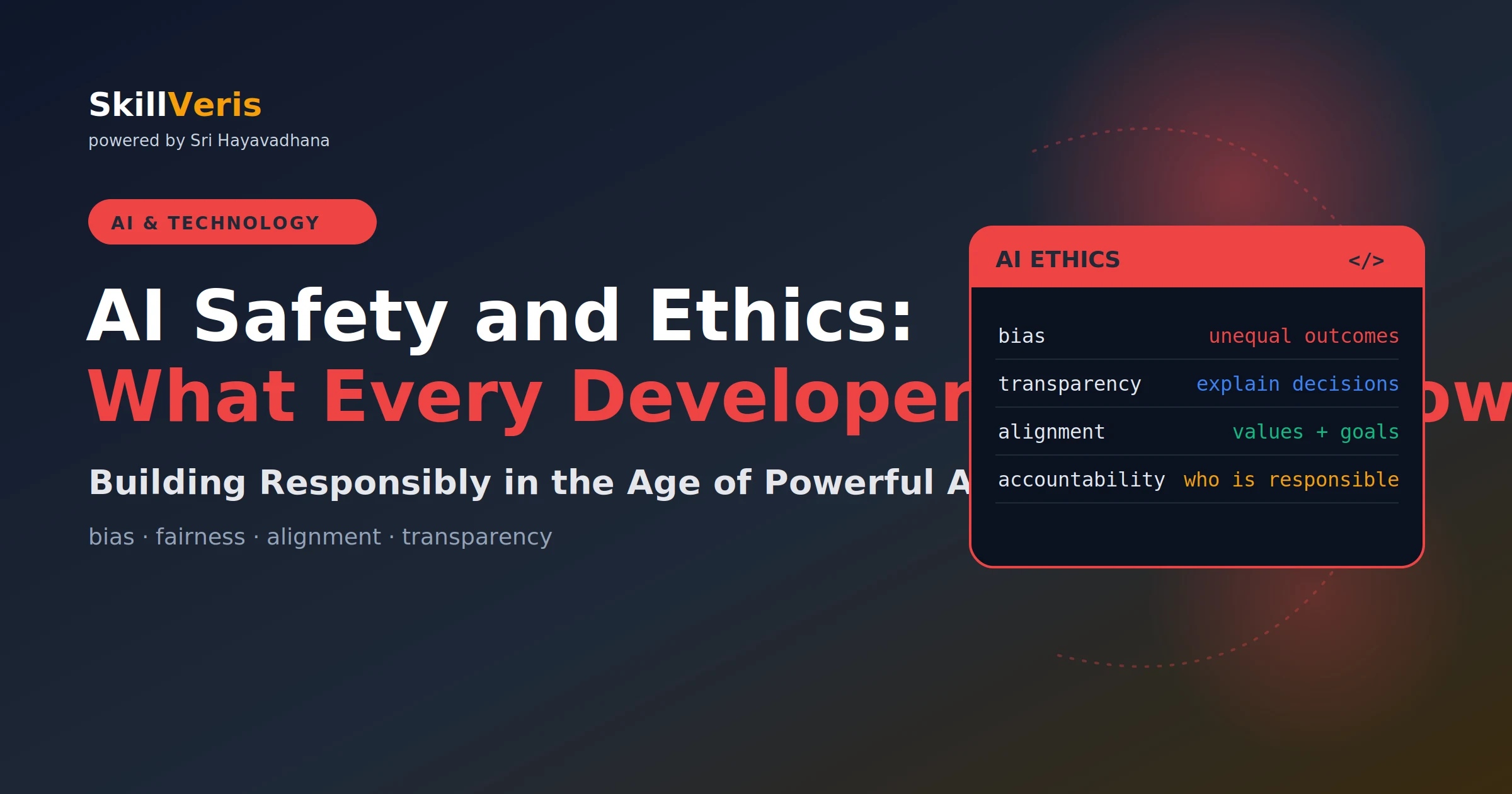
AI Safety and Ethics: What Every Developer Should Know
Every developer building AI-powered products is now making ethical decisions, whether they realise it or not. This guide covers the key concepts — bias, fairness, transparency, alignment, and accountability — and gives practical guidance for building AI responsibly.
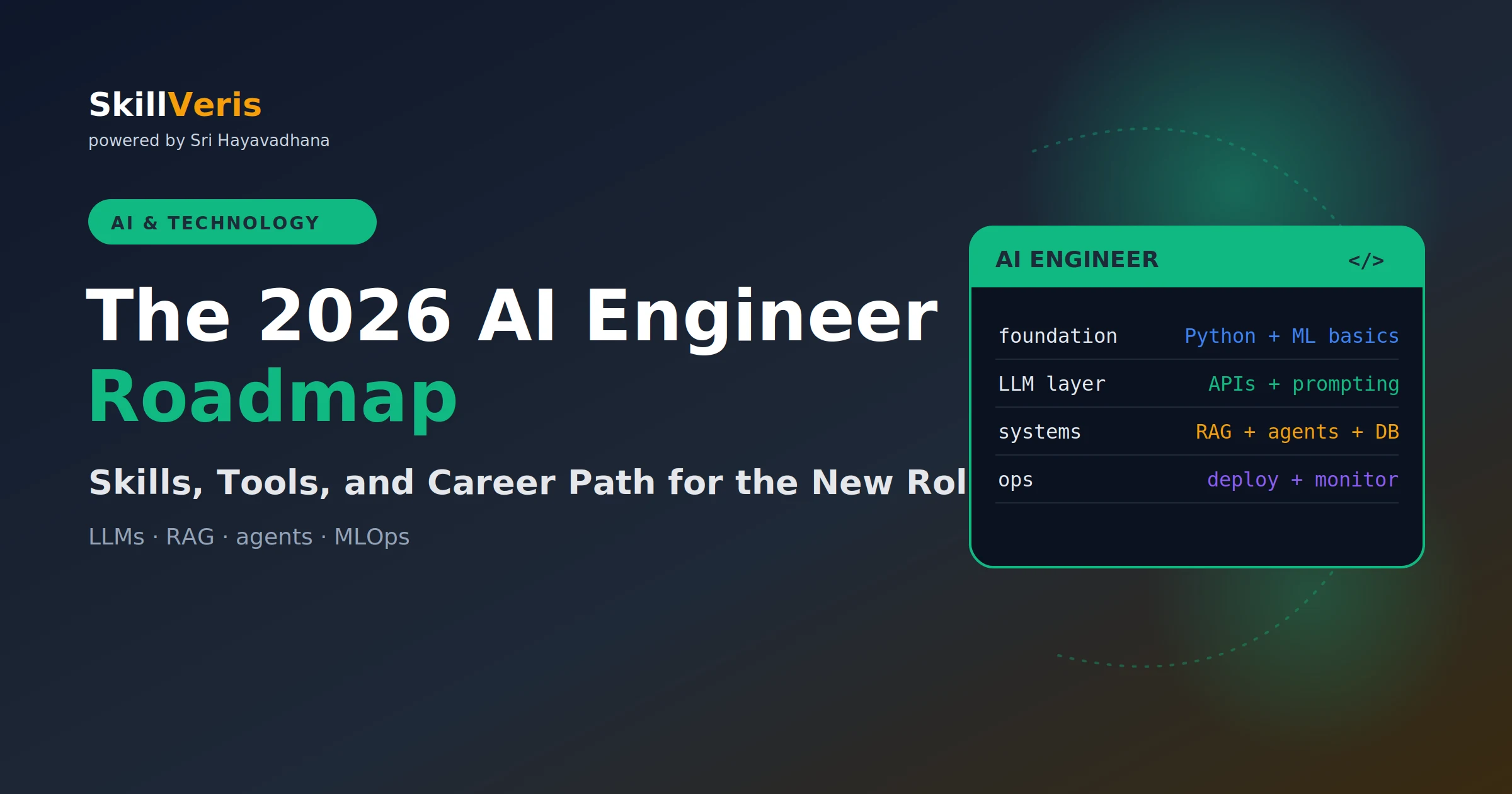
The 2026 AI Engineer Roadmap: Skills, Tools, and Career Path
AI Engineer is one of the fastest-growing roles in tech — and it's more accessible than traditional ML engineering. This guide maps the exact skills, tools, and learning sequence for becoming an AI engineer in 2026, from Python basics to deploying production RAG and agent systems.
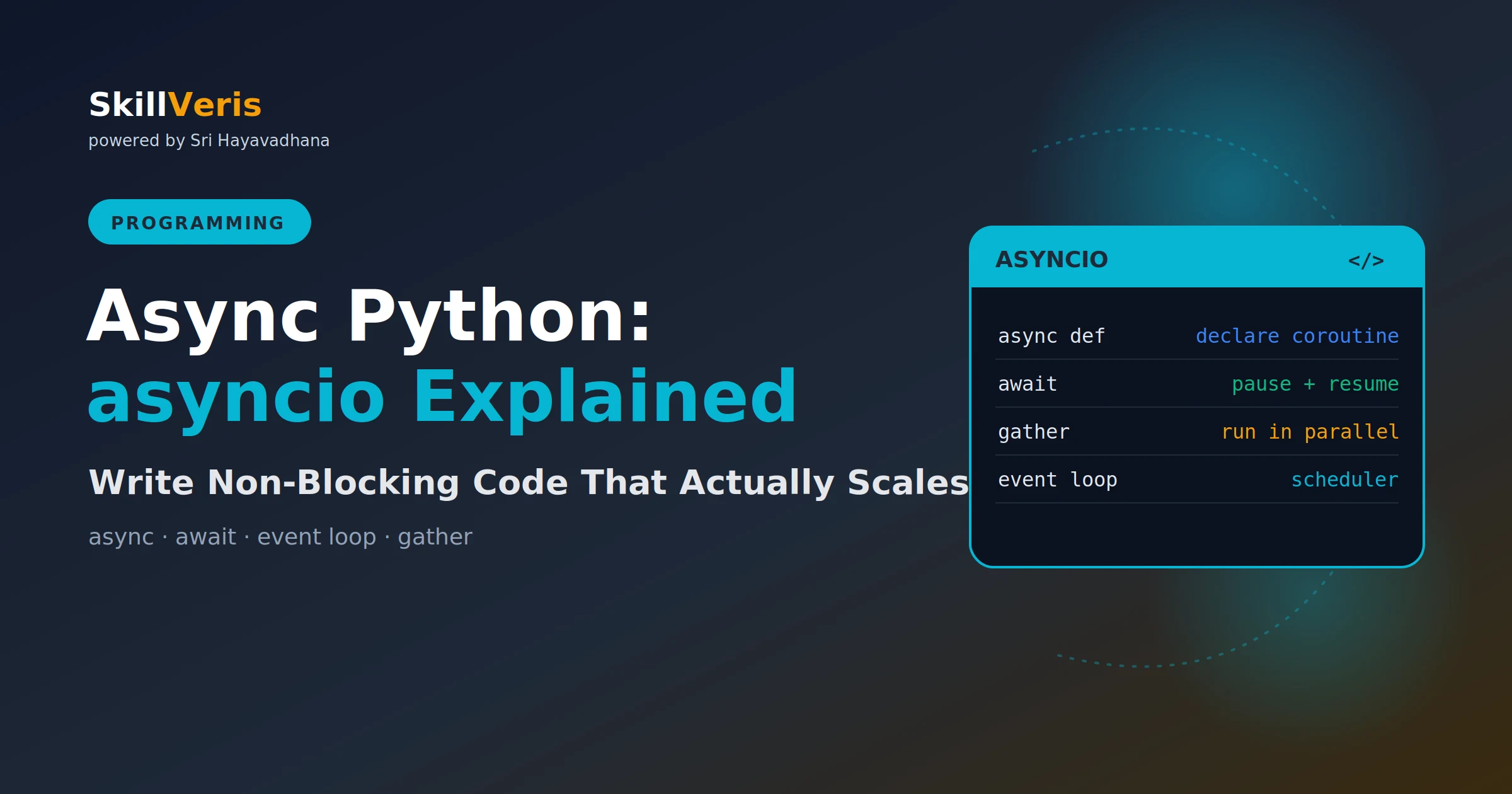
Async Python: asyncio Explained for Beginners
Async Python lets a single thread handle hundreds of concurrent I/O operations — making it essential for web APIs, database calls, and AI integrations. This guide explains coroutines, the event loop, await, gather, and real patterns you'll use in FastAPI, httpx, and LLM streaming.
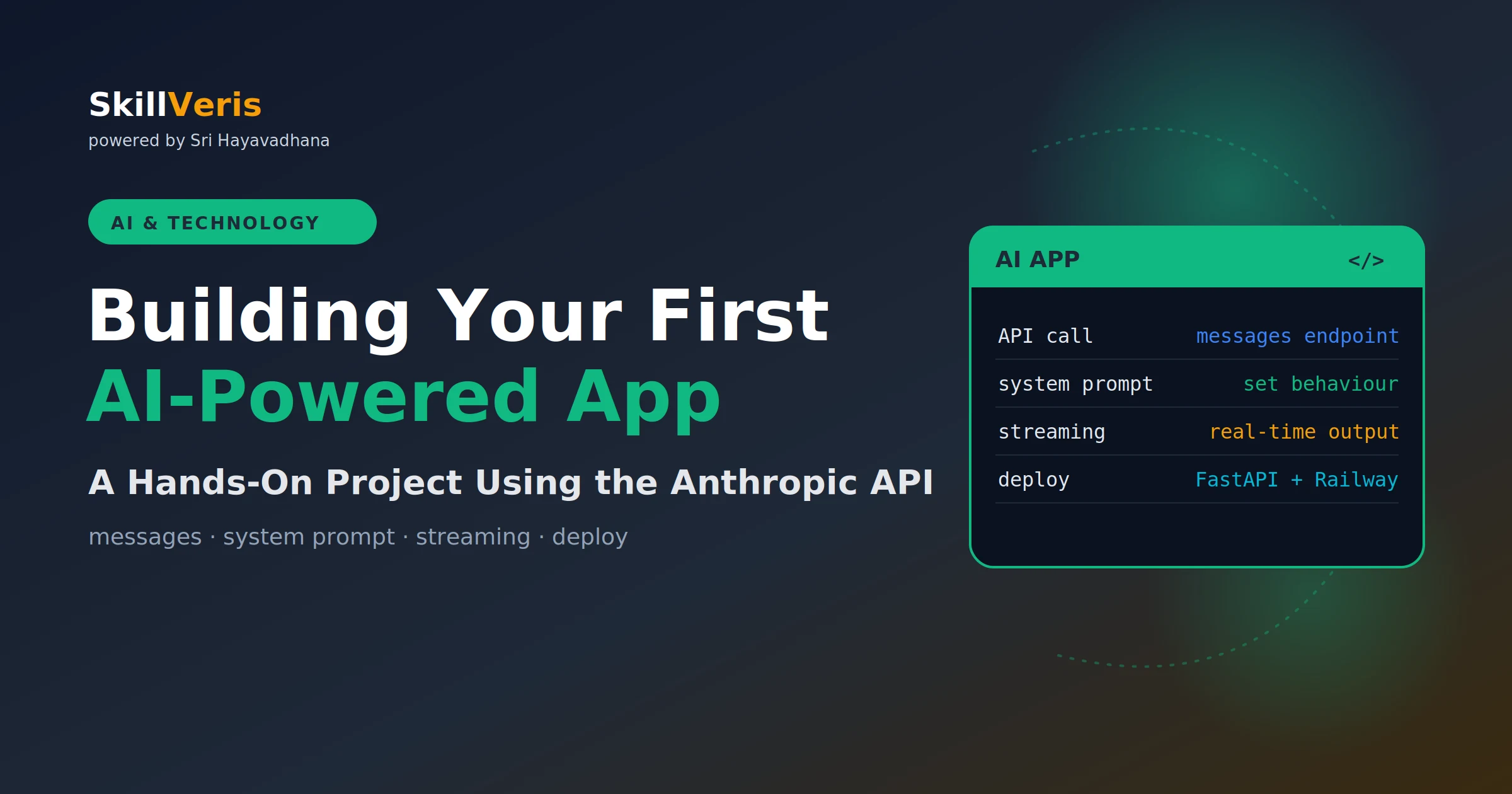
Building Your First AI-Powered App with the Anthropic API
The fastest way to understand AI engineering is to build something real. This project- based guide walks you through building a writing assistant powered by Claude — from your first API call through streaming responses, a FastAPI backend, a simple frontend, and deployment.
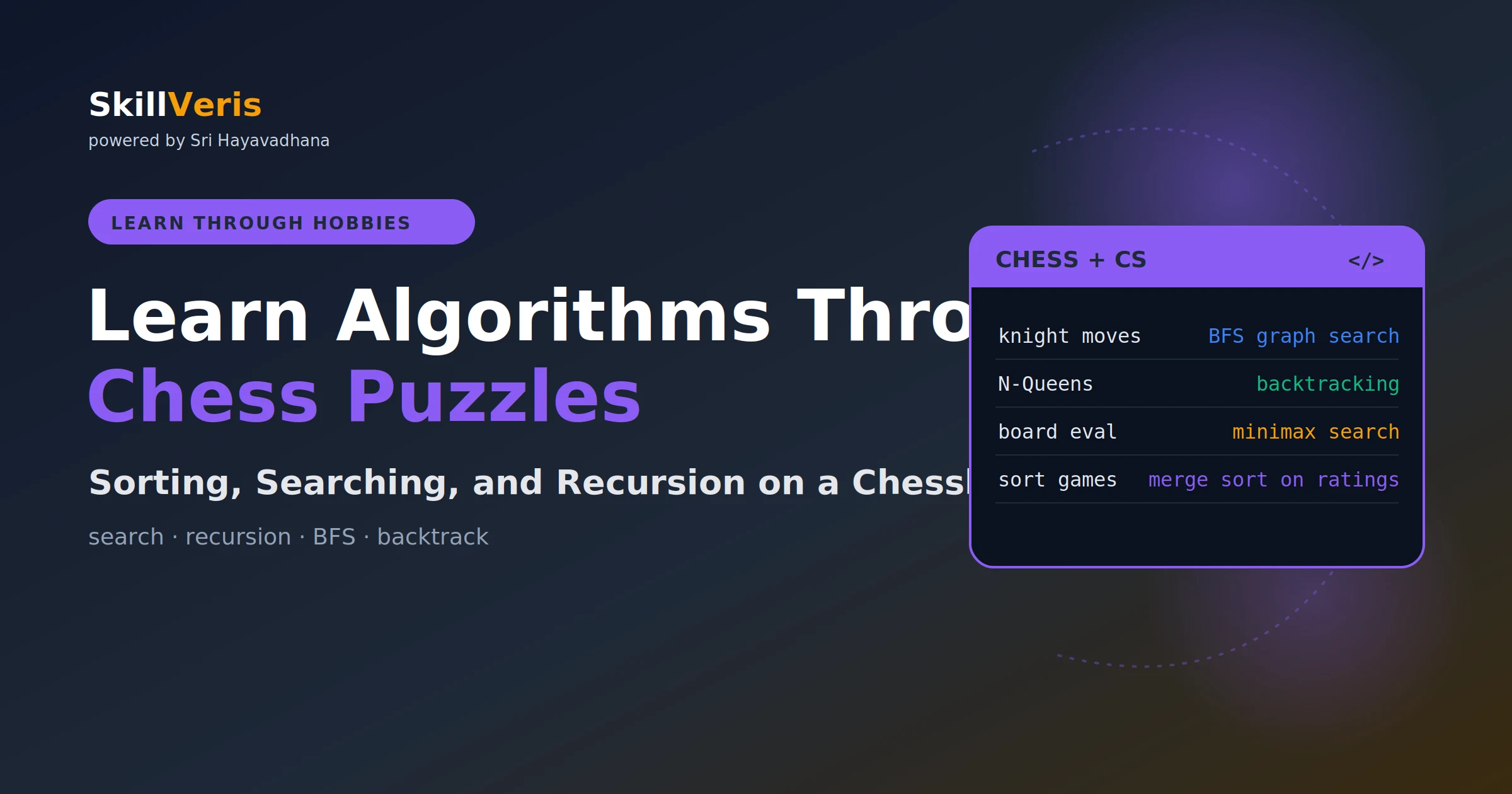
Learn Algorithms Through Chess Puzzles
Chess is a perfect algorithmic playground: the knight's tour teaches BFS, the N- Queens problem teaches backtracking, move generation teaches recursion, and game AI teaches minimax search. This guide covers four classic computer science algorithms using chess problems that make the concepts tangible.
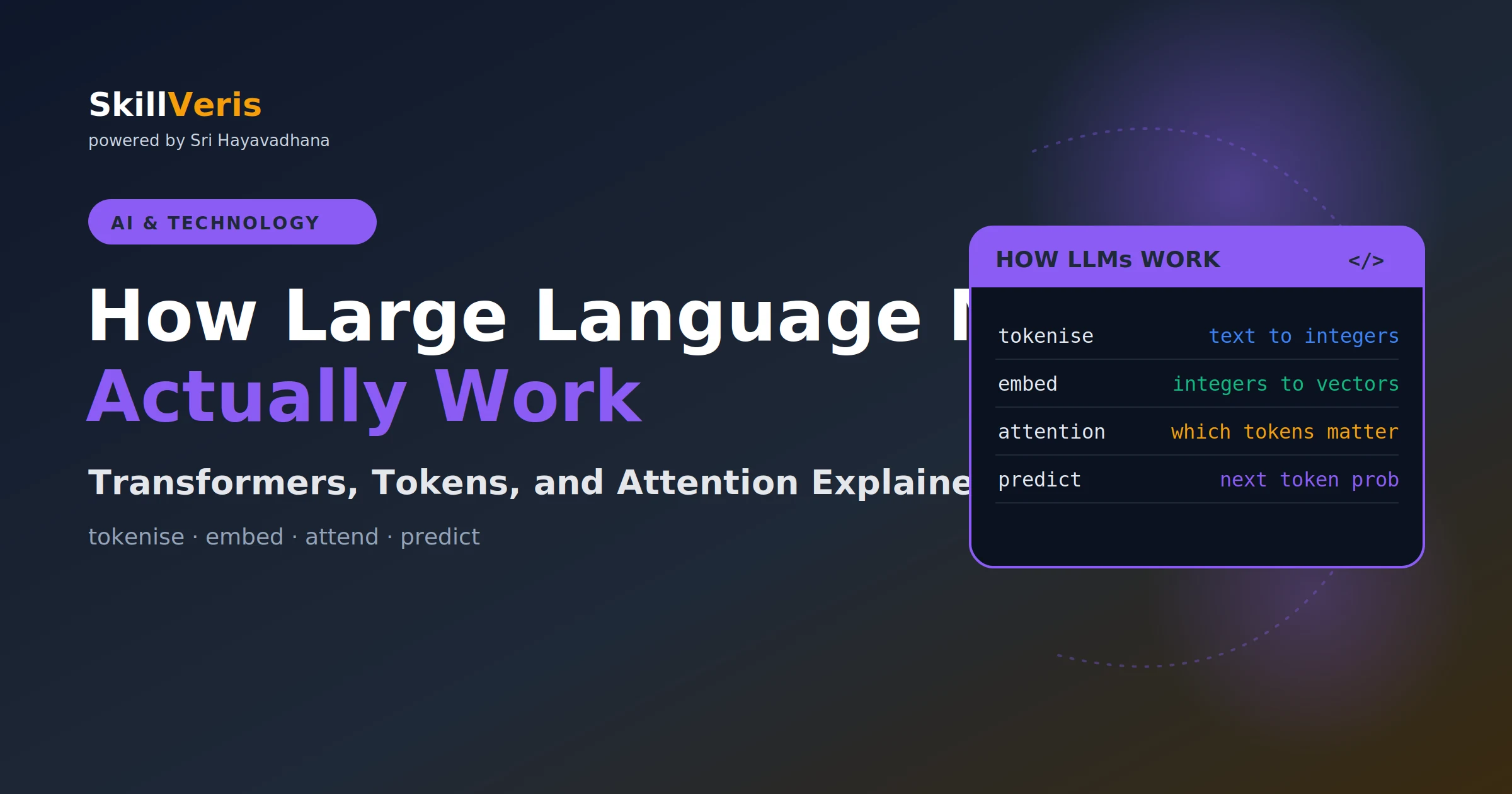
How Large Language Models Actually Work
LLMs seem magical until you understand what they are: next-token predictors trained on massive text corpora. This guide explains tokenisation, embeddings, the transformer architecture, attention mechanism, and how training works — without requiring a maths degree.
AI in Healthcare: Opportunities and Risks in 2026
AI is being used in radiology, drug discovery, clinical documentation, and patient triage — and it's raising serious questions about bias, accountability, and patient safety. This guide gives developers and healthcare professionals an honest overview of where AI helps, where it harms, and what responsible deployment looks like.
Scikit-Learn for Beginners: Machine Learning in Python
Scikit-learn is the most widely used Python library for classical machine learning. This guide covers the fit-predict workflow, train/test splits, classification, regression, model evaluation, feature engineering, and pipelines — everything you need to build and evaluate your first ML models.
What Is Retrieval-Augmented Generation (RAG)? A Complete Guide
Learn what retrieval-augmented generation is, how RAG connects language models to your own data, and how to build reliable, source-grounded AI answers.
Prompt Engineering in 2026: Techniques That Actually Work
Discover the prompt engineering techniques that reliably improve AI output in 2026, from clear instructions and examples to structured reasoning and evaluation.
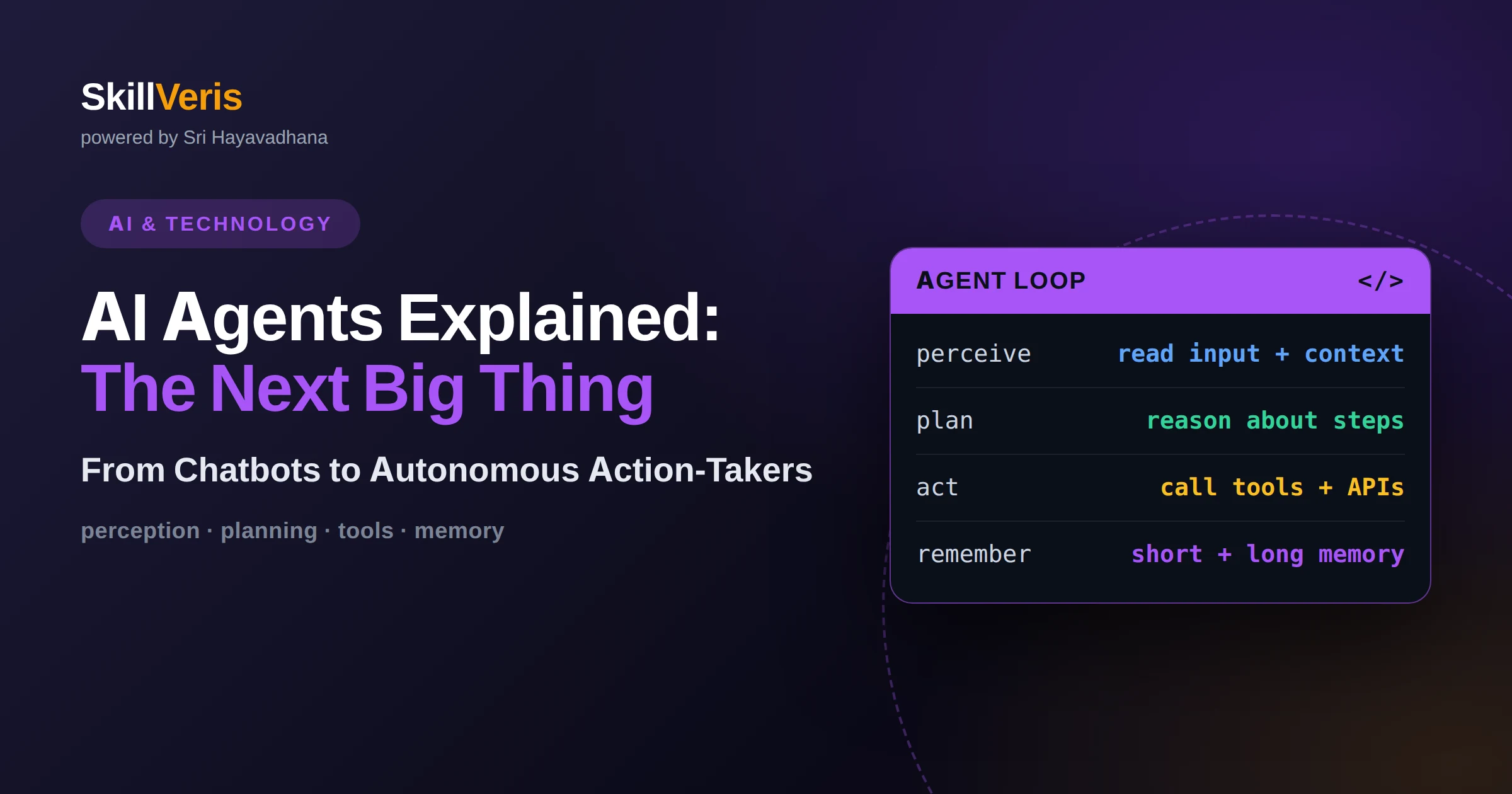
AI Agents Explained: How Agentic Workflows Work
Understand what AI agents are, how agentic workflows plan and use tools to complete multi-step tasks, and when to choose an agent over a simple prompt.
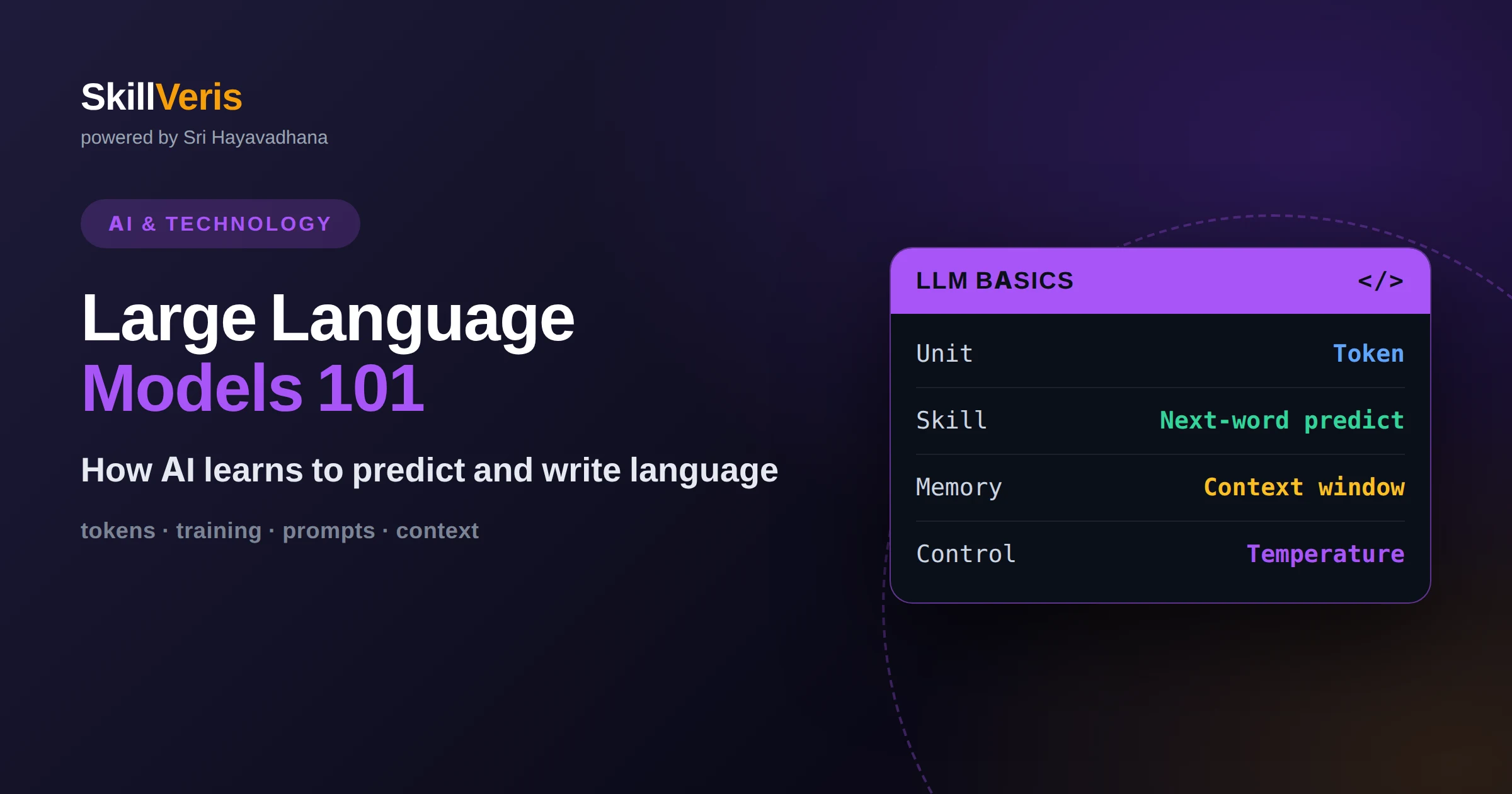
What Is a Large Language Model? A Beginner's Guide
A large language model is an AI trained on vast amounts of text to predict the next word, letting it write, summarize, translate, and answer questions fluently.
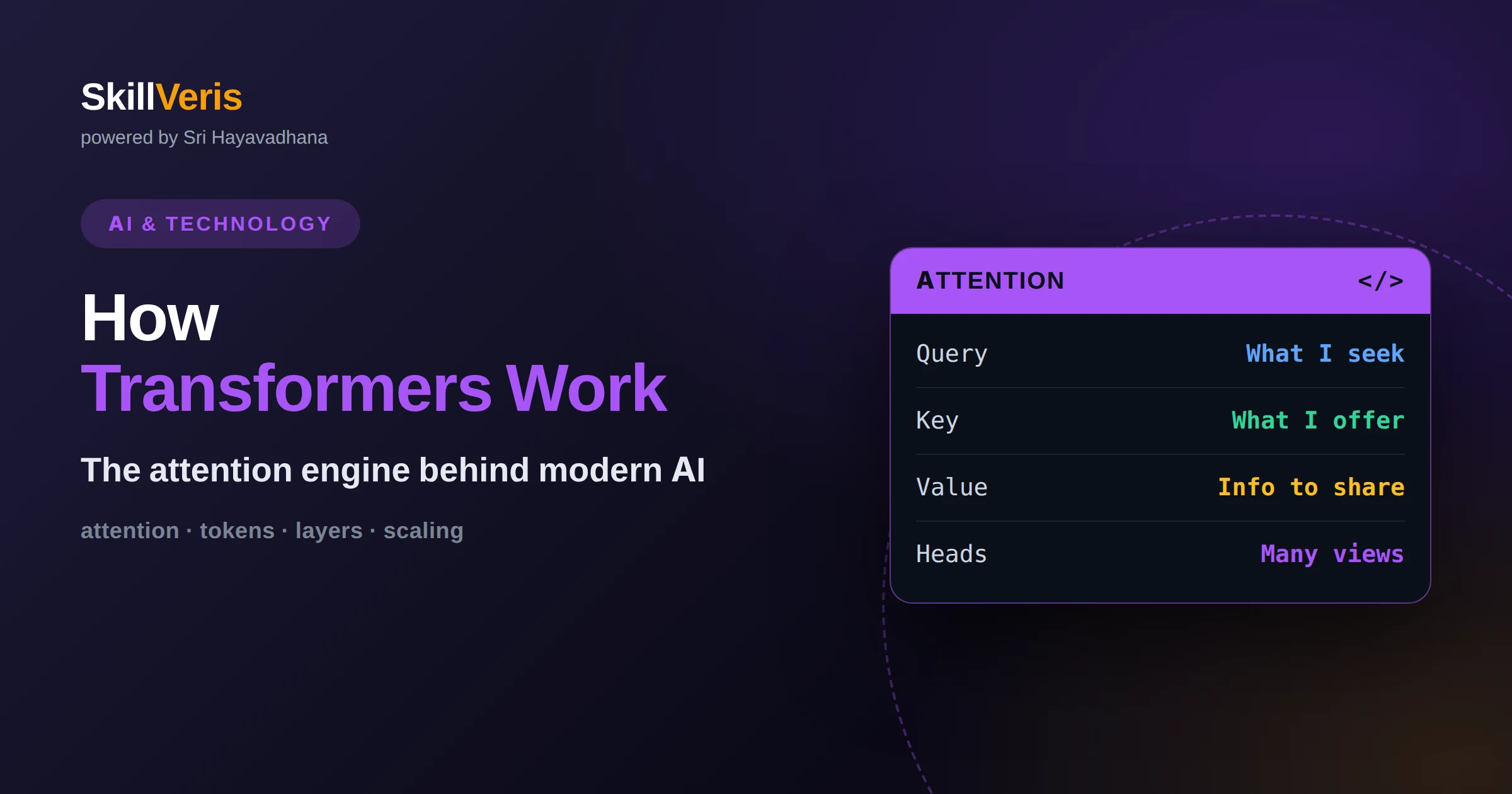
How Transformers Work: The Architecture Behind Modern AI
Transformers are neural networks that use attention to weigh how words relate, letting AI process whole sequences in parallel and capture long-range context.
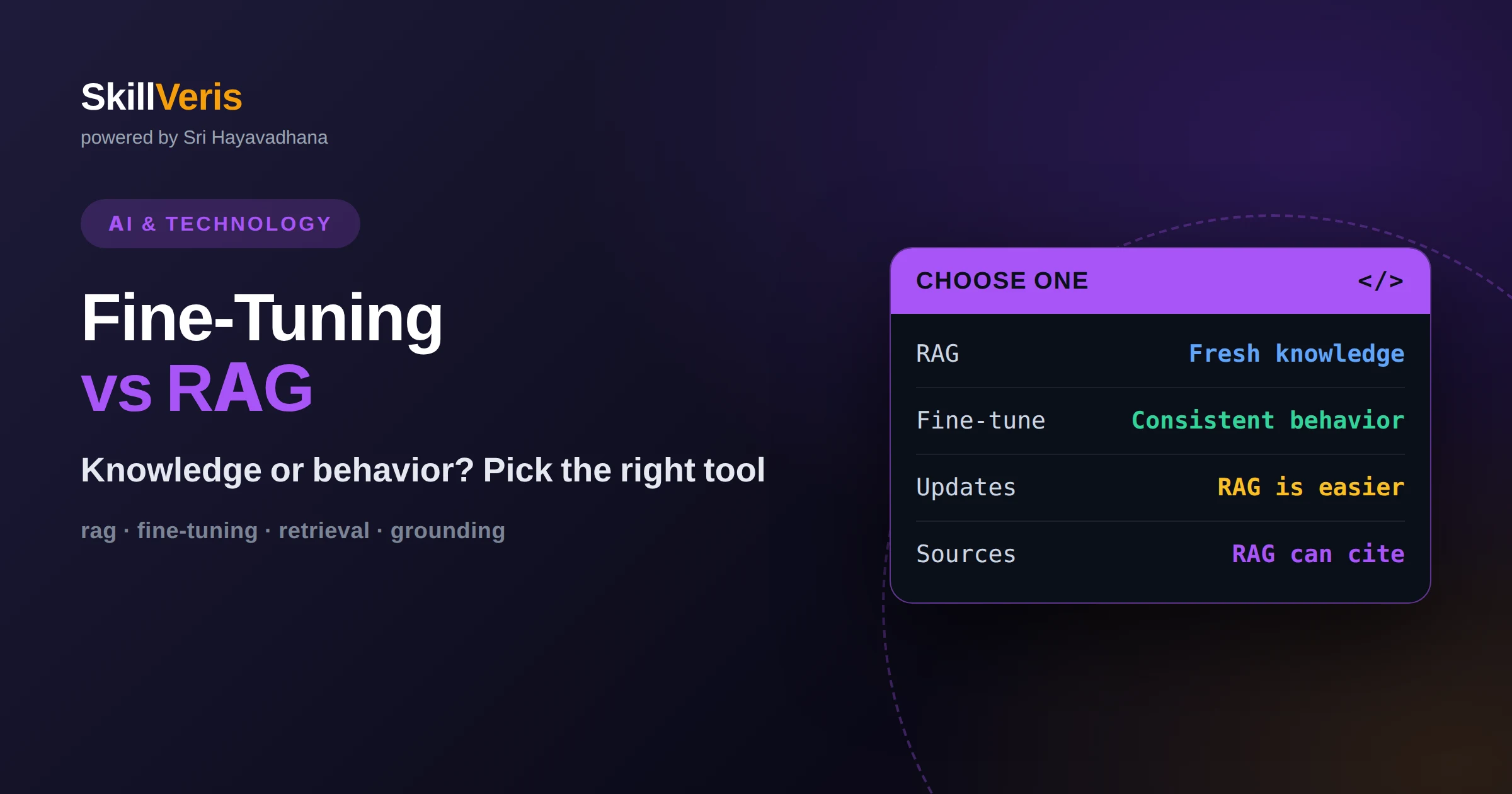
Fine-Tuning vs RAG: Which One Do You Actually Need?
Use RAG to give a model fresh, factual knowledge it can cite, and fine-tuning to teach it a consistent style or skill. Most real systems combine both.
Vector Databases Explained: How AI Remembers
A vector database stores data as numerical embeddings and finds items by meaning, letting AI apps search, recommend, and recall information by similarity.
Embeddings Explained: How AI Understands Meaning
Embeddings turn words, sentences, and images into vectors of numbers so that similar meanings sit close together, letting AI compare and search by meaning.
What Is Generative AI? A Complete Beginner's Guide
Generative AI creates new content like text, images, code, and audio by learning patterns from data, then producing fresh outputs that match those patterns.
LangChain for Beginners: Build Your First LLM App
LangChain is a framework that connects language models to prompts, your data, and tools so you can build real LLM apps fast. Here is how to start today.
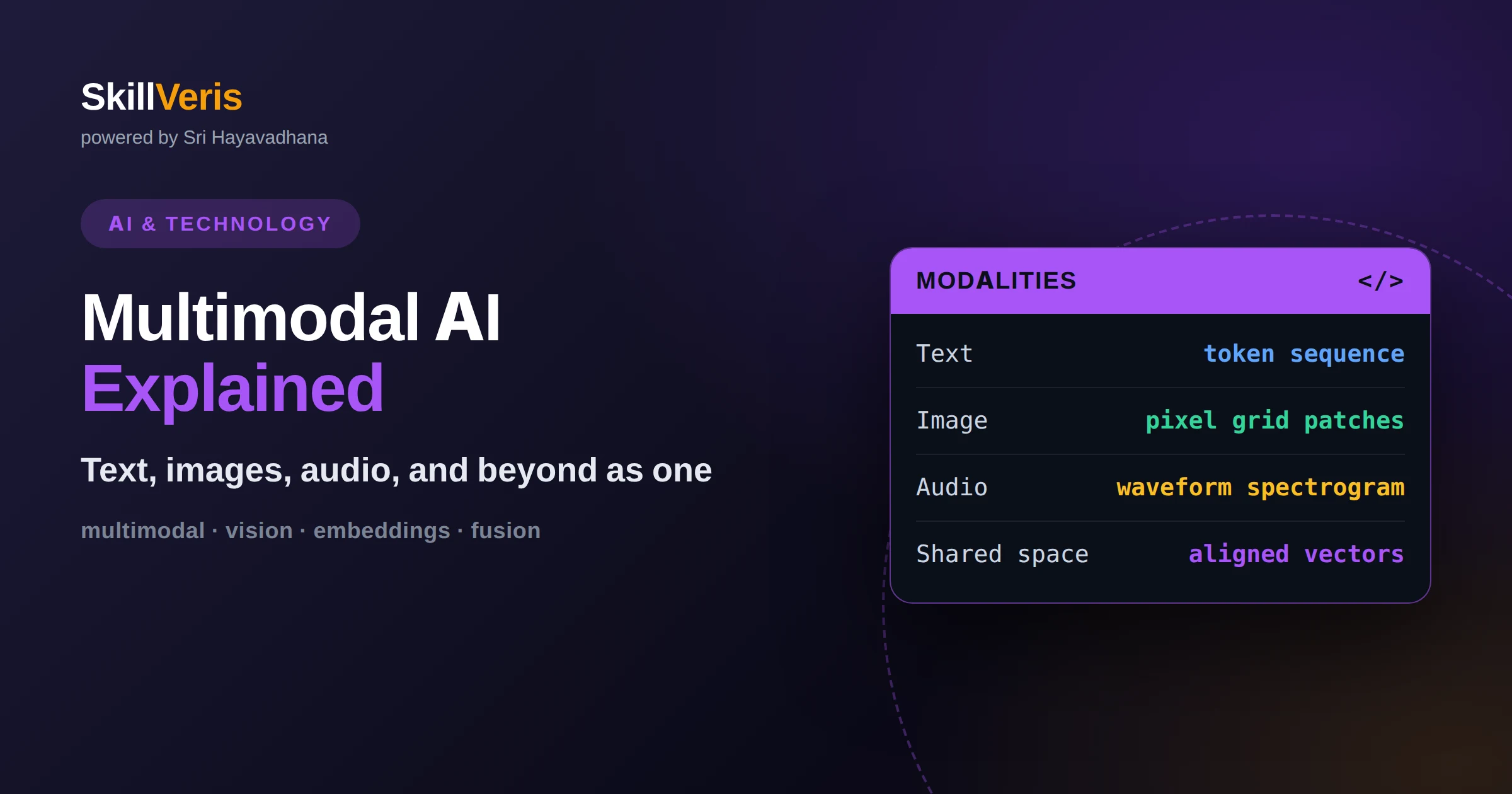
Multimodal AI Explained: Text, Images, and Beyond
Multimodal AI processes and connects several data types like text, images, audio, and video all at once. Here is how it works and why it matters now.
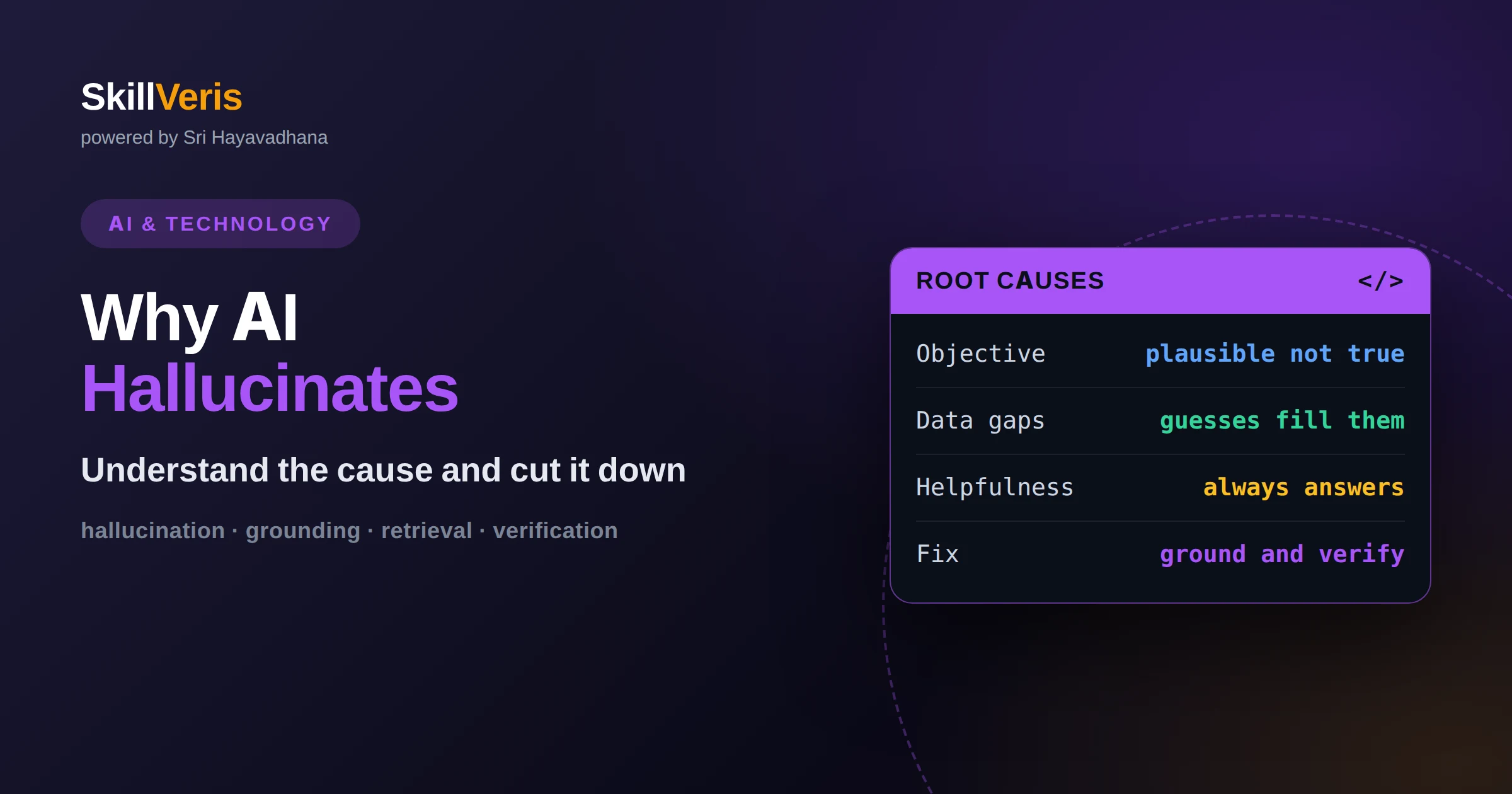
Why AI Hallucinates and How to Reduce It
AI hallucinates because language models predict plausible text, not verified truth. Learn why it happens and practical ways to reduce it in your apps.
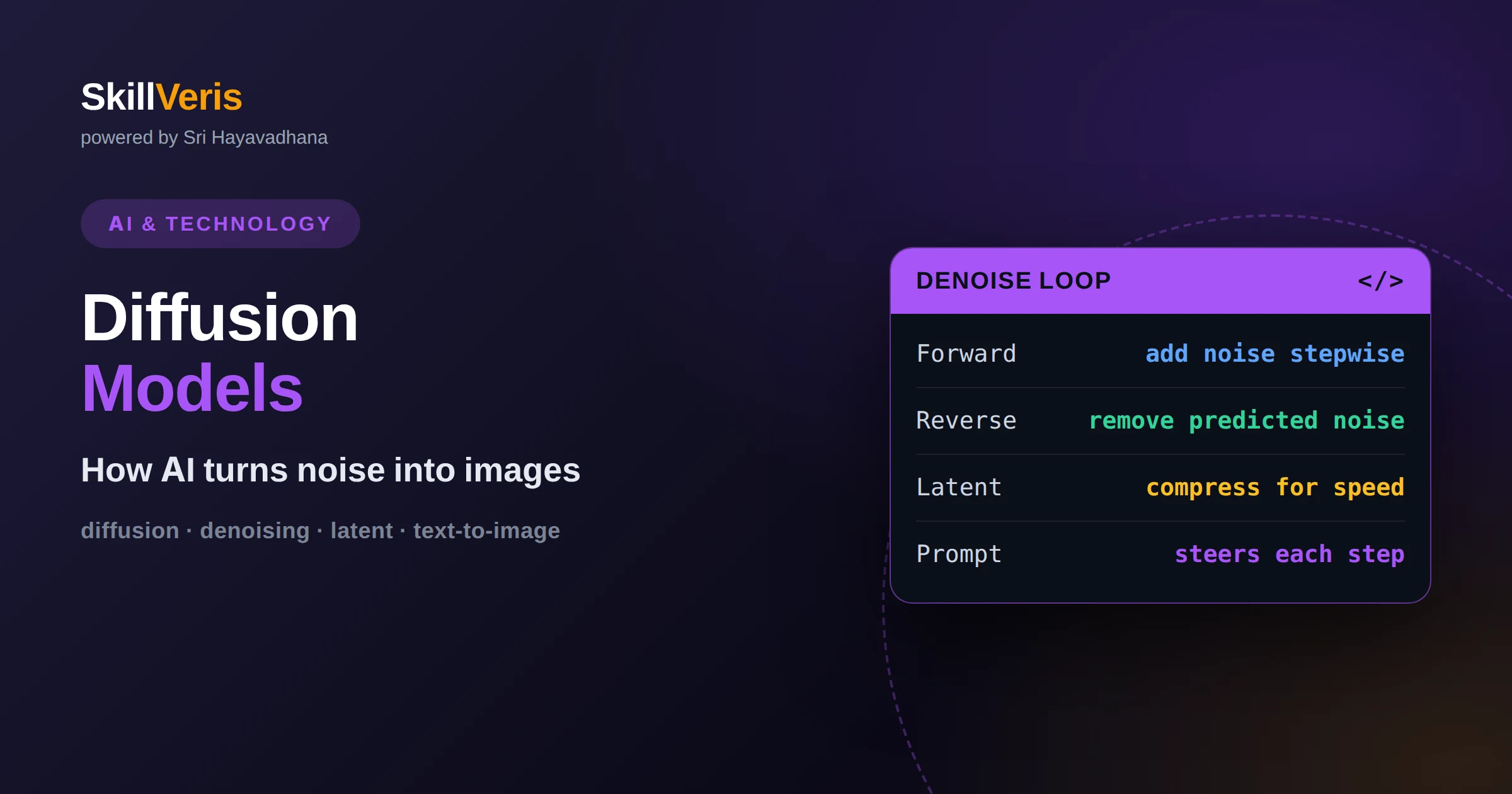
Diffusion Models: How AI Generates Images
Diffusion models generate images by learning to reverse a step-by-step noising process, turning random static into a picture. Here is how that works.
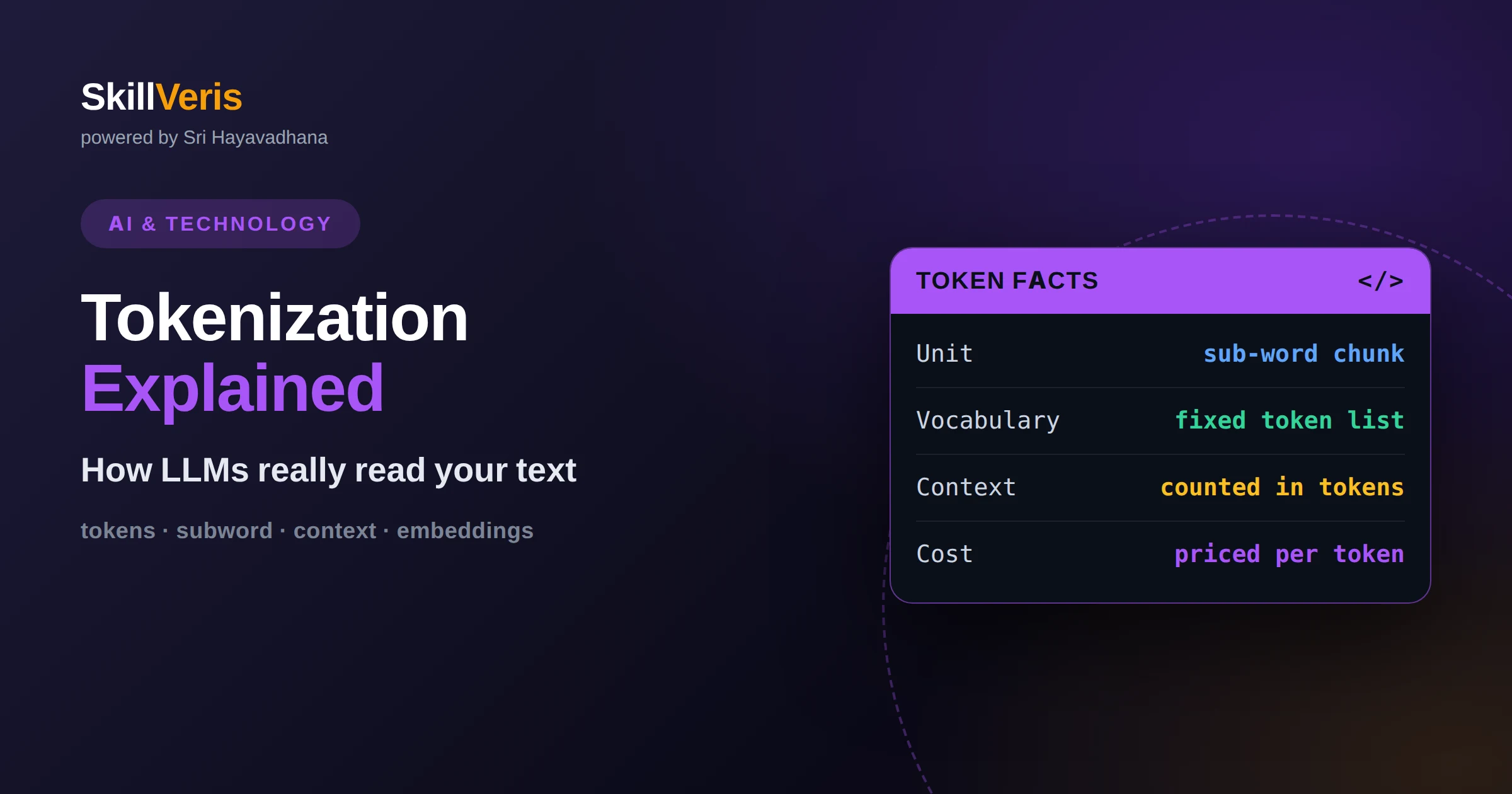
Tokenization Explained: How LLMs Read Text
LLMs do not read words or letters; they read tokens, the chunks text is split into. Learn what tokens are and why they shape cost, limits, and behavior.
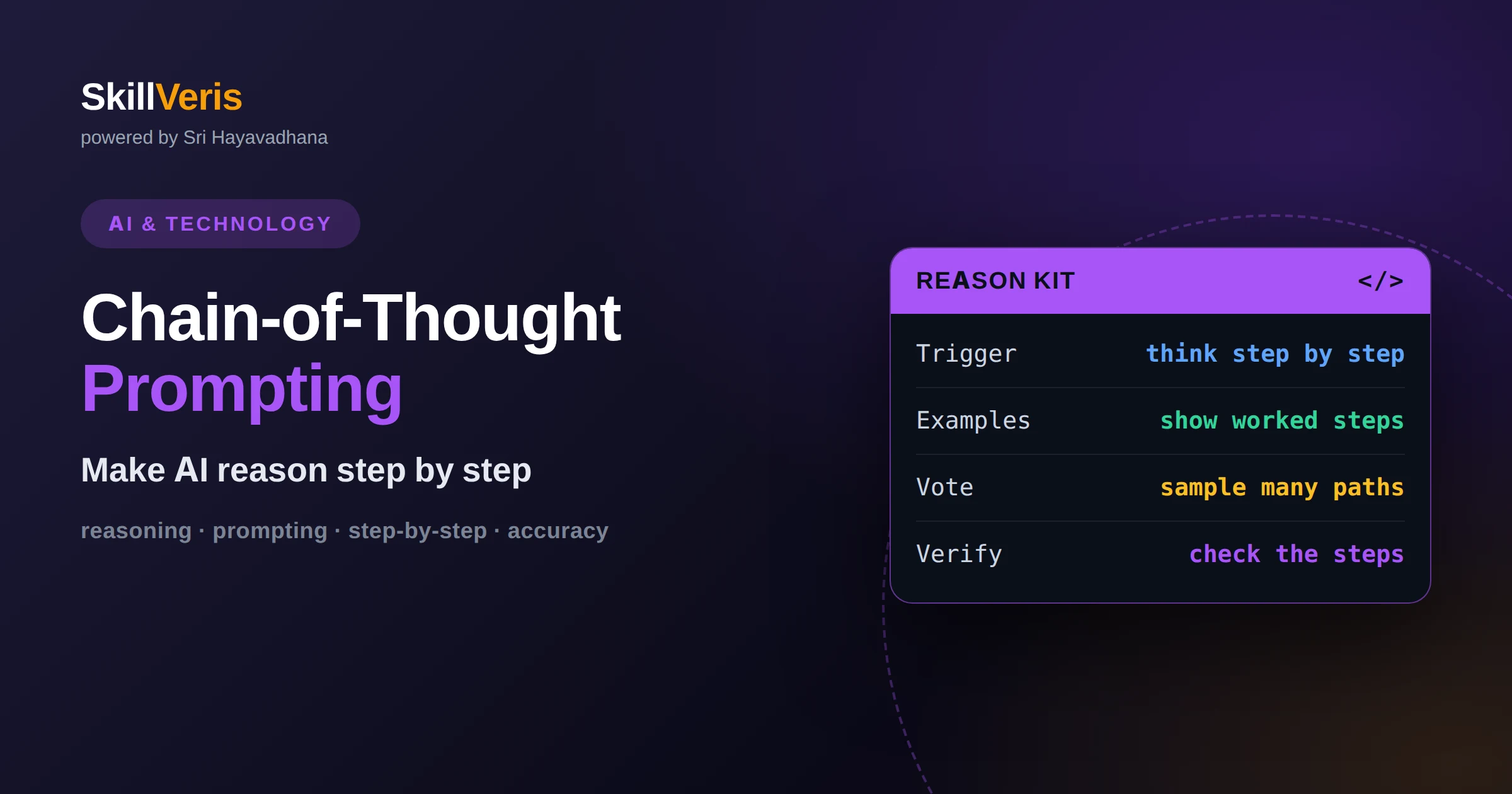
Chain-of-Thought Prompting: Make AI Reason Better
Chain-of-thought prompting asks a model to reason step by step before answering, which improves accuracy on problems that need multiple stages of logic.
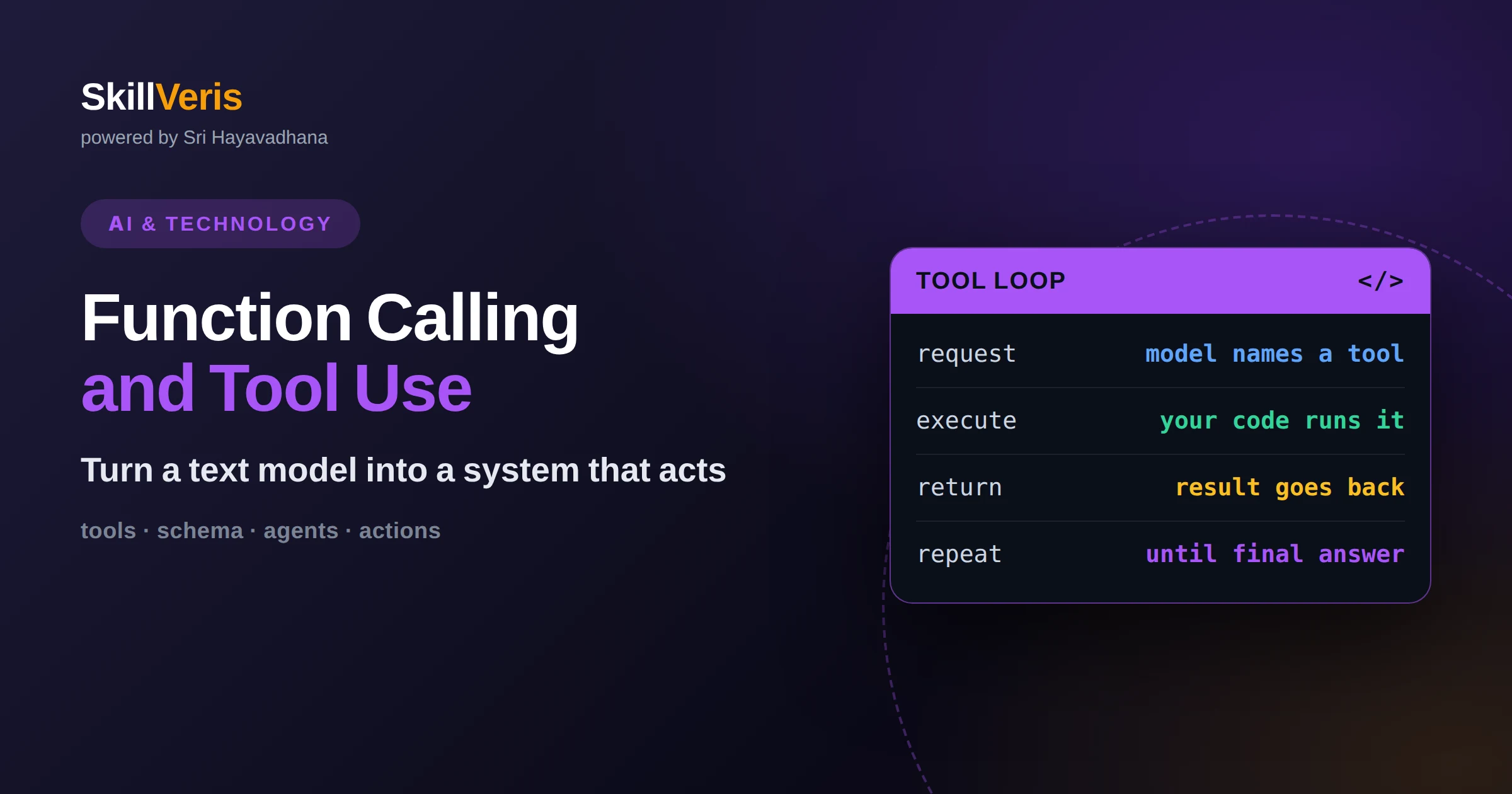
Function Calling and Tool Use in LLMs
Function calling lets a language model request real actions like API calls or database lookups, turning a text generator into a system that gets things done.
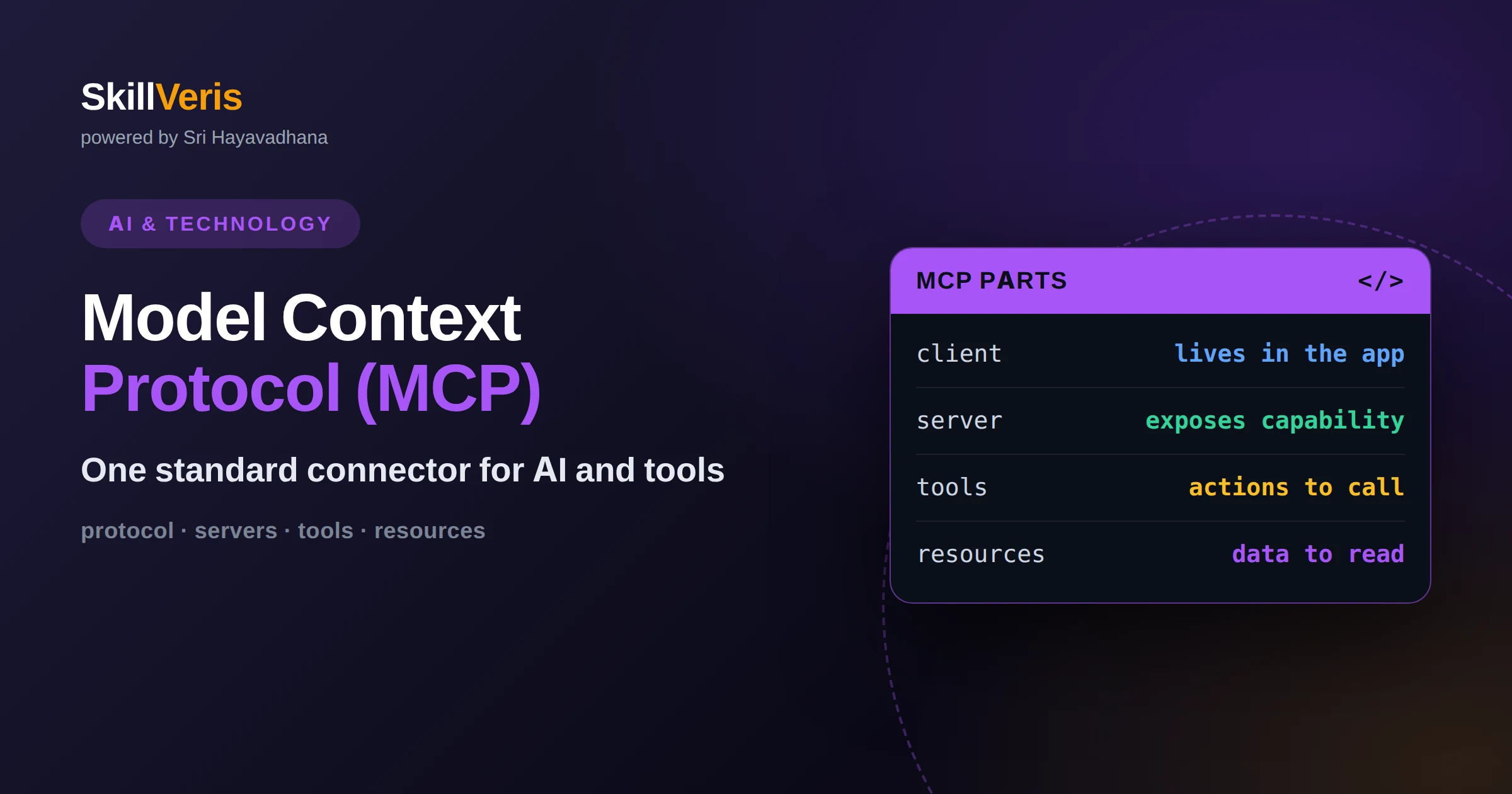
Model Context Protocol (MCP) Explained
The Model Context Protocol is an open standard that lets AI assistants connect to tools and data through one consistent interface, instead of custom integrations.
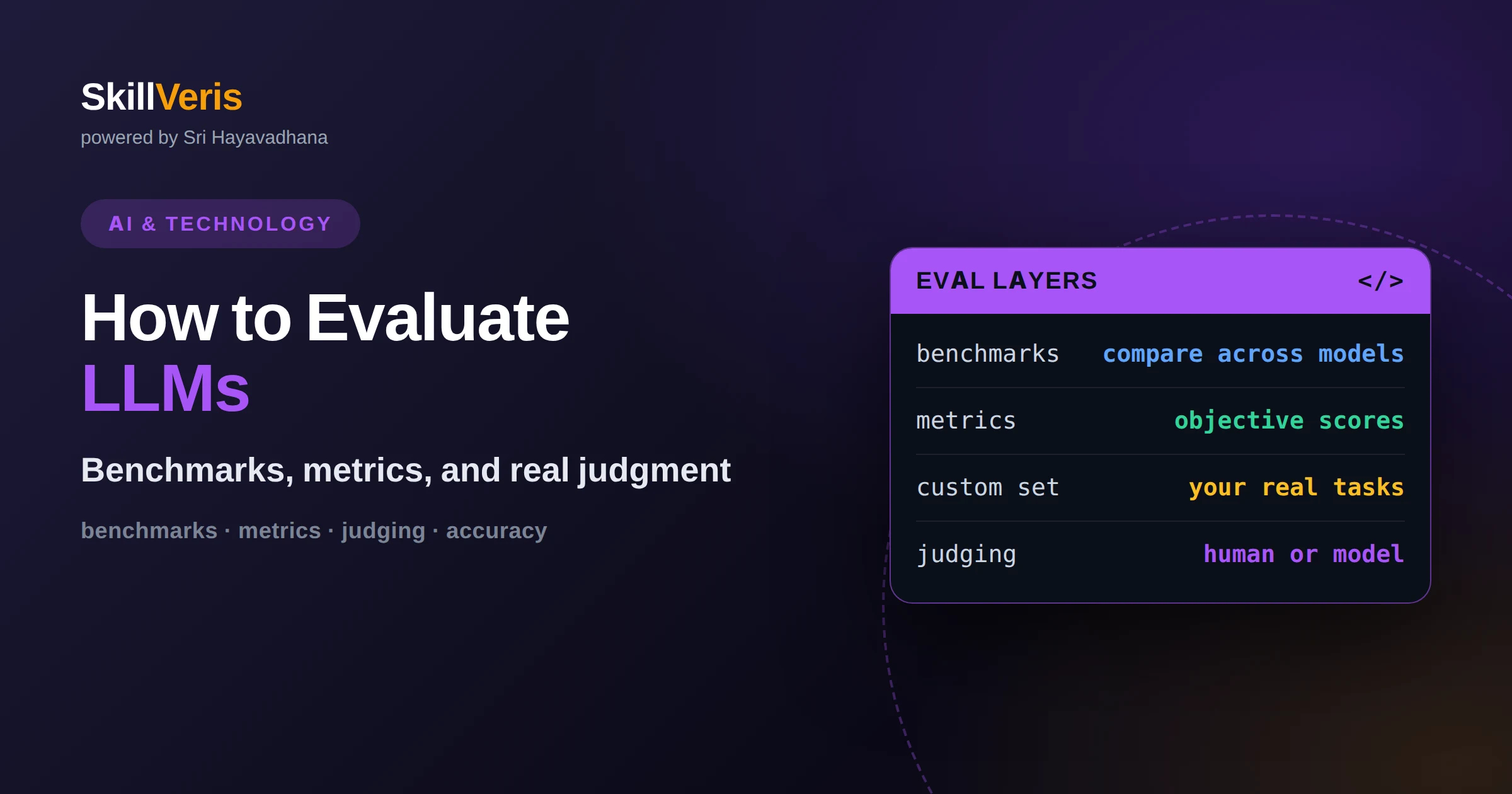
How to Evaluate LLMs: Benchmarks and Metrics
Evaluating a language model means measuring how well it does the job you need, using benchmarks, task-specific metrics, and human or model-based judgment together.
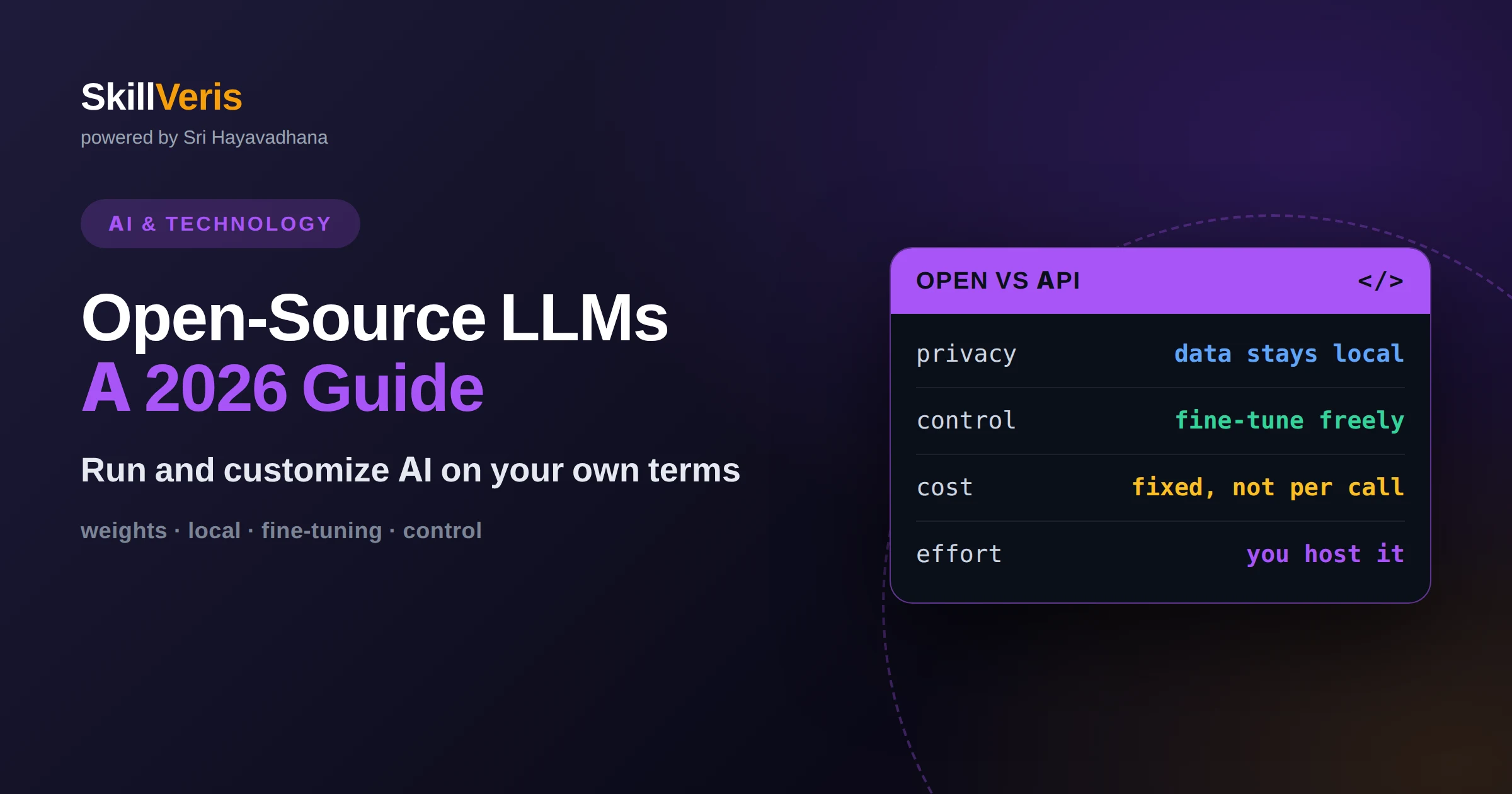
Open-Source LLMs: A Practical Guide for 2026
Open-source language models let you download, run, and customize powerful AI on your own terms, trading convenience for control, privacy, and cost predictability.
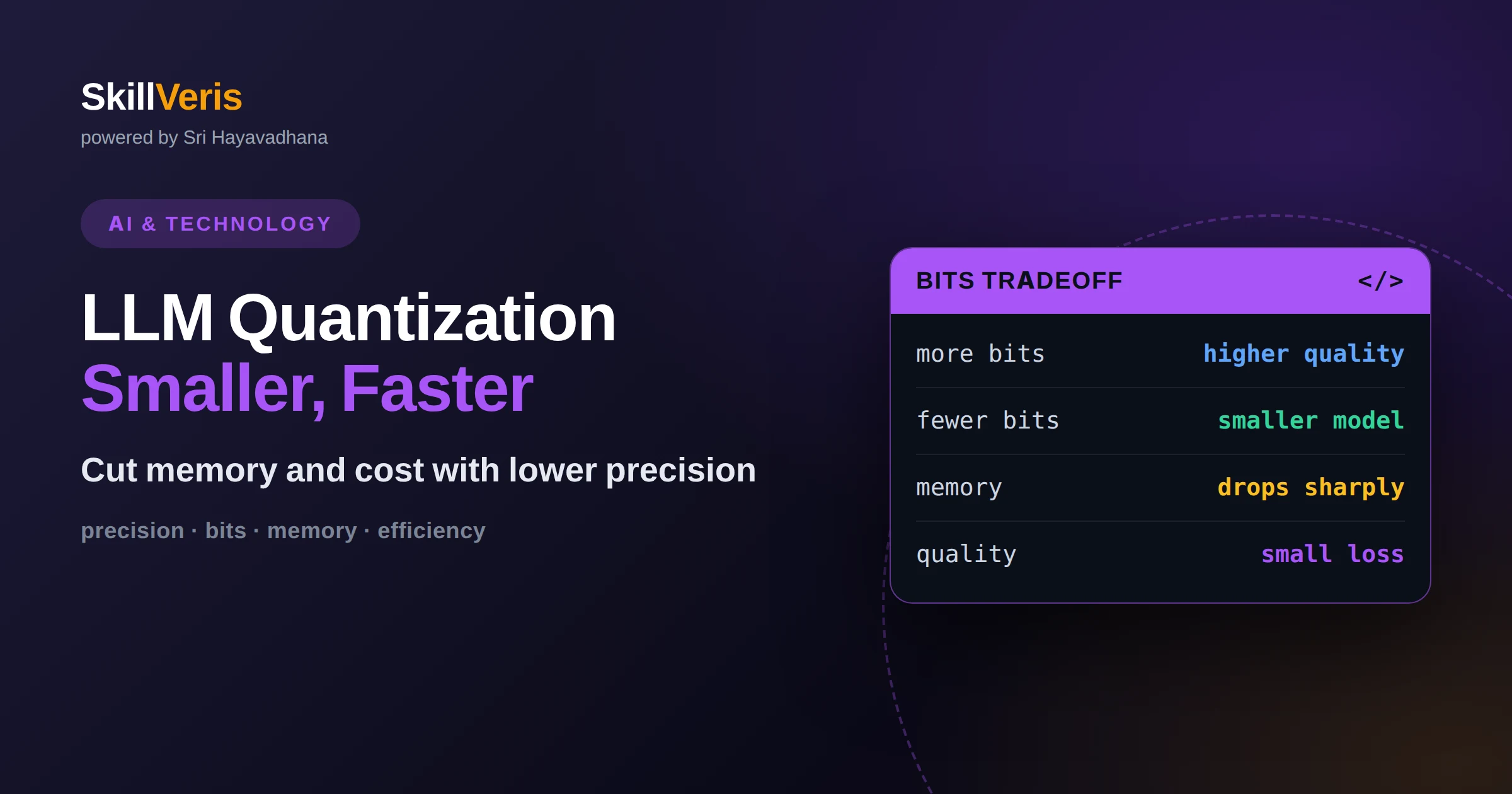
LLM Quantization Explained: Smaller, Faster Models
Quantization shrinks a language model by storing its numbers at lower precision, cutting memory and speeding it up with only a small loss in quality.
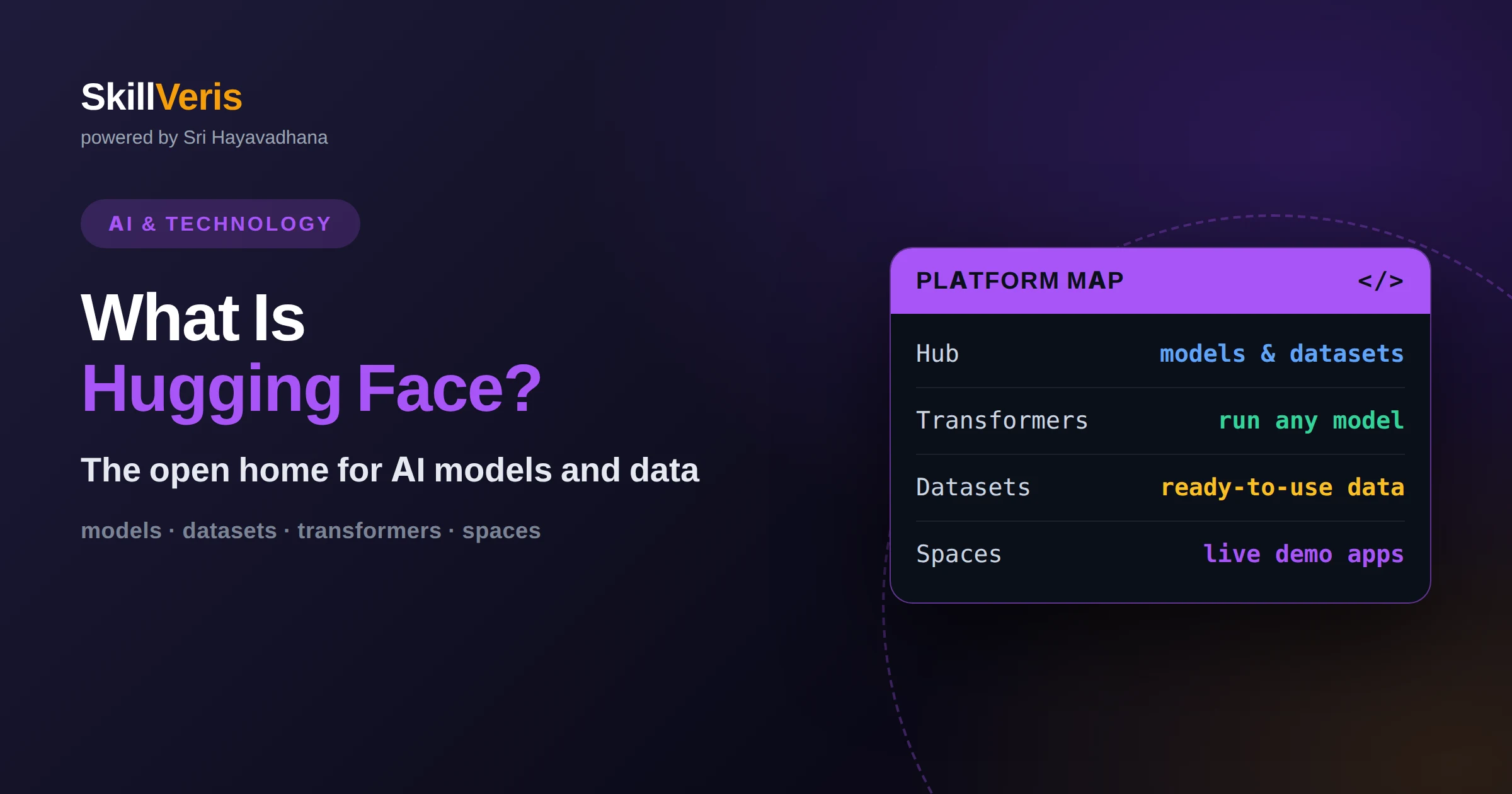
What Is Hugging Face? A Beginner's Guide
Hugging Face is the open platform where developers find, share, and run AI models and datasets. Learn what it is and how to start building with it today.
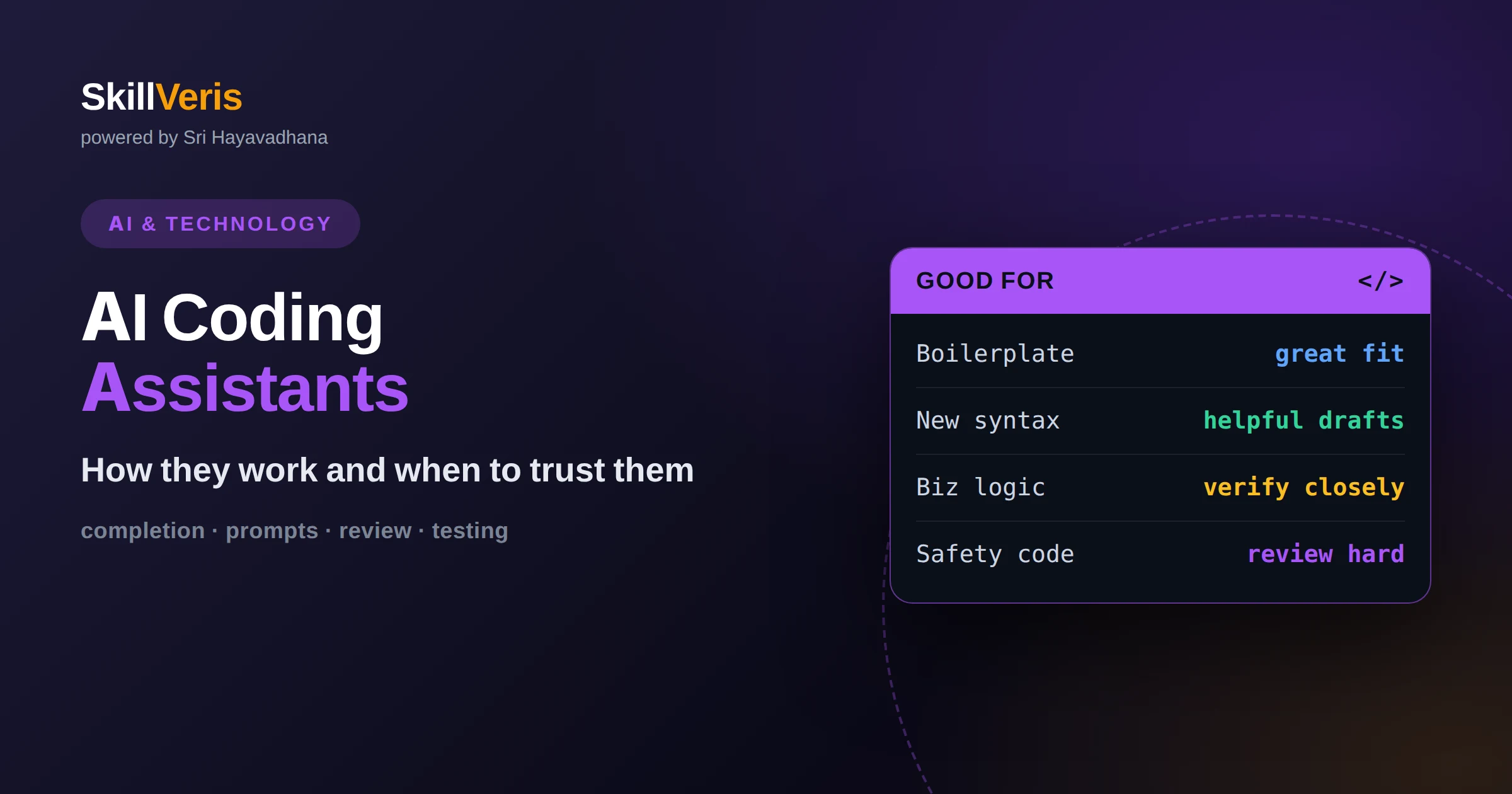
AI Coding Assistants: How They Work and When to Use Them
AI coding assistants predict and generate code from your context to speed up development. Learn how they really work, their limits, and when to trust them.
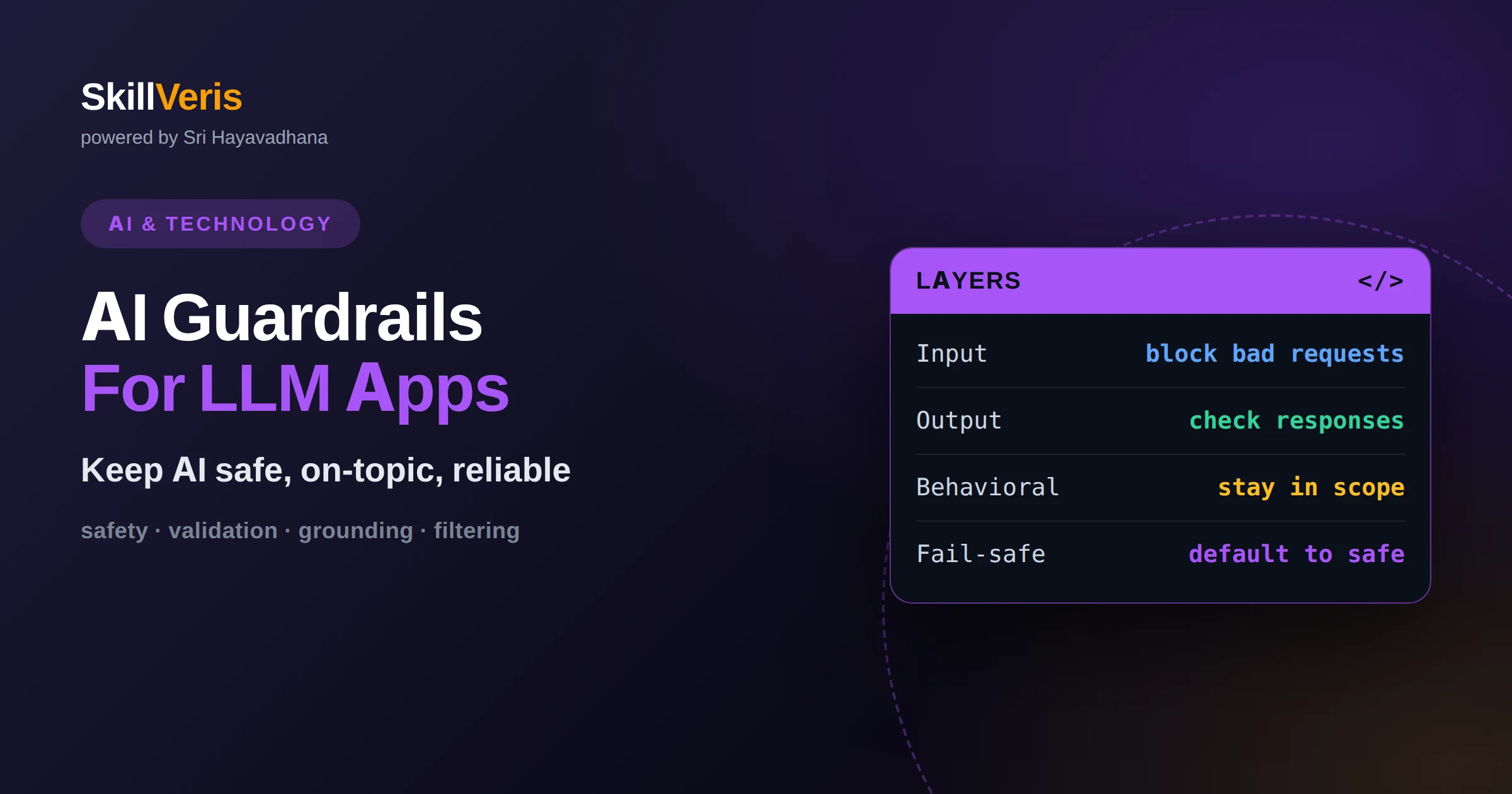
AI Guardrails: Making LLM Apps Safe and Reliable
AI guardrails are the checks that keep LLM apps safe, on-topic, and reliable. Learn what they are, the main types, and how to add them to your own app.
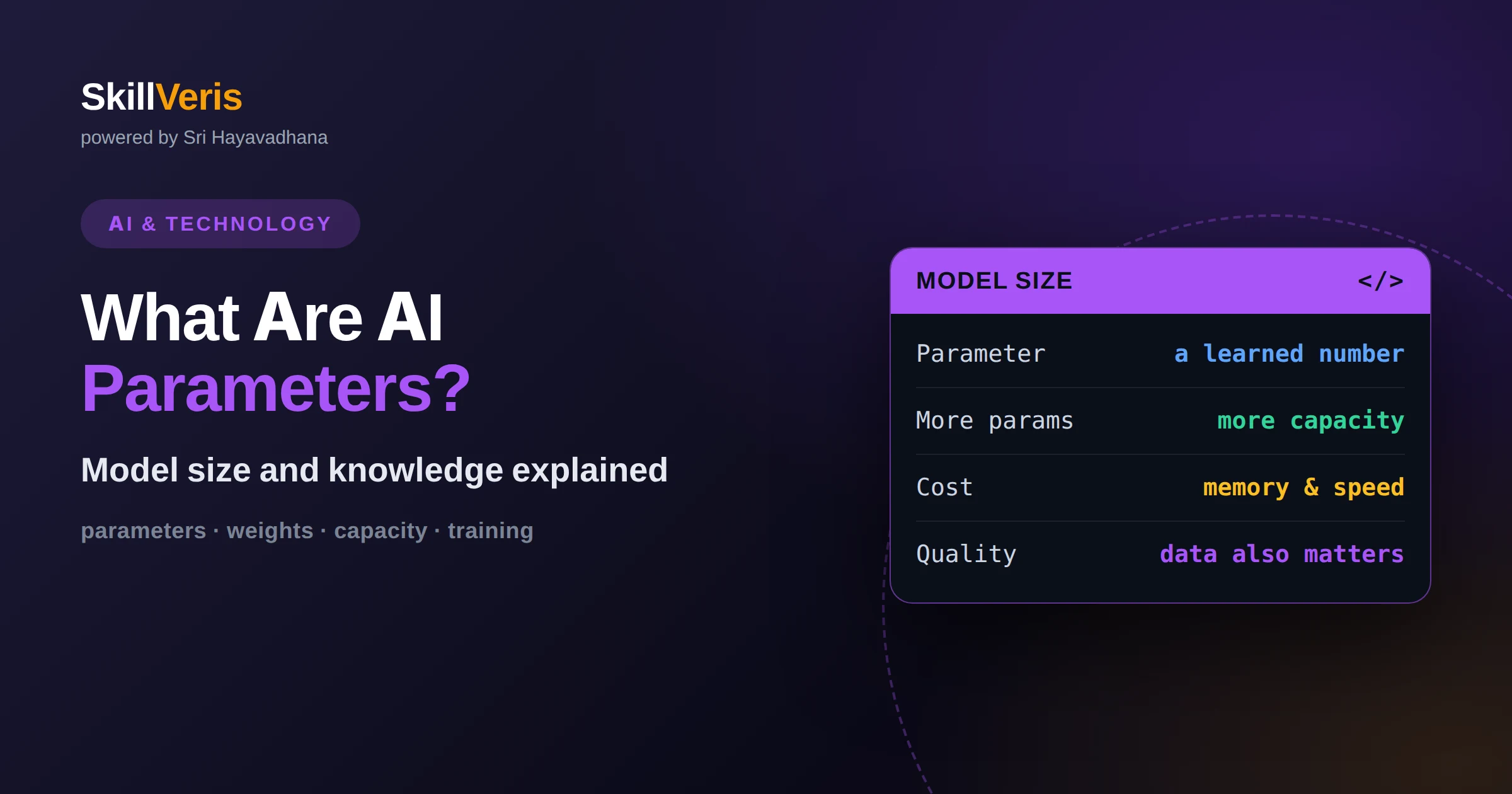
What Are AI Parameters? Model Size Explained
AI parameters are the learned values that store what a model knows. Learn what parameters are, why model size matters, and what the numbers really mean.
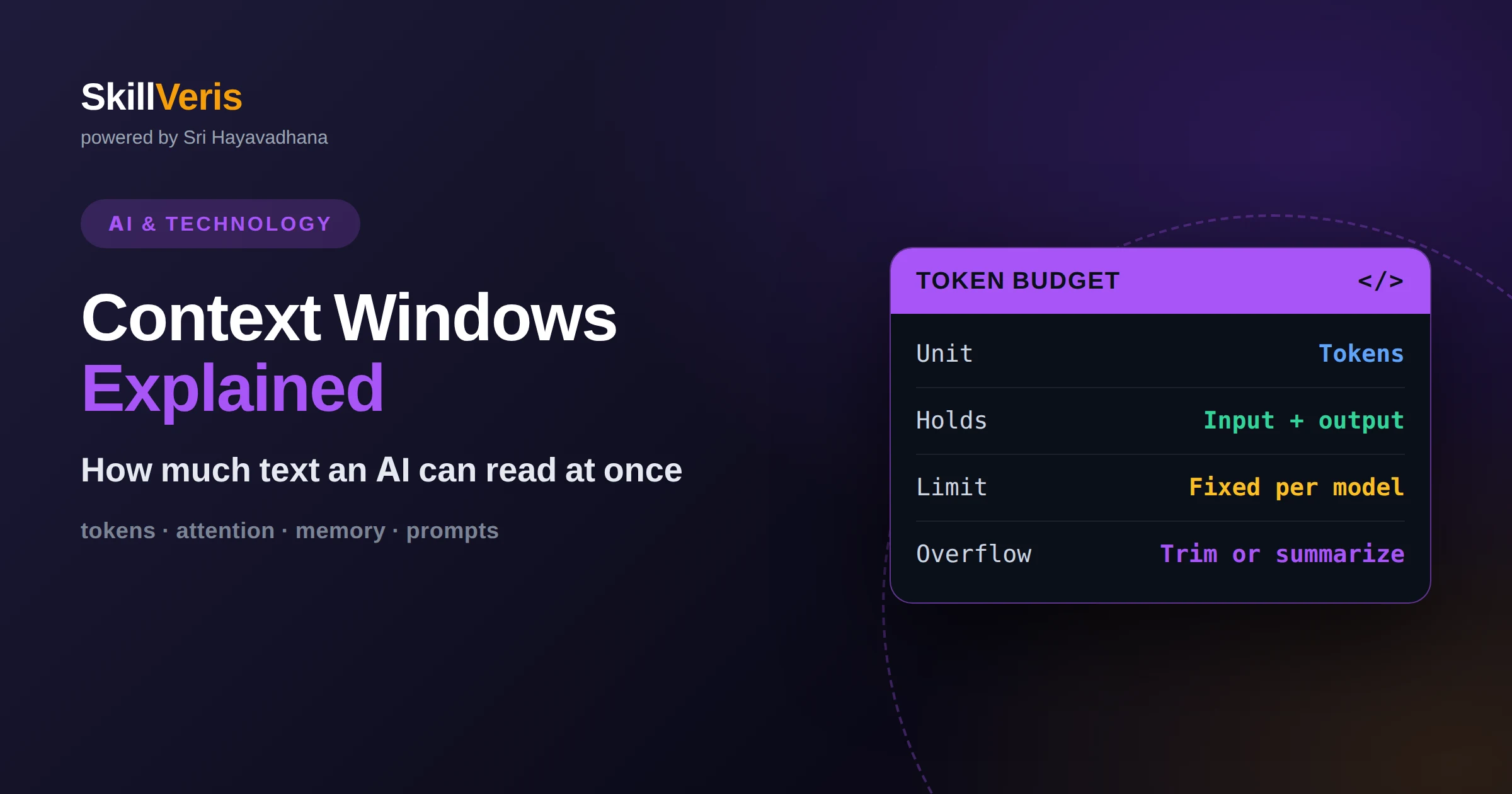
Context Windows Explained: How Much AI Can Read
A context window is the maximum text an AI model can read and reason over at once. Learn how it works, why it matters, and how to work within its limits.
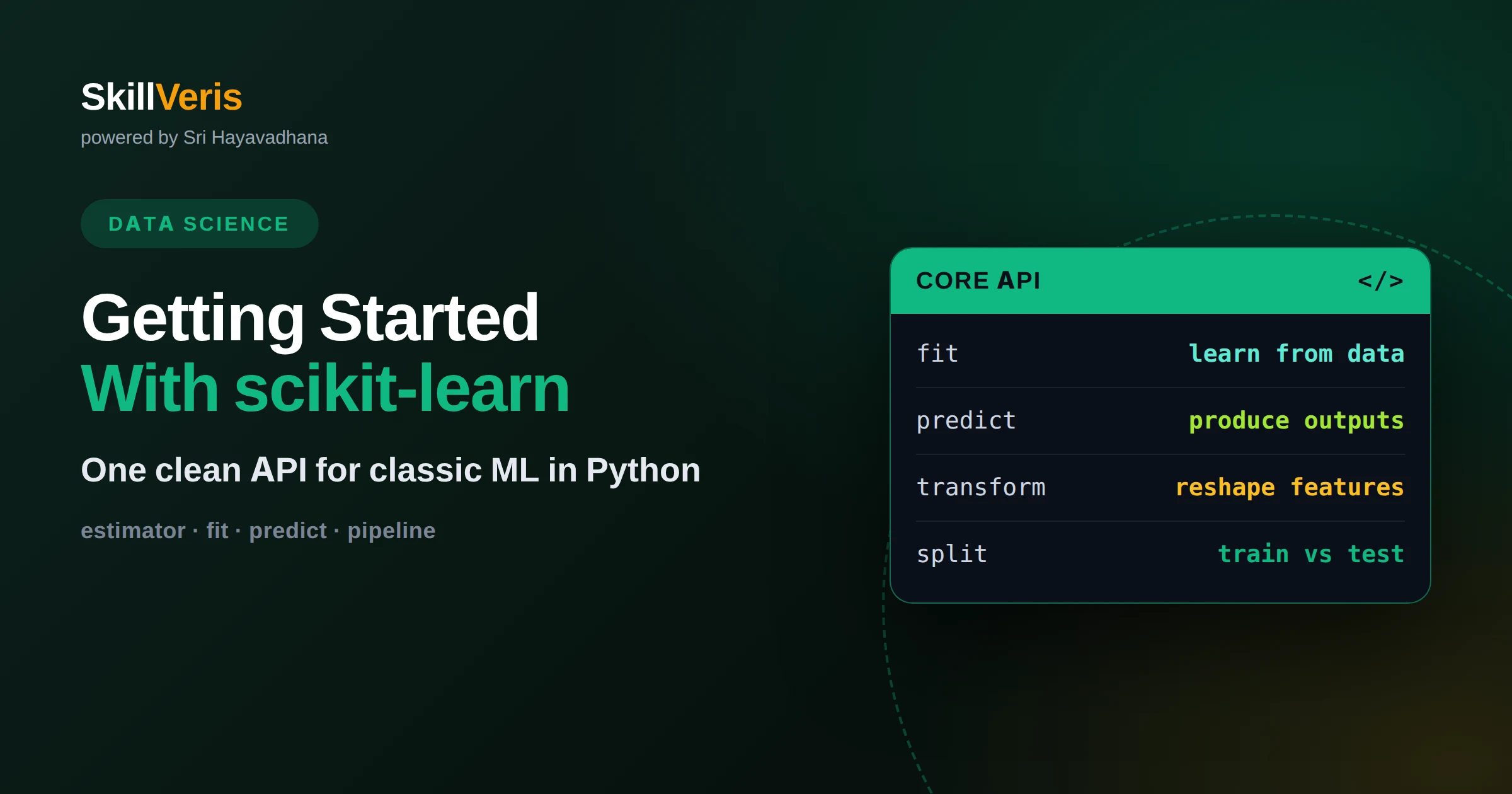
Getting Started With scikit-learn
scikit-learn is the standard Python library for classic machine learning. Learn its consistent API, core workflow, and how to train your first model correctly.
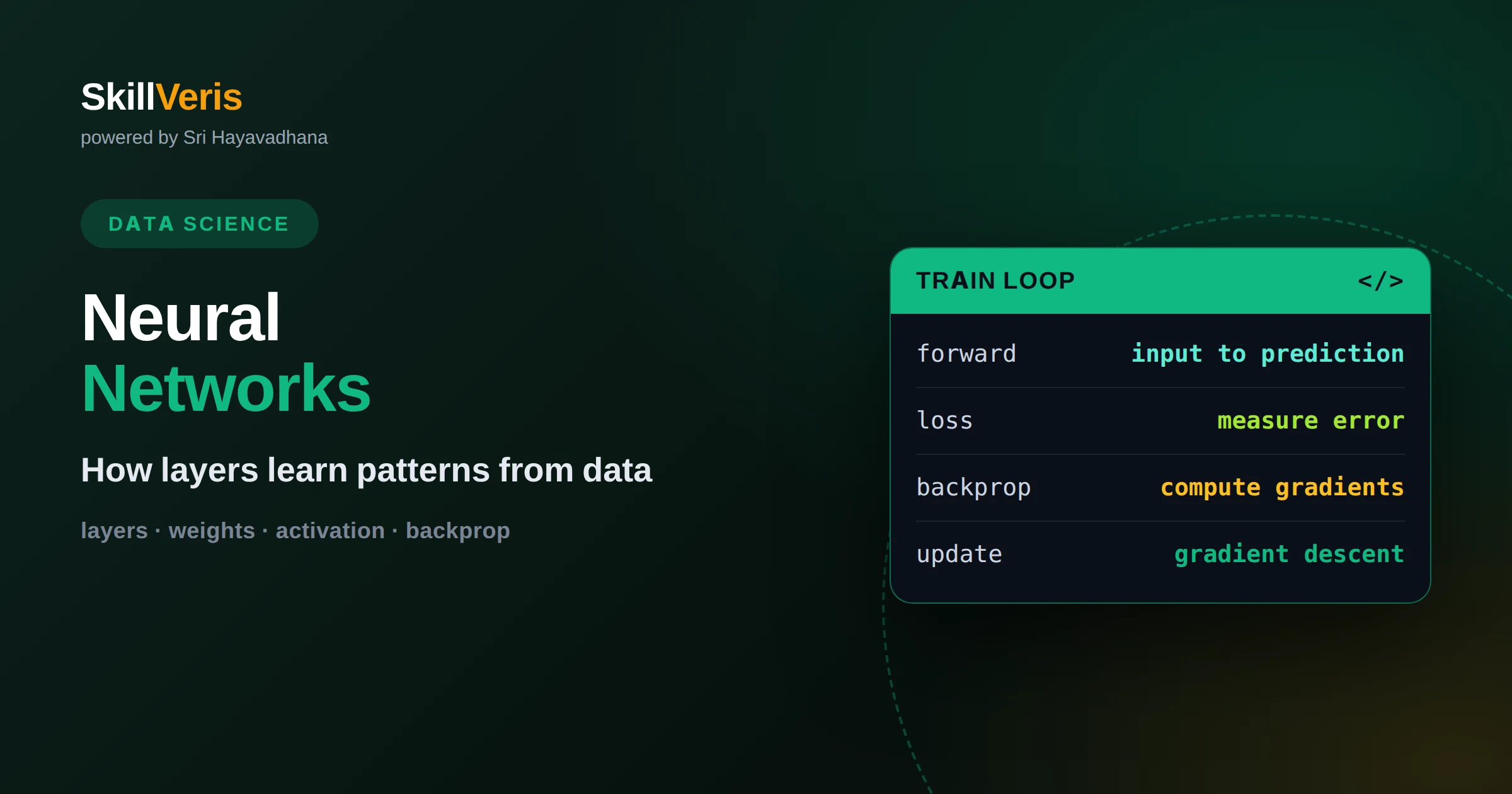
Neural Networks Explained: A Visual Guide
A neural network learns patterns by passing data through layers of weighted connections that adjust during training. Here is how each piece works together.
What Is Prompt Chaining and When to Use It
Prompt chaining splits a big task into a sequence of smaller LLM calls, where each step's output feeds the next. Learn how it works and when to use it.
Vector Databases Explained for Beginners
A vector database stores data as numeric embeddings so you can search by meaning, not keywords. Learn how they work and why modern AI apps rely on them.
What Are AI Embeddings? A Simple Explanation
AI embeddings turn words, images, or audio into lists of numbers that capture meaning, so machines can measure how similar two things are. Here is how.
Fine-Tuning vs RAG: Which Should You Use?
Use RAG to give a model fresh, factual knowledge and fine-tuning to teach it a style, format, or skill. Many systems combine both. Here is how to choose.
How to Reduce AI Hallucinations in Your Apps
Reduce AI hallucinations by grounding answers in real data with RAG, adding verification steps, and letting the model say 'I do not know'. Here is how.
What Is an AI Context Window and Why It Matters
An AI context window is the maximum amount of text a model can consider at once, measured in tokens. It sets the limits for memory, cost, and accuracy.
Multimodal AI Explained: Text, Image, and Audio
Multimodal AI understands and generates across text, images, and audio in one model, so you can ask questions about a photo or describe a sound in words.
How AI Tokenization Works Explained Simply
Tokenization splits text into tokens, the small chunks a language model actually reads. It drives context limits, cost, and even how models spell and count.
What Is Model Distillation in AI?
Model distillation trains a small, fast student model to mimic a large teacher model, keeping most of the quality at just a fraction of the size and cost.
AI Guardrails: How to Keep LLMs Safe in Production
AI guardrails are the checks around an LLM that validate inputs and outputs, block unsafe content, and keep responses on-topic, accurate, and policy-compliant.
AI Model Evaluation: How to Measure LLM Quality
Measuring LLM quality means combining automated benchmarks, task metrics, human review, and LLM-as-judge scoring against a representative evaluation set.
How to Build a Chatbot With an LLM API
Build a chatbot by calling an LLM API with a system prompt and message history, streaming responses, managing context, and adding tools for real capabilities.
What Are Function Calling and Tool Use in LLMs?
Function calling lets an LLM request that your code run a defined function, returning structured arguments so the model can fetch data or take actions reliably.
Open Source vs Closed Source AI Models Compared
Open source AI models offer control, privacy, and customization you self-host, while closed source models offer top performance and ease via a managed API.
What Is Chain-of-Thought Prompting?
Chain-of-thought prompting asks an LLM to reason step by step before answering, which noticeably improves accuracy on math, logic, and multi-step problems.
How AI Agents Use Memory and Planning
AI agents use memory to remember context across steps and planning to break goals into actions, letting them tackle multi-step tasks instead of single replies.
What Is an AI Knowledge Graph?
An AI knowledge graph stores facts as connected entities and relationships, letting machines reason over data, answer complex questions, and ground LLM output.
Speech Recognition Explained: How AI Understands Voice
Speech recognition turns spoken audio into text by converting sound waves into features a neural network maps to words, powering assistants, captions, and dictation.
What Is Edge AI and Why It Is Growing
Edge AI runs machine learning directly on devices instead of the cloud, cutting latency, protecting privacy, and working offline — key to its rapid growth.
What Is Synthetic Data and How Is It Used in AI?
Synthetic data is artificially generated information that mimics real data, used to train AI when real data is scarce, private, or expensive to collect.
How to Evaluate an AI Startup Idea in 2026
Evaluate an AI startup idea by testing whether it solves a real painful problem, has a durable data or workflow moat, and survives when foundation models improve.
What Is AGI and How Close Are We?
AGI is AI that matches human intelligence across virtually any task. Despite rapid progress, experts disagree sharply on whether it is years or decades away.
How Small Language Models Are Changing AI
Small language models deliver strong performance at a fraction of the size and cost, enabling private, fast, on-device AI that runs without the cloud.
What Is Feature Engineering in Machine Learning?
Feature engineering is transforming raw data into inputs that help models learn. Good features often matter more than the algorithm. Learn the core techniques here.
Building Your First Machine Learning Model
Build your first machine learning model step by step with scikit-learn: load data, split it, train, evaluate, and predict. A practical beginner walkthrough.
Build a Chatbot With Python: Step-by-Step
Build a chatbot with Python by choosing rule-based or LLM-powered logic, handling user input in a loop, and connecting an API like OpenAI for real conversations.
What Is Retrieval-Augmented Generation in Practice
Retrieval-augmented generation grounds an LLM in your own documents, fetching relevant text at query time so answers stay accurate, current, and traceable to sources.
How to Build a RAG Pipeline Step by Step
Build a RAG pipeline in six steps: load documents, chunk them, embed and store the chunks, retrieve by similarity, assemble a grounded prompt, and generate a cited answer.
What Are AI Agents Frameworks: LangChain vs LlamaIndex
AI agent frameworks orchestrate LLM tool use, memory, and control flow. LangChain excels at general agent workflows; LlamaIndex specializes in data-heavy retrieval.
What Is Prompt Injection and How to Prevent It
Prompt injection tricks an LLM into ignoring its instructions by hiding malicious commands in user or retrieved text. Learn how the attack works and how to defend against it.
How LLM Temperature and Top-p Sampling Work
Temperature and top-p control how random an LLM's output is. Temperature reshapes the probability curve; top-p limits the candidate pool. Learn when to tune each.
What Is a System Prompt and Why It Matters
A system prompt is the hidden instruction that sets an LLM's role, rules, and tone before any user message. It shapes every response and anchors consistent behavior.
What Is Cosine Similarity in AI Search
Cosine similarity measures how alike two vectors are by the angle between them, ignoring length. It's the core scoring method behind semantic and vector search.
What Is Self-Attention in Neural Networks
Self-attention lets each token in a sequence attend to every other token in the same sequence, building context-aware representations that power transformer models.
How GPT Models Are Trained: Pretraining to RLHF
GPT models are trained in stages: massive next-token pretraining, supervised fine-tuning on instructions, then RLHF to align outputs with human preferences.
What Is Transfer Learning in Machine Learning
Transfer learning reuses a model trained on one task as the starting point for another, cutting data and compute needs dramatically. Here's how it works.
What Are Guardrails and Content Filters for LLMs
Guardrails and content filters are the safety layers around an LLM that block harmful inputs and outputs, enforce policy, and keep responses on-topic and safe.
What Is a Token and How Pricing Works for LLMs
A token is the sub-word unit LLMs read and write, and API pricing is charged per token for both input and output. Learn to estimate and control your costs.
How to Cut Your LLM API Costs
Cut LLM API costs by trimming prompts, caching, routing to smaller models, and capping output. Here are the highest-impact tactics for lowering your bill.
What Is Model Quantization and Why It Matters
Model quantization shrinks a neural network by storing its weights in lower precision, cutting memory and speeding inference with little accuracy loss.
What Is a Foundation Model in AI
A foundation model is a large AI model trained on broad data that can be adapted to many downstream tasks. Learn how they work, why they matter, and their limits.
How AI Image Upscaling Works
AI image upscaling uses neural networks to add realistic detail when enlarging photos, going beyond old resizing tricks. Learn how it works and where it shines.
What Is Text-to-Speech and How It Works
Text-to-speech converts written text into natural spoken audio using neural networks. Learn how modern TTS works, its components, and where it is used.
What Is Speech-to-Text: ASR Explained
Speech-to-text, or ASR, converts spoken audio into written words using neural networks. Learn how automatic speech recognition works and where it is used.
How AI Detects Objects in Images
Object detection lets AI find and label multiple items in an image with bounding boxes. Learn how detectors like YOLO work and where they are used.
What Is Image Segmentation in Computer Vision
Image segmentation labels every pixel in an image to outline exact object shapes. Learn semantic, instance, and panoptic segmentation and where they are used.
What Is Sentiment Analysis and How to Do It
Sentiment analysis uses NLP to detect whether text is positive, negative, or neutral. Learn how it works, the main approaches, and how to build one.
What Is Named Entity Recognition in NLP
Named entity recognition finds and classifies names of people, places, organizations, and more in text. Learn how NER works and where it is used.
How Machine Translation Works Today
Modern machine translation uses neural networks called transformers to convert text between languages by learning meaning, not just swapping words one by one.
What Is a Confusion Matrix in Machine Learning
A confusion matrix is a simple table that shows exactly where a classification model gets predictions right and wrong, broken down by every class.
What Is Gradient Descent Explained for Beginners
Gradient descent is the algorithm that trains most machine learning models by repeatedly nudging parameters in the direction that reduces error, step by step.
What Is Backpropagation in Neural Networks
Backpropagation is the algorithm that lets neural networks learn by efficiently calculating how much each weight contributed to the error and adjusting it.
What Is a Loss Function in Machine Learning
A loss function is the formula that measures how wrong a model's predictions are, giving training a single number to minimize so the model can improve.
What Are Activation Functions in Neural Networks
Activation functions add non-linearity to neural networks, letting them learn complex patterns instead of behaving like a simple linear model. Here's how they work.
What Is Regularization in Machine Learning
Regularization is a set of techniques that prevent a model from overfitting by discouraging it from becoming too complex, so it generalizes to new data.
What Is Cross-Validation in Machine Learning
Cross-validation tests a model on multiple data splits instead of one, giving a reliable estimate of how it will perform on unseen data. Here is how it works.
What Is a Decision Tree in Machine Learning
A decision tree predicts by asking a series of yes/no questions about your data, splitting it step by step until it reaches an answer. It is simple, visual, and easy to read.
What Is Reinforcement Learning for Beginners
Reinforcement learning teaches an agent to make decisions by trial and error, earning rewards for good actions. It is how AI masters games, robotics, and control tasks.
How AI Fraud Detection Systems Work
AI fraud detection spots suspicious transactions in real time by learning normal behavior and flagging anything that deviates, using both labeled examples and anomaly detection.
What Is Feature Scaling in Machine Learning
Feature scaling puts numeric inputs on a comparable range so no single feature dominates a model. Learn normalization, standardization, and when each matters.
Build a Kanban Board With React
Build a Kanban board in React with columns, draggable cards, and drag-and-drop between lists. Learn component structure, state lifting, and persistence for a real productivity app.
Build a RAG Chatbot Over Your Own Documents
Build a RAG chatbot that answers from your own documents: chunk and embed your files, store vectors, retrieve relevant passages, and feed them to an LLM for grounded answers.
Free Artificial Intelligence Courses for Complete Beginners
Start with free artificial intelligence courses built for complete beginners — a concepts-first path that takes you from zero to building real AI projects.
How to Learn AI in 2026 Without a PhD
Learn AI in 2026 without a PhD using a realistic self-study route from zero to building — the skills, tools, and projects that actually get you hired.
Free Course on Artificial Intelligence: What to Expect
Wondering what a free course on artificial intelligence covers? Here is exactly what a good AI curriculum teaches, how it is structured, and how to choose one.
AI for Data Analysts: Tools That Save Hours
Discover practical AI for data analysts — tools and prompts that cut hours off cleaning, querying, and summarizing data without replacing your judgement.
Machine Learning for Data Analytics: A Gentle Intro
A gentle intro to machine learning for data analytics — when to reach for ML, the simplest models to start with, and how to avoid the beginner mistakes.
Using ChatGPT for Data Analysis: A Practical Guide
Learn to use ChatGPT for data analysis with proven prompt patterns, code interpreter workflows, and a clear-eyed view of where the tool fails you.
What Is Generative AI and How Do You Learn It Free
Understand what generative AI is, how generative models actually work, and follow a free, structured learning path to go from curious beginner to capable.
AI Terminology Explained: 30 Terms Beginners Confuse
AI terminology explained in plain English: 30 terms beginners confuse, from tokens and parameters to hallucination and fine-tuning, defined clearly with examples.
AI vs Machine Learning vs Deep Learning
AI vs machine learning vs deep learning explained clearly: the nested relationship between the three, with concrete examples showing exactly how they differ.
Can AI Replace Data Analysts? An Honest Look
Can AI replace data analysts? An honest look at what AI automates, what it genuinely cannot do, and how to stay valuable as the tools keep improving.
Free AI Tools Every Student Should Try in 2026
Discover the best free AI tools for students in 2026 across writing, coding, research, and study, plus how to use them honestly and effectively.
Natural Language Processing: A Beginner Roadmap
A free beginner roadmap to natural language processing, from tokenization and embeddings to transformers and LLMs, with a practical learning order.
Computer Vision Explained With Real Examples
Computer vision explained with real examples — learn what it does, the key tasks like detection and segmentation, and free ways to try it yourself.
RAG Explained: How AI Answers From Your Own Data
RAG explained simply — learn how retrieval-augmented generation lets AI answer from your own data with grounded, cited responses instead of guesses.
AI Agents for Beginners: What They Are and Why They Matter
AI agents for beginners — understand what agentic AI is, how the plan-act-observe loop works, where it helps, and where the hype outruns reality.
How to Fine-Tune a Model Without Breaking the Bank
Learn how to fine-tune a model without breaking the bank — when to fine-tune vs prompt or use RAG, plus cheap techniques like LoRA and free ways to start.
Understanding AI Bias and Fairness
Learn how AI bias creeps into models through data and design, and the practical fairness techniques responsible practitioners use to detect and reduce it.
A Beginner Guide to Building Your First AI Project
A beginner guide to building your first AI project: how to scope a small idea, pick free tools, and ship a working AI app you can actually show people.
How AI Is Changing Data Analytics Jobs
How AI is changing data analytics jobs in 2026: what gets automated, the new skills analysts need, and why the role is being augmented, not replaced.
Free vs Paid AI Courses: How to Choose
Free vs paid AI courses: how to choose wisely in 2026, what free courses cover well, when paying is worth it, and the red flags that signal a waste of money.
The Math Behind AI, Explained Gently
The math behind AI, explained gently: just-enough linear algebra, probability, and calculus intuition to understand how machine learning actually works.
The Best Free AI Certifications for Beginners
The best free AI certifications for beginners: where to earn credible AI credentials at no cost, what each proves, and how to turn them into real skills.
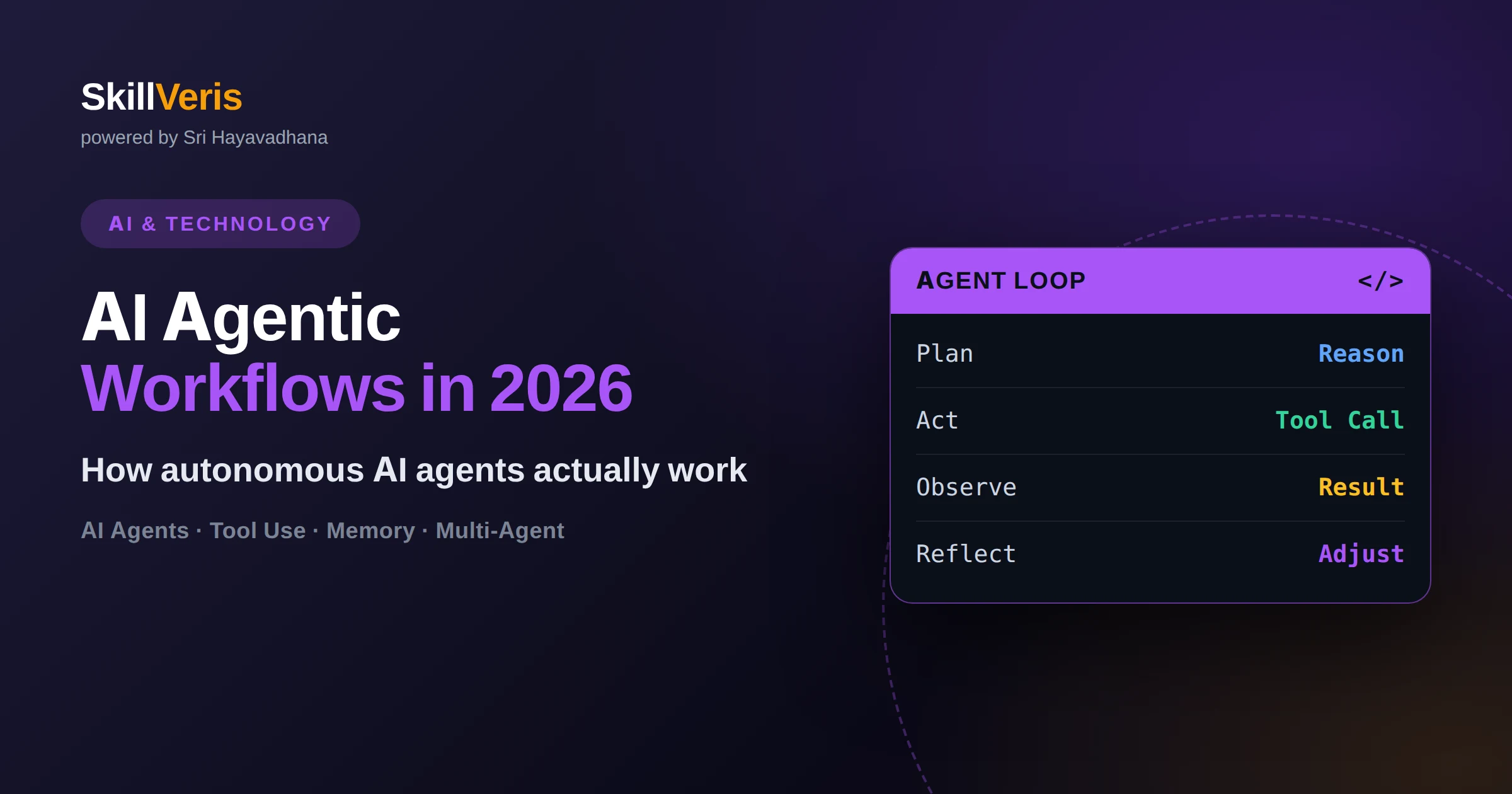
How AI Agentic Workflows Work in 2026
Agentic AI works by looping through plan, act, observe, and reflect steps, using tools and memory to complete multi-step goals autonomously.
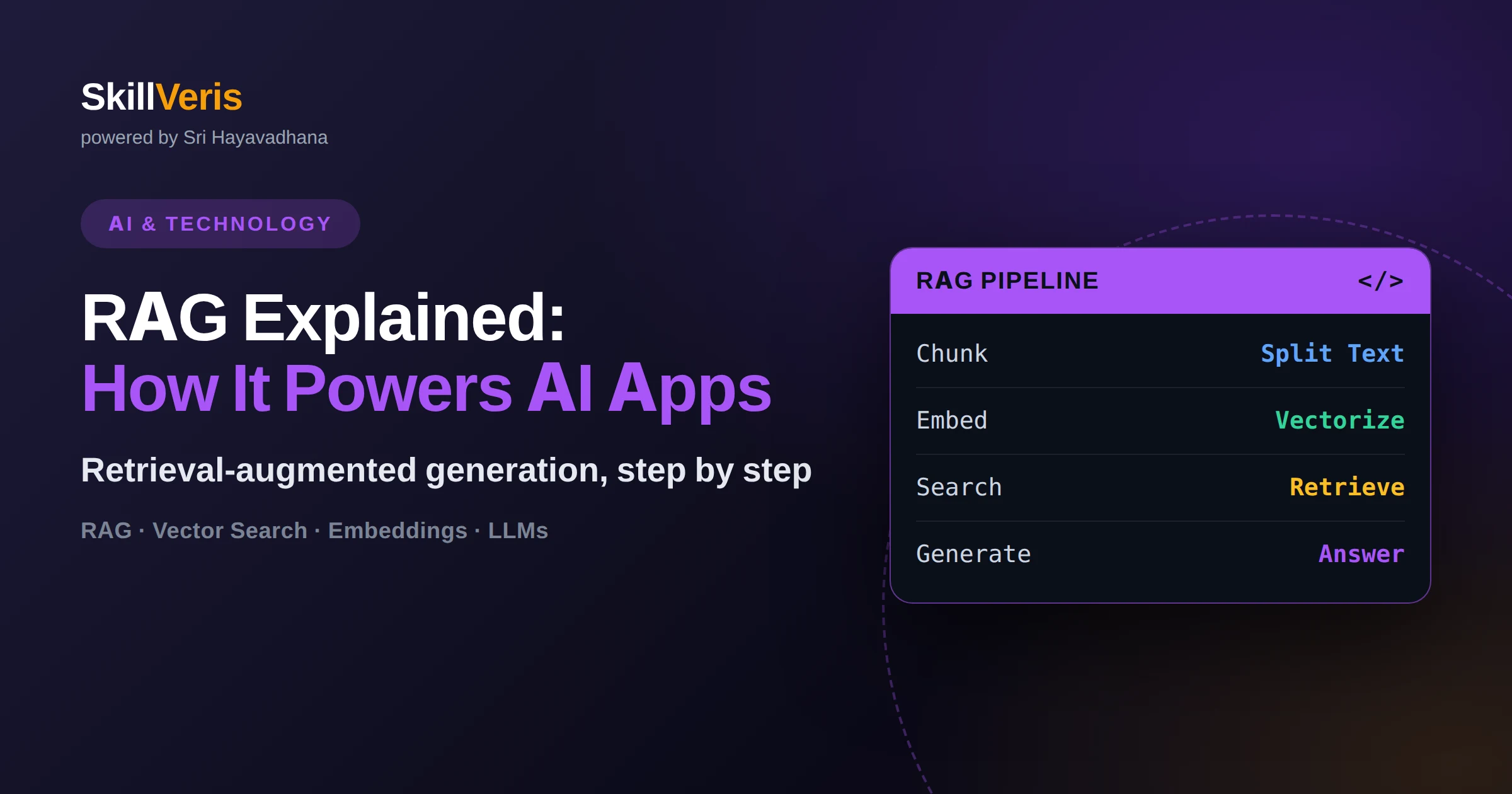
RAG Explained: How It Powers AI Apps
RAG grounds an LLM's answers in retrieved documents at query time, fixing hallucinations and stale knowledge without retraining the model.
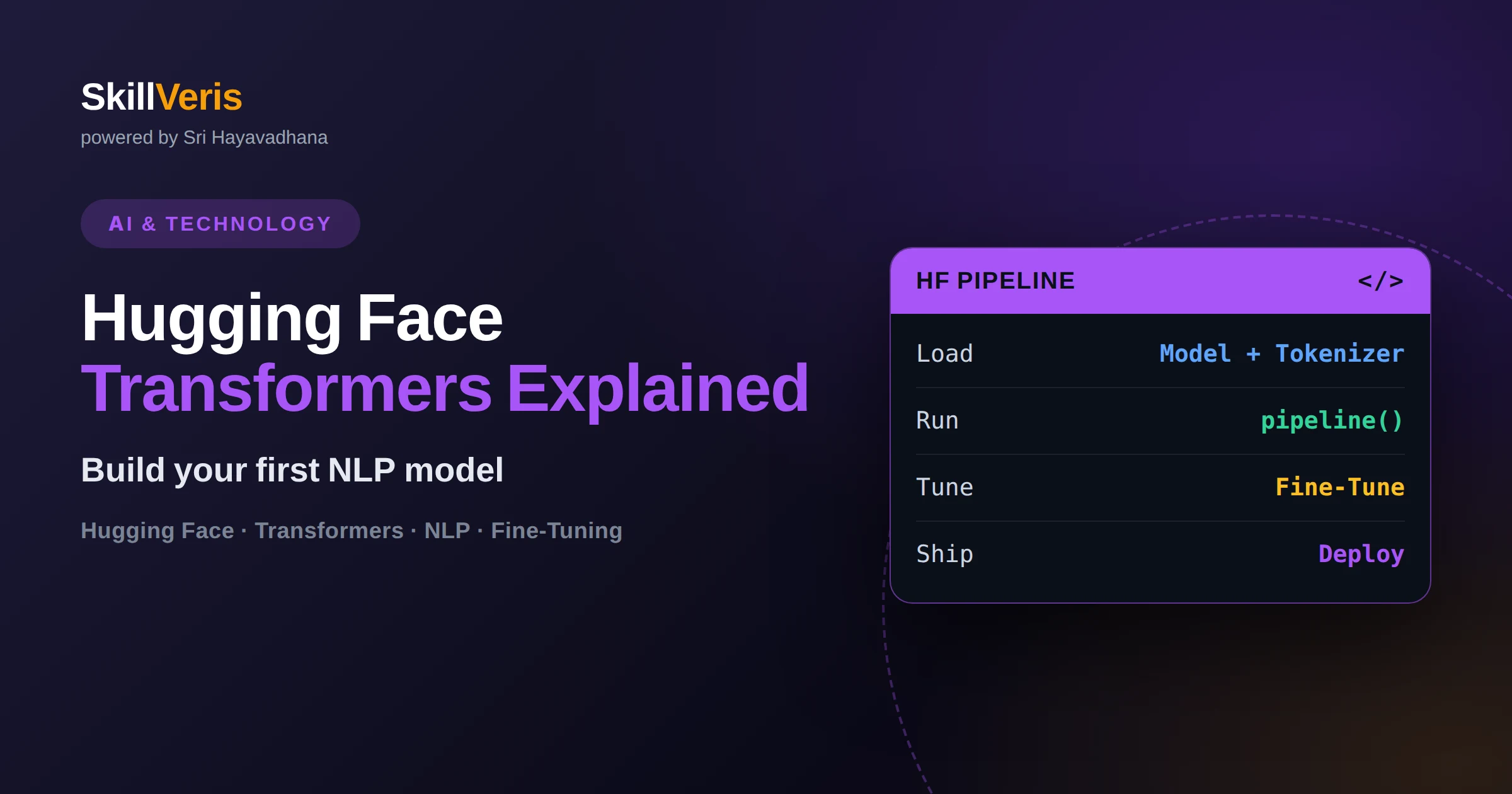
Hugging Face Transformers Explained
Hugging Face Transformers is a Python library that gives you pretrained NLP models in a few lines of code, no training from scratch required.
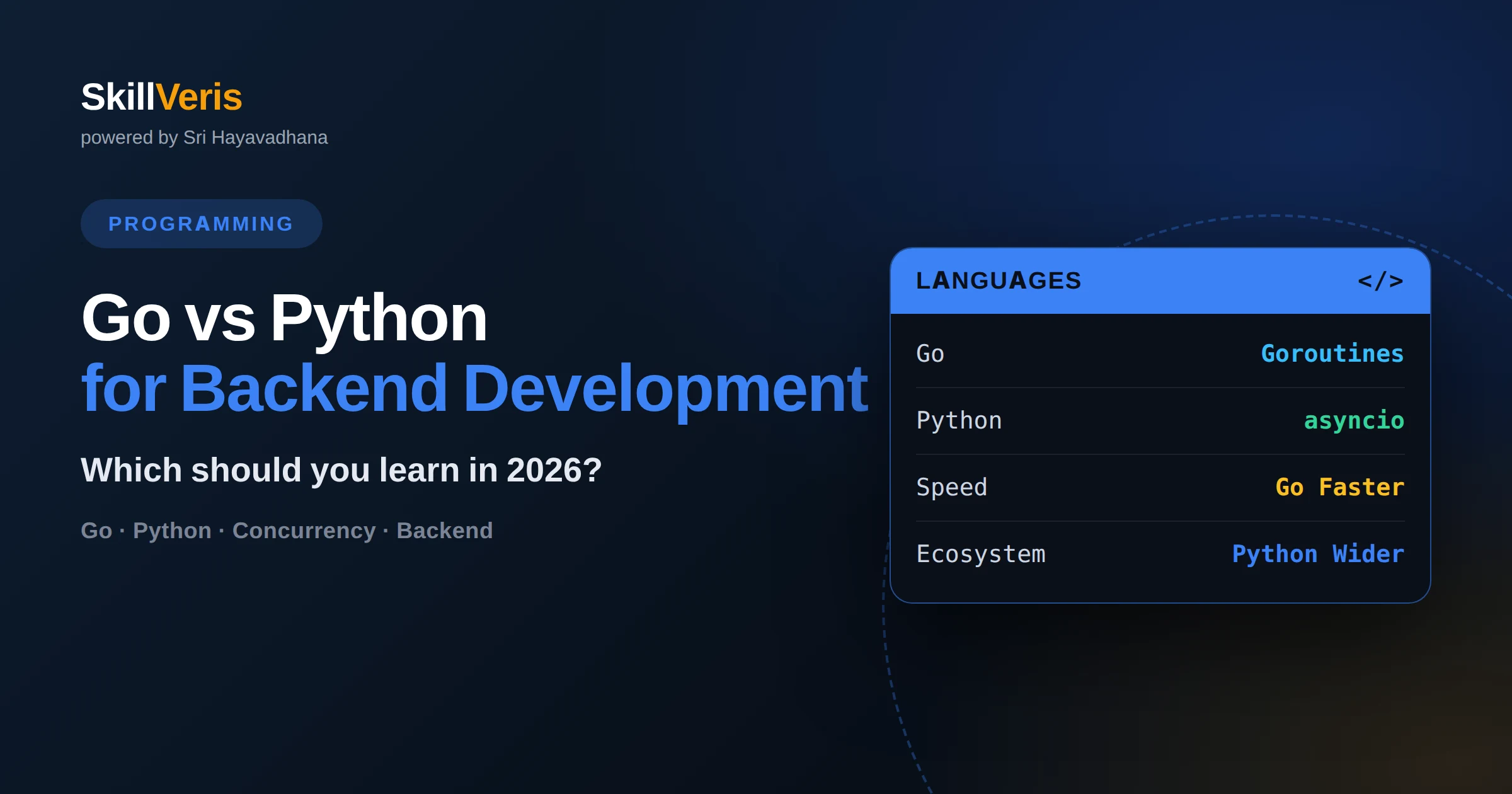
Go vs Python for Backend Development
Go wins for high-concurrency, low-latency infrastructure; Python wins for speed of development, AI integration, and ecosystem breadth.
What Is ChatGPT? A Practical Guide to the AI Chatbot
ChatGPT is an AI chatbot built on a large language model that generates human-like text from a prompt. This guide explains how it actually works, what it's good at, where it fails, and how to write prompts that get useful answers.
What Is Perplexity AI? The Answer Engine Explained
Perplexity AI is a search-and-answer tool that combines live web retrieval with a large language model to produce cited, sourced answers instead of a list of links. Here's how it works, how it differs from a chatbot, and when to use it.
What Is Python Used For? A Beginner's Guide
Python is a beginner-friendly, general-purpose programming language used for web development, data analysis, automation, and AI. This guide explains why it's popular, where it's used in the real world, and how to write your first script.
What Is GPT? Understanding GPT-4 and How It Works
GPT stands for Generative Pre-trained Transformer, a type of large language model that generates text by predicting the next most likely word based on patterns learned from massive training data. This guide explains how GPT-4 works and what sets it apart.
What Great Customer Service Looks Like Today
Customer service is the support a business provides before, during, and after a purchase to help people use a product and resolve problems. This guide covers core principles, channels, metrics, and how AI tools are reshaping the function.
What Is Ecommerce? Models, Platforms, and How It Works
Ecommerce is the buying and selling of goods or services over the internet, spanning business models like B2C, B2B, and C2C, and built on platforms that handle catalogs, payments, and fulfillment behind the scenes.
How to Write ChatGPT Prompts That Get Better Answers
Writing better ChatGPT prompts means giving clear context, a specific task, and the format you want the answer in, rather than a vague one-line question. This guide covers the core techniques with practical examples you can reuse.
ChatGPT 3.5 vs 4: What Actually Changed
ChatGPT 4 is meaningfully more accurate, better at reasoning through multi-step problems, and able to handle images, while GPT-3.5 remains faster and cheaper for simple tasks. This guide breaks down when the difference actually matters.
What Is DALL-E? AI Image Generation Explained
DALL-E is an AI model that generates original images from a written text description, trained to connect language and visual concepts. This guide explains how it works, what it is good at, and its practical limitations.
What Is Data Annotation in Machine Learning?
Data annotation is the process of labeling raw data so a machine learning model can learn from it. This guide explains how annotation works, common types, quality control, and what a data annotator role actually involves.
AI in Data Science: How the Two Fields Connect
AI in data science refers to how artificial intelligence techniques, especially machine learning, are used within the broader data science workflow to build predictive models and automate analysis. This guide explains how the two fields overlap.
What Is Artificial General Intelligence? AGI Explained
Artificial general intelligence describes a hypothetical AI system that can understand and learn any intellectual task a human can, unlike today's specialized AI tools. This guide explains AGI, how it differs from current AI, and open debates.
Types of Neural Networks Explained Simply
Neural networks come in several architectures, each suited to a different kind of data, from images to sequences to graphs. This guide breaks down the major types, what makes each one distinct, and where each is typically applied.
AI Engineer Salary: What Determines Your Earning Potential
AI engineer earning potential depends far more on demonstrated skill with real systems than on a job title alone. This guide breaks down the factors that actually move the needle: specialization, experience, industry, and location.
AI vs Generative AI: How They're Actually Different
Artificial intelligence is the broad field of building systems that perform tasks requiring intelligence, while generative AI is a specific subset focused on creating new content. Here's exactly where the line falls.
What Is Digital Art? Tools, Styles, and How to Start
Digital art is any visual artwork created or modified using digital technology, from tablet drawings to 3D renders and generative pieces. This guide covers the main styles, the software behind them, and how newcomers can start creating their own work.
Automation vs AI: What's the Real Difference?
Automation follows fixed, pre-written rules, while AI learns patterns from data and adapts its output. This guide explains the practical difference between automation and AI, where each fits, and when combining them works best.
The Real Advantages of AI (And Where It Still Falls Short)
AI's biggest advantages are speed, consistency, and the ability to find patterns in data at a scale humans cannot match. This guide explains where AI genuinely helps, where it still needs human oversight, and how to start learning it.
AGI vs AI: What Actually Separates Them?
AGI, or artificial general intelligence, refers to a system that can reason and learn across any task at a human level, while today's AI excels only within narrow, trained domains. This guide explains the distinction clearly, without the hype.
What Is Quantum AI? Quantum Computing Meets Machine Learning
Quantum AI combines quantum computing hardware with machine learning algorithms to potentially solve certain problems faster than classical computers. This guide explains the concept honestly, including how far along the technology really is.
What Is Data Mining? A Practical Introduction
Data mining is the process of discovering patterns, correlations, and anomalies in large datasets to support decisions. This guide explains the core techniques, the typical workflow, and where data mining fits alongside analytics and machine learning.
Artificial Neural Networks: How They Work, Explained Simply
An artificial neural network is a computing model made of layered nodes that learns patterns from data by adjusting internal weights during training. This guide explains its structure, how it learns, and where it is used today.
What Is Grok? xAI's Chatbot Explained
Grok is xAI's conversational AI assistant, built to answer questions with real-time awareness and a more irreverent tone than most chatbots. This guide explains how it works, what sets it apart, and where it fits among large language models.
LSTM Neural Networks Explained Simply
An LSTM, or Long Short-Term Memory network, is a type of neural network built to remember patterns across long sequences of data. This guide explains how LSTMs work, why they were created, and where they're still used today.
What Is Stemming in NLP? A Plain-English Guide
Stemming is a text-processing technique that chops words down to a rough root form so a computer can treat running, runs, and runner as the same word. This guide explains how it works, where it is used, and how it differs from lemmatization.
Machine Vision vs Computer Vision: What's the Difference?
Machine vision refers to industrial systems using cameras and rule-based image processing for tasks like quality inspection, while computer vision is the broader field of teaching computers to interpret images with AI. This guide breaks down the difference.
AI Programming Languages: Which One Should You Learn?
Python leads AI development thanks to its libraries and readability, but R, Julia, C++, and Java each have a place. This guide breaks down which language fits which AI task, from prototyping to production deployment.
What Does a Life Coach Actually Do?
A life coach helps clients set goals and build the habits and mindset to reach them, acting as an accountability partner rather than a therapist. This guide explains what the role covers, how sessions work, and how AI tools now support the practice.
How to Use ChatGPT to Improve Your Resume
ChatGPT can rewrite bullet points, tighten wording, and tailor a resume to a specific job description, but it works best as an editor rather than the original author of your experience. This guide covers effective prompts and common pitfalls to avoid.
AI in Healthcare: How Machine Learning Is Changing Care
Artificial intelligence in healthcare uses machine learning to support diagnosis, streamline administrative work, and personalize treatment planning. This guide covers where AI is genuinely helping and its real limitations.
The ChatGPT API Explained: How to Use It
The ChatGPT API lets developers send conversation messages to a language model and receive generated responses programmatically. This guide covers how the API works, core parameters, and common use cases.
Quantization Explained: Shrinking Models Without Losing Power
Quantization reduces the numerical precision of a model's weights so it runs faster and fits in less memory. This guide explains how the quantization parameter works, why it matters for deploying AI, and how to choose the right precision level.
Best ChatGPT Alternatives and How to Choose One
A ChatGPT alternative is any conversational AI tool built on a different large language model that serves a similar purpose. This guide explains the main categories of alternatives, how they differ, and how to choose one for your needs.
10 Cool, In-Demand Tech Jobs to Explore in India
The most interesting tech jobs in India today span AI, cloud, data, cybersecurity, and product roles that combine strong growth with genuinely engaging daily work. This guide walks through ten roles worth exploring and how to start toward each.
How to Use an LLM Notebook Effectively
An LLM notebook works best when you feed it curated source material and ask specific, grounded questions rather than open-ended ones. This guide covers practical habits for getting accurate, useful answers from notebook-style AI tools.
Tokenization in NLP: How Machines Break Down Text
Tokenization is the process of splitting text into smaller units a model can process, and it is the first step in nearly every NLP pipeline. This guide explains how tokenization works, common strategies, and why it matters for language models.
AI Cloud Services: How Cloud Platforms Power Modern AI
AI cloud services let teams train, deploy, and scale machine learning models without owning specialized hardware. This guide explains what these platforms offer, how they differ, and how to choose the right one for a given project.
Building AI Agents: Architecture, Tools and Control Loops
An AI agent is a language model wrapped in a control loop that perceives state, decides on an action, calls a tool and observes the result until a stopping condition fires. This guide shows how to build that loop, design tool interfaces, add memory, and stop the agent before it burns your budget.
LLM Fundamentals: How Language Models Are Built and Behave
A large language model predicts the next token from a sequence, and almost every behaviour that surprises you in production follows from that one fact. This guide connects tokenization, pretraining, fine-tuning, decoding and context limits into a single mental model you can use while debugging real systems.
AI Coding Assistants at Work: Workflow, Review and Limits
AI coding assistants pay off on well-specified, pattern-heavy work and cost you time on novel design. This guide places them precisely in the development loop, gives you a review order that catches machine-specific defects, and names the failure modes — hallucinated APIs, silent context truncation, leaked secrets — you need to watch for.
LLM Inference Optimization: Latency, Throughput and Cost
Latency, throughput and cost pull against each other in LLM serving, and most optimisation advice fails because it ignores which one you are actually optimising. This guide separates the three goals, maps each technique to the goal it moves, and names the quality or memory price each one charges.
PyTorch Deep Learning: How Training Loops Actually Work
A PyTorch training loop is four explicit steps — forward pass, loss, backward pass, optimiser step — and understanding them is what lets you debug a model rather than guess at it. This guide walks the loop end to end, explains autograd's graph, and names the failure modes each step produces.
Responsible AI Engineering: Risk, Governance and Controls
Responsible AI becomes real when principles turn into controls you can point at in code: a review gate before launch, structured logs of every model call, an escalation path when output goes wrong, and one named owner per system. This article shows how to build those controls into an ordinary delivery pipeline.
The Scientific Python Stack: NumPy, SciPy and Friends
The scientific Python stack is built on one data structure: NumPy's ndarray, a typed block of contiguous memory with shape and stride metadata. SciPy, pandas, scikit-learn and the deep learning frameworks all sit on that foundation, and understanding it explains their performance, their errors and their interoperability.
Shipping AI Features: Engineering Practices for LLM Products
Shipping an LLM feature is a delivery lifecycle, not a prompt. You scope the task so success is checkable, build an evaluation set before you tune anything, roll out behind a flag, instrument the funnel, and cap cost per user. This guide walks that lifecycle end to end and names the failure mode at each stage.
RAG Systems: A Practical Architecture Guide
A retrieval-augmented generation system is five stages — ingestion, indexing, retrieval, reranking and generation — and answer quality is set by the weakest one. This guide walks each stage, the decisions inside it, the failure it produces when it goes wrong, and how to measure the stages separately.
AI and Data Certifications: Matching an Exam to Your Role
Choose an AI or data certification by starting from the job you do or want, not from the vendor brand. This guide sorts the major exams into four role families — data engineering, applied ML, ML platform and analytics — explains what each actually tests, and covers when studying for one is the wrong investment.
LLM Evaluation: Building a Test Suite for Generative Output
You can test non-deterministic output by fixing the inputs, grading against a rubric rather than an exact string, and gating releases on aggregate thresholds instead of per-case pass or fail. This guide shows how to assemble that suite: dataset, scorers, run harness, thresholds and the CI wiring that makes it enforceable.
AI Portfolio Projects: Choosing One That Shows Judgment
A strong AI portfolio project is defined by its evaluation and its constraints, not by the model behind it. Choose a task where correctness is measurable, build the harness that measures it, handle the failure cases honestly, and write up what you rejected — that combination is what distinguishes engineering from an API call in a wrapper.
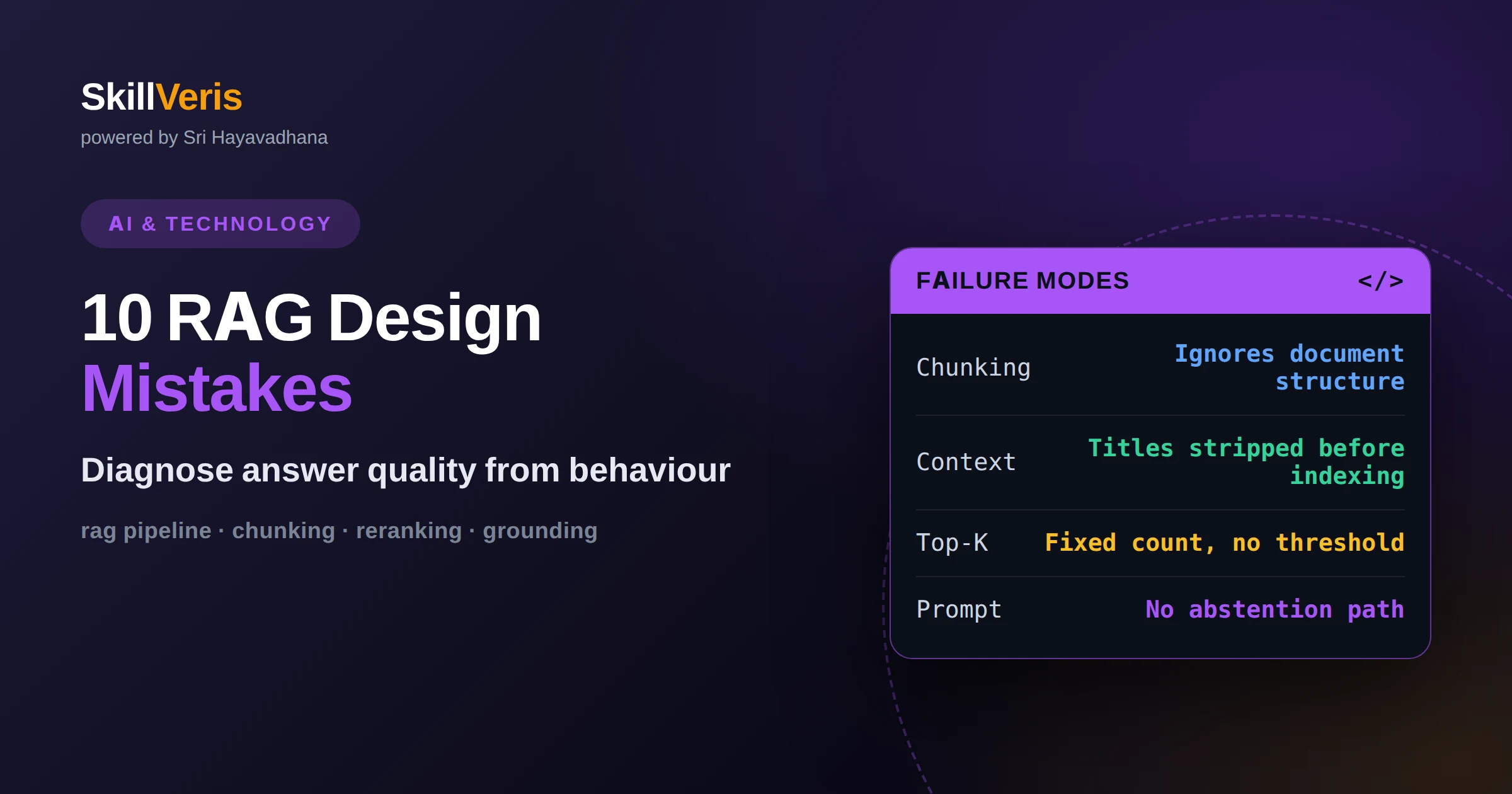
10 RAG Design Mistakes That Quietly Hurt Answer Quality
Most RAG quality problems are design errors, not model errors, and each one produces a recognisable symptom. This walks through ten recurring mistakes — from chunking that severs context to prompts that never tell the model what to do with weak evidence — and names the symptom each produces so you can diagnose from behaviour.
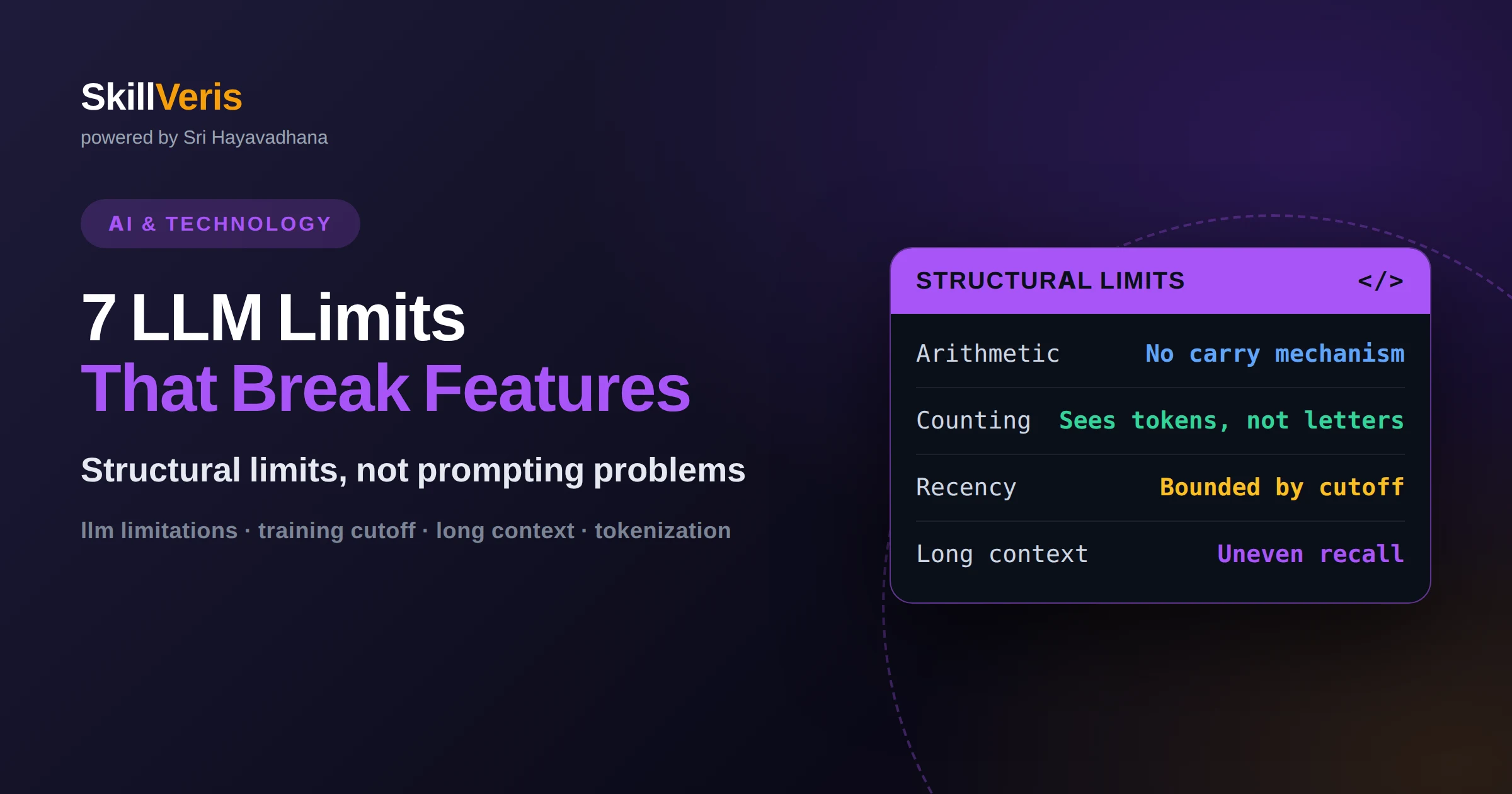
7 LLM Limitations That Break Naive Product Features
Seven limits are structural, not bugs waiting to be patched: arithmetic, counting, recency, self-knowledge, ordering, consistency and long-context recall. Read this to recognise each failure in your own product, know which workaround actually fixes it, and stop shipping features that only work in the demo.
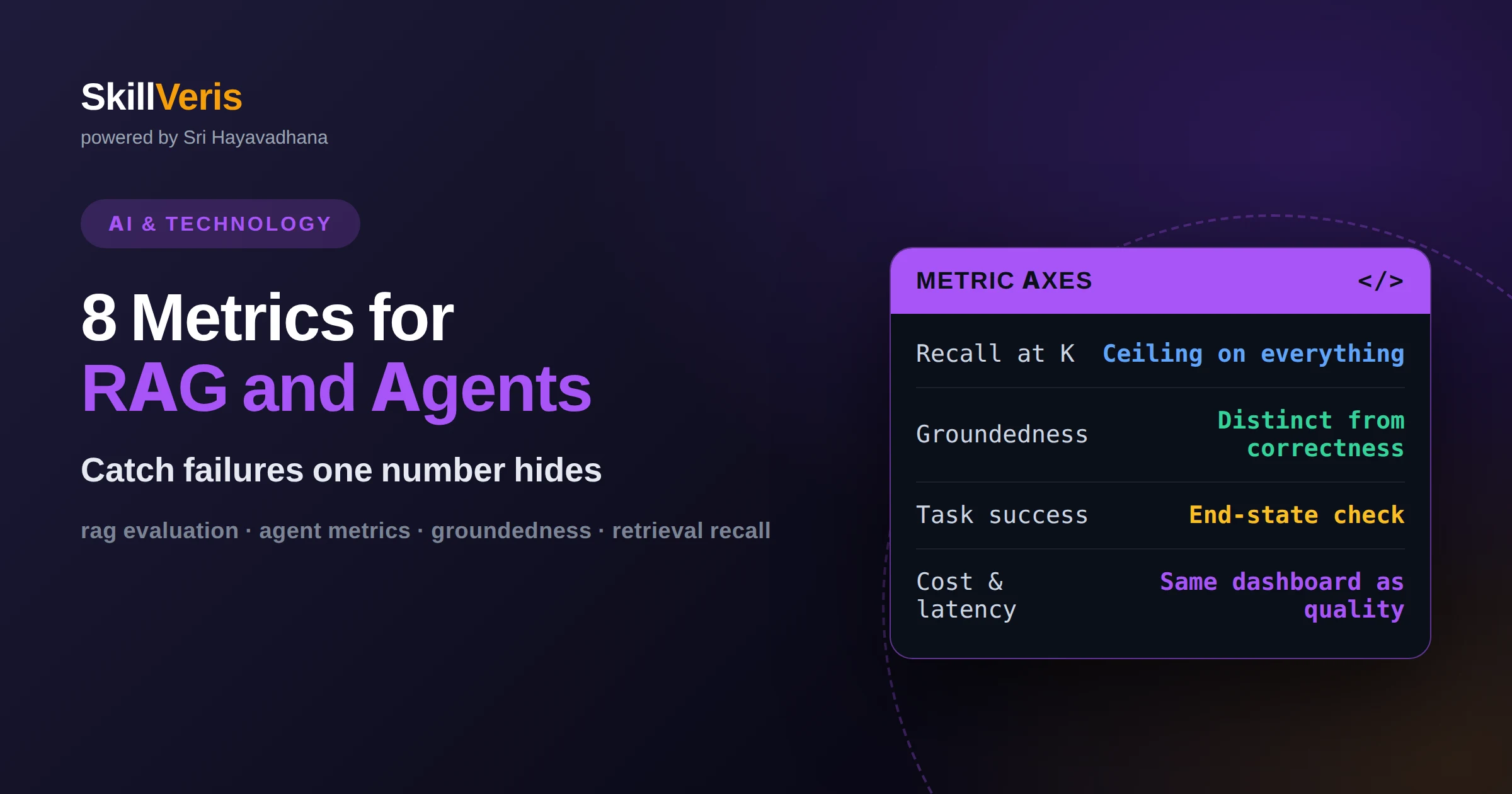
8 Metrics for Evaluating RAG and Agent Systems
No single metric tells you whether a RAG or agent system works, because retrieval, grounding, task completion and cost fail independently. These eight metrics cover the distinct failure modes, what each one catches that the others miss, and how to compute each on your own data.
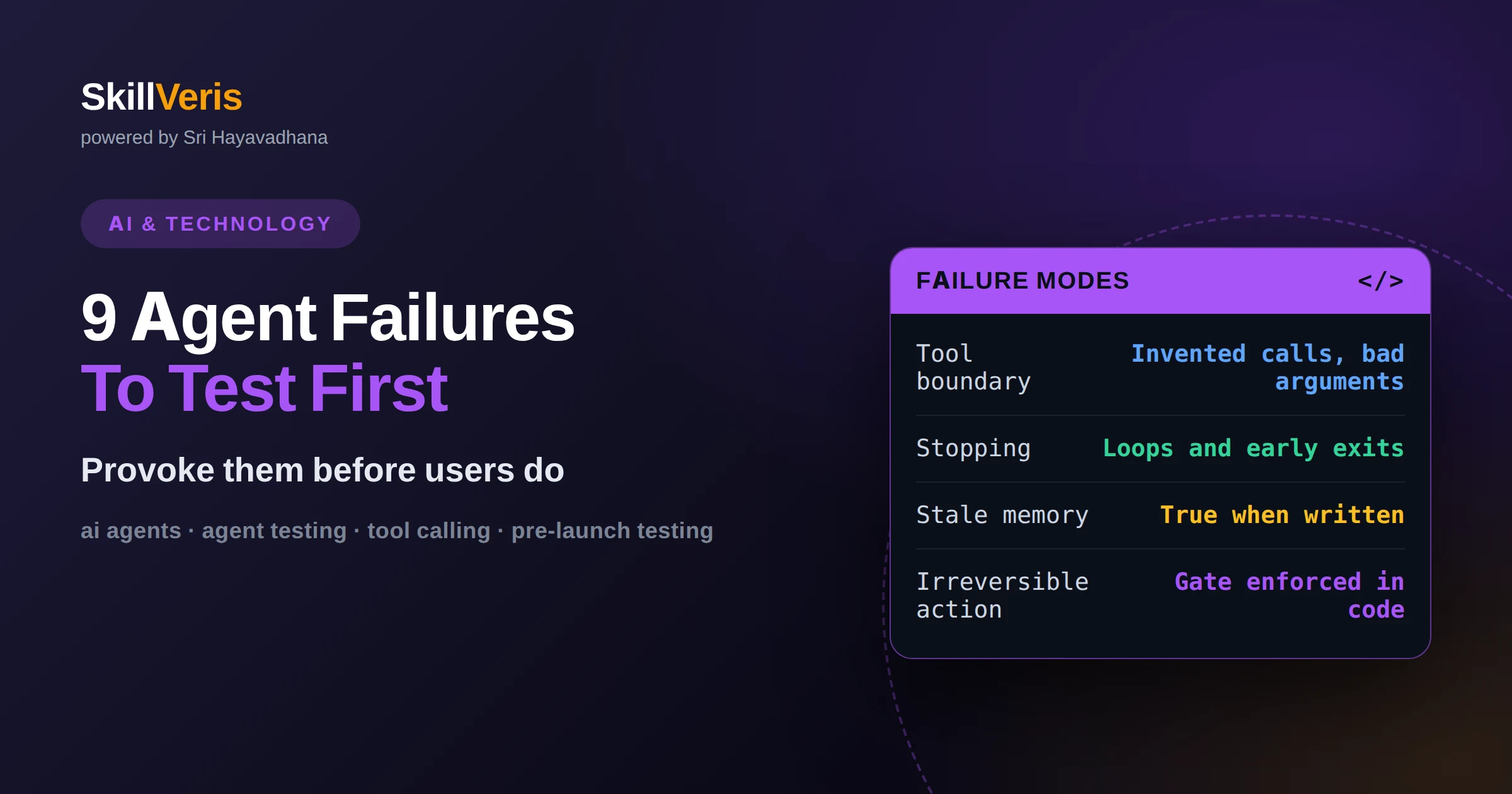
9 Agent Failure Modes to Test Before You Launch
Agents fail in a small number of recognisable ways, and nearly all of them can be provoked deliberately before a user finds them. This article names nine failure modes, from invented tool calls to stale memory and irreversible actions, and gives a concrete test for each that belongs in a pre-launch suite.
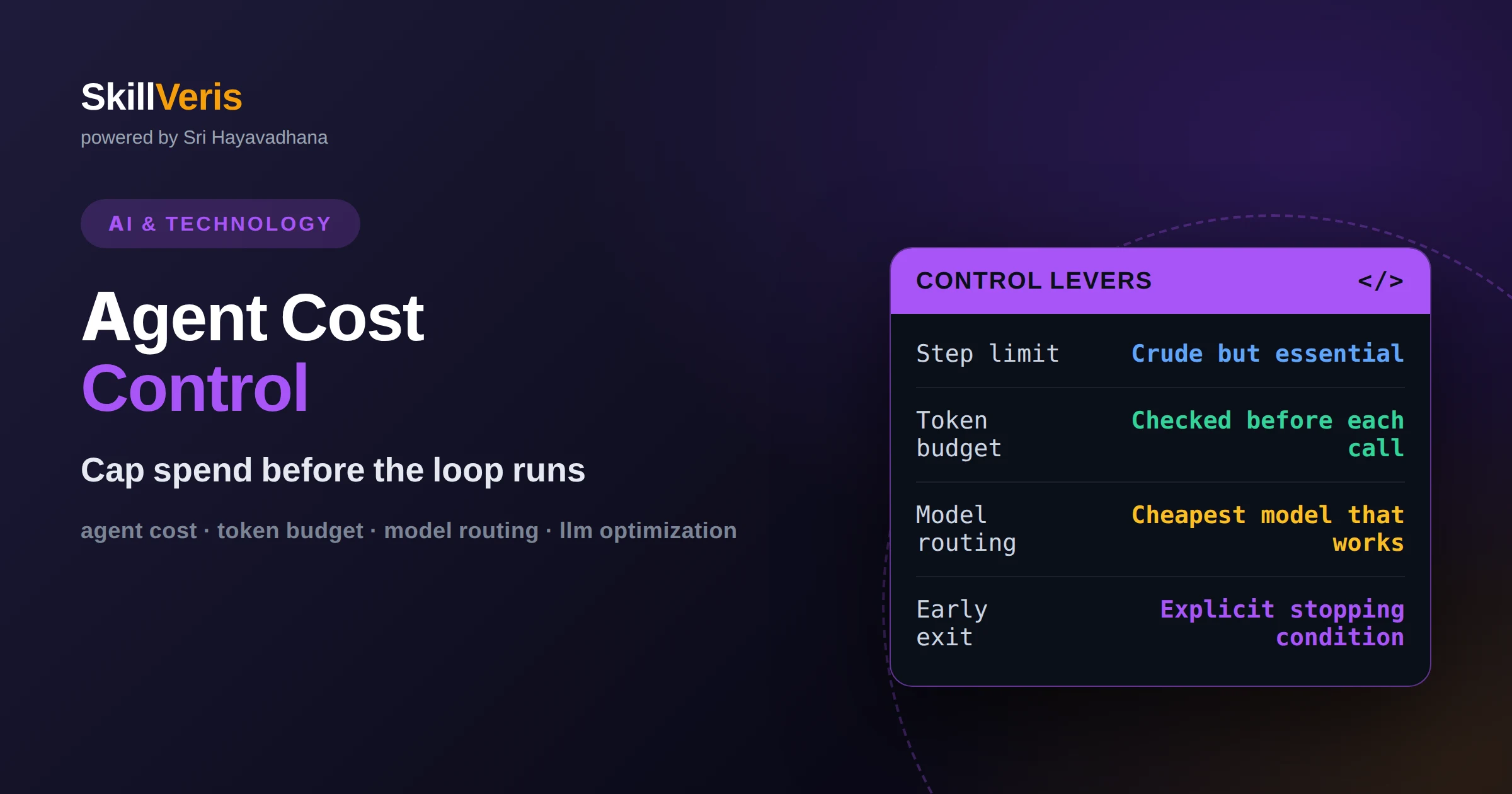
Agent Cost Control: Step Limits, Budgets and Early Exits
Agent cost is controlled by three mechanisms: a hard step limit, a per-run token budget checked before each call, and an early exit when the answer is already good enough. This article shows how to implement all three, plus model routing per step type.
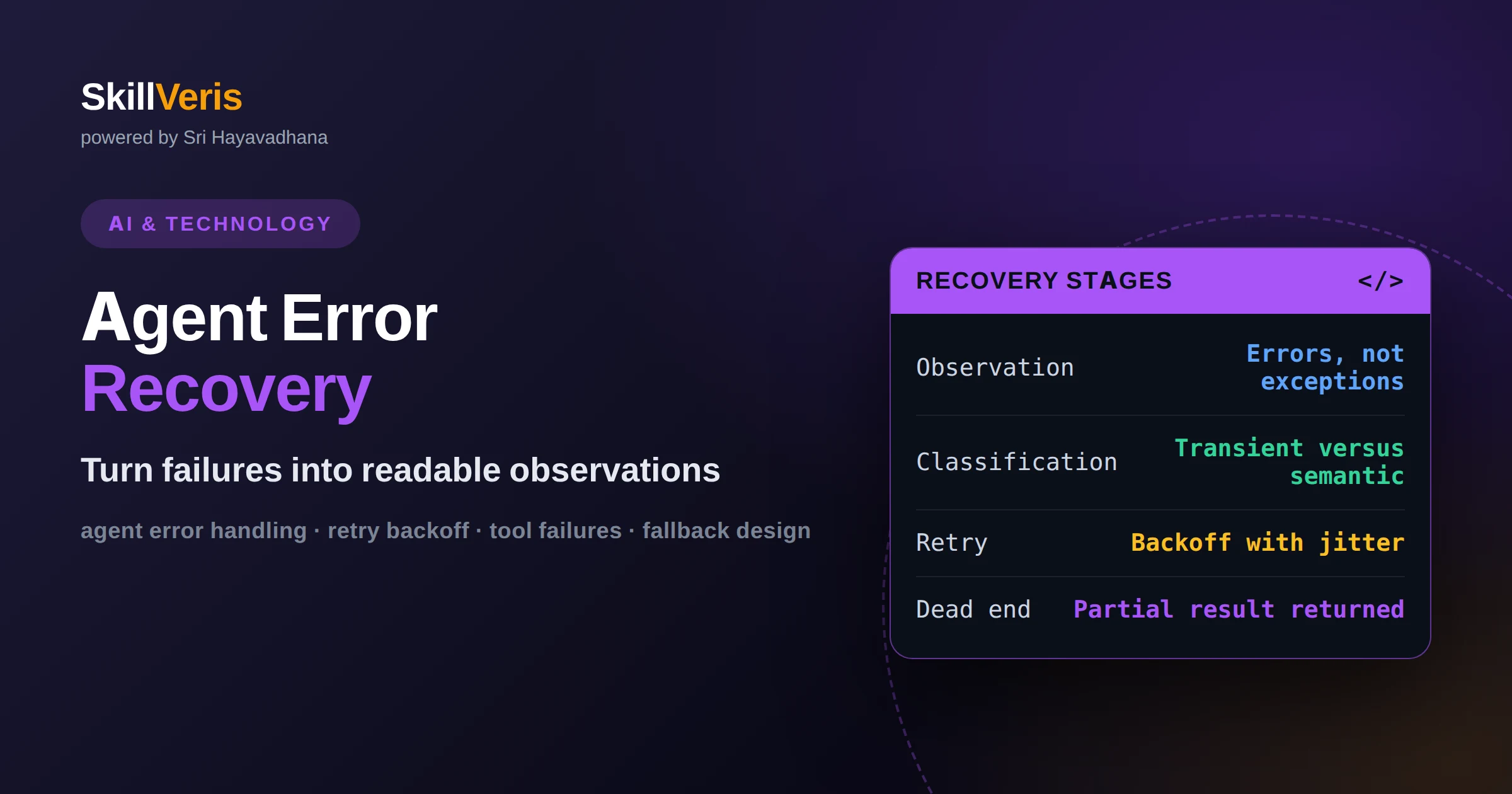
Agent Error Recovery: Retries, Fallbacks and Dead Ends
An agent recovers from a tool failure only if the failure reaches it as a readable observation rather than an exception. This covers turning errors into structured observations, deciding what the runtime retries versus what the model retries, and setting the give-up rules that stop a run looping forever.
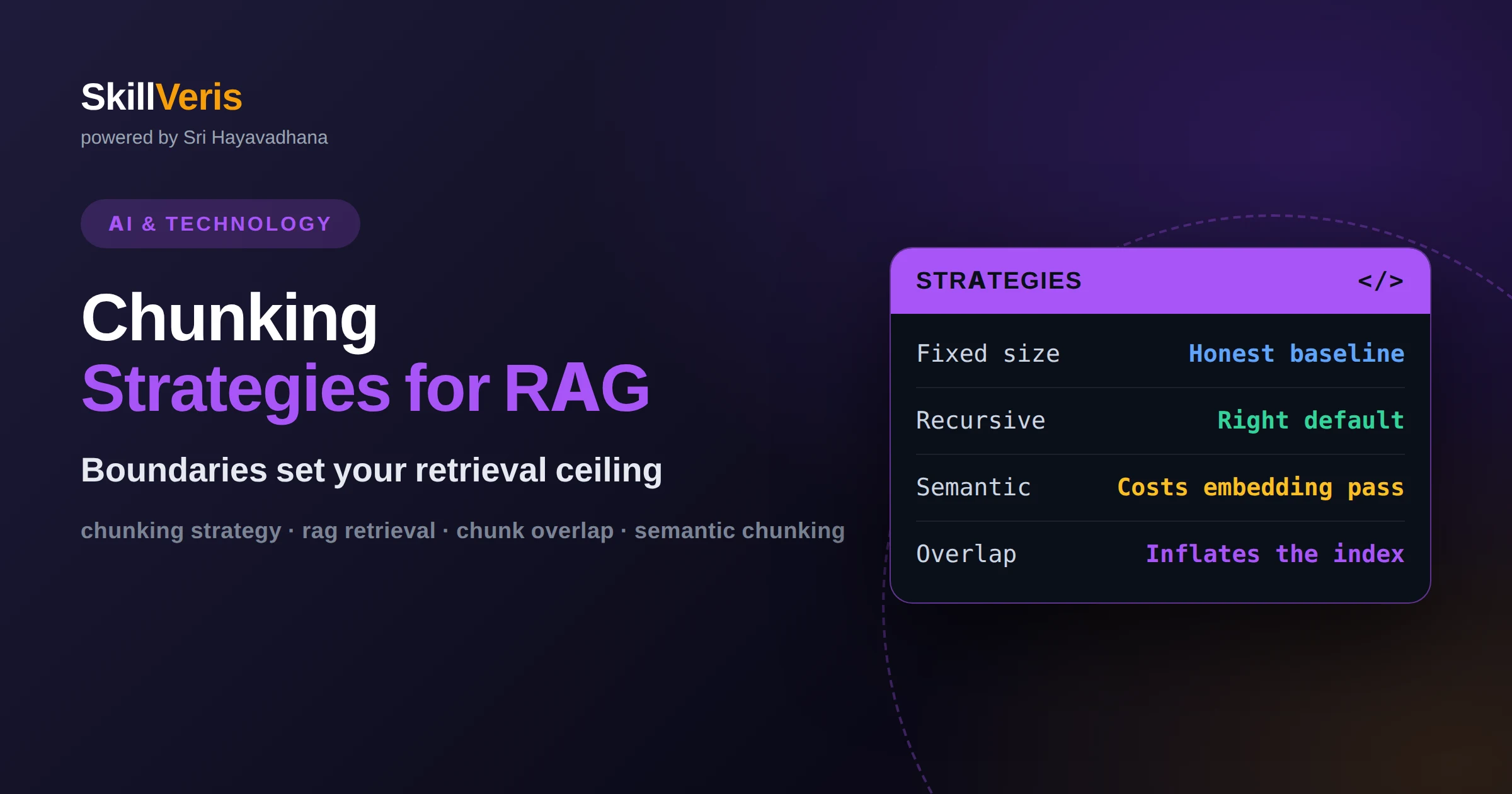
Chunking Strategies for RAG: Fixed, Recursive and Semantic
Fixed-size chunking is the fastest baseline, recursive splitting respects document structure, and semantic chunking pays off only on unstructured prose. This compares the three on retrieval quality, shows where overlap earns its cost, and gives you an evaluation loop to decide on your own corpus.
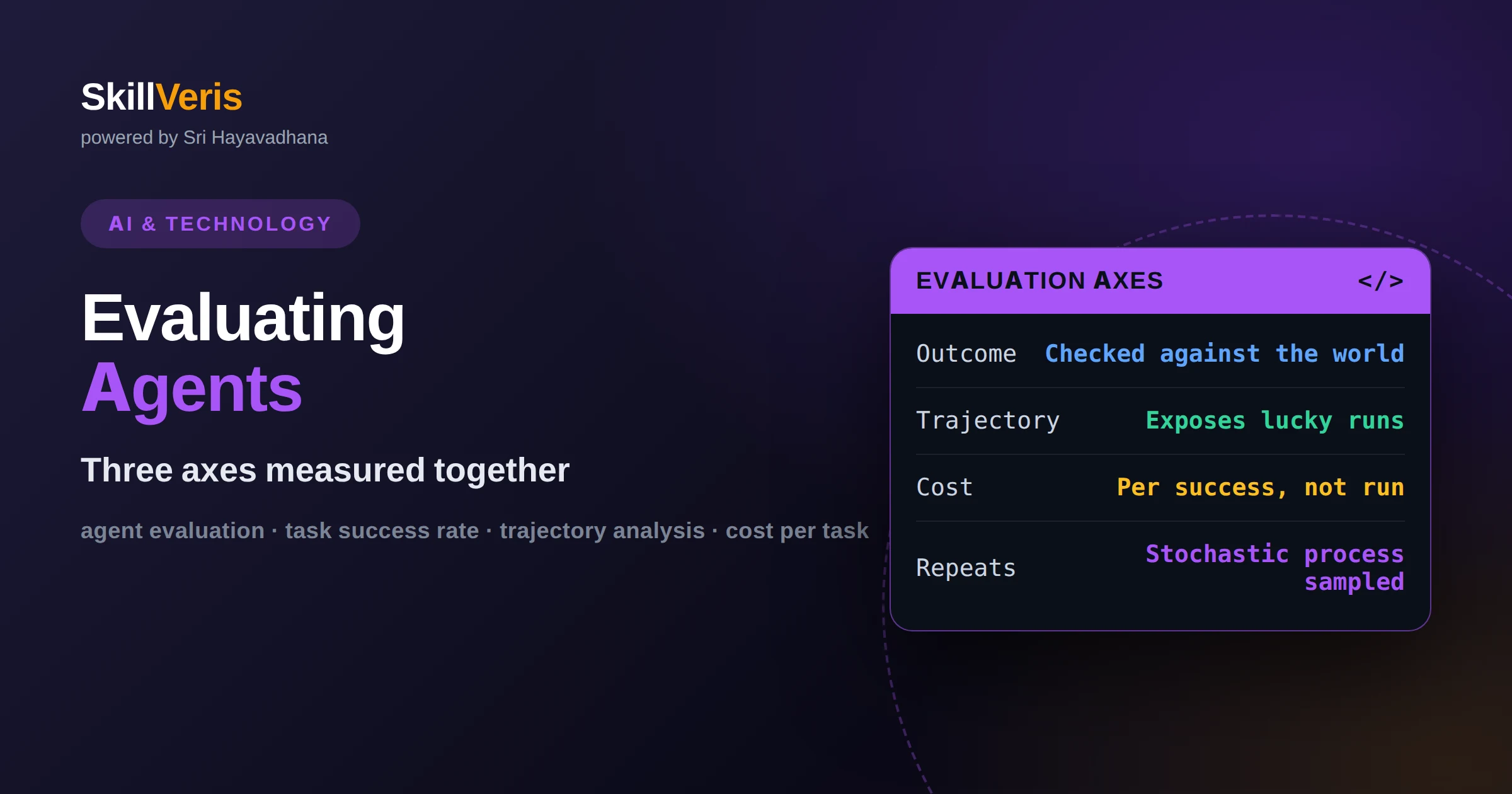
Evaluating Agents: Task Success, Trajectory and Cost
Judge an agent on three axes at once: whether the task ended in the correct state, whether the path there was sound, and what it consumed getting there. Outcome alone rewards lucky runs, so you need process and cost metrics to tell a reliable agent from one that guessed well.
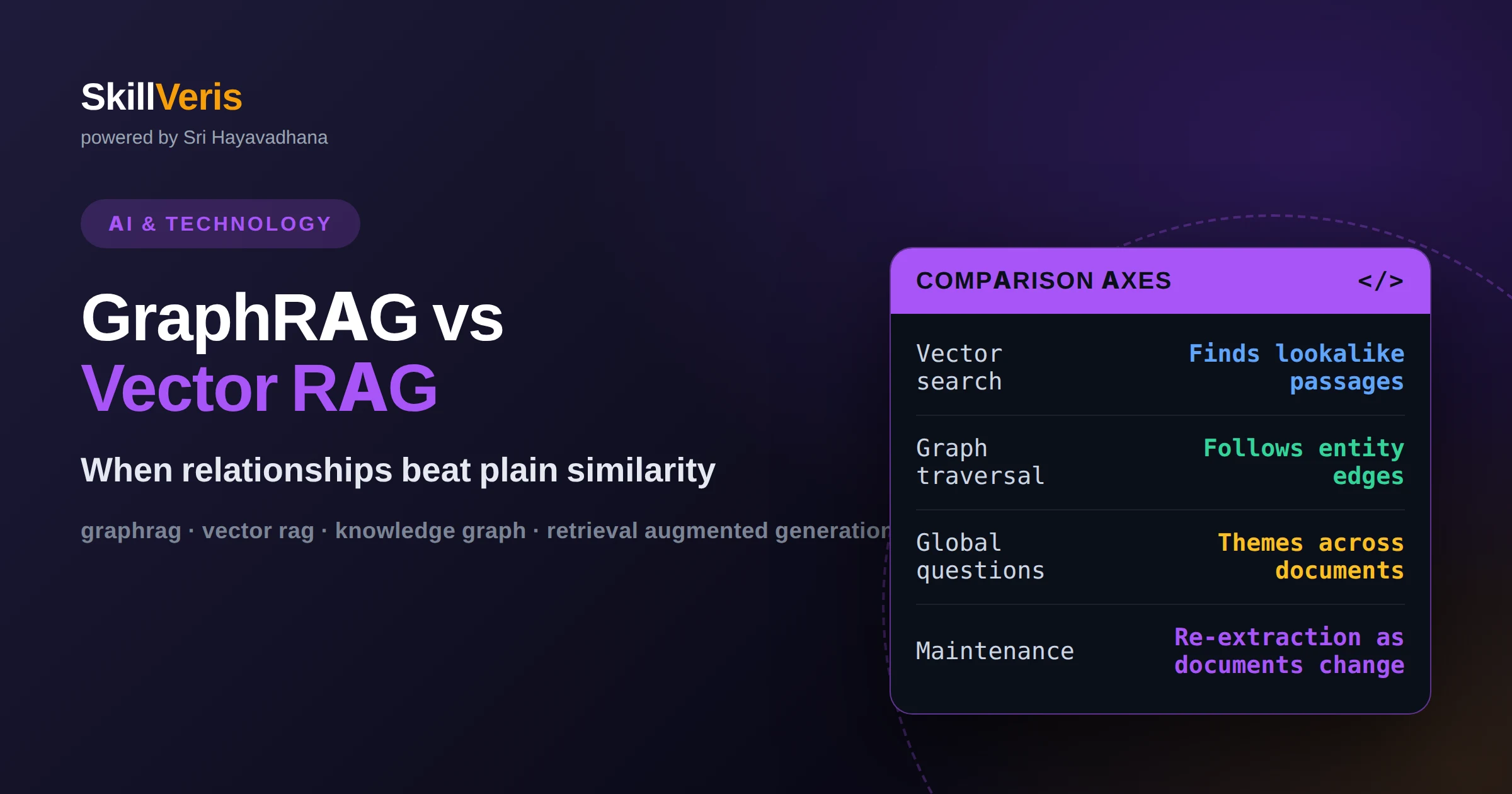
GraphRAG vs Vector RAG: When Relationships Beat Similarity
Vector RAG retrieves passages that look like the question; GraphRAG retrieves entities and the edges between them. This article compares the two on multi-entity and aggregation questions, on build and maintenance cost, and gives a test for deciding which your corpus actually needs.
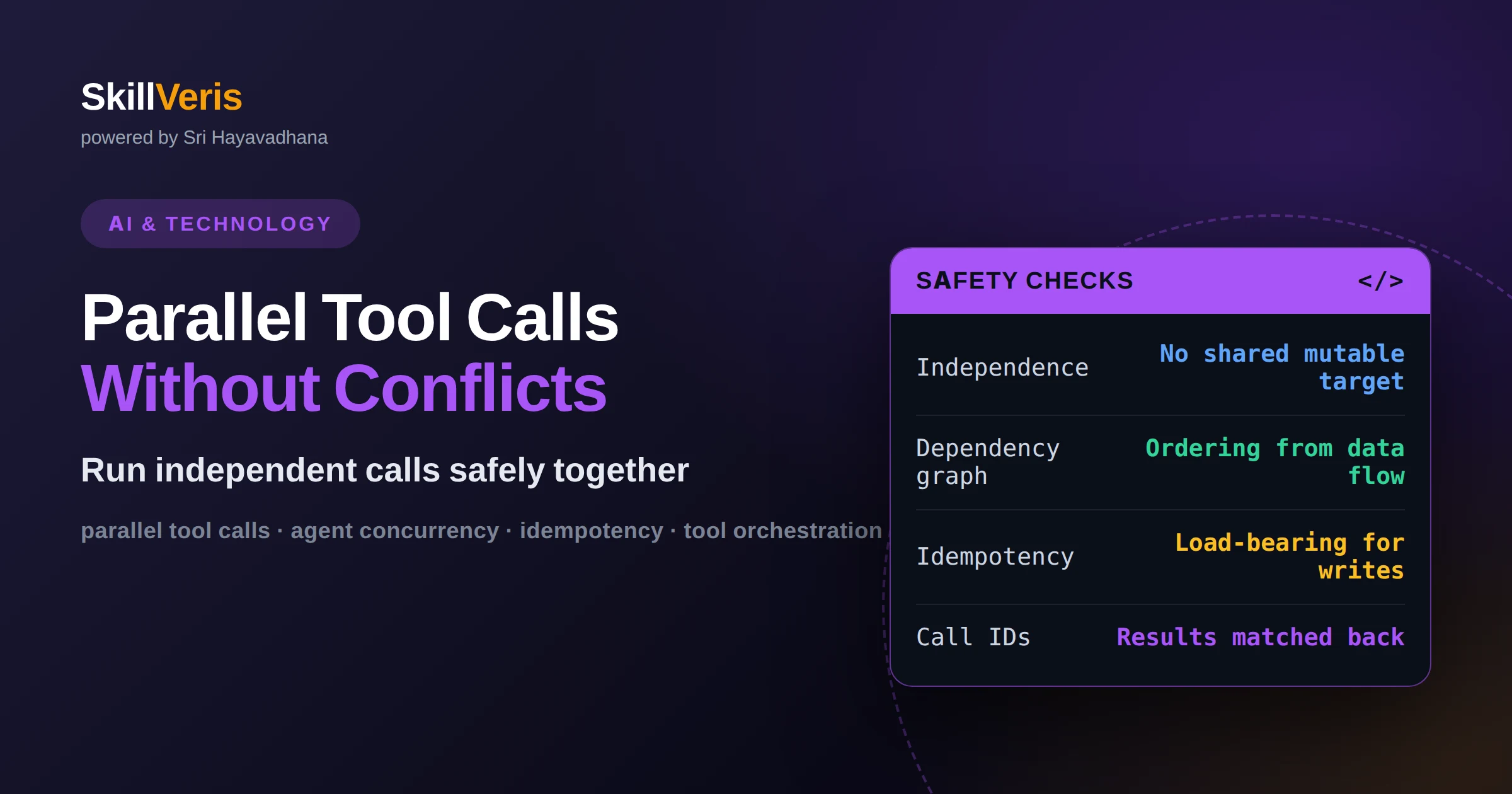
How Agents Run Parallel Tool Calls Without Conflicts
Agents run tool calls in parallel safely when the calls are independent, idempotent and free of shared mutable state. This article covers how models emit multiple calls in one turn, how to build a dependency graph, and the concurrency failures that only appear under load.
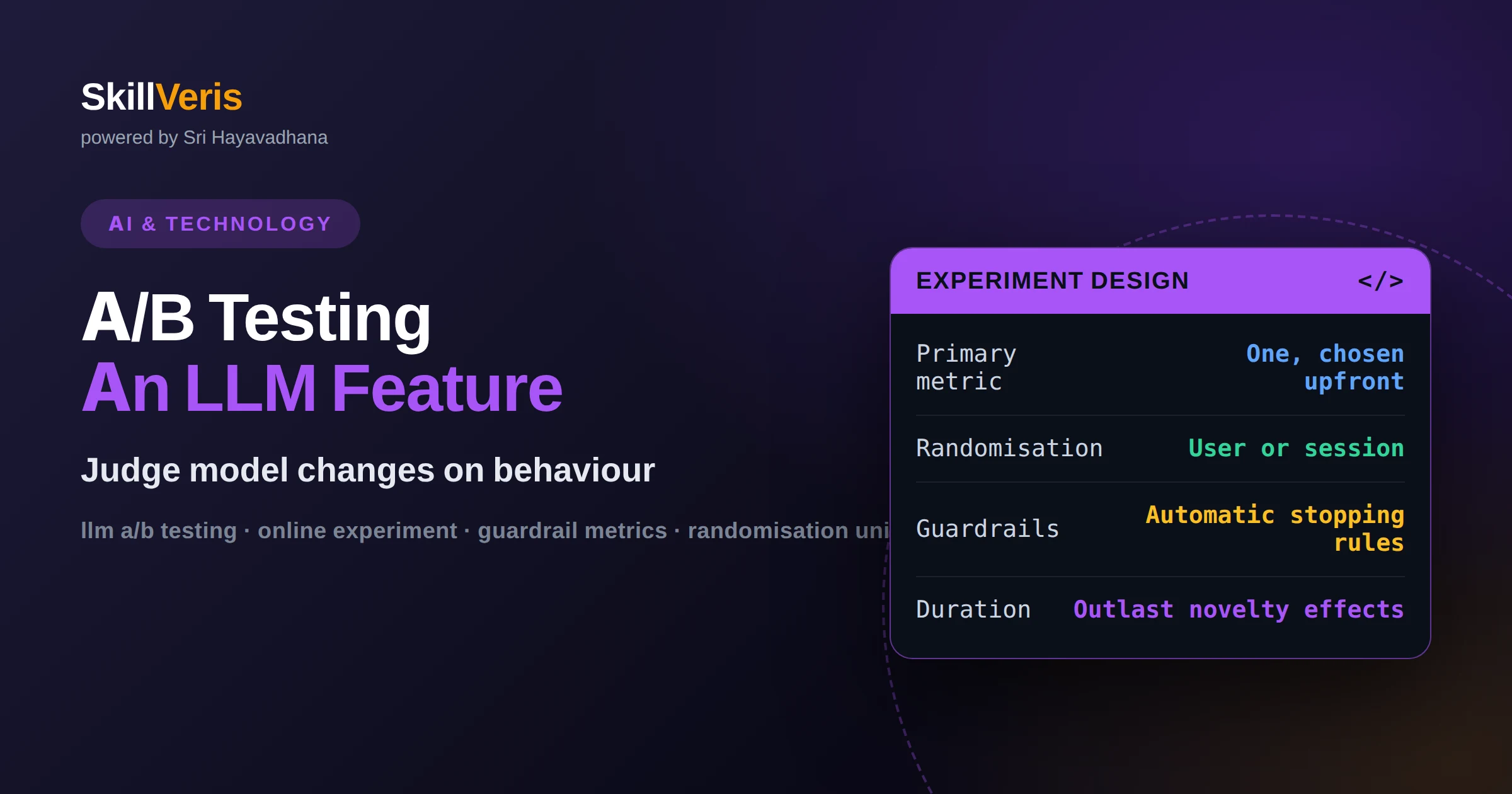
How to A/B Test an LLM Feature With Real Users
Judge model changes on behaviour, not on offline scores. Pick one primary behavioural metric, define guardrails that stop the experiment automatically, randomise at the unit users actually experience, and hold the test long enough for the slow signals — retention and follow-up rate — to arrive.
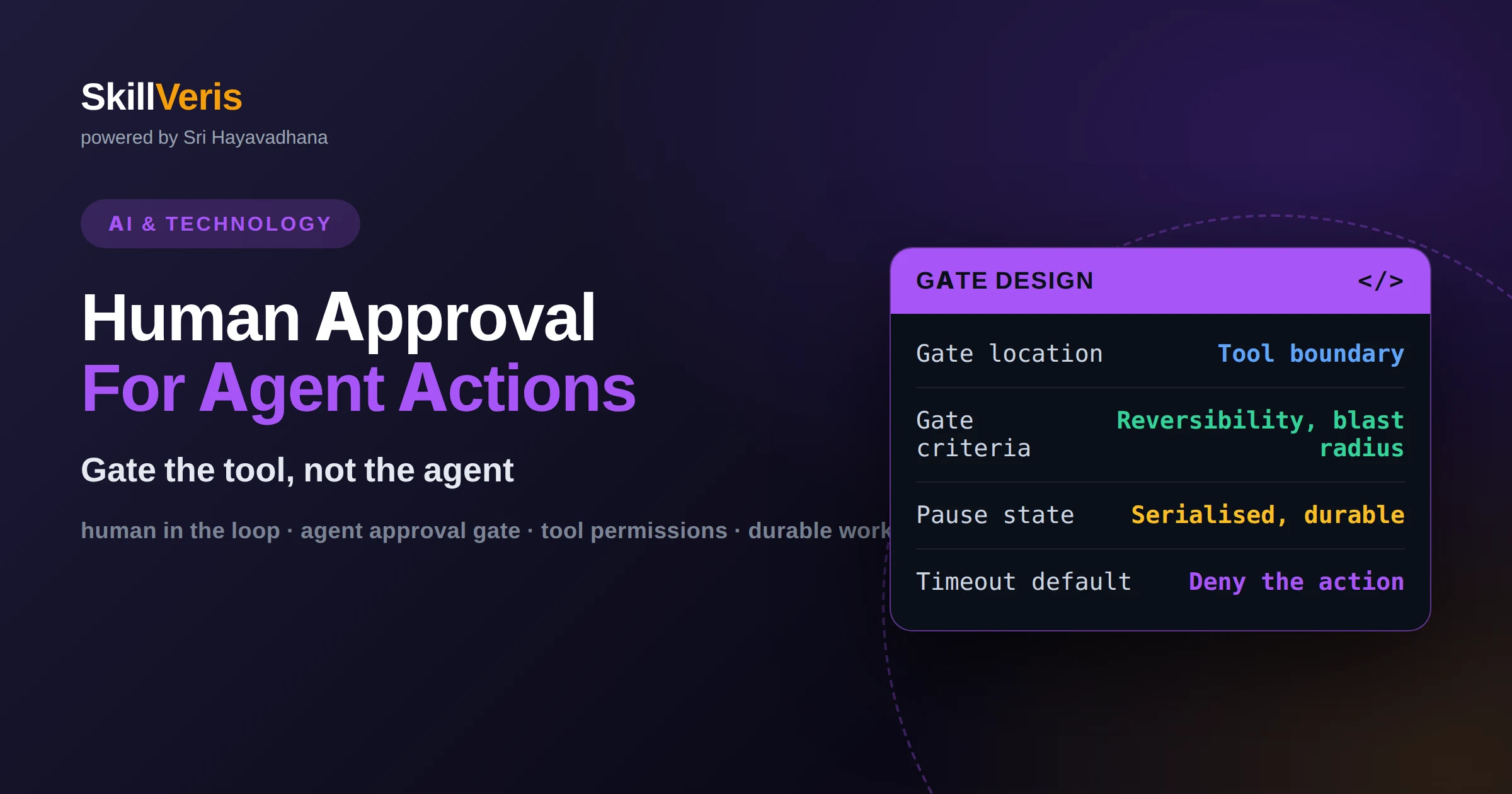
How to Add Human Approval Steps to Agent Actions
Approval gates belong on tools, not on agents. Classify every tool by reversibility and blast radius, block the irreversible ones behind an explicit approval call, and design the pause, resume and timeout paths so a waiting agent survives a process restart rather than silently losing its work.
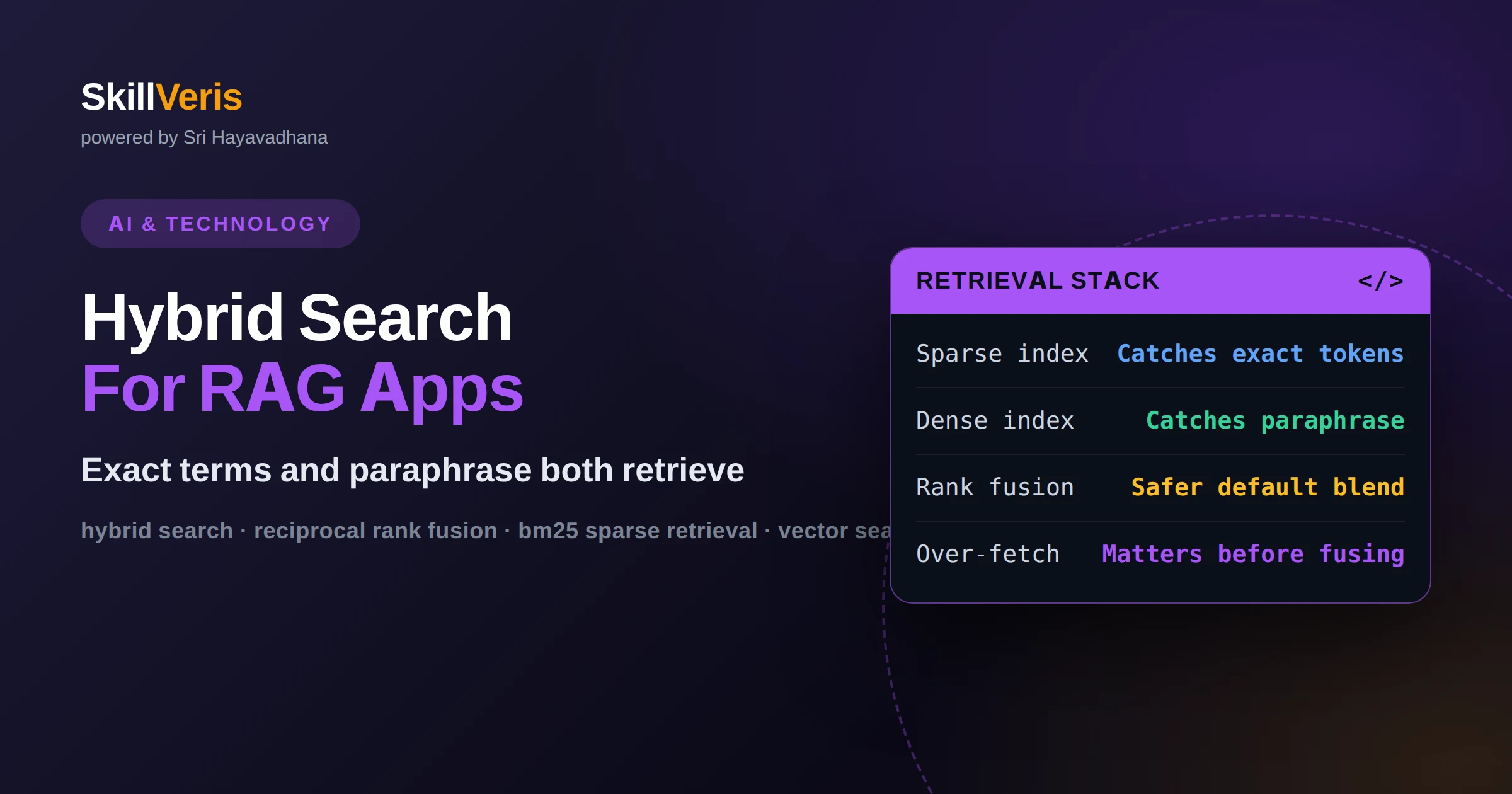
How to Add Hybrid Search to a RAG Application
Hybrid search runs a keyword index and a vector index over the same corpus and fuses their rankings, so exact identifiers and loose paraphrases both retrieve. This covers building both indexes, choosing between score fusion and rank fusion, and tuning the blend against a labelled query set.
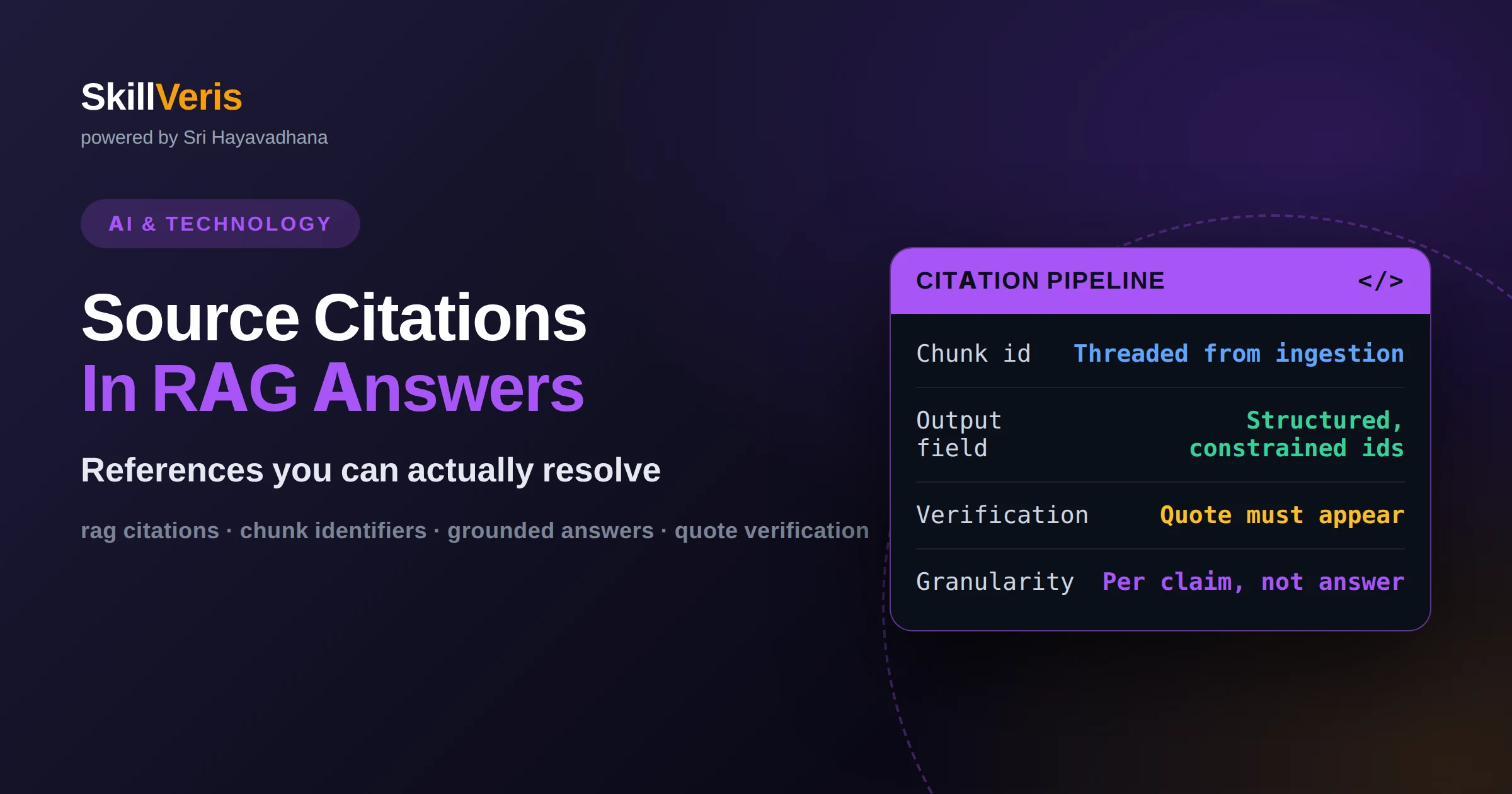
How to Add Source Citations to RAG Answers
Reliable citations come from threading a stable chunk identifier through retrieval into the prompt, asking for it back in a structured field, and then verifying the quoted span actually appears in that chunk. Anything less produces plausible references that point at the wrong document.
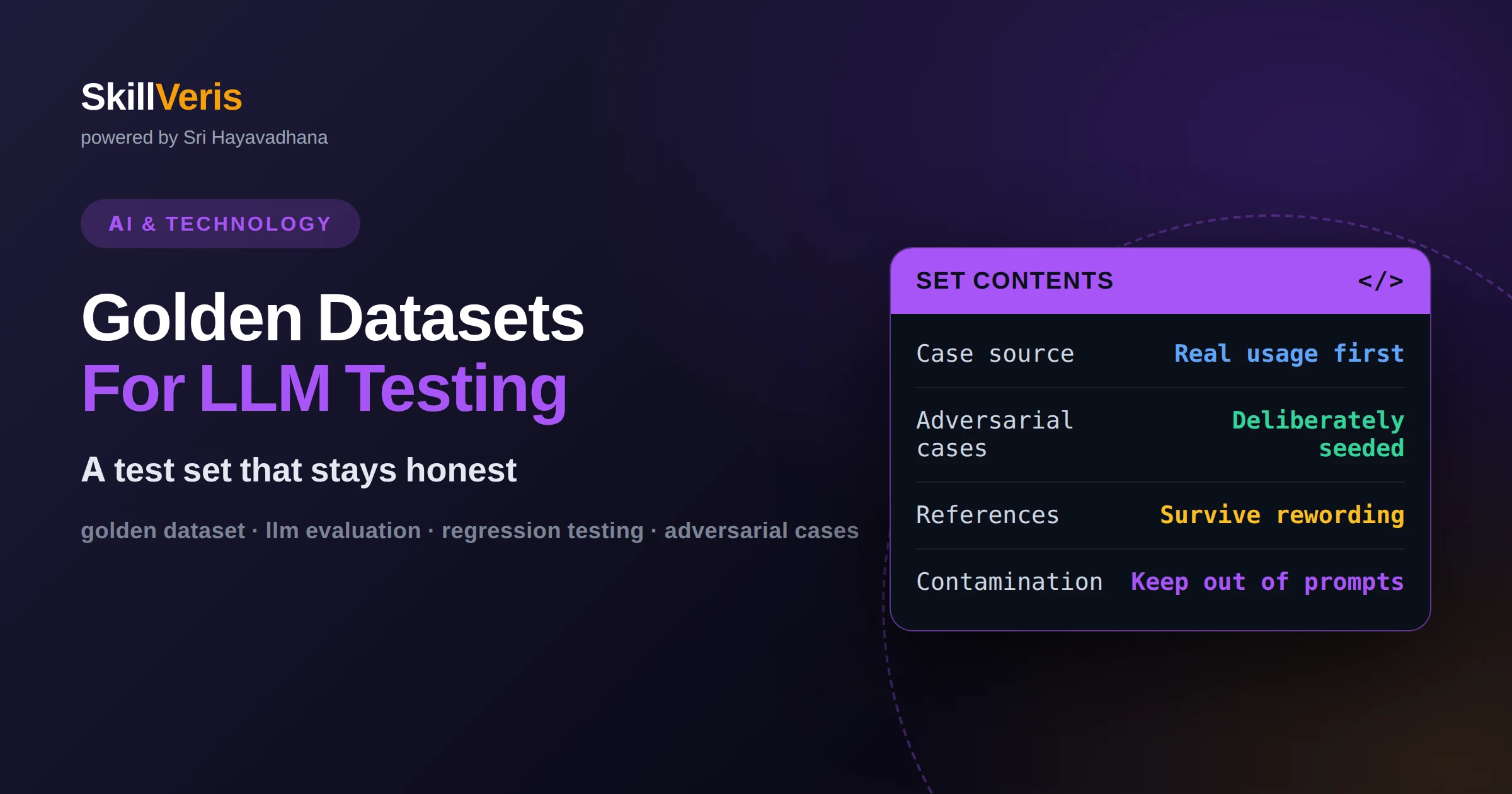
How to Build a Golden Dataset for LLM Testing
A golden dataset is a fixed, versioned set of inputs with reference answers and grading criteria, drawn from real usage and deliberately seeded with adversarial cases. This covers how to select cases, write references that survive rewording, keep the set honest as it ages, and avoid the failure of testing only what already works.
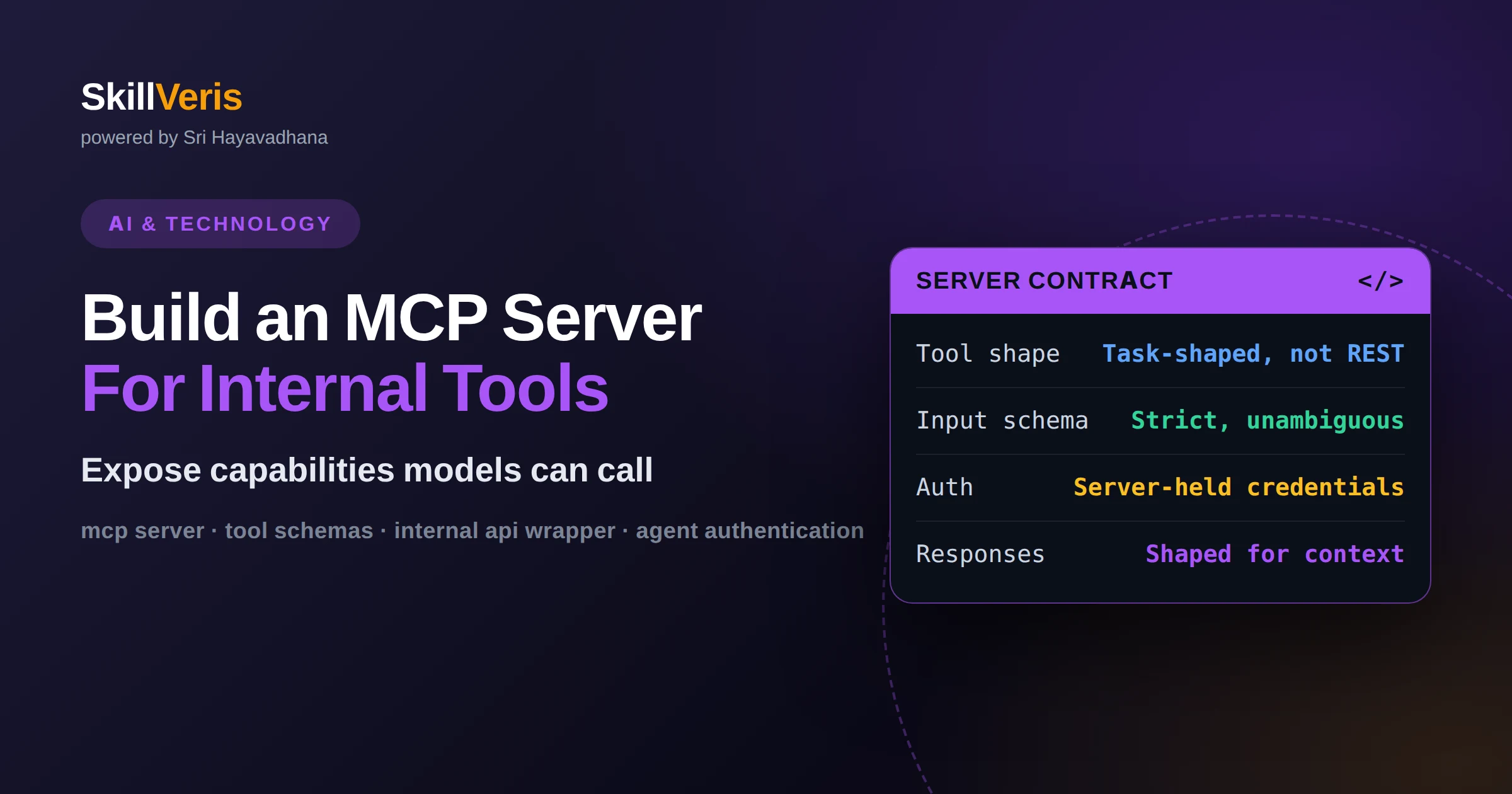
How to Build an MCP Server for Your Internal Tools
Building an MCP server means wrapping internal APIs as named tools with strict input schemas, explicit auth boundaries and error messages a model can act on. This covers choosing what to expose, writing schemas that prevent bad calls, handling credentials, shaping responses for context budgets and testing before an agent touches production.
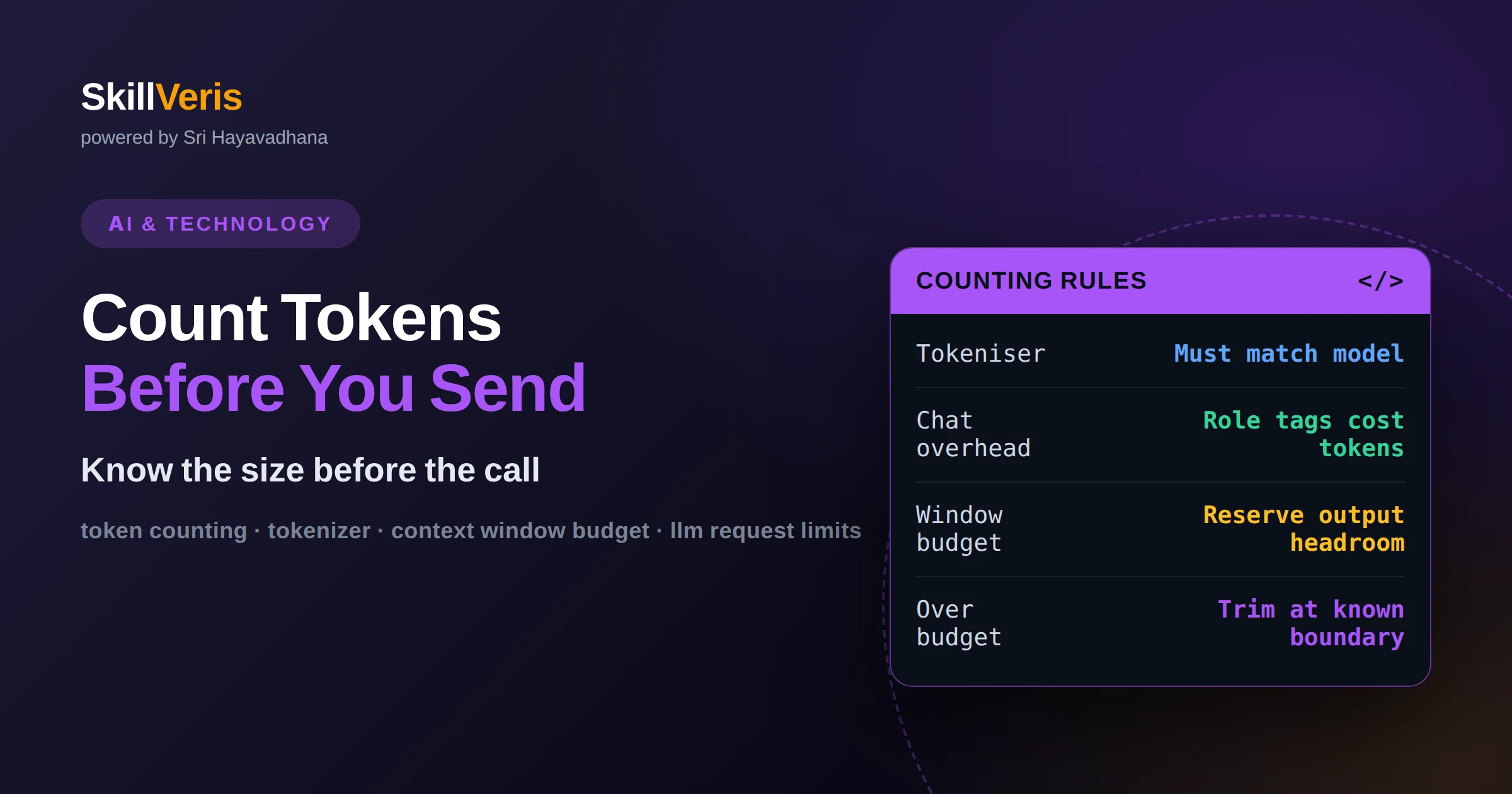
How to Count Tokens Before You Send an LLM Request
Count tokens locally with the same tokeniser the model uses, before the request leaves your process. This lets you reject or trim oversized inputs, price a call in advance, and reserve headroom for the completion instead of discovering the limit through a truncated answer or a hard API error.
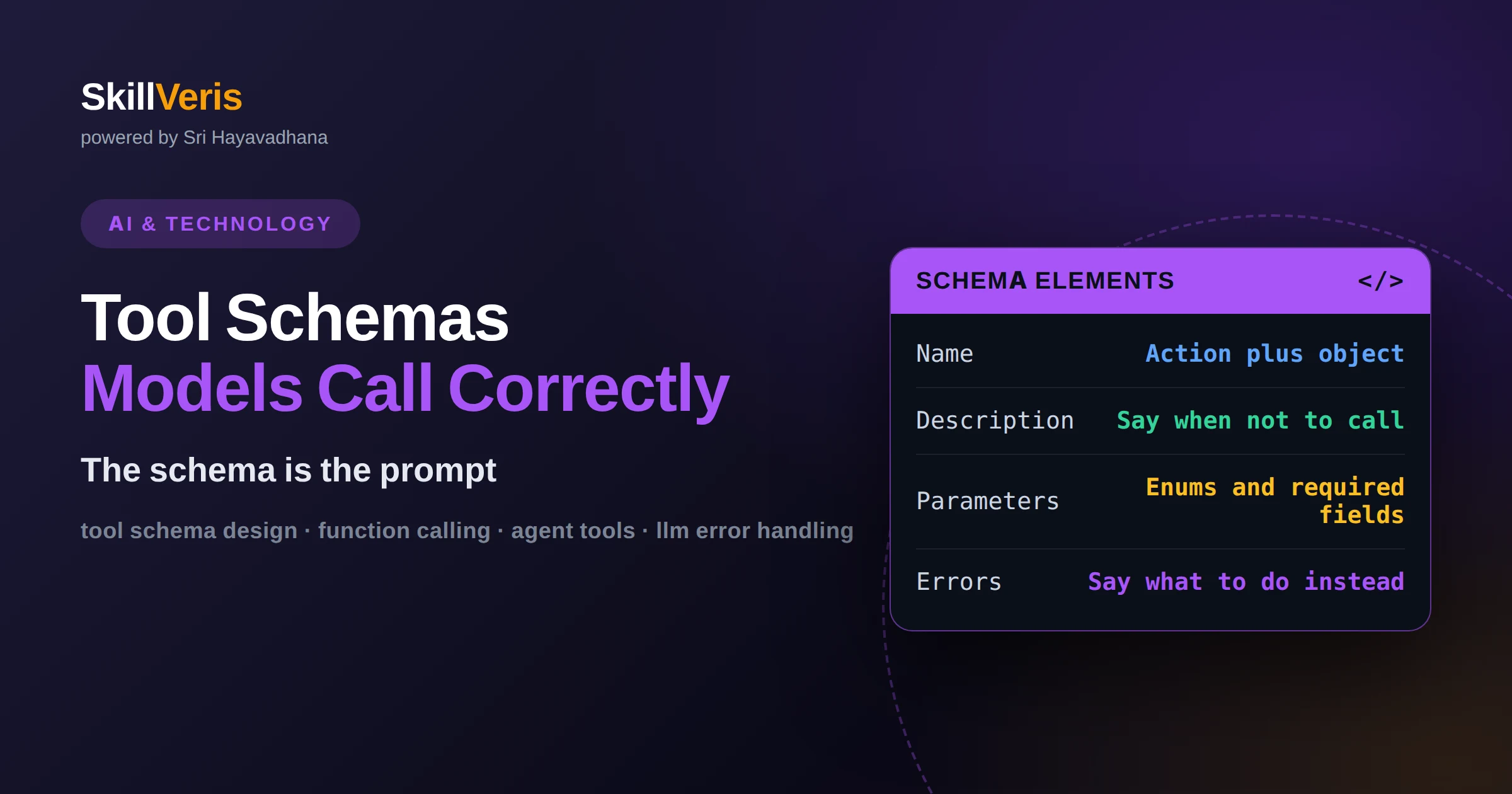
How to Design a Tool Schema an LLM Will Call Correctly
A tool schema is a prompt, not just an interface contract. This shows how to name tools for unambiguous selection, type parameters so wrong values are impossible, write descriptions that say when not to call, and design error messages the model can actually recover from.
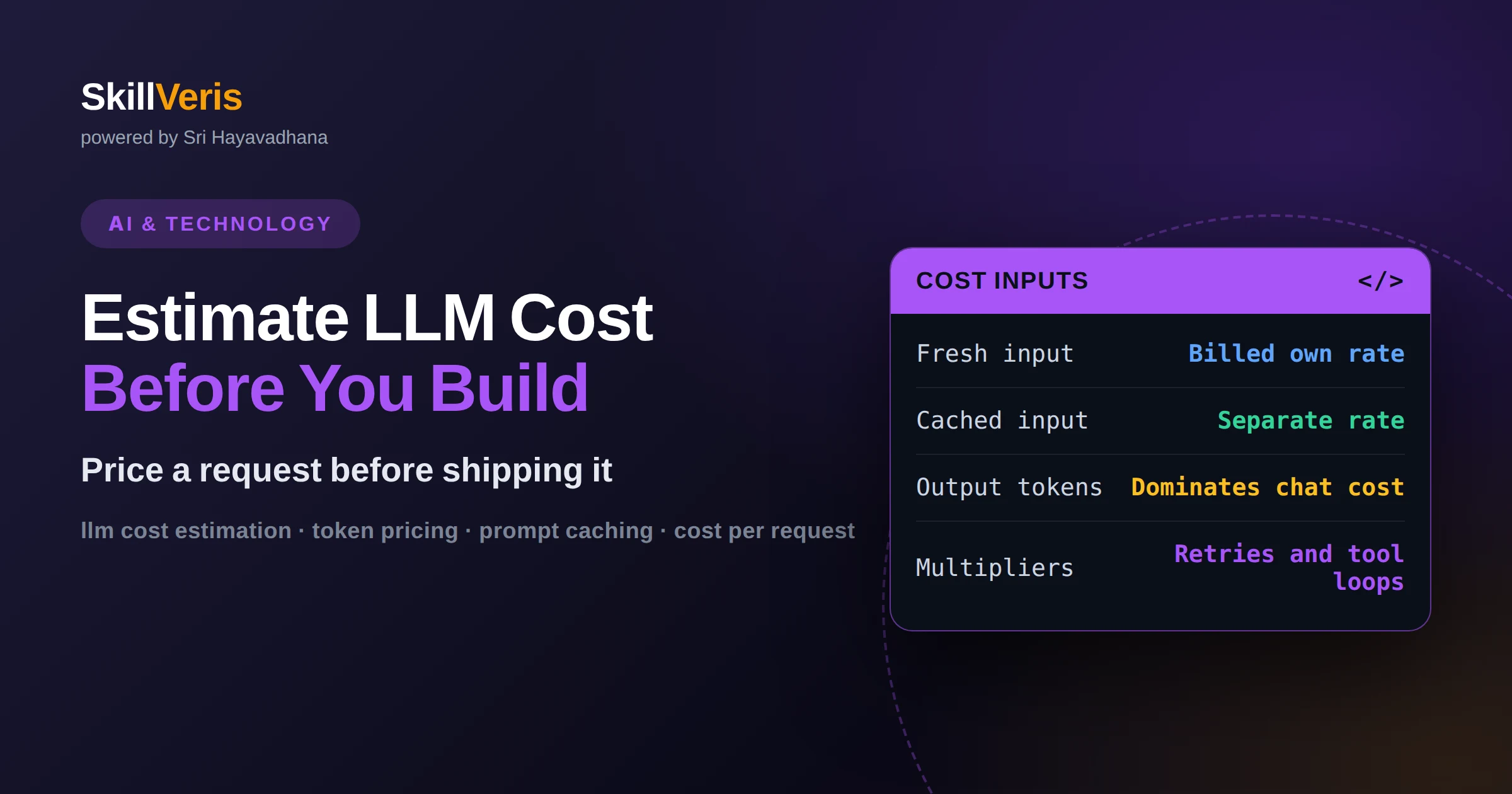
How to Estimate LLM Cost Per Request Before You Build
Estimate a request's cost by counting input tokens, expected output tokens and cached tokens separately, then multiplying each by its own published rate. This article shows how to build that model from a prompt you already have, stress it against realistic traffic, and find the levers that actually move the bill.
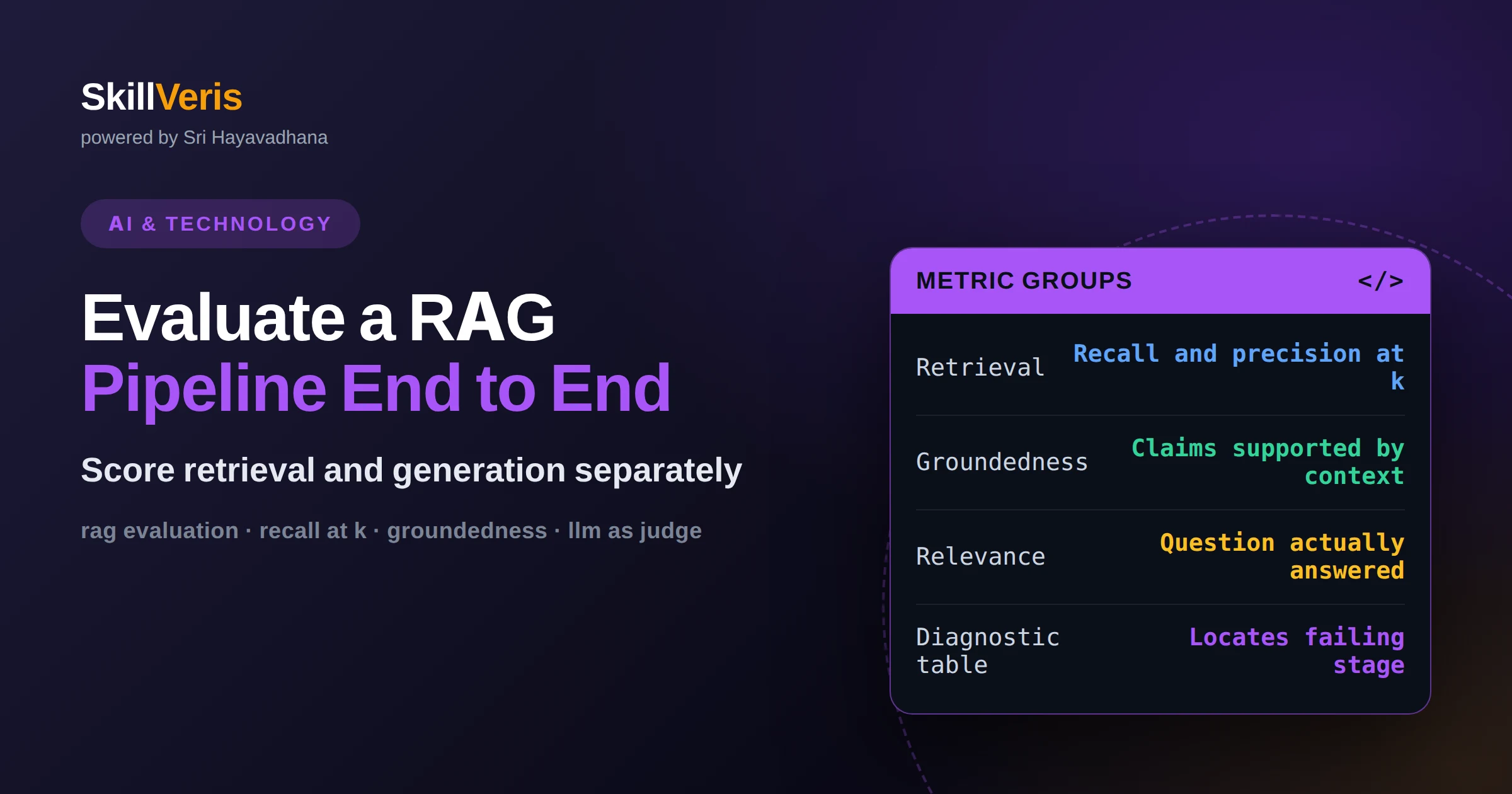
How to Evaluate a RAG Pipeline End to End
Evaluate a RAG pipeline by scoring retrieval and generation separately, because a bad answer has two possible causes and one number cannot tell them apart. This article sets out the retrieval metrics, the answer metrics, and the diagnostic table that tells you which stage to fix.
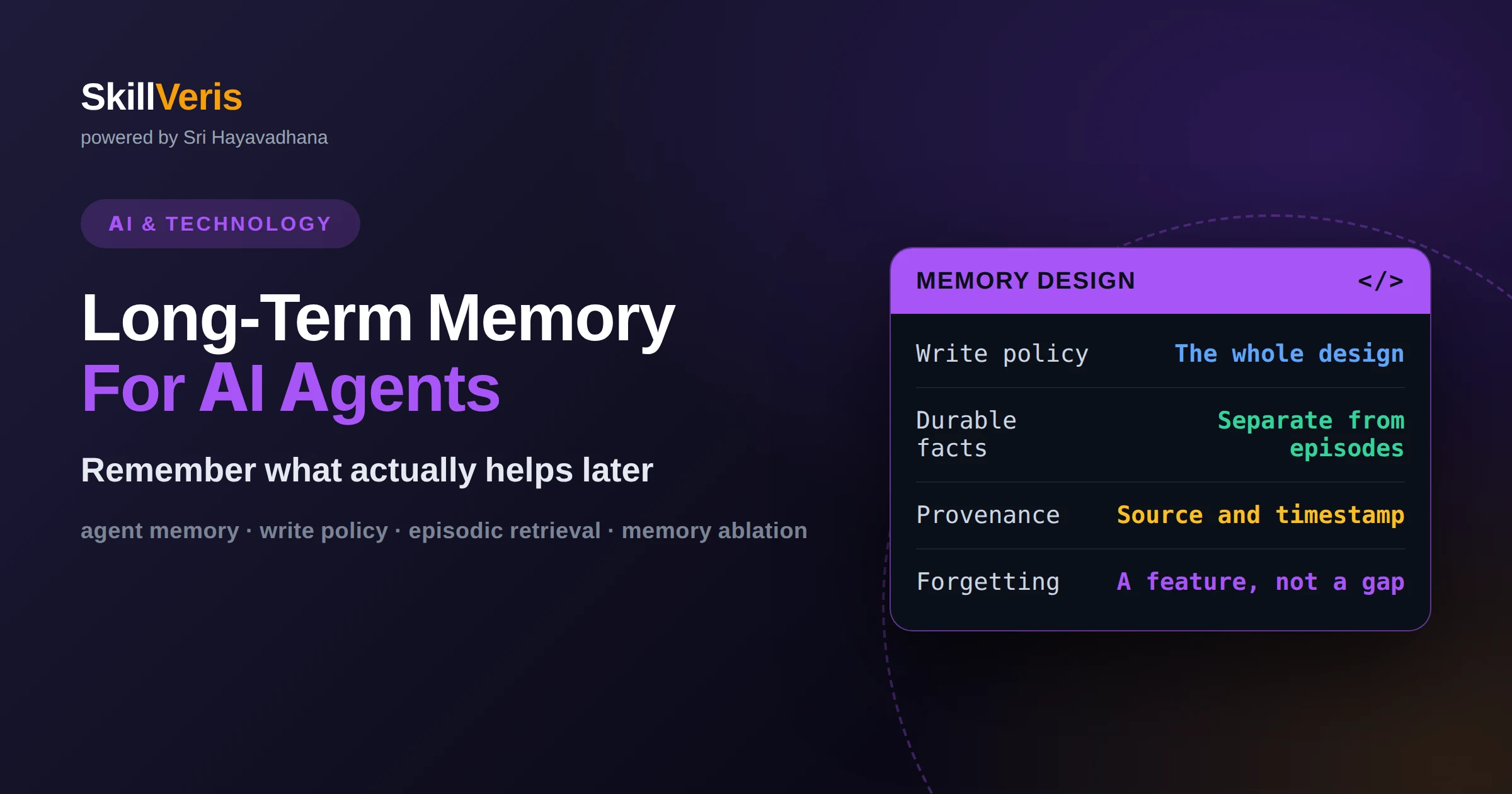
How to Give an Agent Useful Long-Term Memory
Useful agent memory is defined by its write policy and its forgetting rules, not by its storage backend. This guide covers what is worth persisting, how to retrieve past episodes without flooding the context window, how to handle facts that change, and how to tell whether memory is helping or quietly misleading the agent.
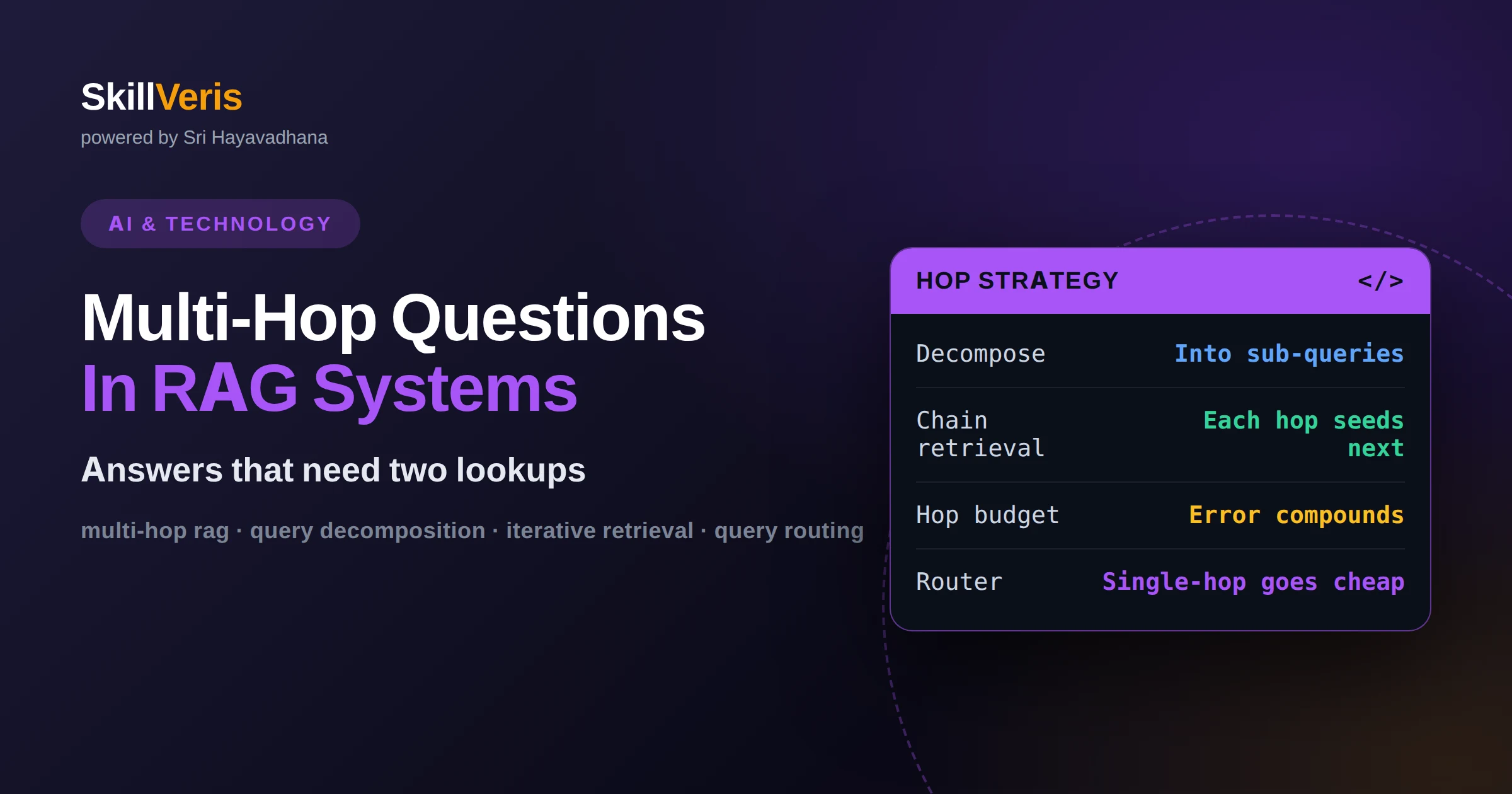
How to Handle Multi-Hop Questions in a RAG System
Multi-hop questions fail in standard RAG because the second document is only findable once you know the answer to the first hop. You fix it by decomposing the question into sub-queries, retrieving iteratively so each hop's answer seeds the next, and stopping on an explicit budget rather than when the model feels finished.
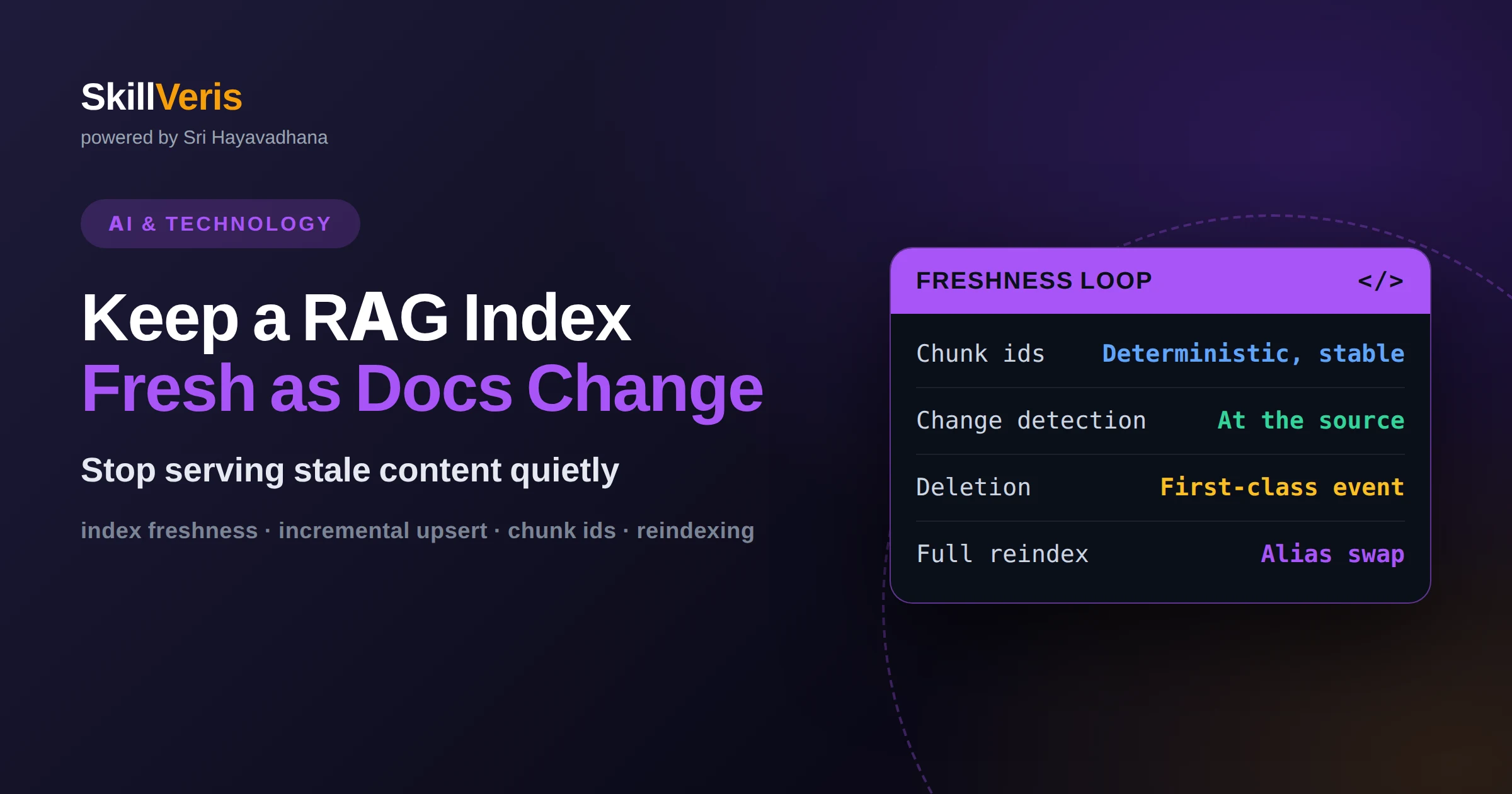
How to Keep a RAG Index Fresh as Documents Change
Keep a RAG index fresh by detecting change at the source, upserting only affected chunks with stable identifiers, and propagating deletions as first-class events. This covers change detection, deterministic chunk IDs, tombstoning, reindex triggers and the monitoring that tells you when stale content is still being served.
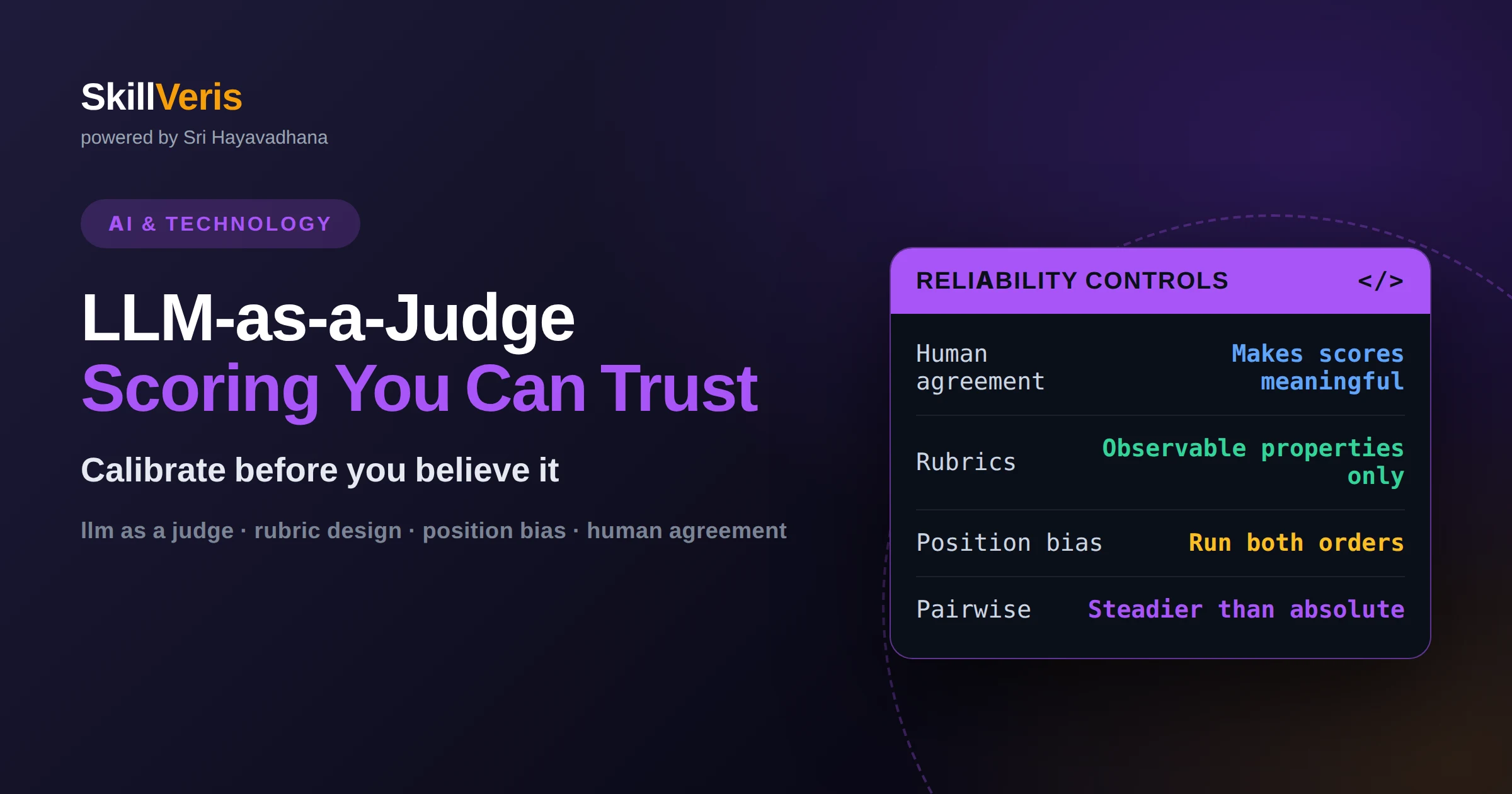
How to Make LLM-as-a-Judge Scoring Reliable
A judge model is only trustworthy once you have calibrated it against human labels and controlled for its known biases. This covers writing rubrics with observable criteria, swapping positions in pairwise comparisons, measuring agreement with humans, and knowing when not to use a judge at all.
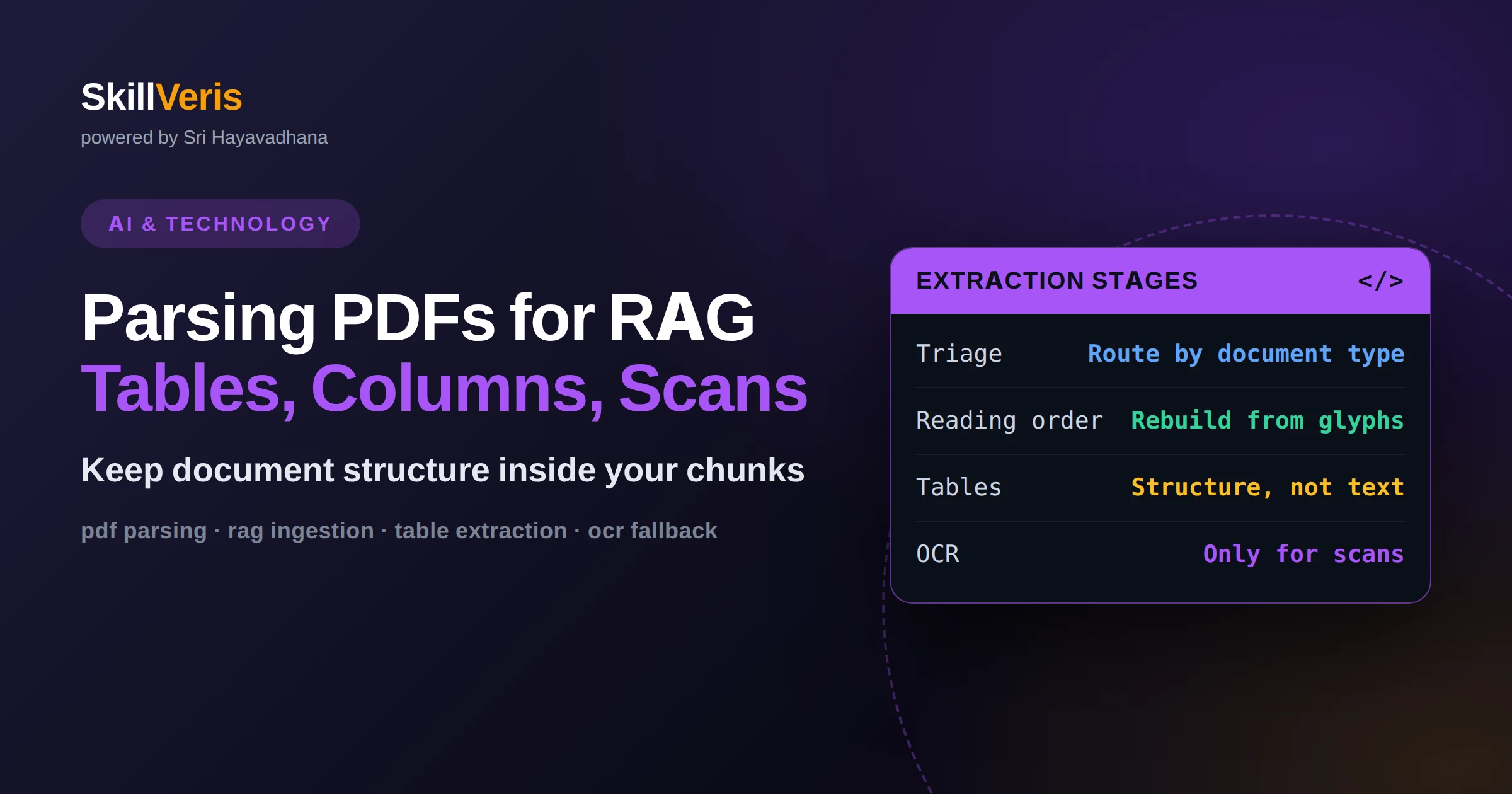
How to Parse PDFs for RAG: Tables, Columns and Scans
PDFs carry no reading order, so naive text extraction interleaves columns and flattens tables into unusable strings. This shows how to route documents by type, extract with layout awareness, keep table structure, and fall back to OCR for scans — so structure survives into your chunks.
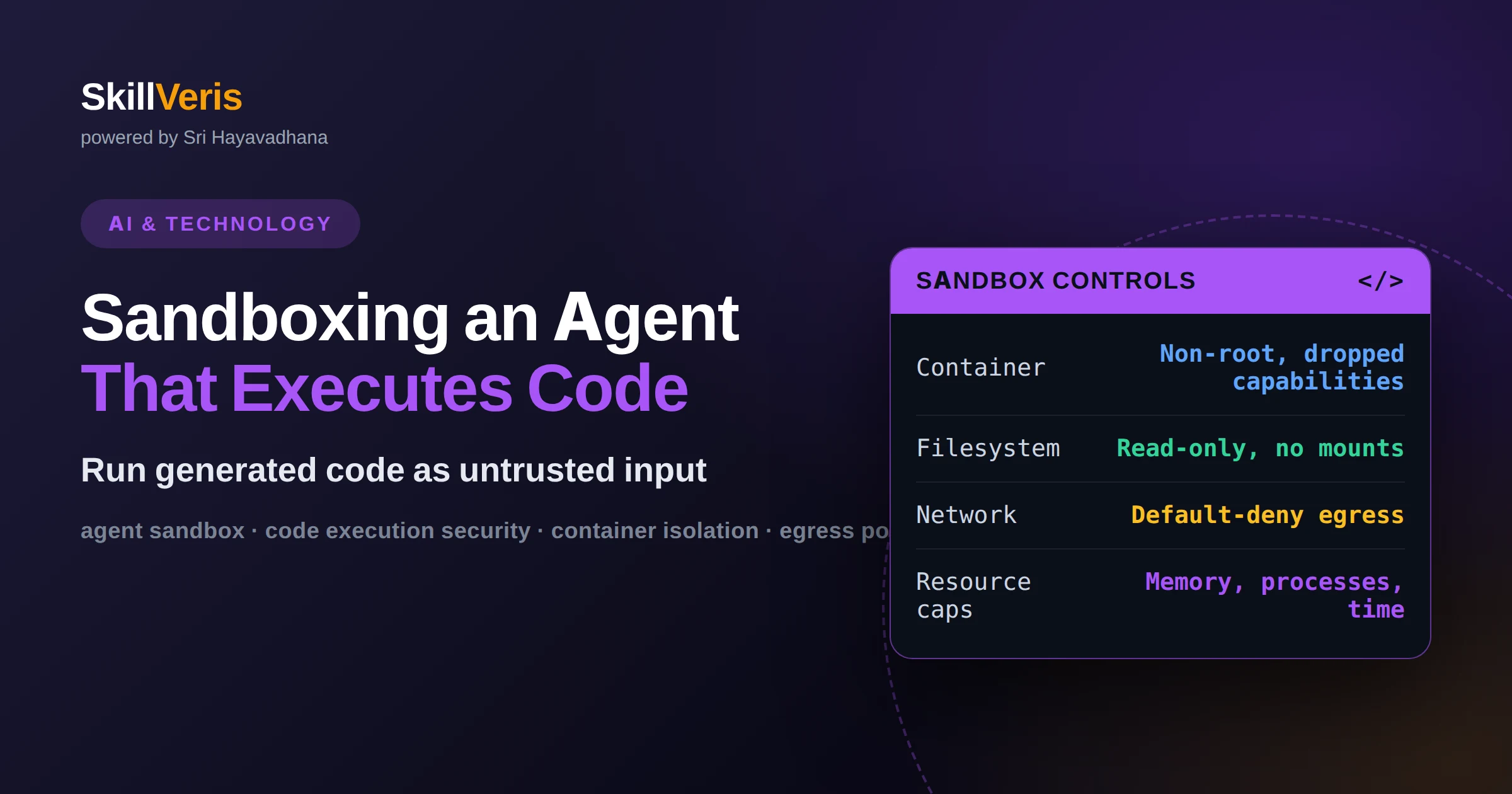
How to Sandbox an Agent That Executes Code
Model-generated code must run as untrusted input: in a container with no host mounts, a default-deny network, a non-root user, a read-only filesystem, and hard limits on memory, processes and wall-clock time. This article covers each control and the failure it prevents.
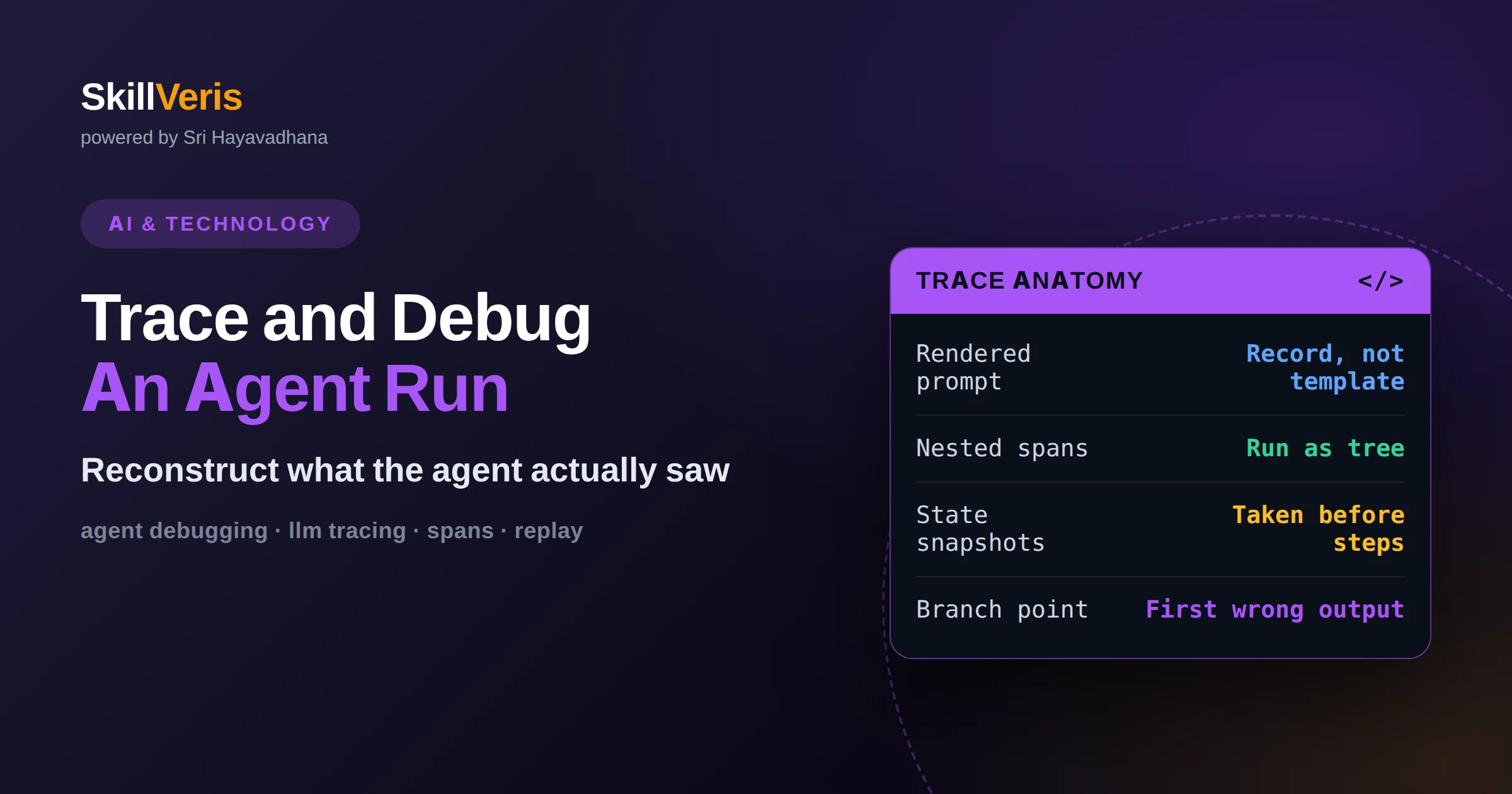
How to Trace and Debug an Agent Run Step by Step
Debugging an agent means reconstructing exactly what it saw at the moment it went wrong. This covers what to record at each step, how to structure spans so a run is navigable, how to find the branch point where a run diverged, and how to replay from there with one variable changed.
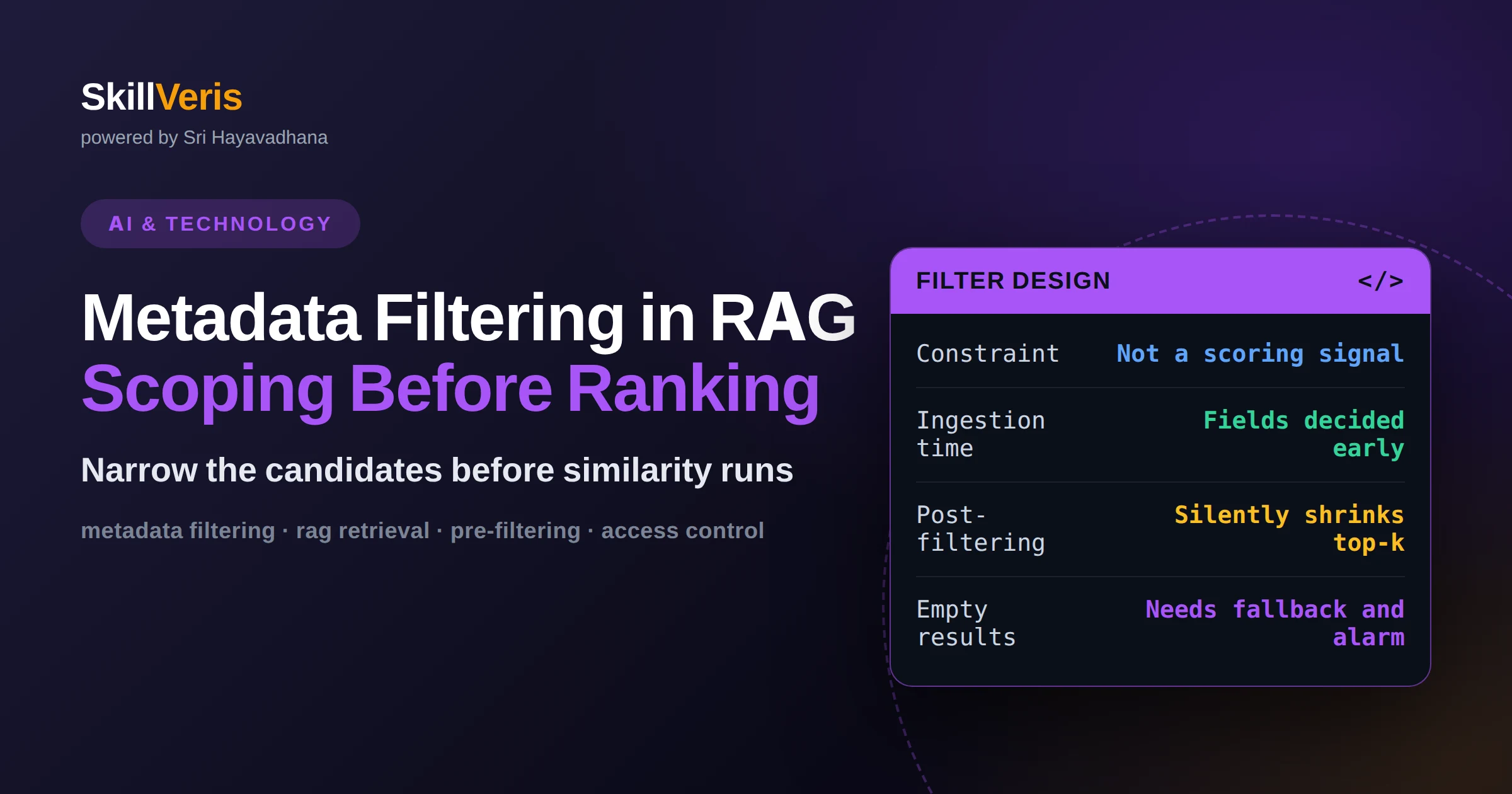
Metadata Filtering in RAG: Scoping Search Before Ranking
Metadata filtering narrows the candidate set before similarity ranking runs, so the retriever only ever sees chunks the user is allowed to read and that are current enough to trust. This guide covers which fields to capture at ingestion, how pre-filtering differs from post-filtering, and how to keep filters from silently emptying results.
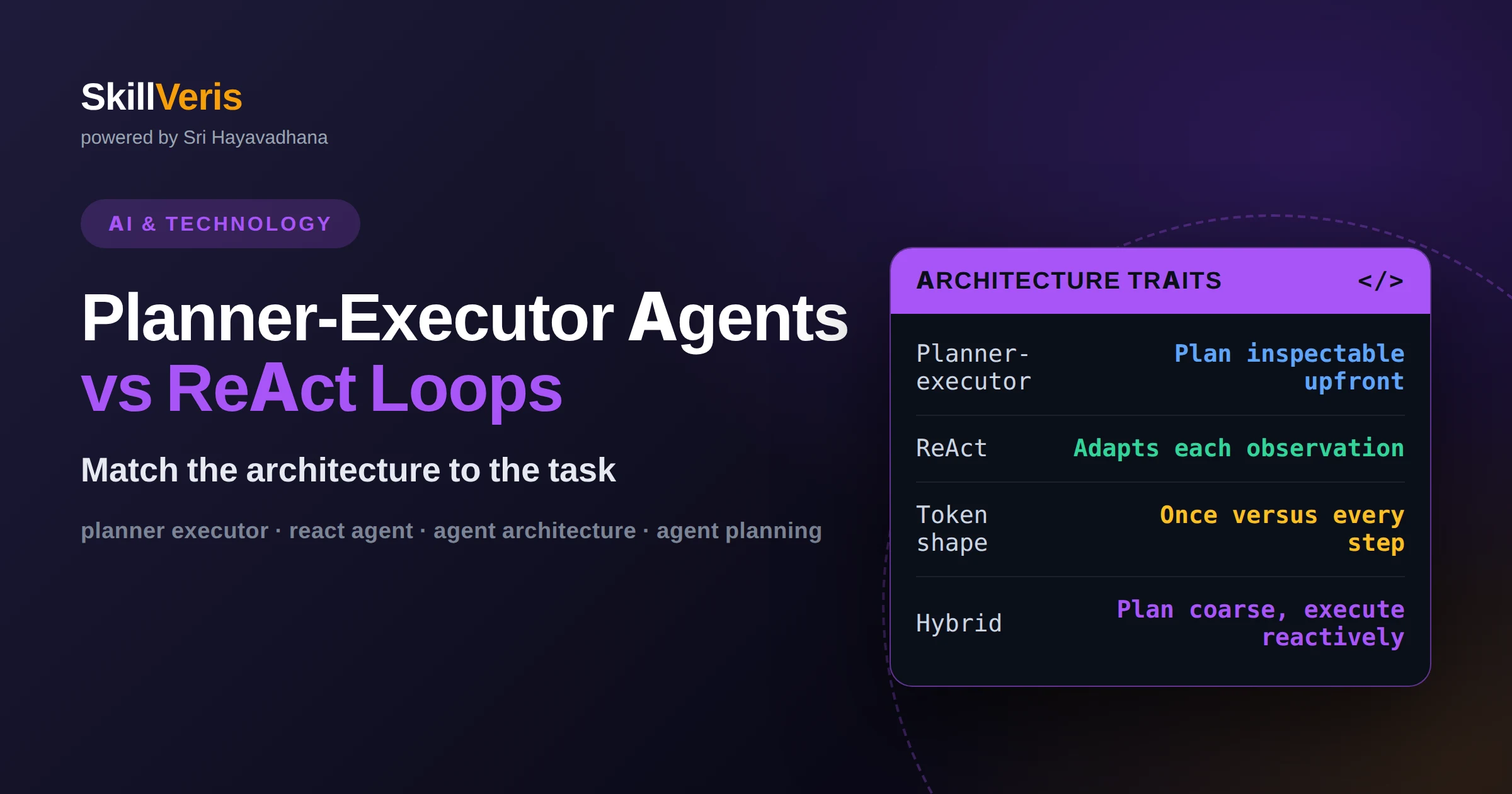
Planner-Executor Agents vs ReAct Loops
Planner-executor architectures commit to a plan up front and then carry it out; ReAct loops decide one step at a time from the latest observation. Planning suits long, decomposable tasks with stable environments; interleaved reasoning suits exploratory work where each result changes what to do next.
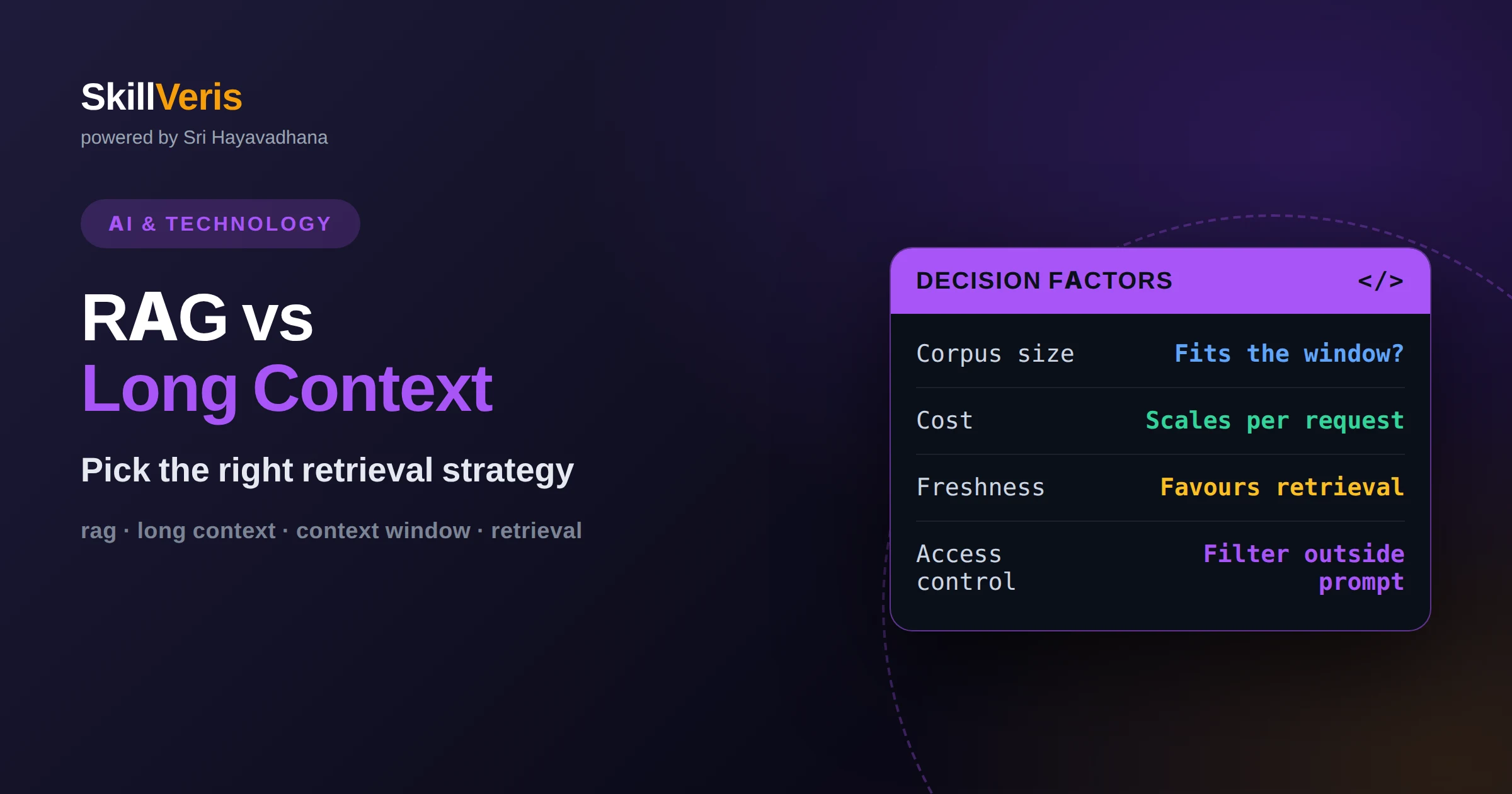
RAG vs Long-Context Prompting: Which to Reach For
Reach for long-context prompting when the relevant material is small, stable and fits comfortably in the window; reach for retrieval when the corpus is larger than the window, changes often, or must be filtered per user. The decision is driven by corpus size, update rate and cost per request, not by which approach is newer.
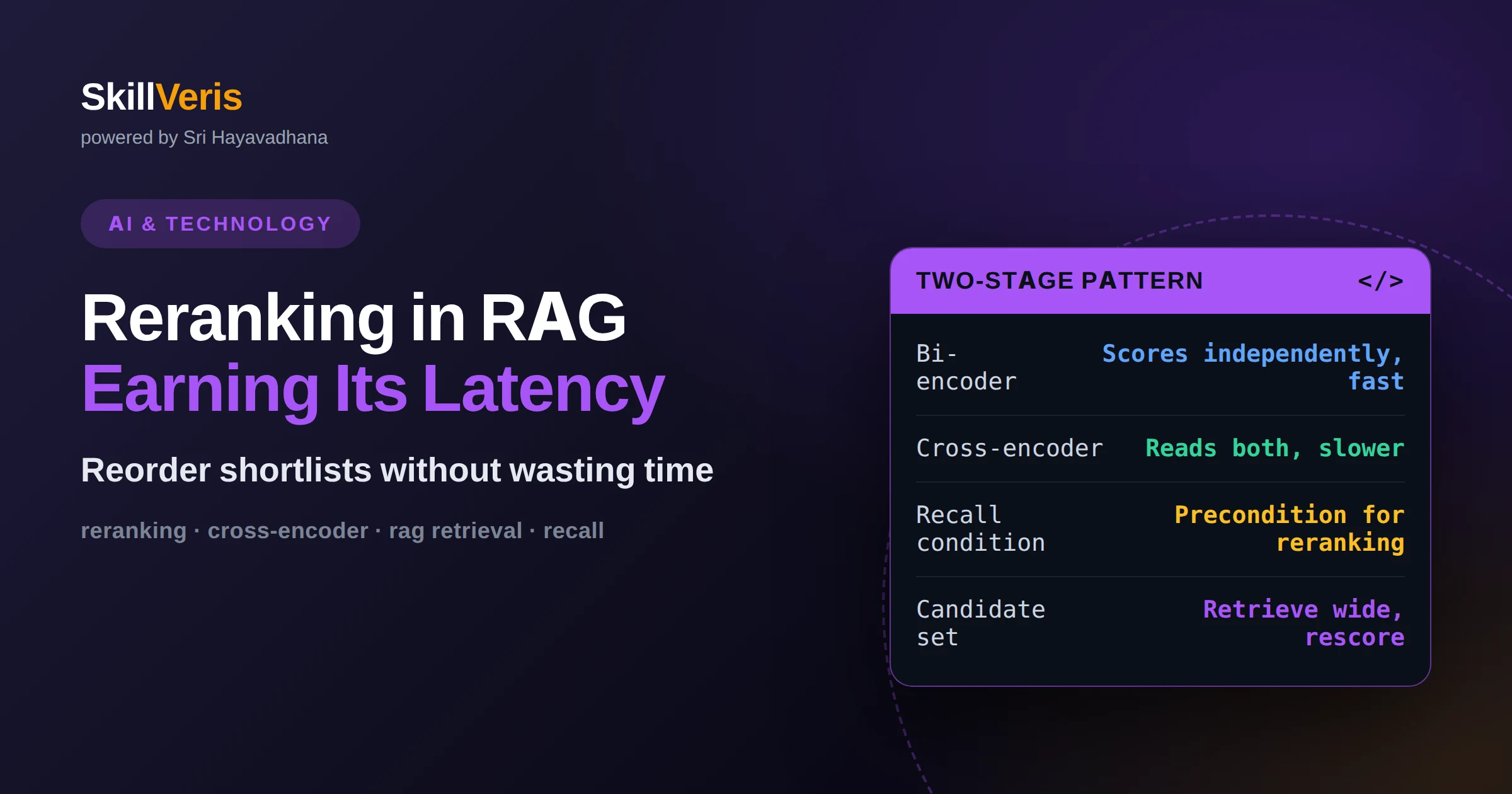
Reranking in RAG: When a Cross-Encoder Earns Its Latency
A cross-encoder reranker earns its latency when your first-stage retriever has high recall at a wide k but poor ordering in the top few. This article explains the two-stage pattern, the recall condition that makes reranking worthwhile, and how to measure whether it is paying for itself.
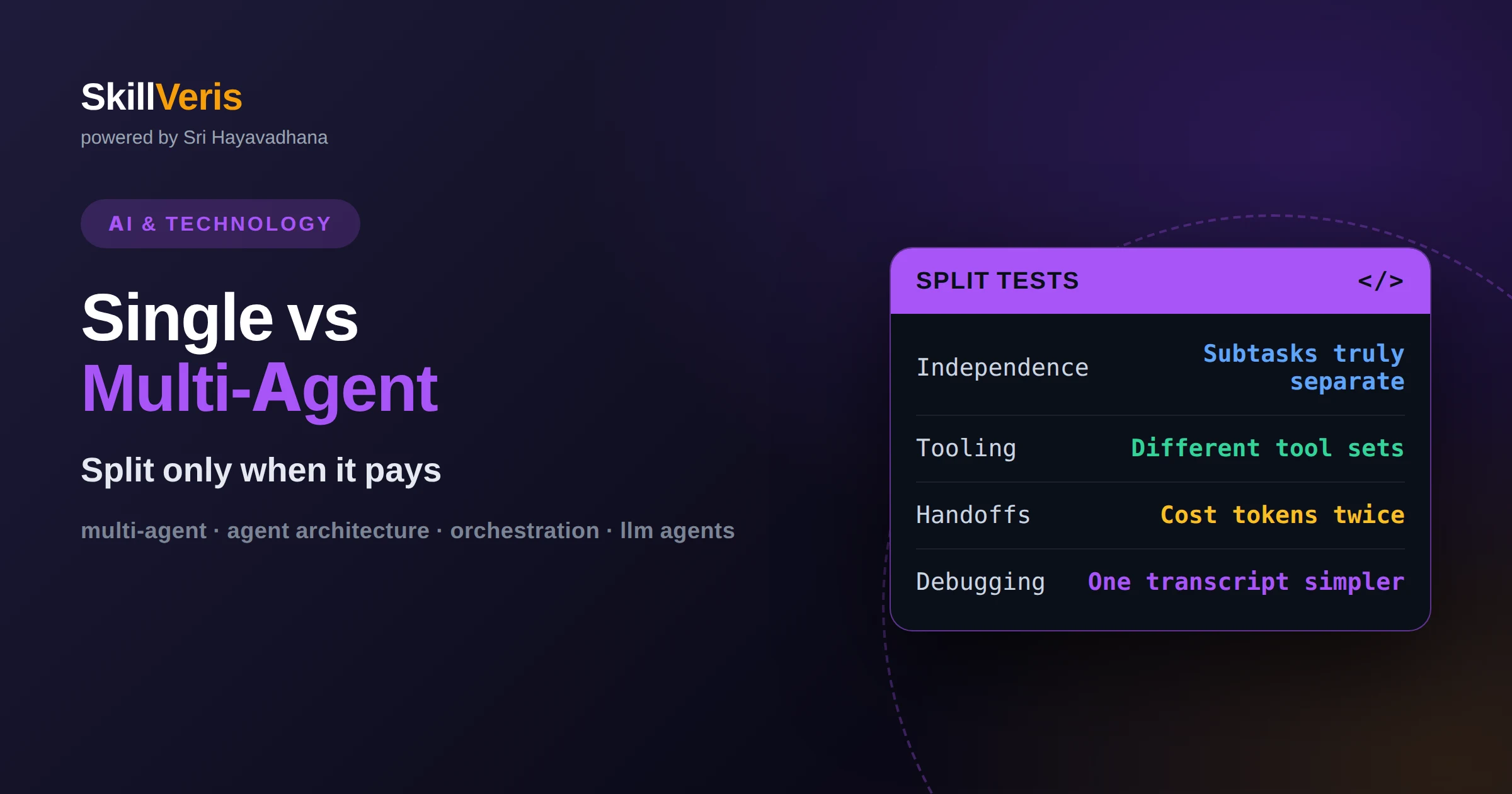
Single-Agent vs Multi-Agent: When Splitting Actually Helps
Split one agent into several only when subtasks are genuinely independent, need different tools or context, and can be verified in isolation. This article compares the two designs on coordination overhead, debuggability and token cost, and gives the tests to apply before splitting.
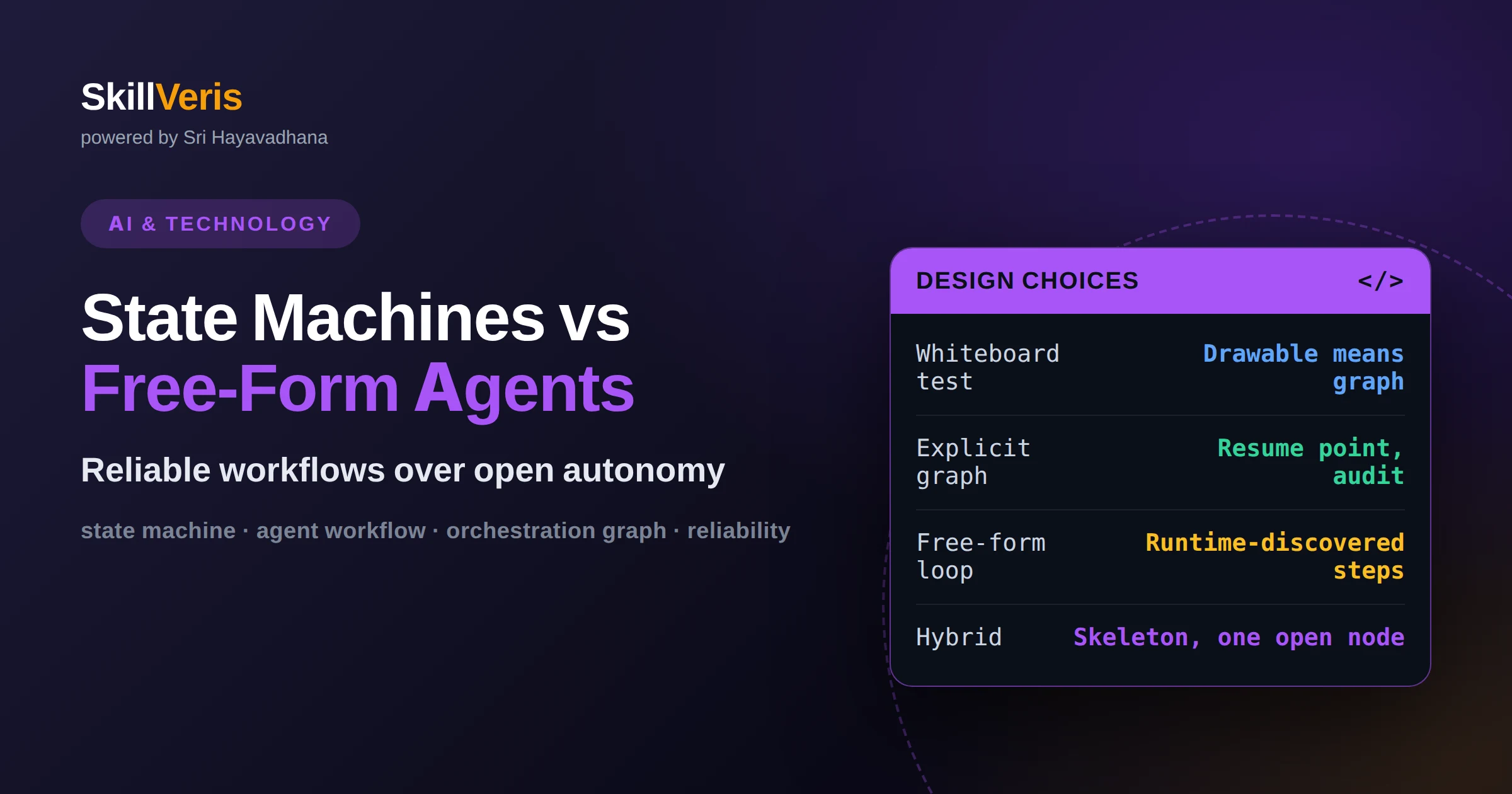
State Machines vs Free-Form Agents for Reliable Workflows
For business processes with known steps, an explicit state machine beats an open-ended agent on reliability, auditability and cost. Reserve free-form autonomy for genuinely open-ended work, and use the practical test of whether you could draw the process on a whiteboard to decide which you are building.
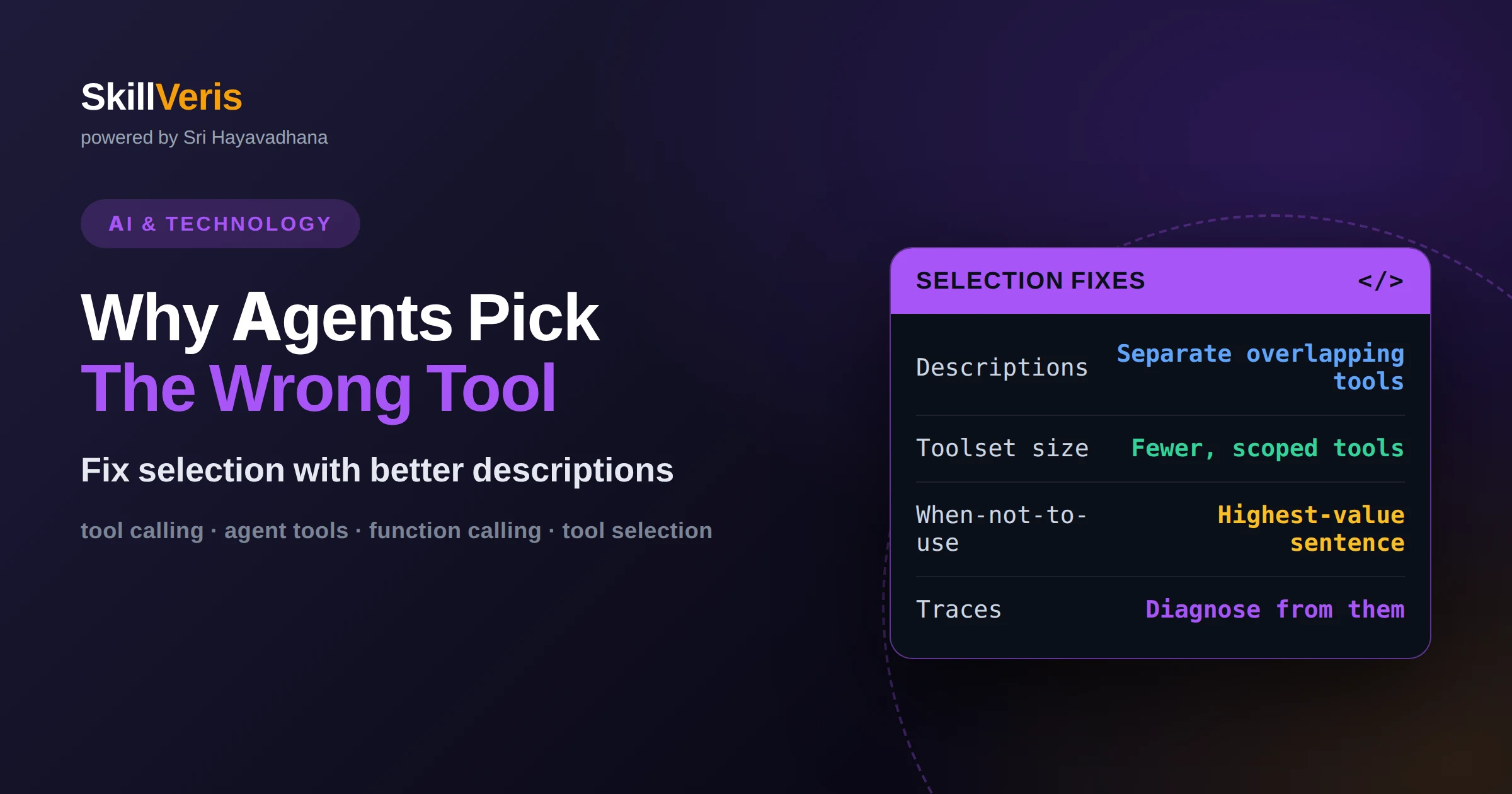
Why Agents Pick the Wrong Tool and How to Fix It
Agents pick the wrong tool mostly because descriptions overlap, toolsets are too large, or the correct tool is invisible for the phrasing used. This shows how to diagnose misselection from traces, rewrite descriptions to separate cleanly, scope toolsets by task, and route between smaller sets when one flat list stops working.
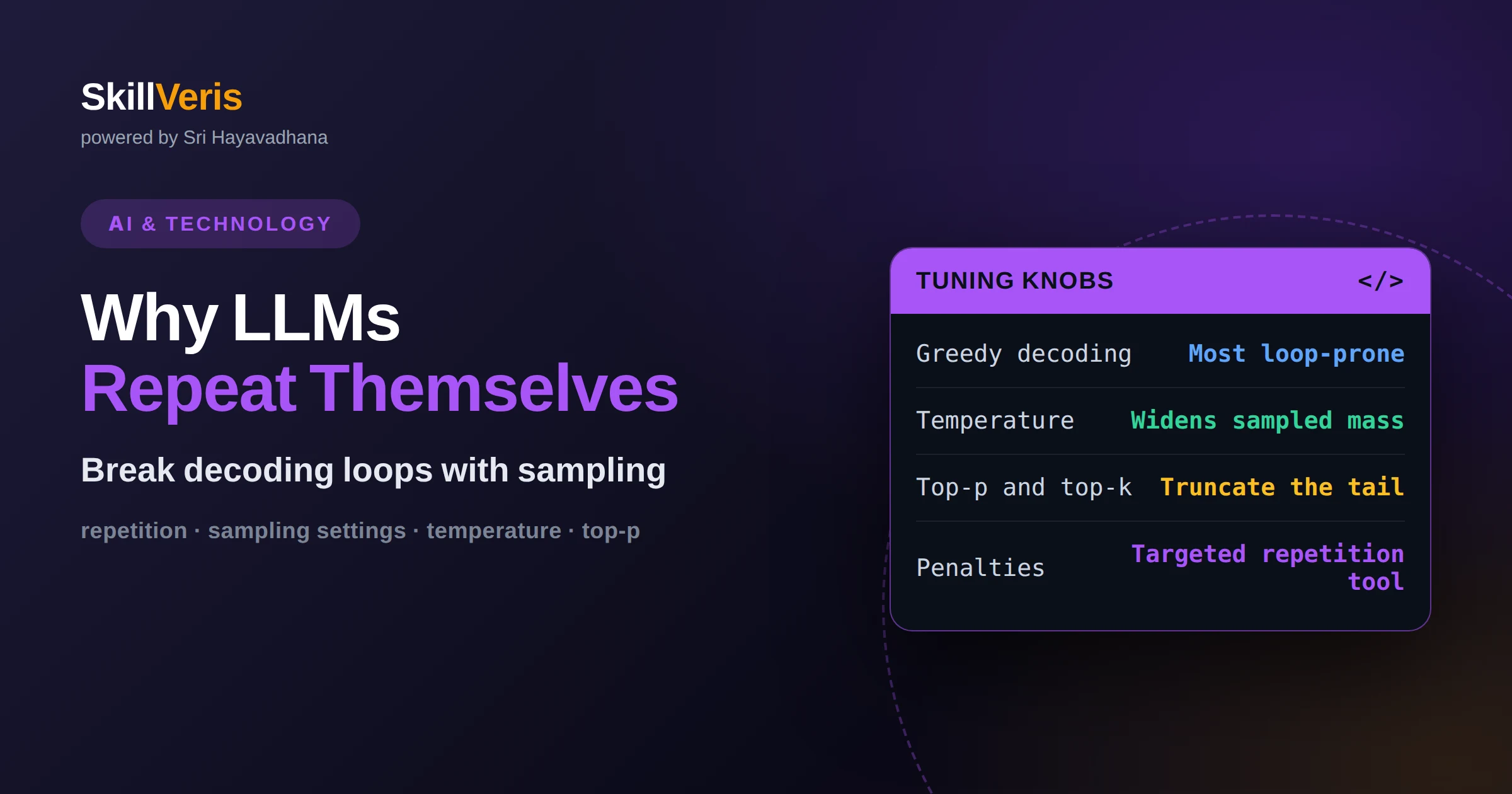
Why LLMs Repeat Themselves and How Sampling Settings Fix It
Language models repeat themselves because greedy and near-greedy decoding falls into self-reinforcing loops: each repeated phrase raises the probability of repeating it again. This article explains the mechanism and shows which sampling settings break the loop, which merely hide it, and which cause worse failures.
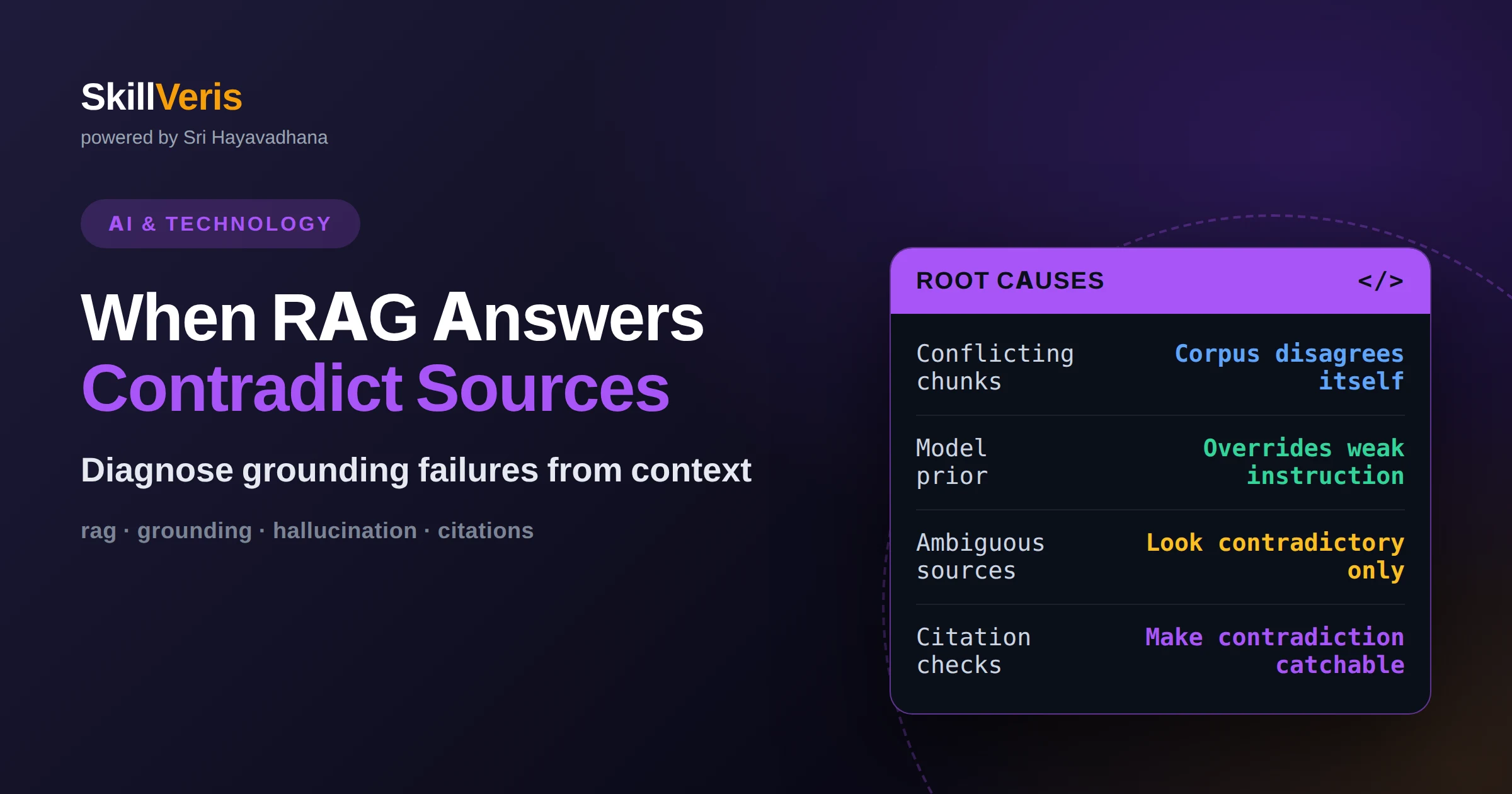
Why RAG Answers Contradict the Retrieved Sources
A RAG answer contradicts its own sources for three reasons: the retrieved chunks disagree with each other, the grounding instruction is too weak to override the model's prior, or the source itself is stale or ambiguous. Diagnosing which one is in play requires reading the actual context, not the answer.
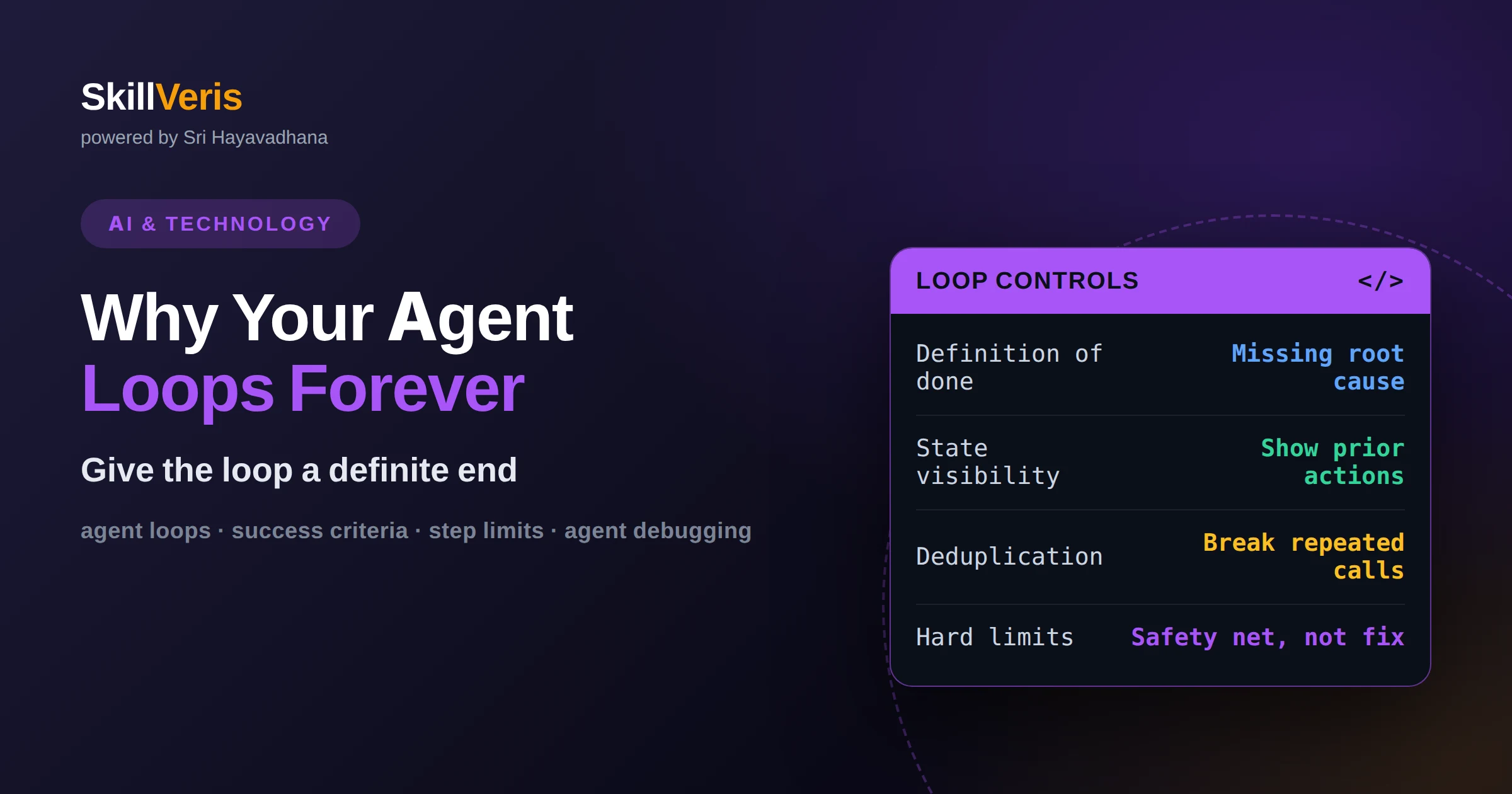
Why Your Agent Loops Forever and How to Stop It
Agents loop because nothing in the loop defines what done looks like, so the model keeps trying. This shows how to diagnose repetition from the trace, add explicit success criteria and state checks, and enforce hard limits so a stuck agent fails visibly instead of burning budget.
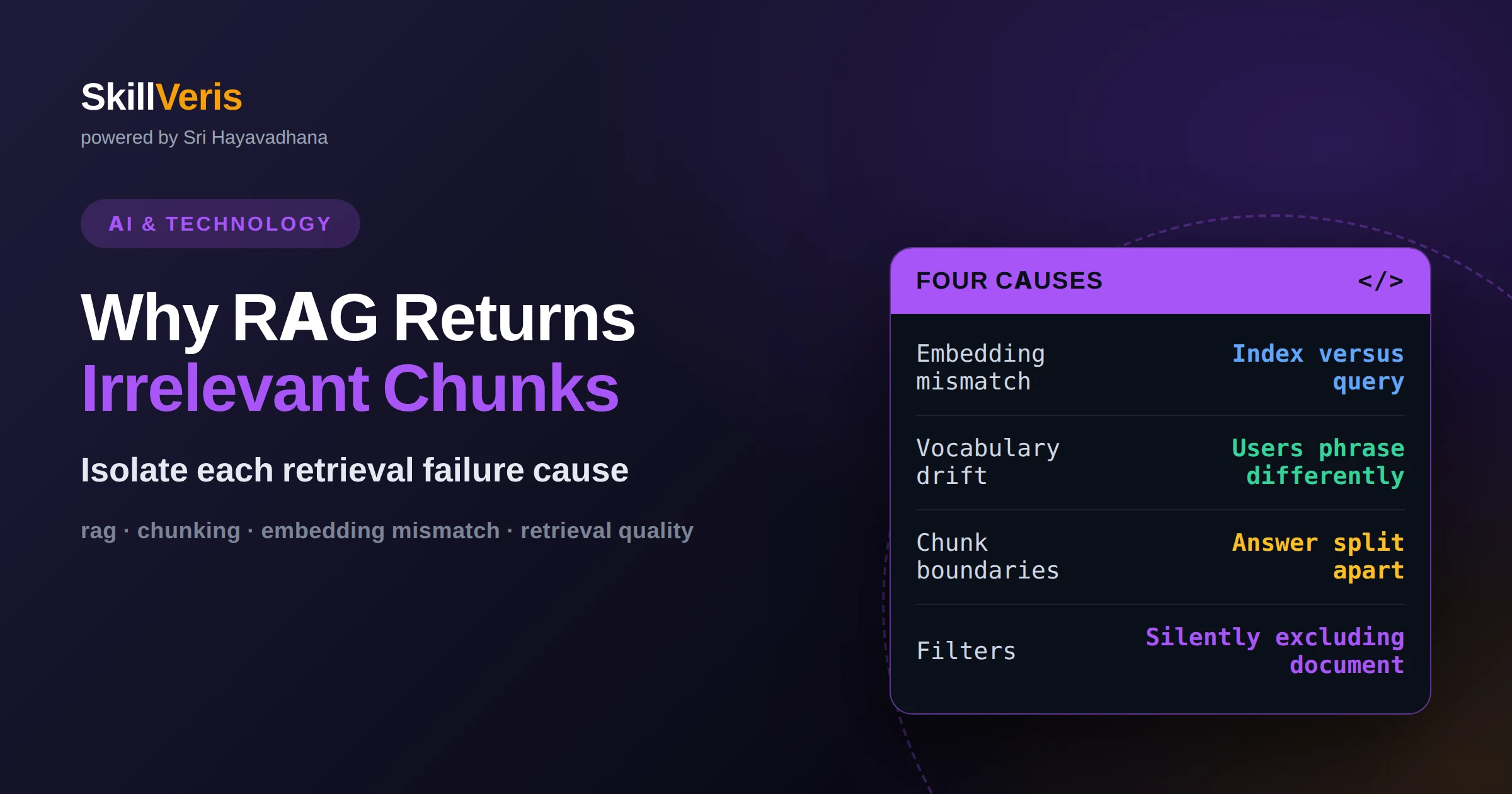
Why Your RAG Pipeline Returns Irrelevant Chunks
Irrelevant retrieval has four common causes: an embedding mismatch between query and index, chunk boundaries that split the answer, vocabulary drift between how users ask and how documents phrase, and a filter or index setting quietly excluding the right document. Here is a check that isolates each.
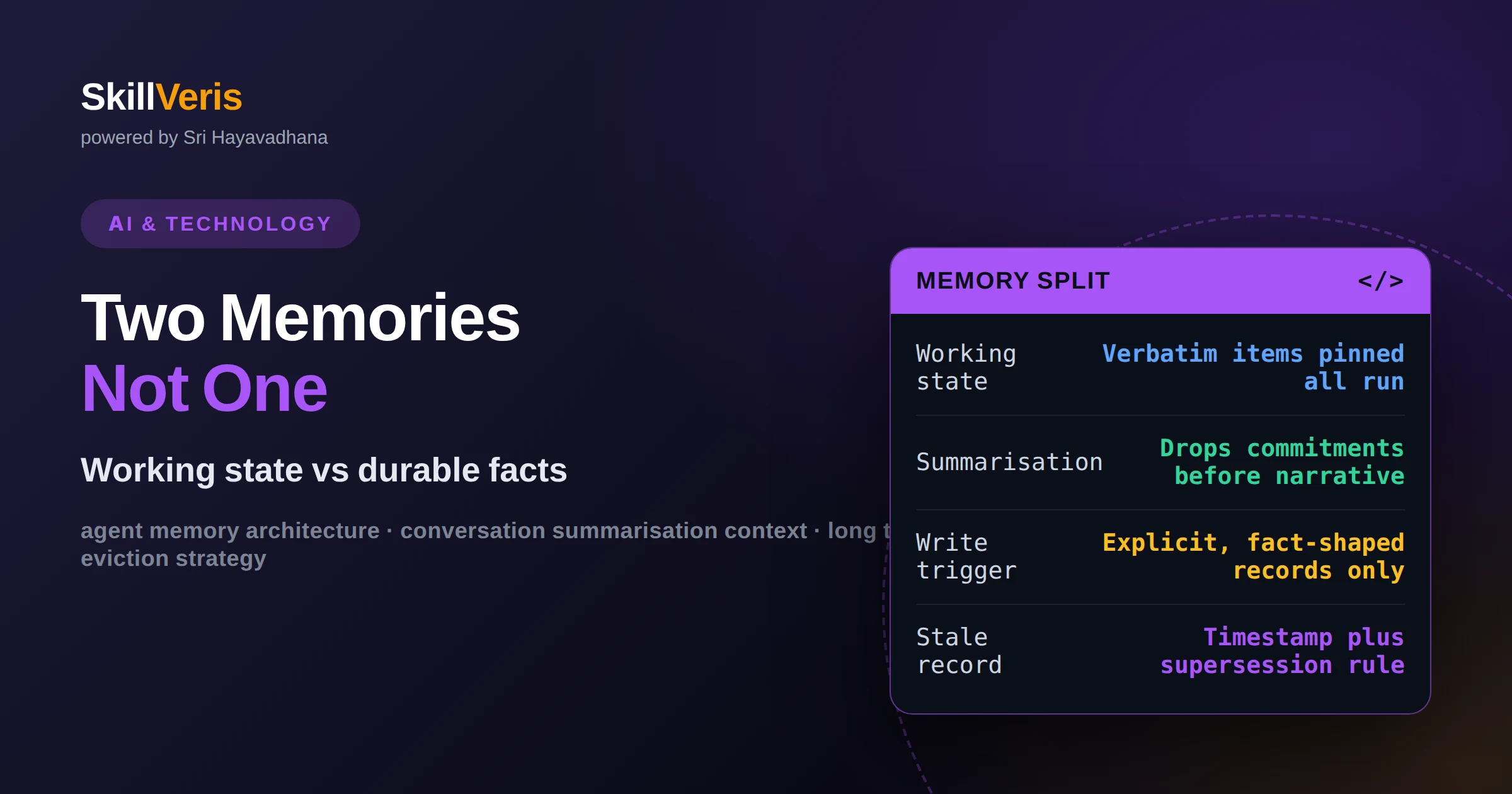
Agent memory: what to keep in context and what to store outside it
Agent memory is two problems, not one. Separate working state from durable knowledge, and learn summarisation, retrieval and eviction that keep both usable.
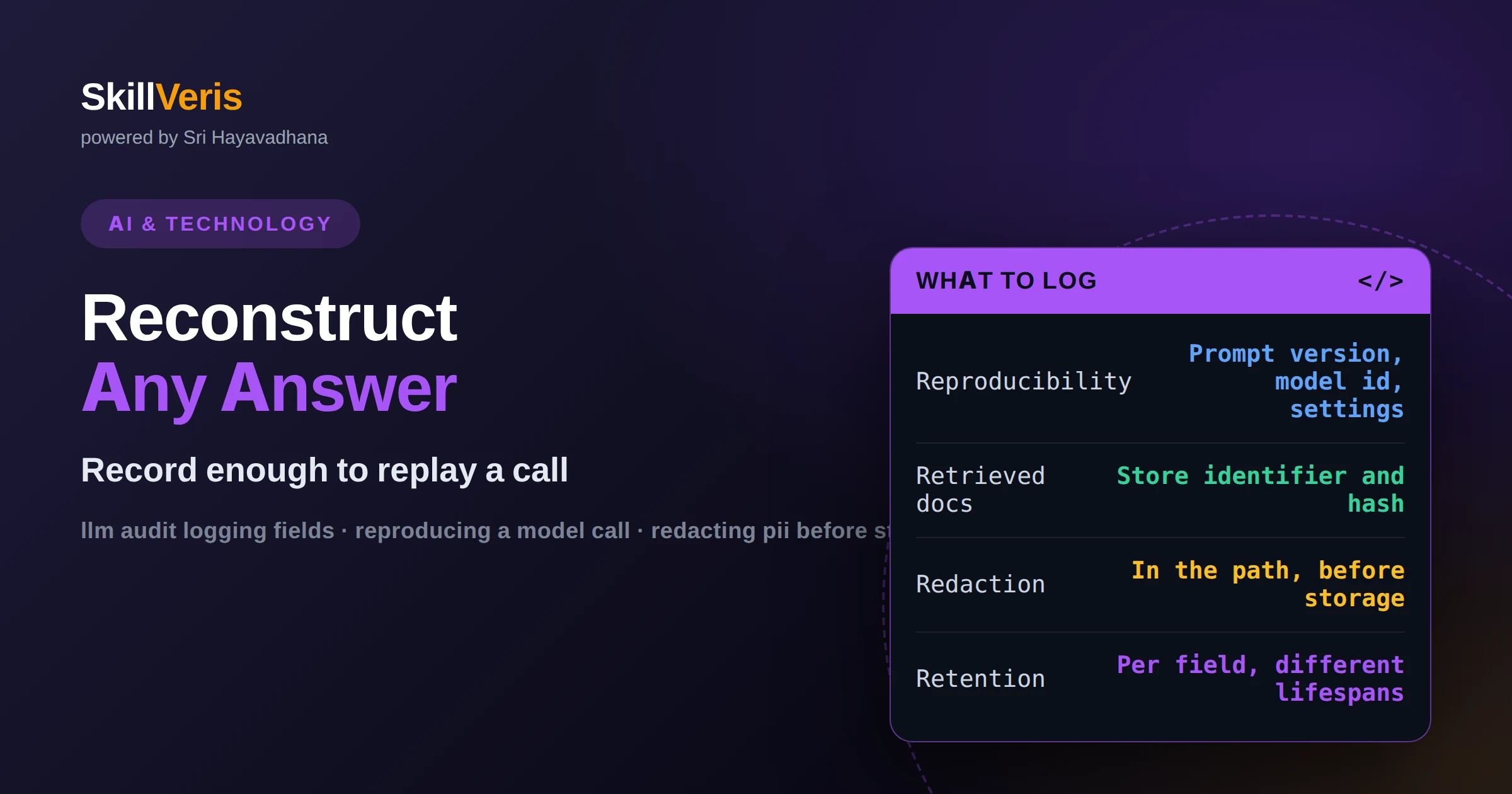
Audit logging for LLM applications: what to record and for how long
Logs are the only way to reconstruct why a model answered as it did. Learn which fields to record, how to redact them, and how retention and access should work.
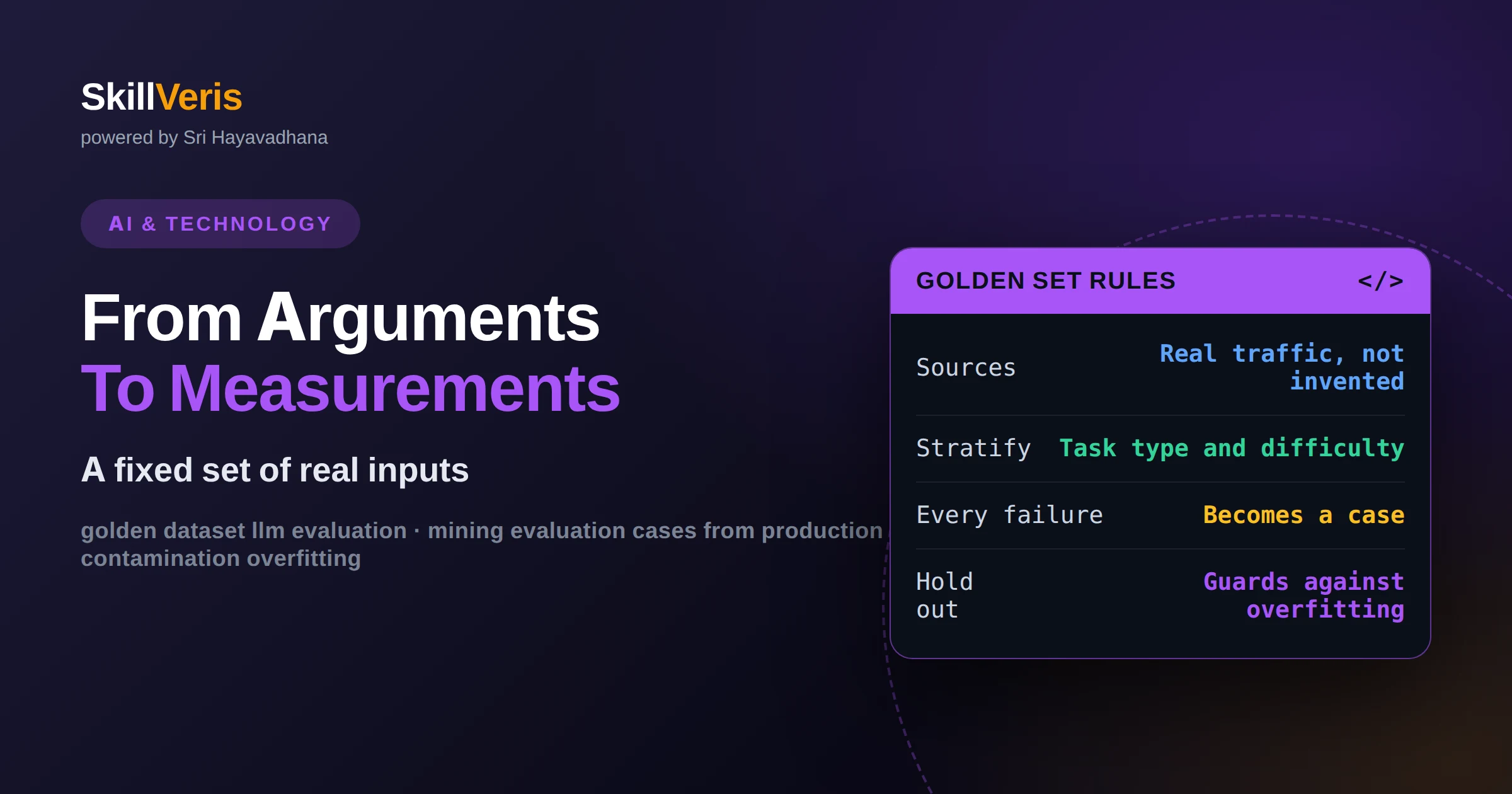
Building a golden evaluation set for an LLM feature
Your golden set makes every later decision measurable. Learn to mine real inputs and past failures, size and stratify it, and keep it honest as the product changes.
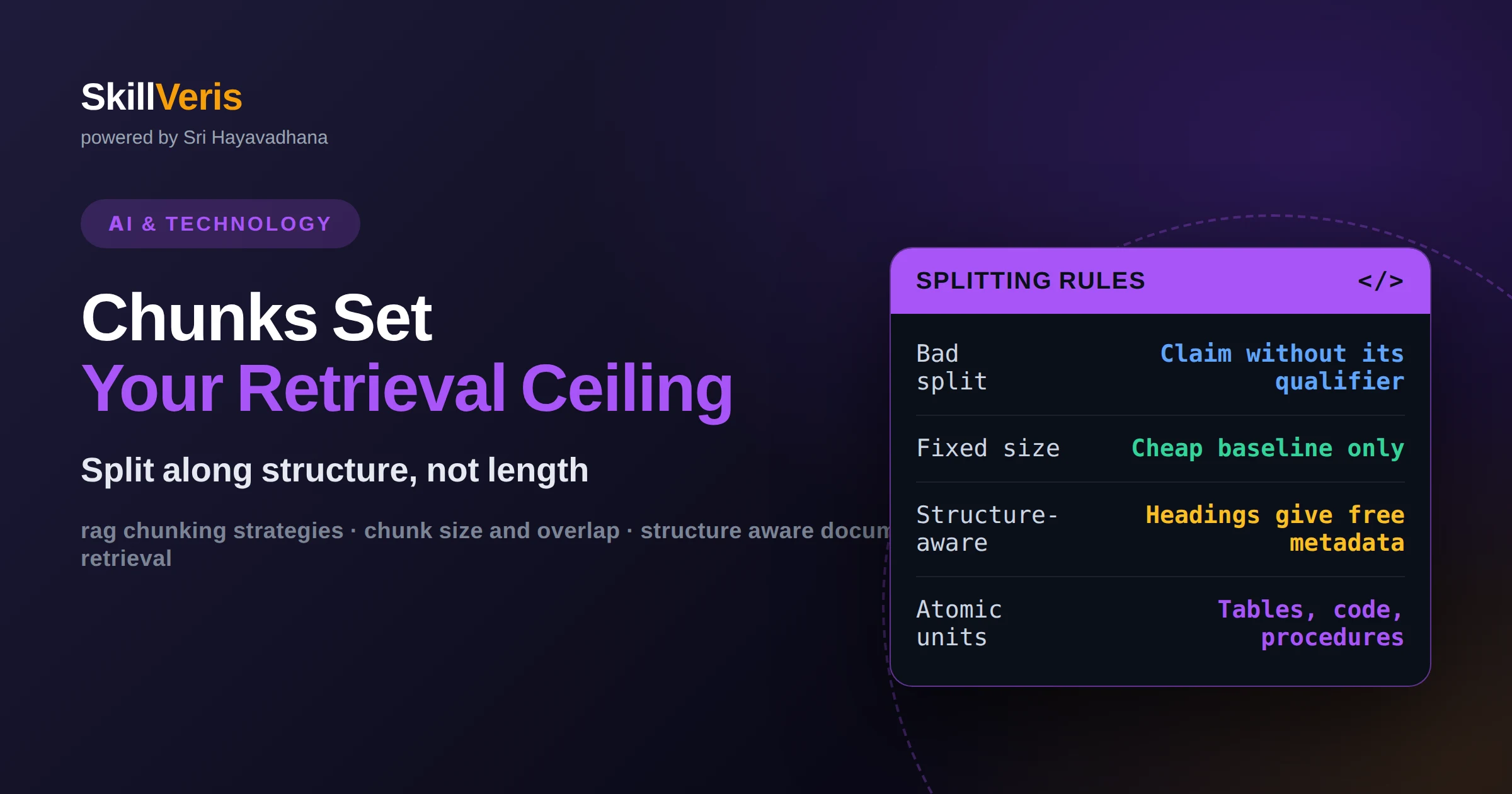
Chunking strategies for RAG: size, overlap and structure-aware splitting
Chunking sets your retrieval ceiling. Learn structure-aware splitting, overlap, metadata enrichment and how to measure whether your chunks contain whole answers.
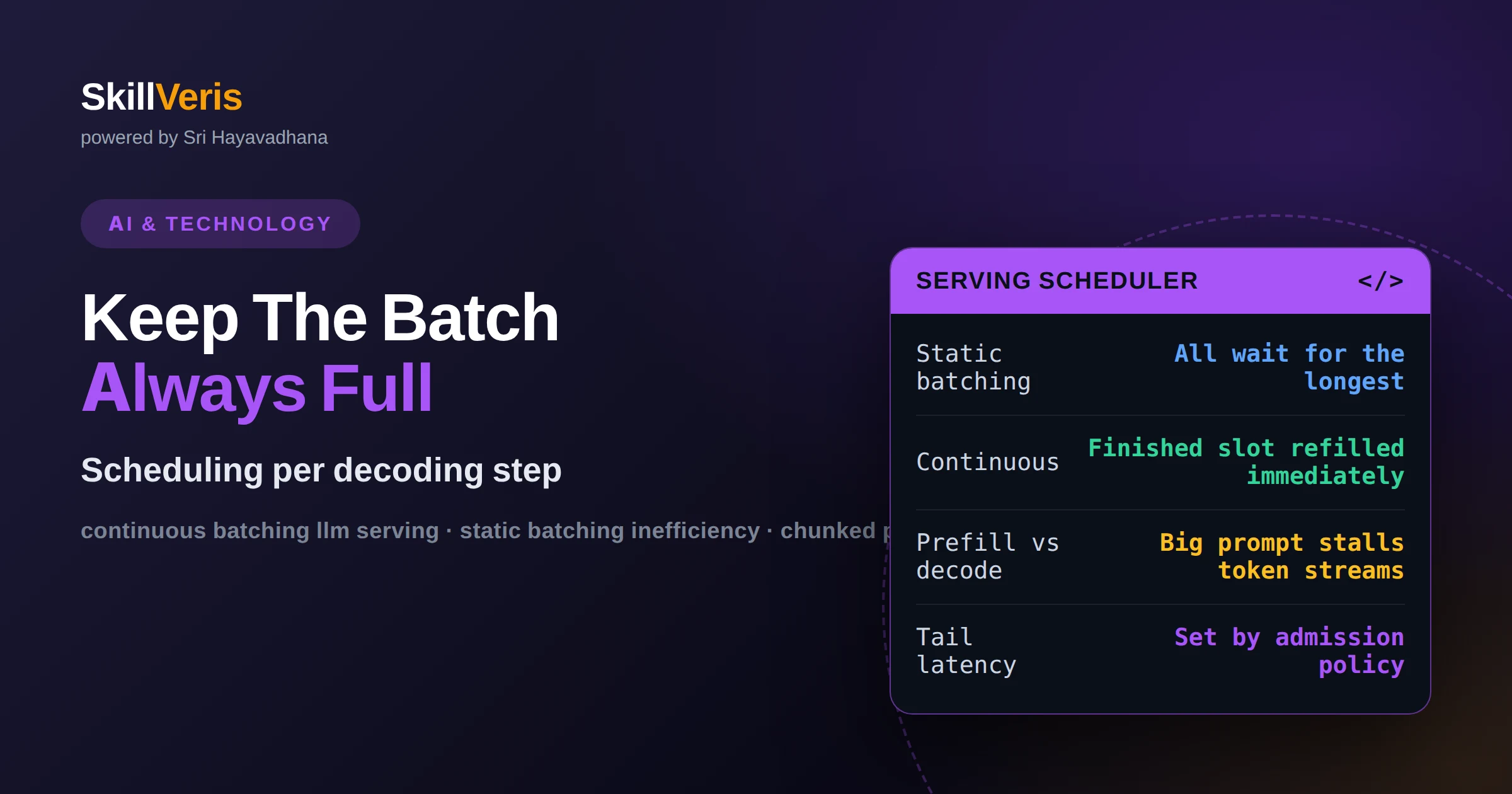
Continuous batching: raising LLM throughput without hurting latency
Continuous batching refills the batch every decoding step. Learn why it beats static batching, how queueing sets tail latency, and which knobs to tune first.
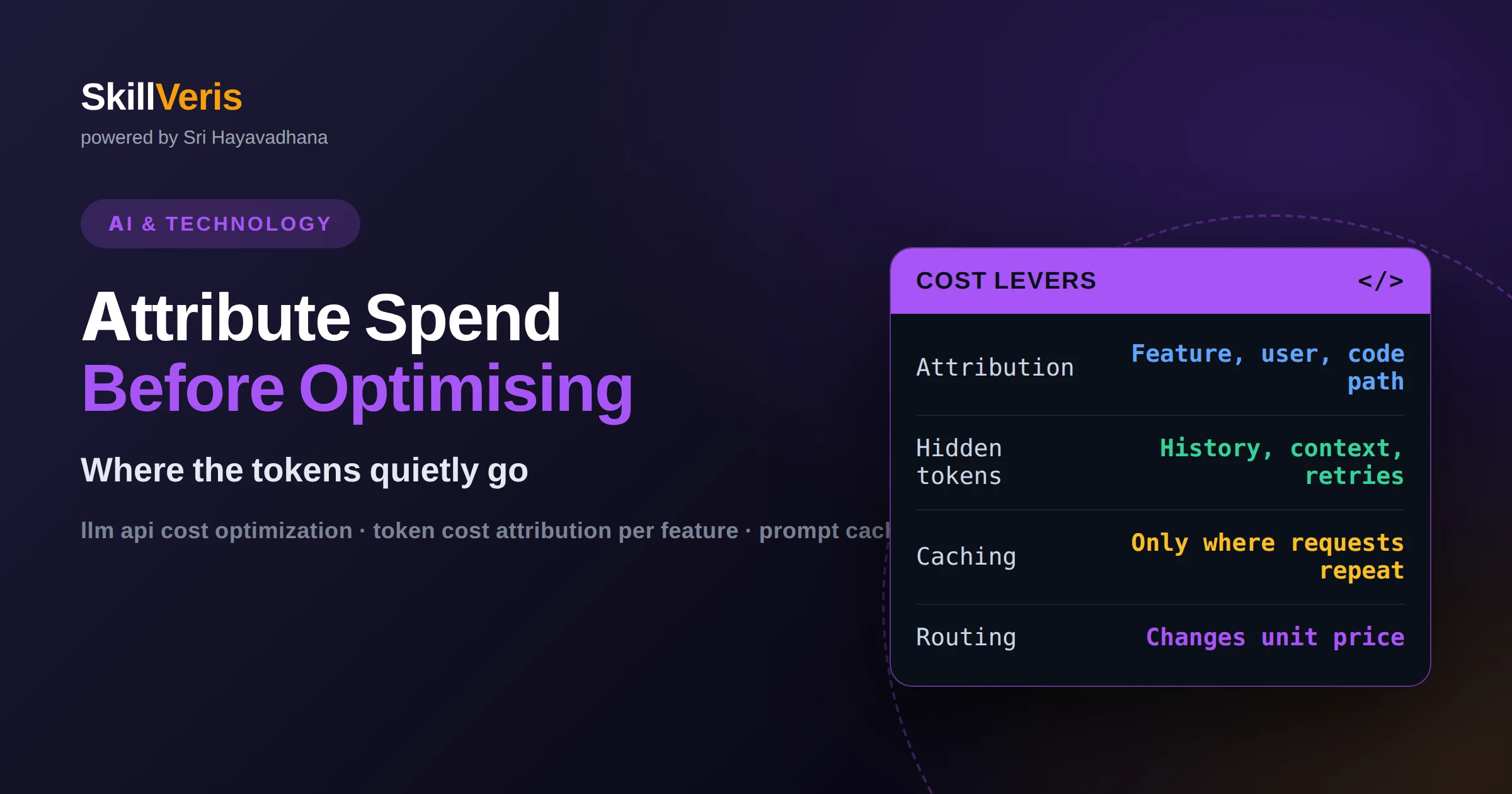
Controlling LLM costs in production: attribution, caching and budgets
You cannot control spend you cannot attribute. Learn per-feature cost accounting, then caching, routing and prompt trimming as measured decisions.
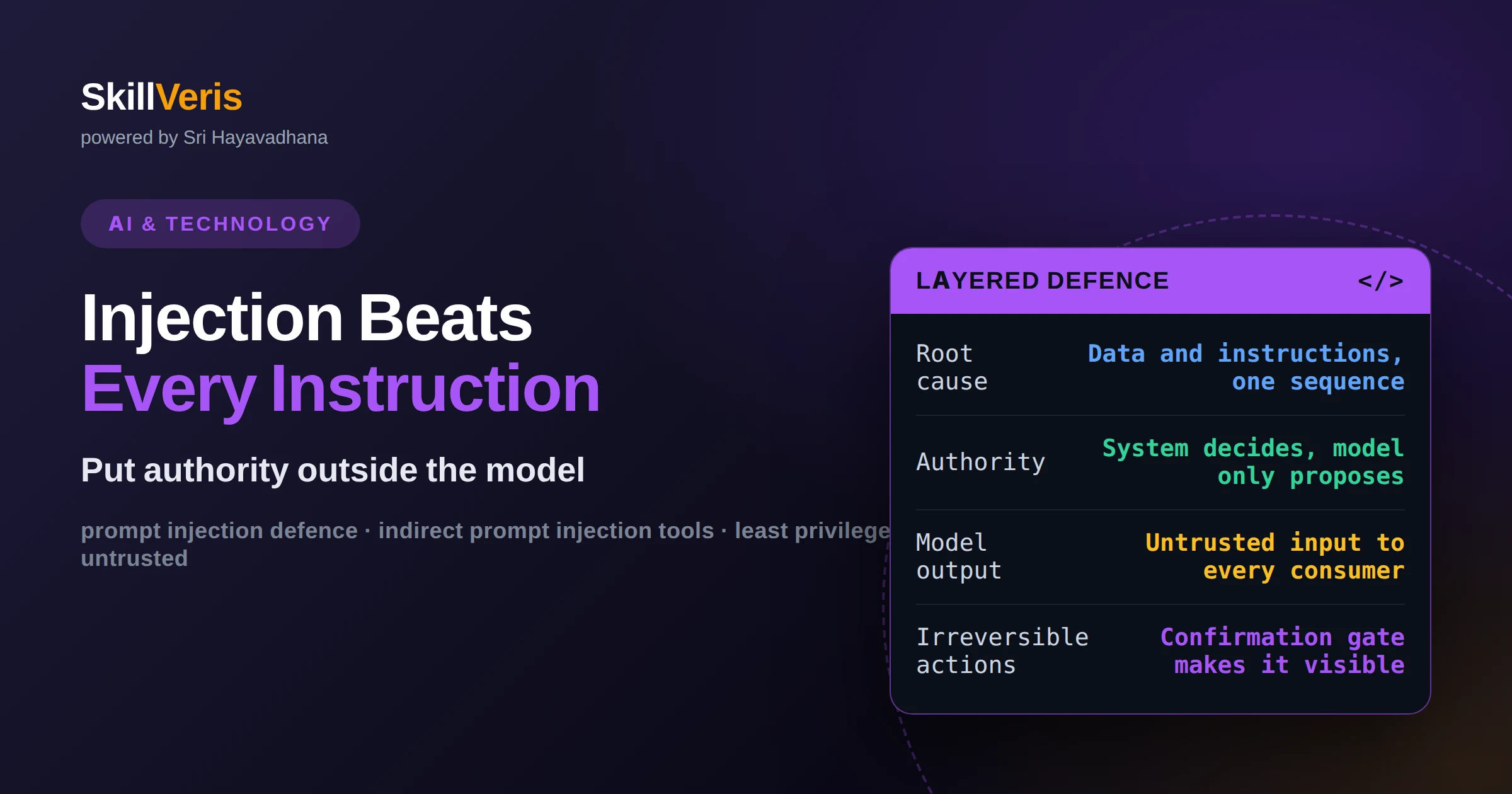
Defending LLM applications against prompt injection
Instructions cannot stop prompt injection because models cannot separate data from commands. Learn layered defences that put authority outside the model.
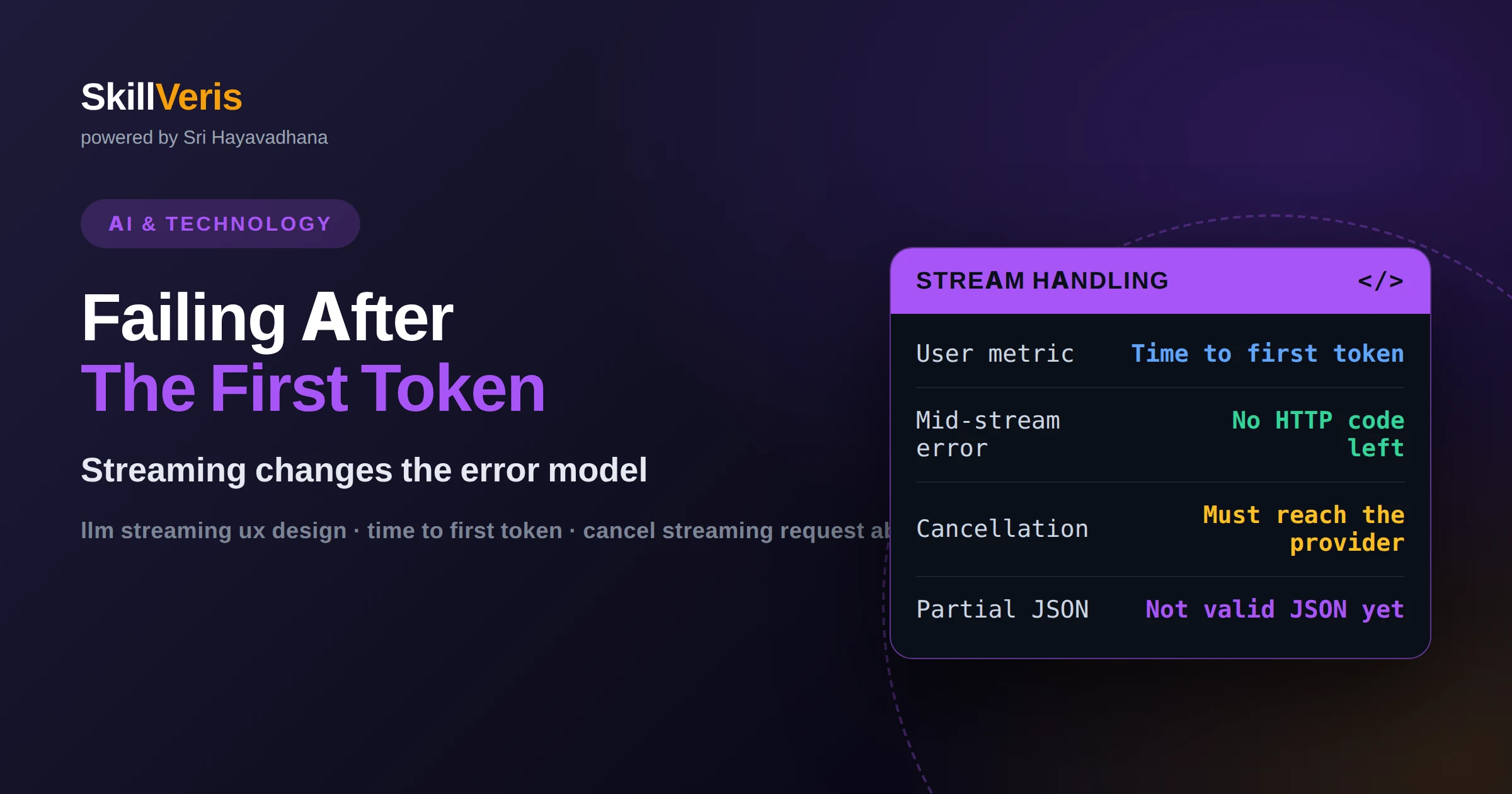
Designing streaming UX for LLM responses: latency, cancellation and errors
Streaming changes the error model: the response fails after it starts. Learn cancellation, partial state, mid-stream failure recovery and honest progress feedback.
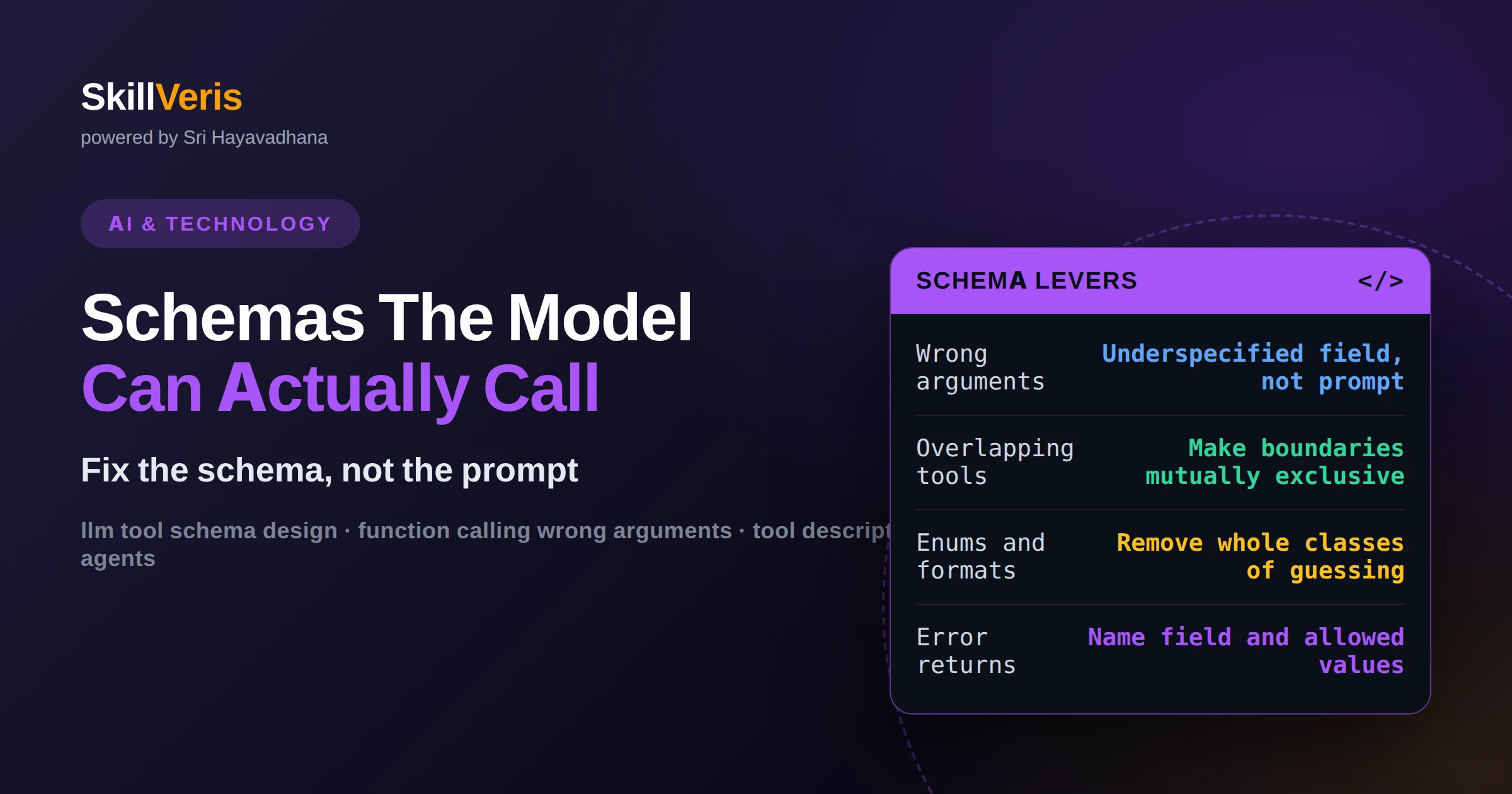
How to design tool schemas an LLM agent can call reliably
Agent tool-calling failures are usually schema failures. Learn how naming, typing, enums and error messages make the model pick the right tool and arguments.
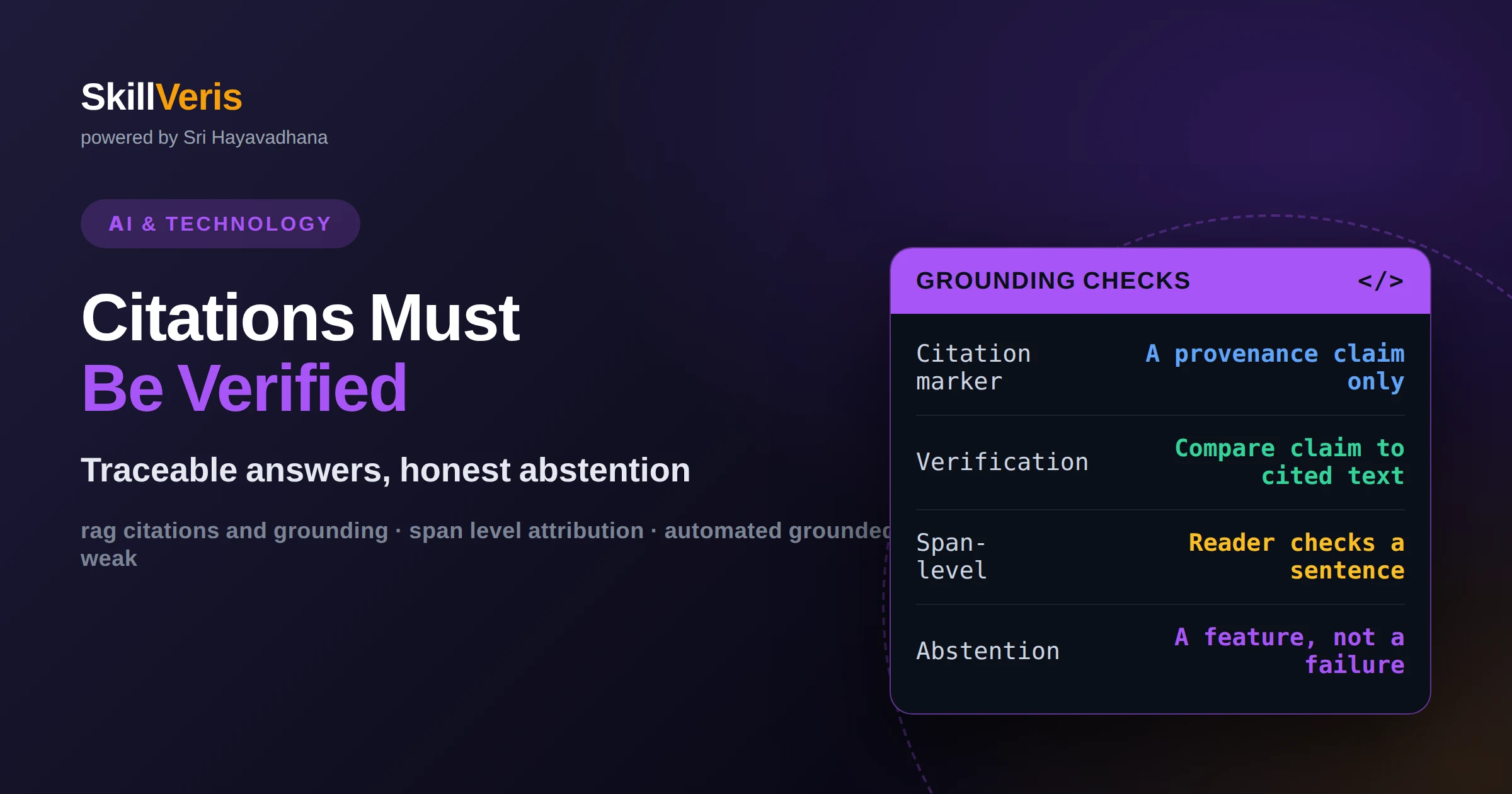
Grounding and citations in RAG: making answers traceable
Models will cite plausibly for unsupported claims. Learn citation formats, span attribution, automated groundedness checks and how to handle insufficient context.
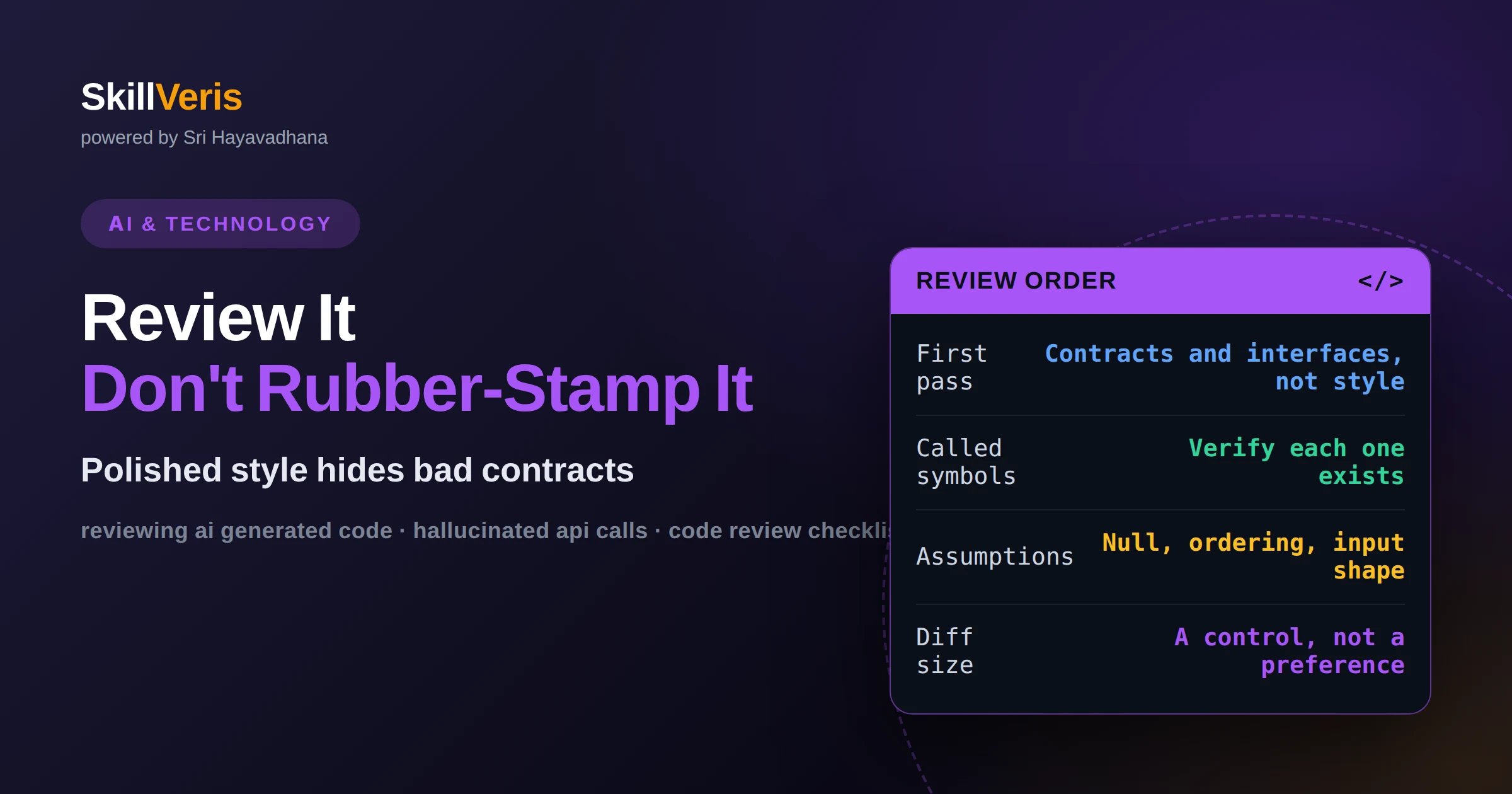
How to review AI-generated code without rubber-stamping it
AI code fails differently from human code: clean style, invented assumptions. Use a review order checking interfaces, invented APIs and edge cases first.
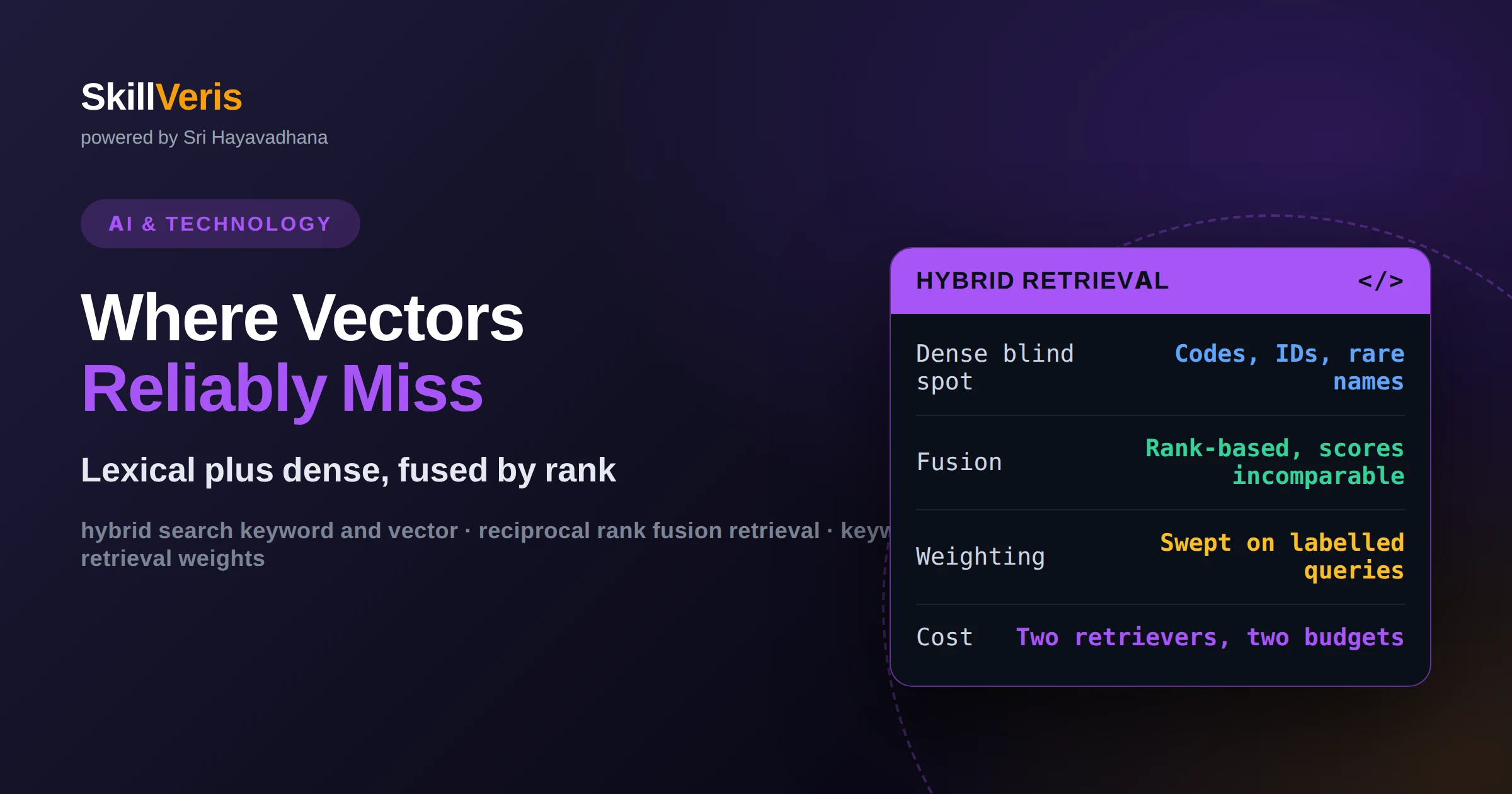
Hybrid search for RAG: combining keyword and vector retrieval
Dense retrieval misses codes, identifiers and rare names. Learn to combine lexical and vector search, fuse the rankings properly, and tune weighting with evidence.
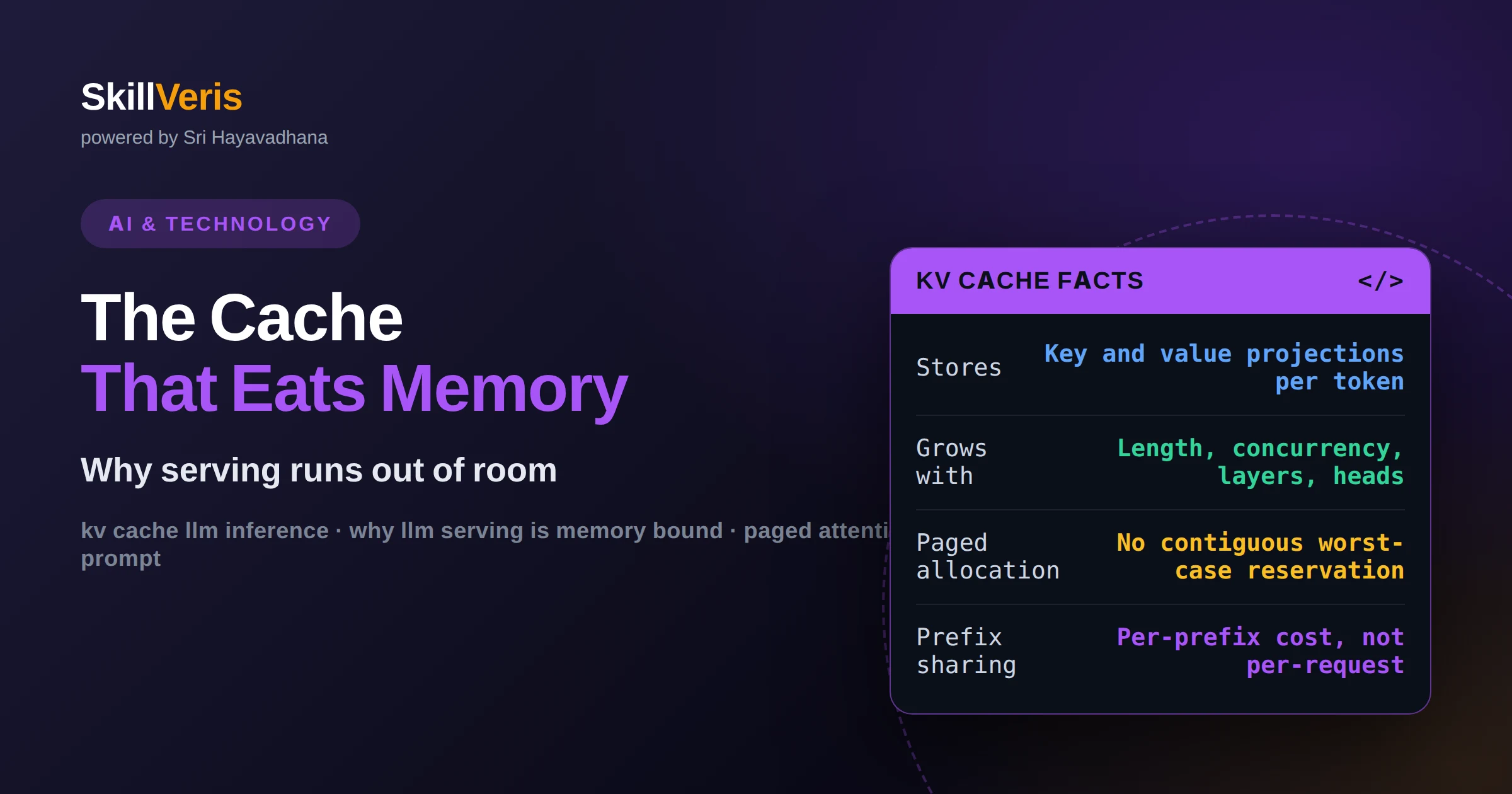
The KV cache explained: why it dominates LLM memory during serving
The KV cache makes generation fast and memory-bound at once. Learn what it stores, why it caps concurrency, and the levers that shrink it without hurting quality.
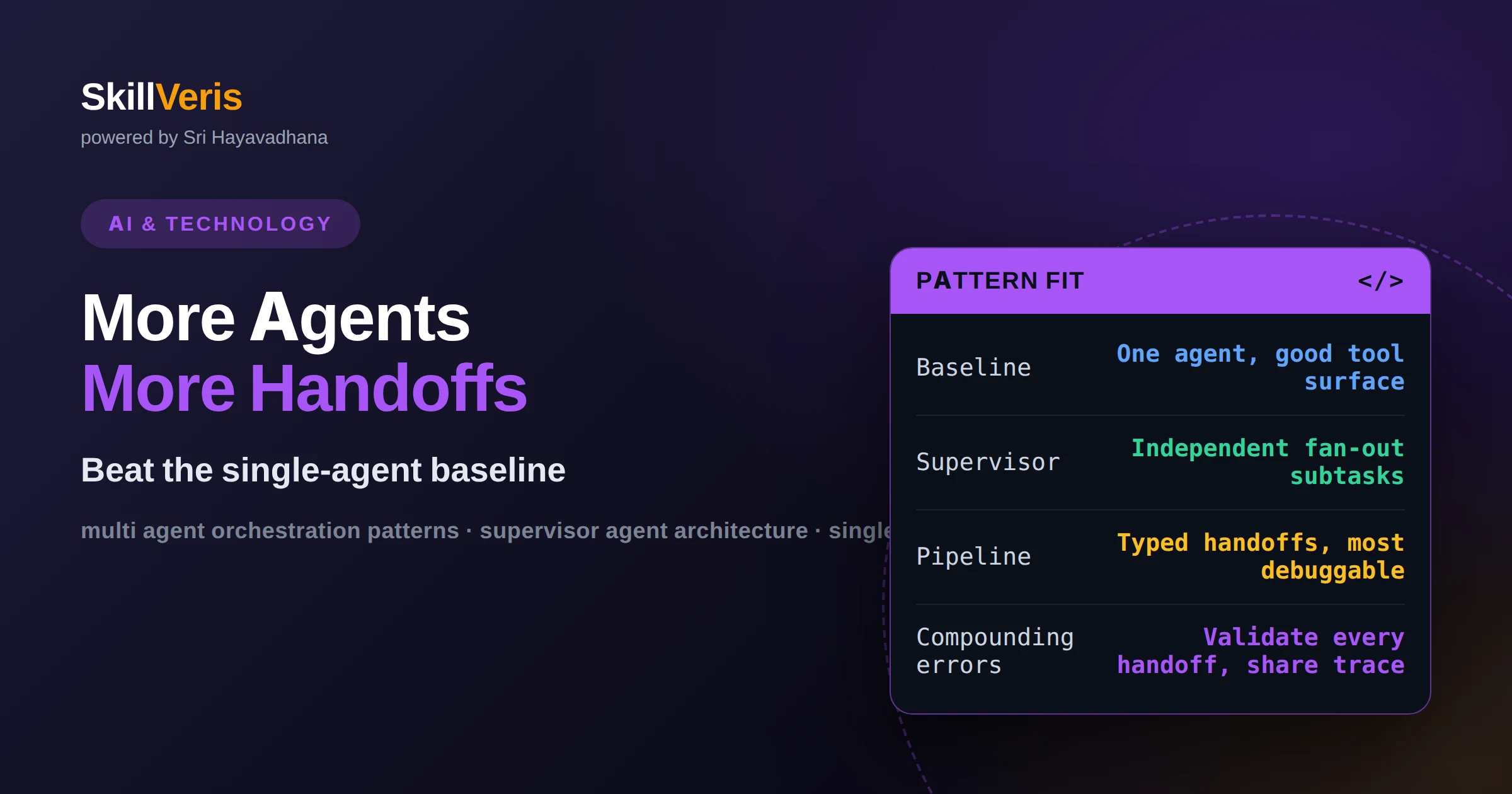
Multi-agent orchestration patterns and when a single agent is better
When does splitting one agent into several actually help? Compare supervisor, pipeline and reviewer patterns, their costs, and the single-agent baseline.
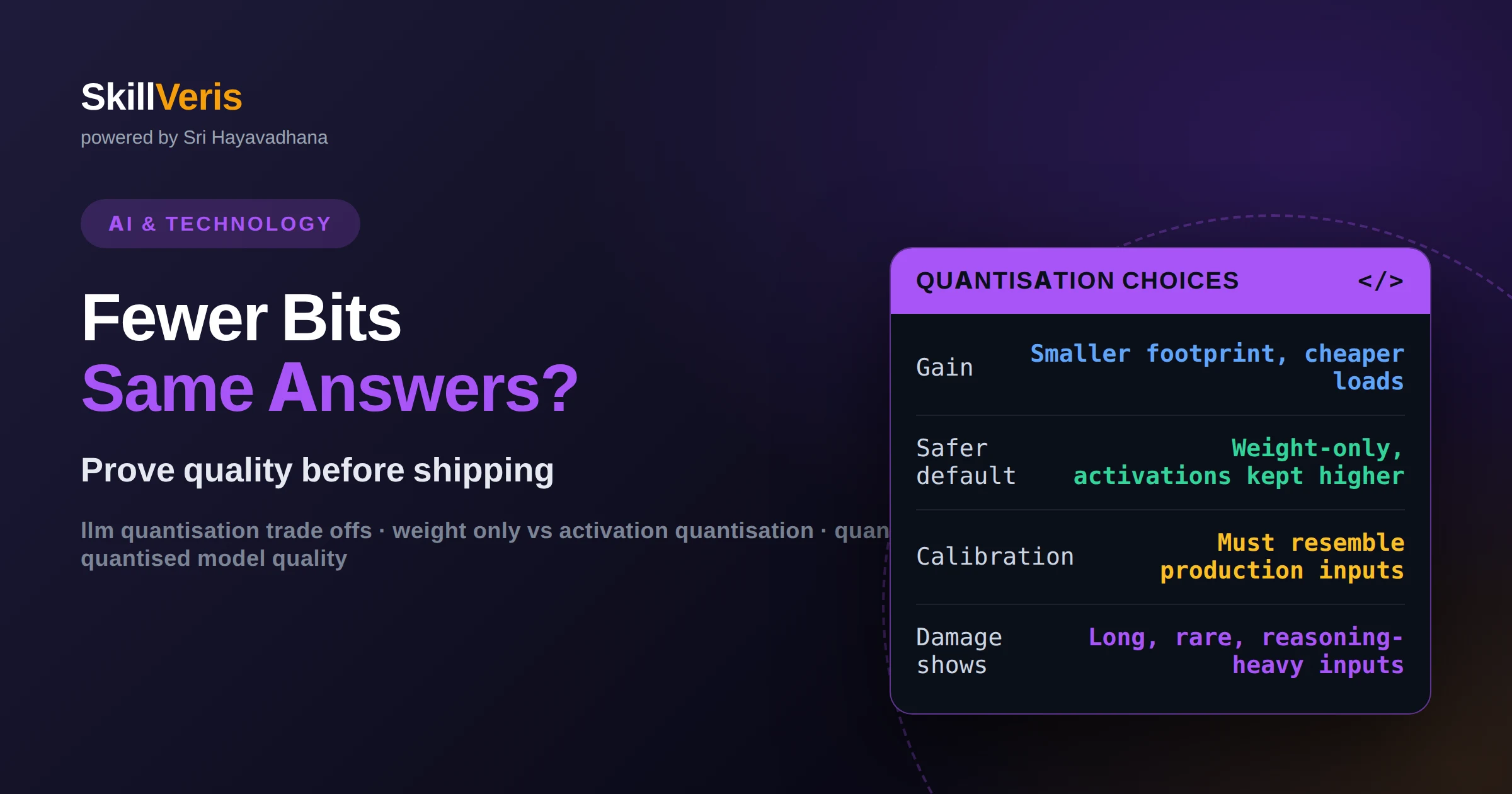
Quantising LLMs for inference: formats, trade-offs and how to validate
Quantisation trades precision for memory and speed. Learn weight-only versus activation quantisation, calibration, and how to prove quality has not degraded.
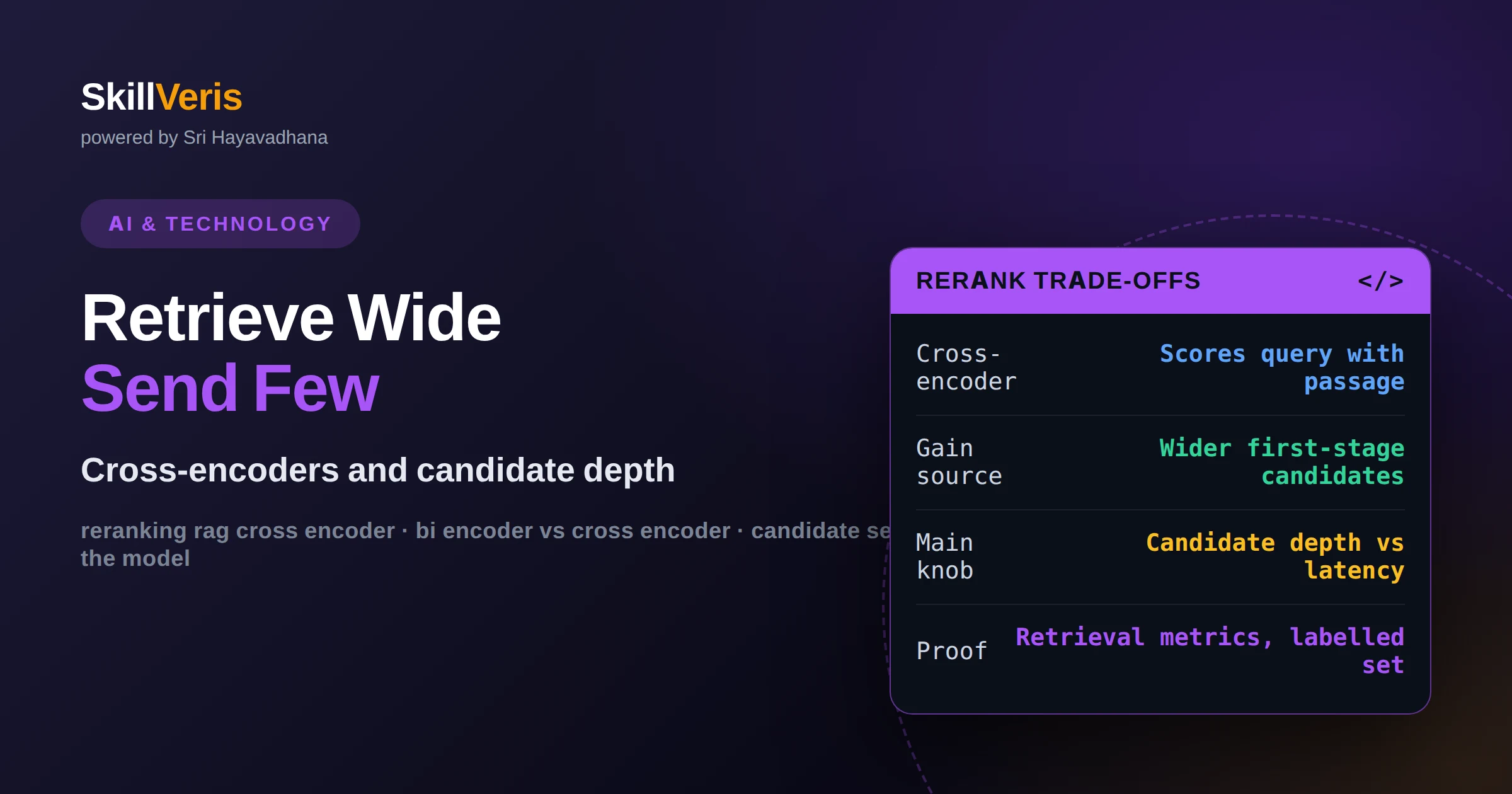
Reranking in RAG: cross-encoders, cost and how far to widen retrieval
Reranking lets you retrieve wide and send few passages. Learn candidate-set sizing, cross-encoder trade-offs, latency budgets and how to prove the gain.
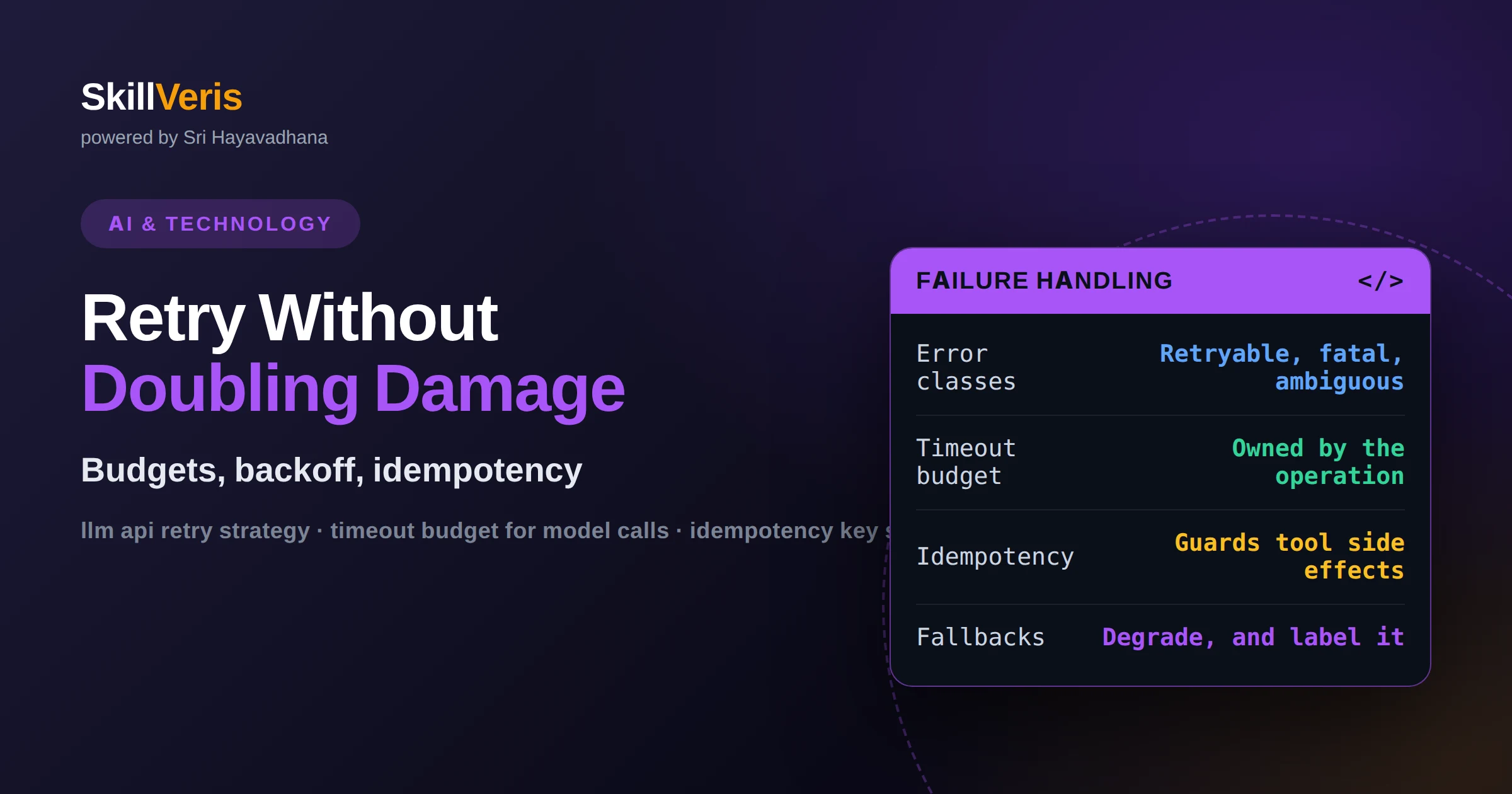
Retries, timeouts and fallbacks for LLM API calls
Naive retries on model calls multiply cost and duplicate side effects. Learn timeout budgets, backoff, idempotency keys and fallback chains that degrade gracefully.
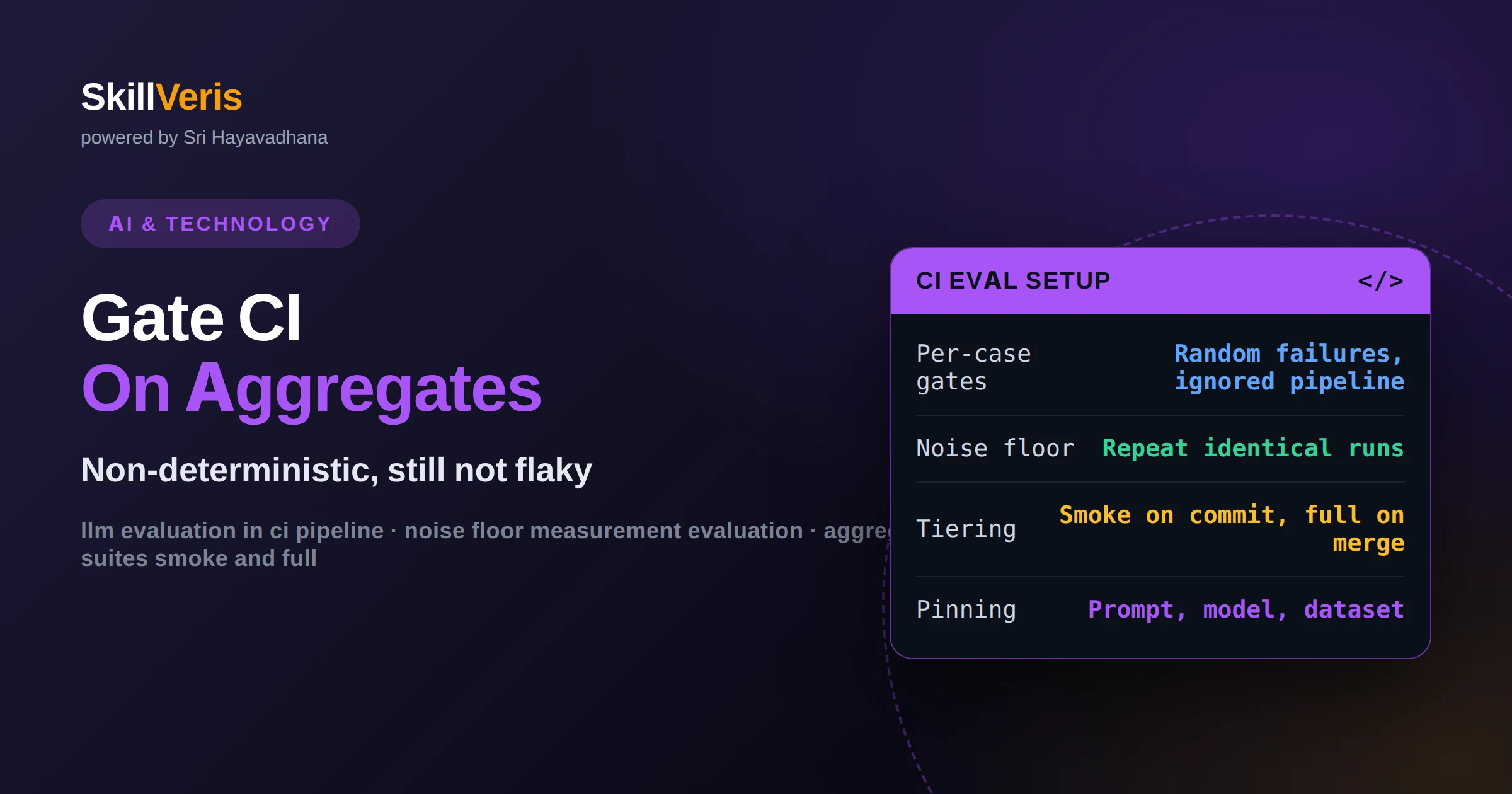
Running LLM evaluations in CI without flaky pipelines
Non-deterministic output can still gate CI. Learn aggregate thresholds, noise floors, tiered suites and caching that keep evaluation runs fast and non-flaky.
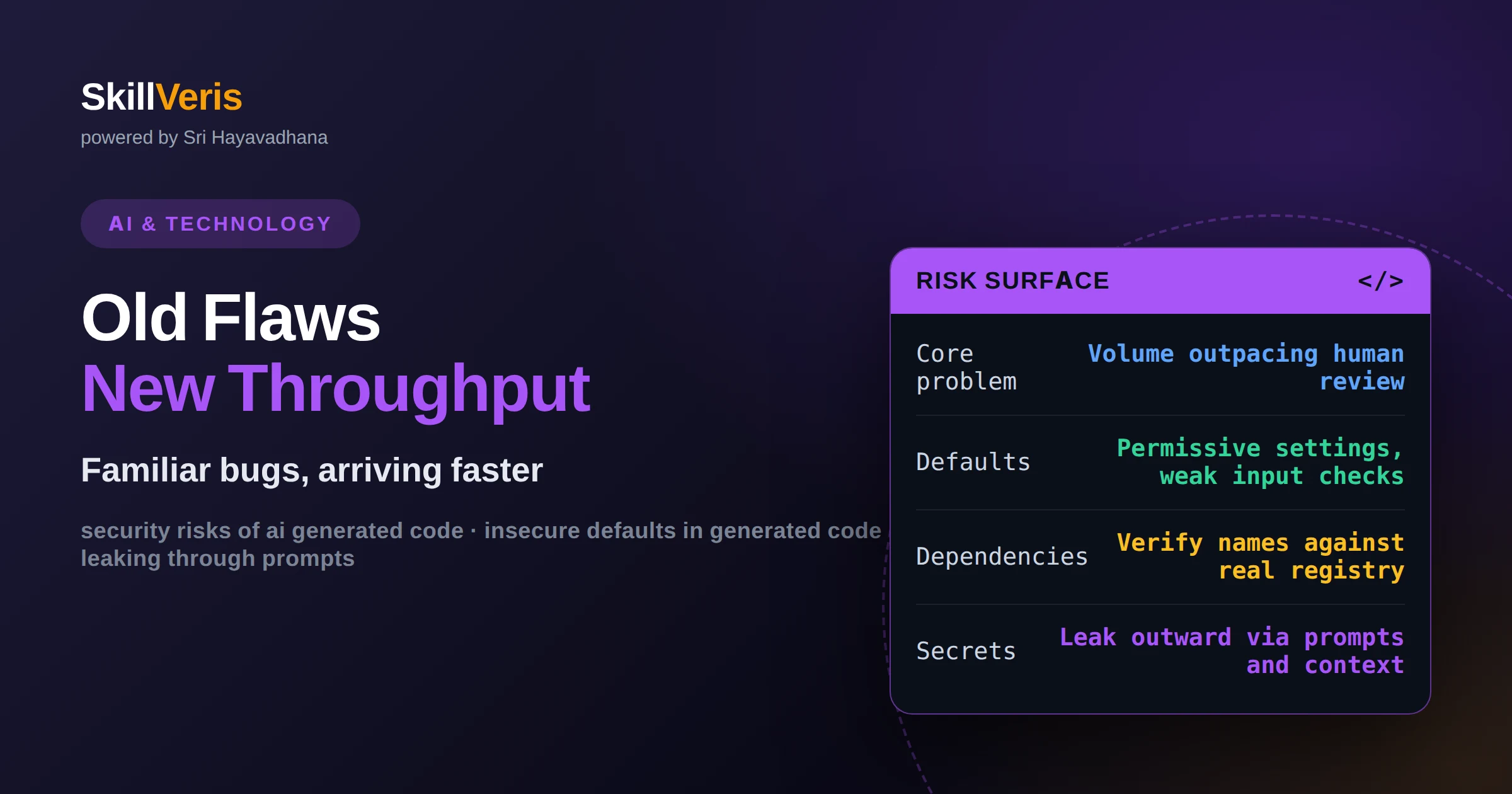
Security and licence risks in AI-generated code, and how to catch them
The risk is ordinary insecure defaults arriving faster than review. Learn the patterns to scan for, how secrets leak through prompts, and which gates to automate.
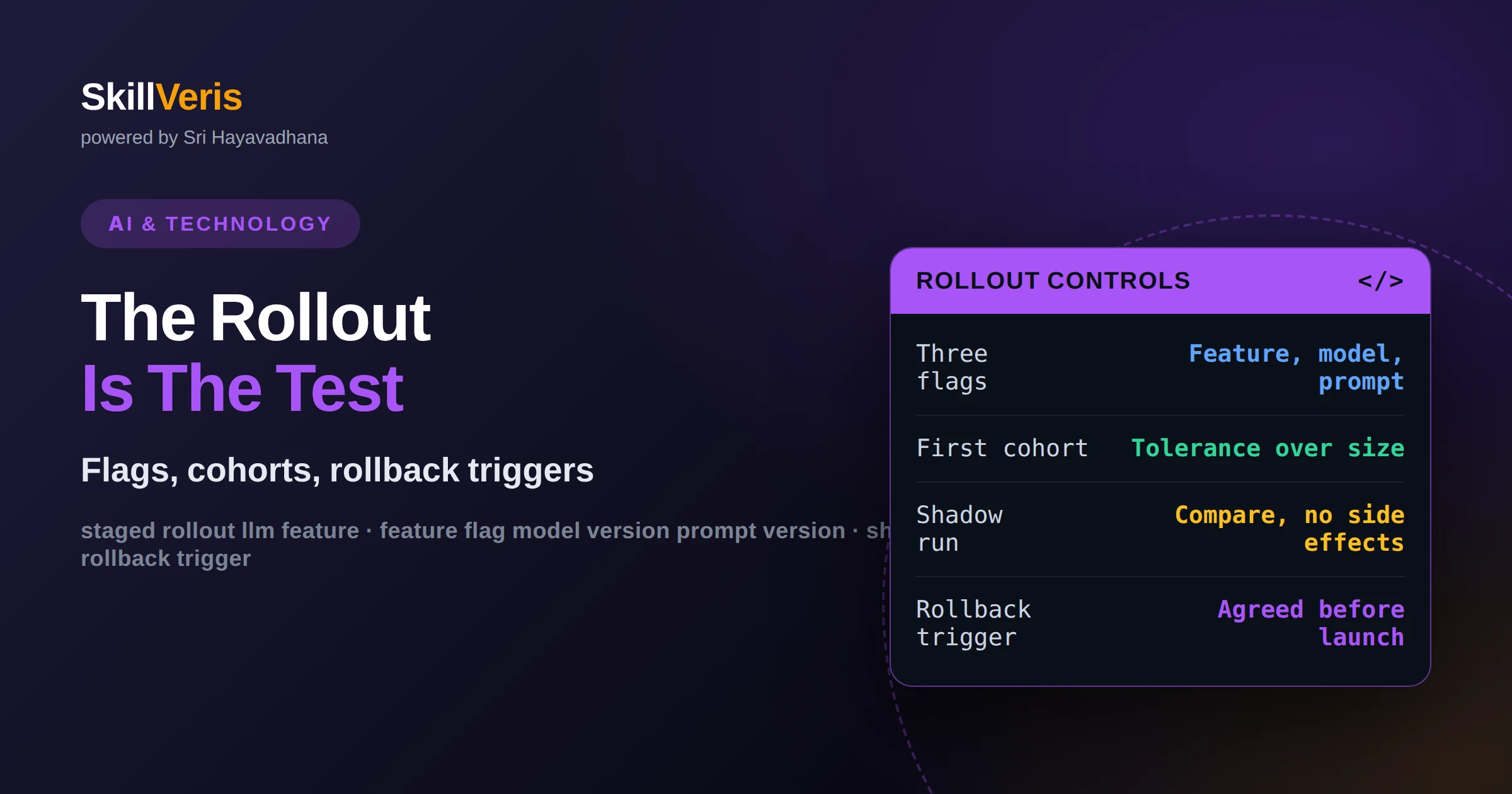
Staged rollout for an LLM feature: flags, cohorts and rollback
You cannot fully validate an LLM feature pre-launch, so the rollout is the test. Design flags, cohorts, guardrail metrics and rollback triggers before you ship.
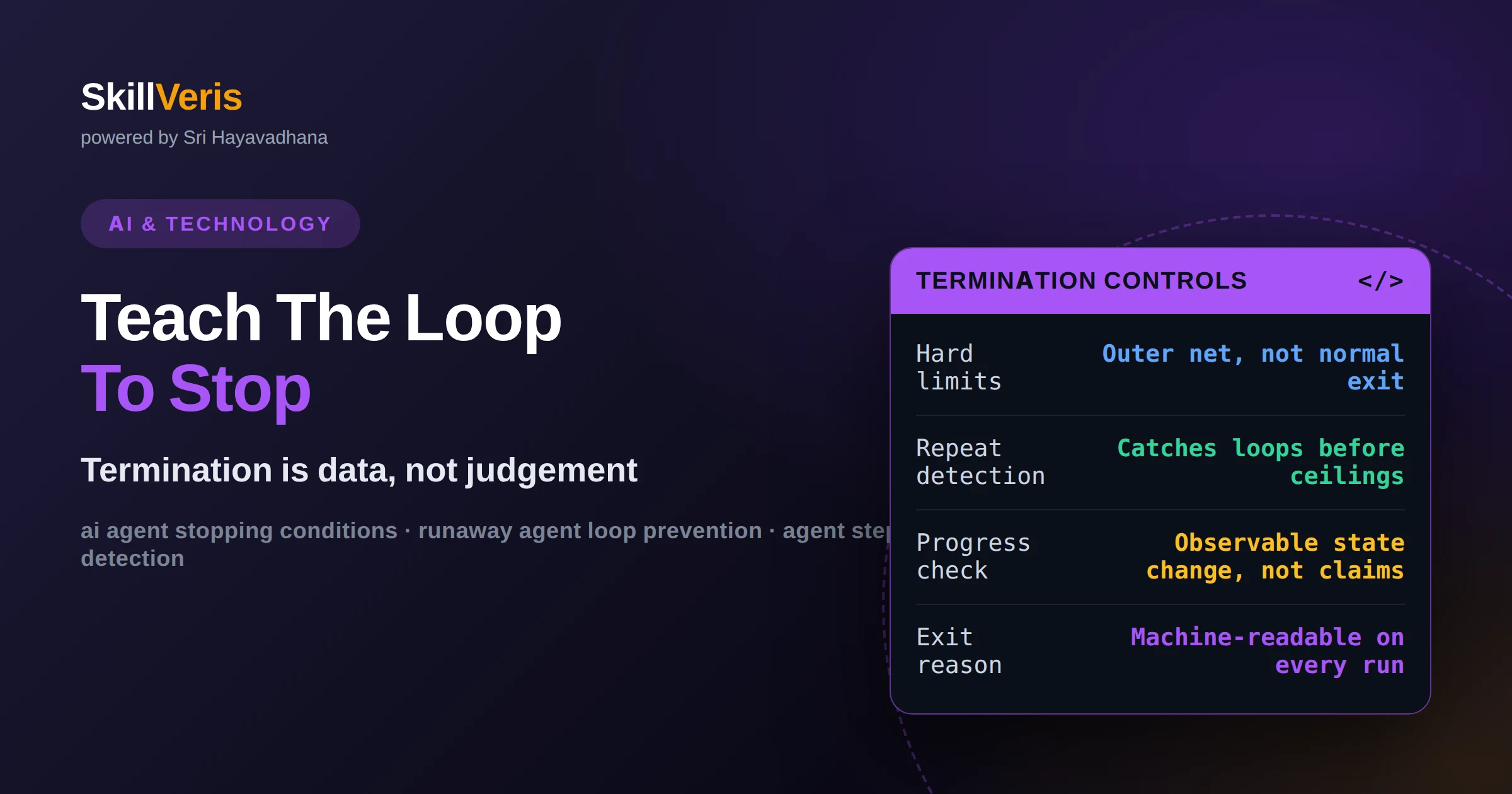
Stopping conditions for AI agents: preventing runaway control loops
Agents loop because nothing tells them to stop. Learn step limits, cost ceilings, repeat detection and progress checks that end a run without cutting it short.
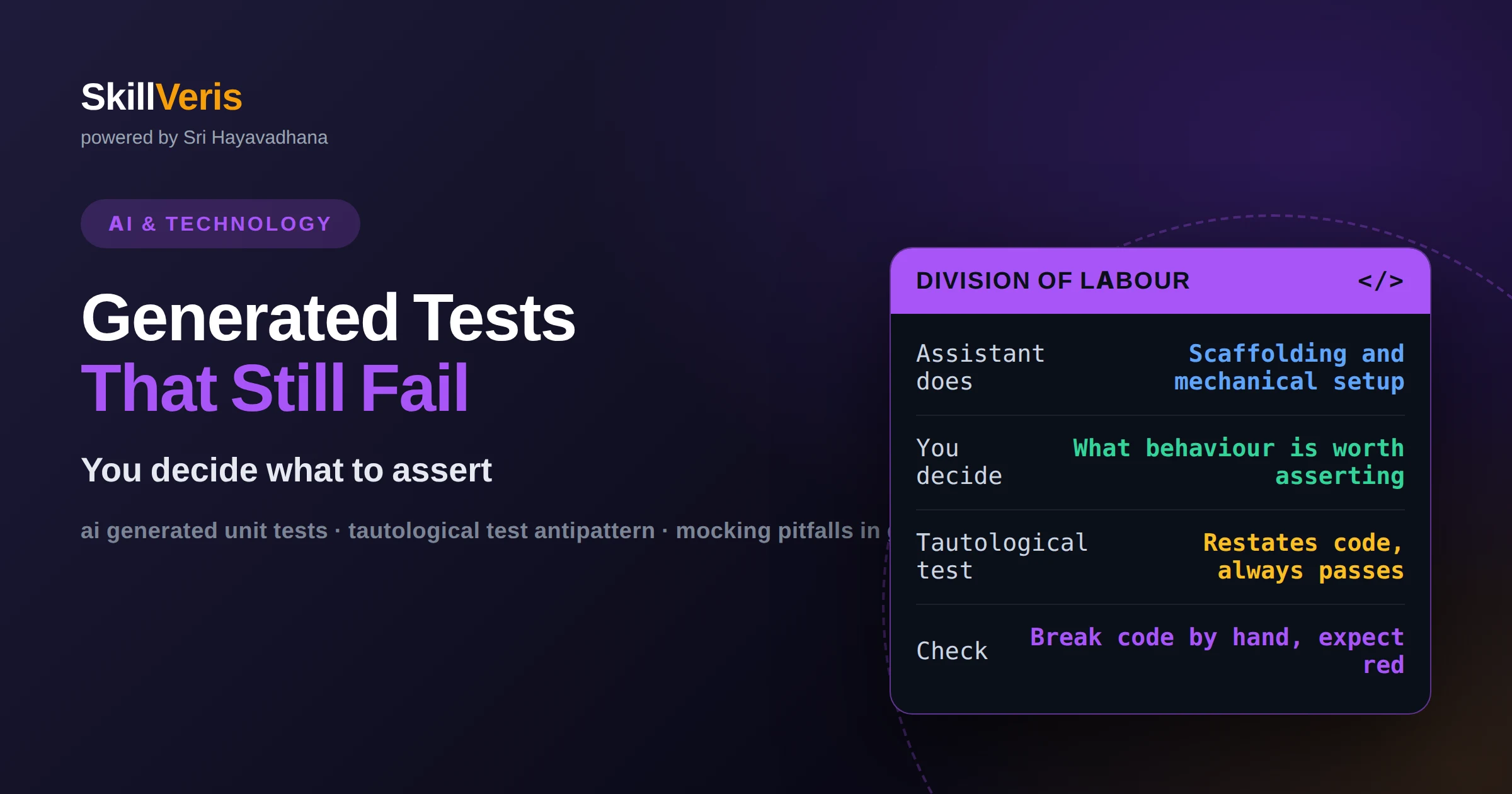
Using AI assistants to write tests without weakening your test suite
Assistants scaffold tests well and choose assertions badly. Learn a workflow that keeps you deciding what to assert while the tool writes the mechanical parts.
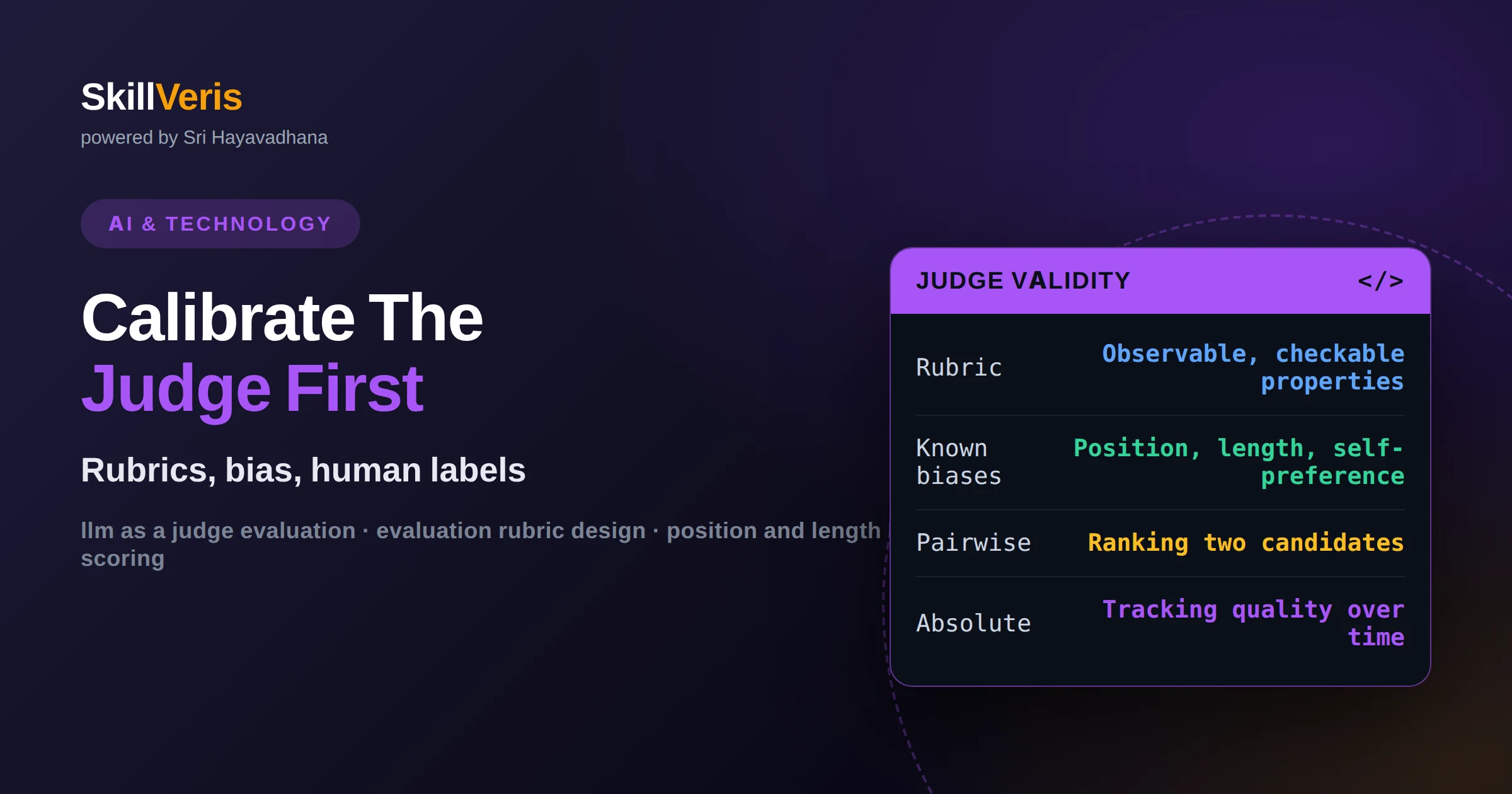
Using an LLM as a judge: rubrics, bias and validating the judge
An unvalidated judge is worse than no measurement. Learn rubric design, known judge biases, pairwise versus scalar scoring, and how to calibrate against humans.