#DeepLearning
25 articles tagged with #DeepLearning
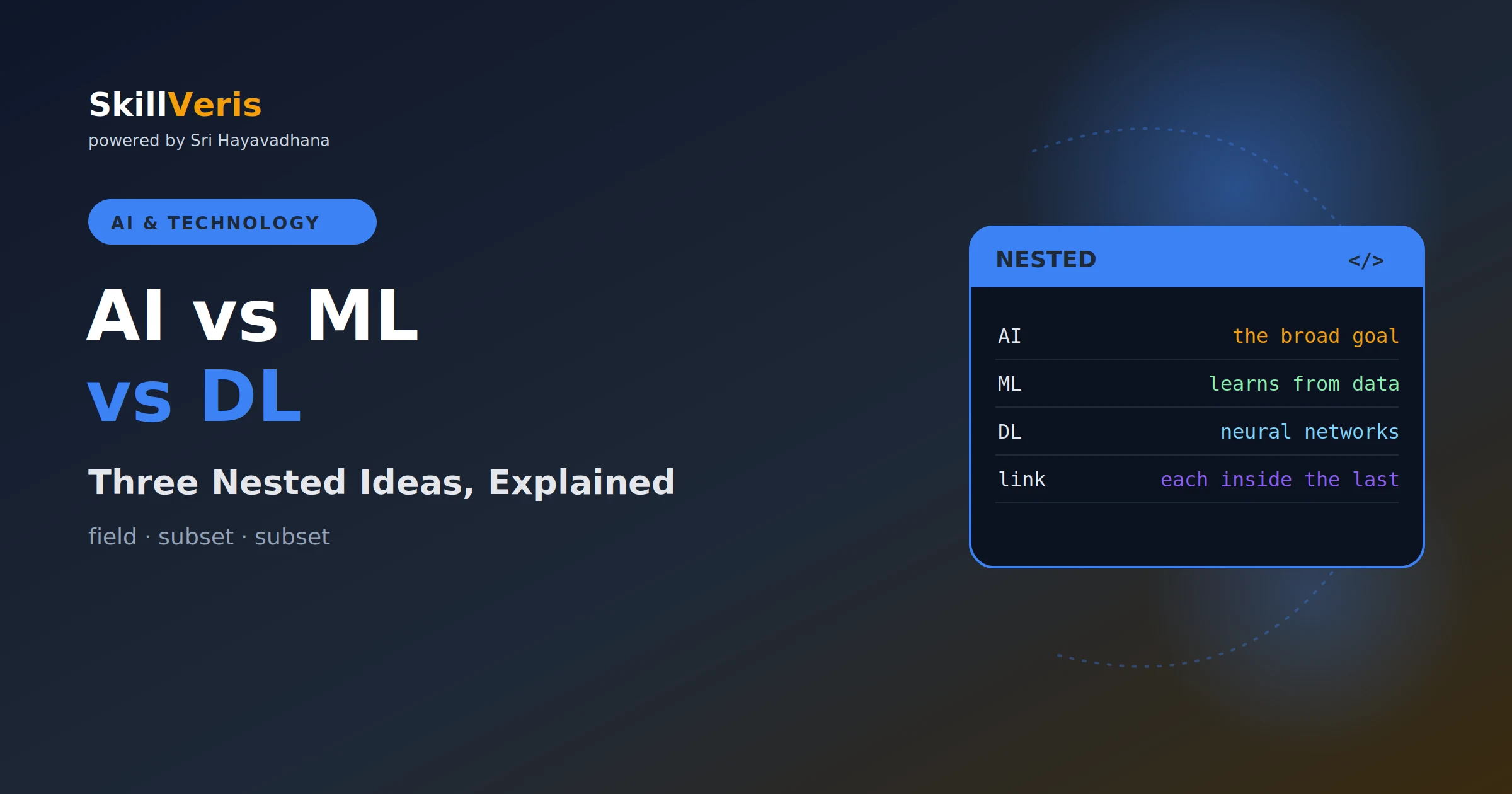
Machine Learning vs Deep Learning vs AI Explained
A comprehensive guide to machine learning vs deep learning vs ai explained — written for learners at every level.
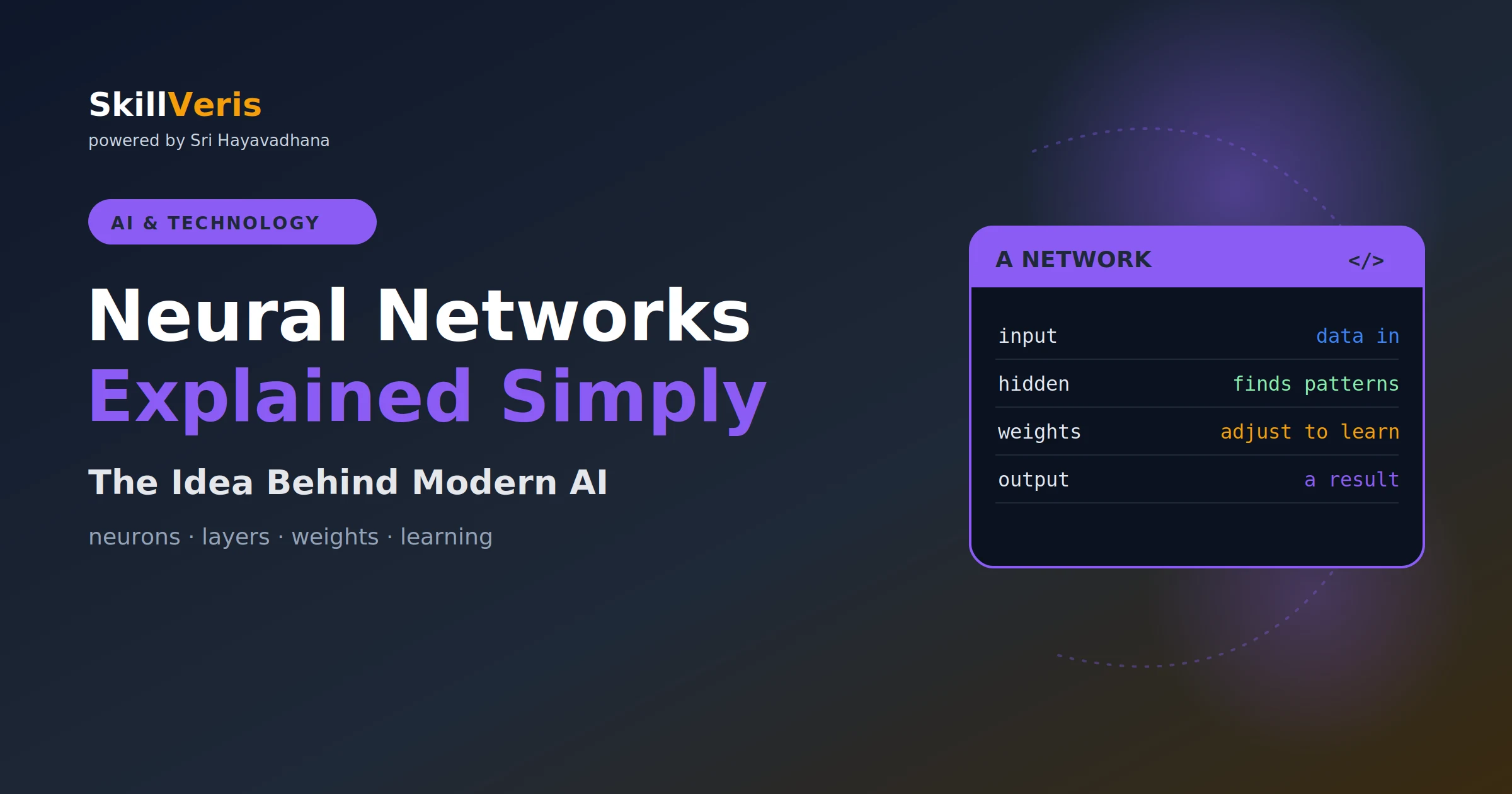
Neural Networks Explained with Simple Analogies
Neural networks are webs of simple units trained to recognise patterns — explained here without any maths.
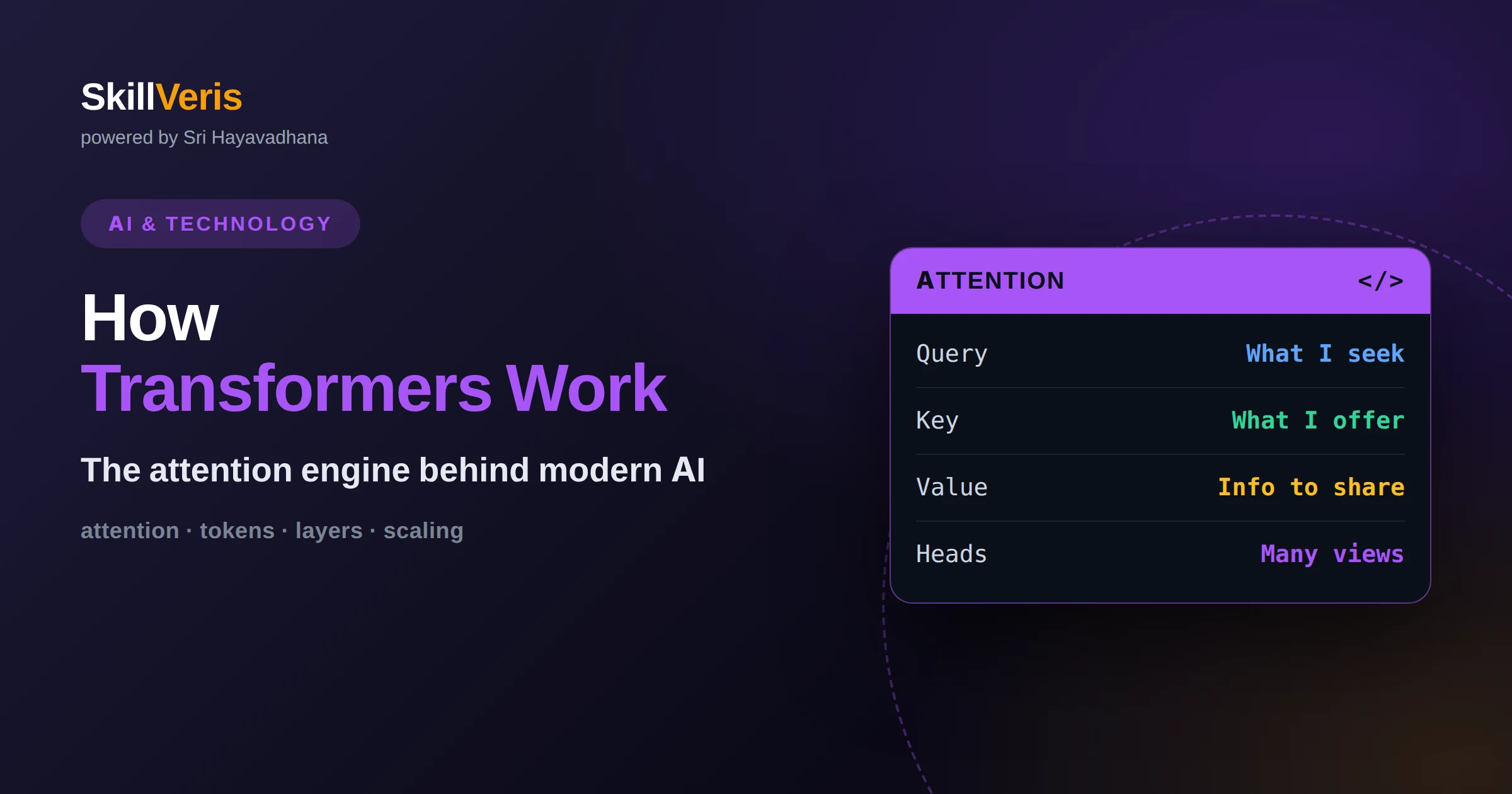
How Transformers Work: The Architecture Behind Modern AI
Transformers are neural networks that use attention to weigh how words relate, letting AI process whole sequences in parallel and capture long-range context.
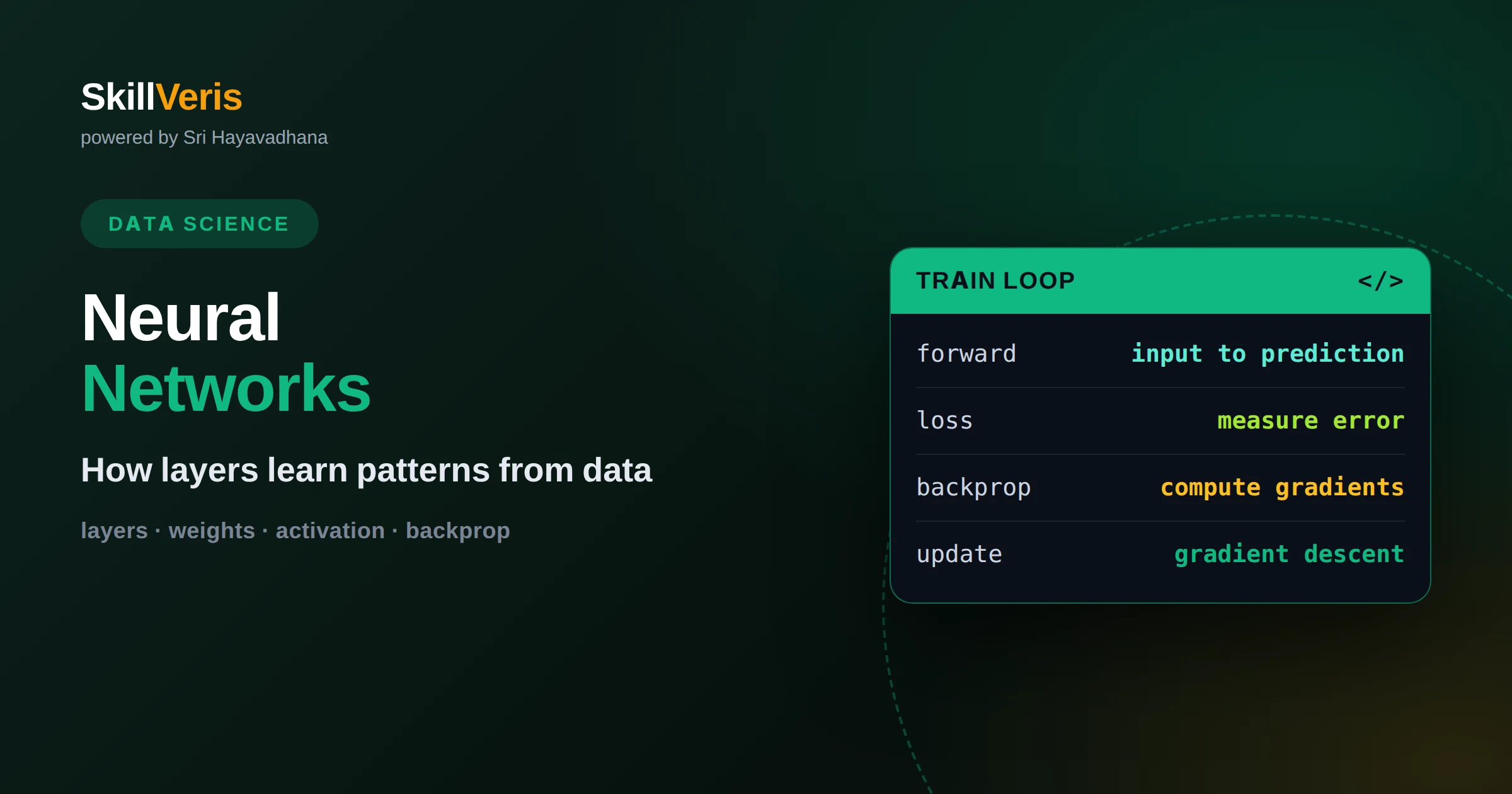
Neural Networks Explained: A Visual Guide
A neural network learns patterns by passing data through layers of weighted connections that adjust during training. Here is how each piece works together.

Speech Recognition Explained: How AI Understands Voice
Speech recognition turns spoken audio into text by converting sound waves into features a neural network maps to words, powering assistants, captions, and dictation.
What Is Self-Attention in Neural Networks
Self-attention lets each token in a sequence attend to every other token in the same sequence, building context-aware representations that power transformer models.
What Is Model Quantization and Why It Matters
Model quantization shrinks a neural network by storing its weights in lower precision, cutting memory and speeding inference with little accuracy loss.
How AI Image Upscaling Works
AI image upscaling uses neural networks to add realistic detail when enlarging photos, going beyond old resizing tricks. Learn how it works and where it shines.
What Is Text-to-Speech and How It Works
Text-to-speech converts written text into natural spoken audio using neural networks. Learn how modern TTS works, its components, and where it is used.
What Is Speech-to-Text: ASR Explained
Speech-to-text, or ASR, converts spoken audio into written words using neural networks. Learn how automatic speech recognition works and where it is used.
How Machine Translation Works Today
Modern machine translation uses neural networks called transformers to convert text between languages by learning meaning, not just swapping words one by one.
What Is Backpropagation in Neural Networks
Backpropagation is the algorithm that lets neural networks learn by efficiently calculating how much each weight contributed to the error and adjusting it.
What Are Activation Functions in Neural Networks
Activation functions add non-linearity to neural networks, letting them learn complex patterns instead of behaving like a simple linear model. Here's how they work.
AI vs Machine Learning vs Deep Learning
AI vs machine learning vs deep learning explained clearly: the nested relationship between the three, with concrete examples showing exactly how they differ.
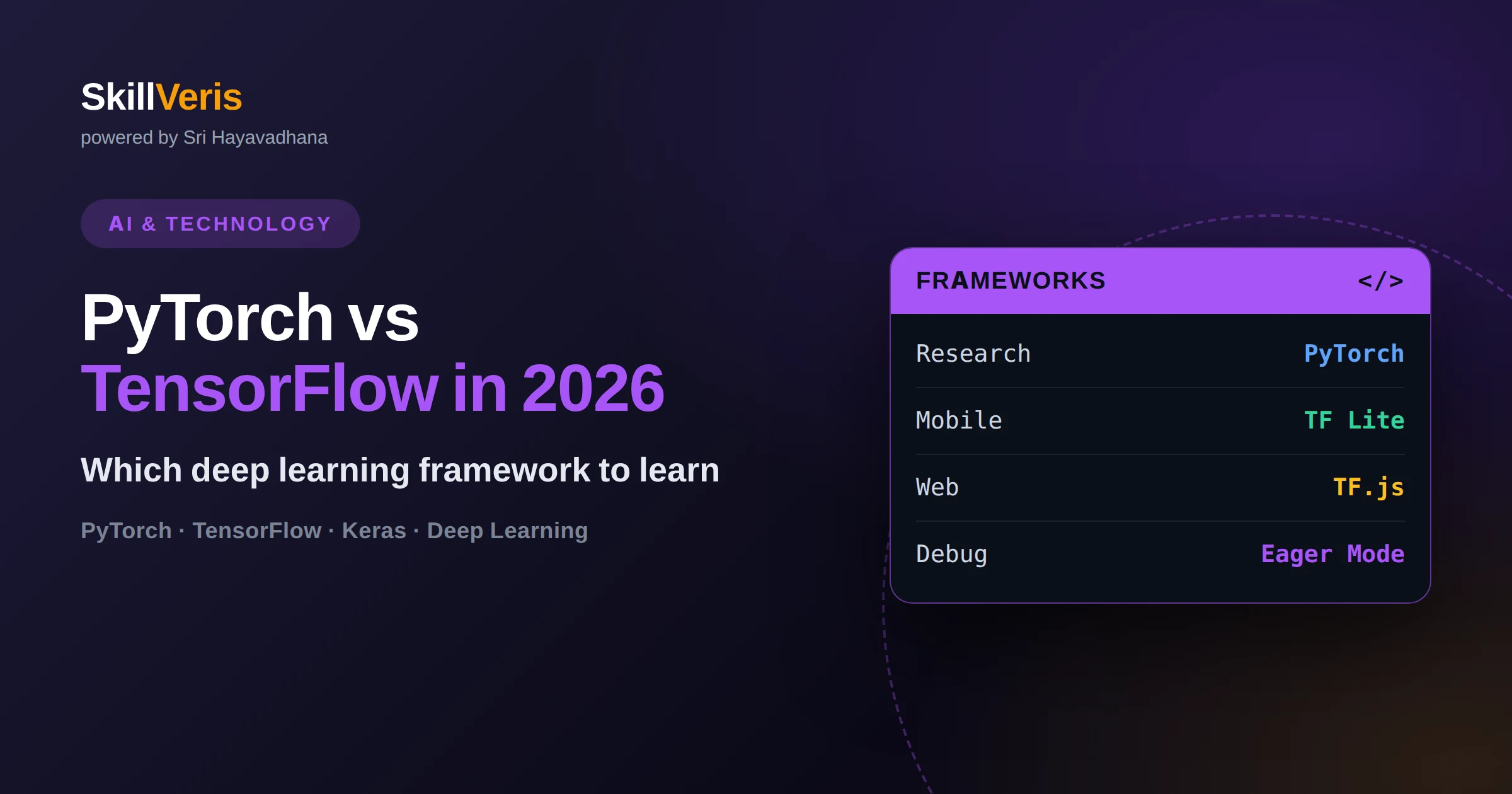
PyTorch vs TensorFlow: Which to Learn in 2026
PyTorch wins for research and learning; TensorFlow/Keras wins for mobile and production deployment. Most beginners should start with PyTorch.
Types of Neural Networks Explained Simply
Neural networks come in several architectures, each suited to a different kind of data, from images to sequences to graphs. This guide breaks down the major types, what makes each one distinct, and where each is typically applied.
Artificial Neural Networks: How They Work, Explained Simply
An artificial neural network is a computing model made of layered nodes that learns patterns from data by adjusting internal weights during training. This guide explains its structure, how it learns, and where it is used today.
LSTM Neural Networks Explained Simply
An LSTM, or Long Short-Term Memory network, is a type of neural network built to remember patterns across long sequences of data. This guide explains how LSTMs work, why they were created, and where they're still used today.
PyTorch Deep Learning: How Training Loops Actually Work
A PyTorch training loop is four explicit steps — forward pass, loss, backward pass, optimiser step — and understanding them is what lets you debug a model rather than guess at it. This guide walks the loop end to end, explains autograd's graph, and names the failure modes each step produces.
The Scientific Python Stack: NumPy, SciPy and Friends
The scientific Python stack is built on one data structure: NumPy's ndarray, a typed block of contiguous memory with shape and stride metadata. SciPy, pandas, scikit-learn and the deep learning frameworks all sit on that foundation, and understanding it explains their performance, their errors and their interoperability.
TensorFlow and Keras: How the Two Fit Together
Keras is the model-building API and TensorFlow is the tensor runtime beneath it. Learn which layer each task belongs in — models and callbacks in Keras, data pipelines and graph compilation in TensorFlow — so shape errors, retracing surprises and deployment questions stop being confusing.
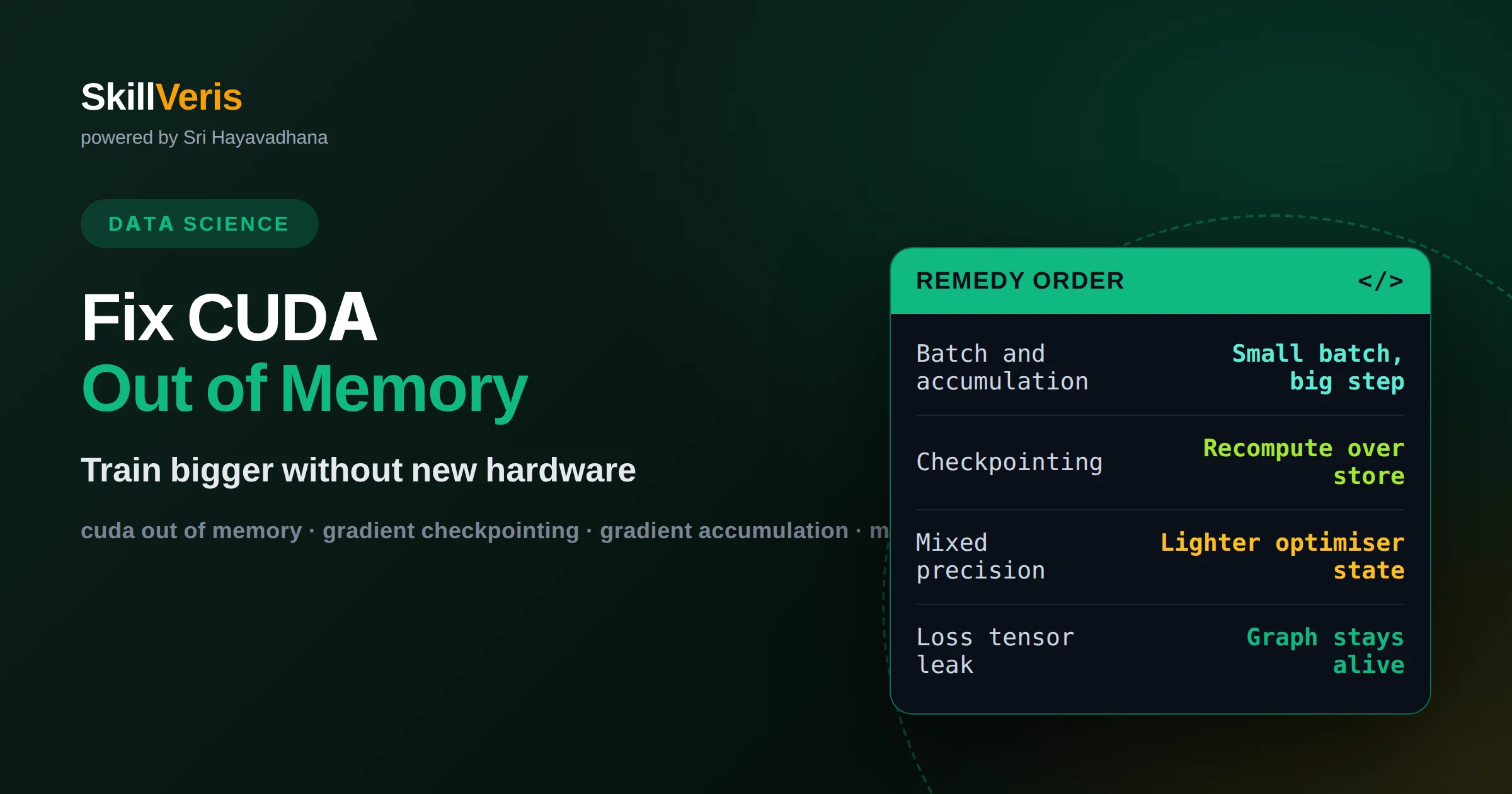
How to fix CUDA out of memory in PyTorch without buying a bigger GPU
GPU memory splits into parameters, gradients, optimiser state and activations, and only the activation term responds to batch size. Measure the breakdown first, then apply remedies in that order: batch size and accumulation, gradient checkpointing, mixed precision, then a leaner optimiser.
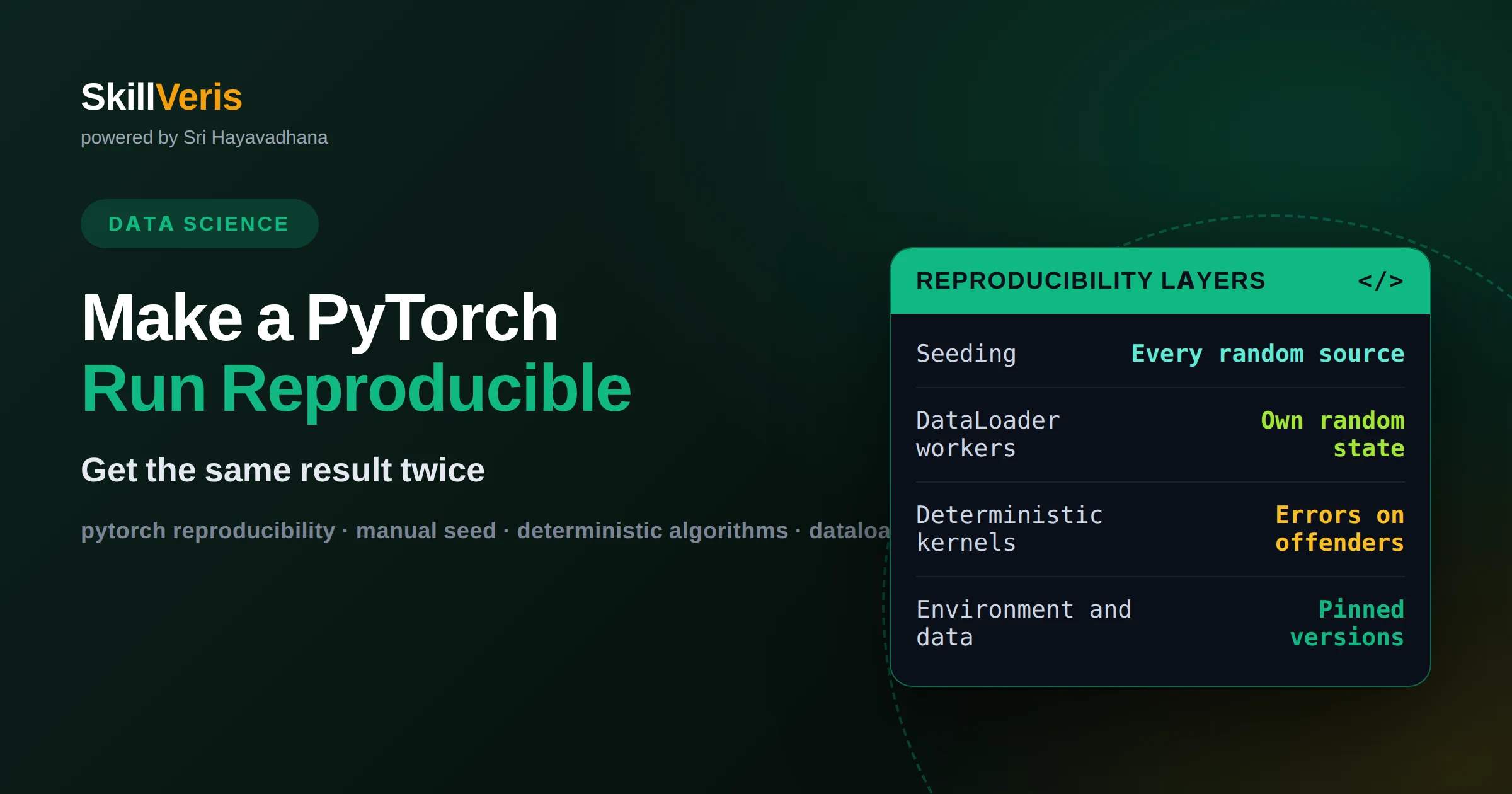
How to make a PyTorch training run reproducible
Reproducibility has three layers: seeding every random source including DataLoader workers, forcing deterministic kernels, and pinning the environment and data version. Fixing only the seed is why two runs still diverge. Learn what to pin, what it costs, and when variance is the result worth reporting.
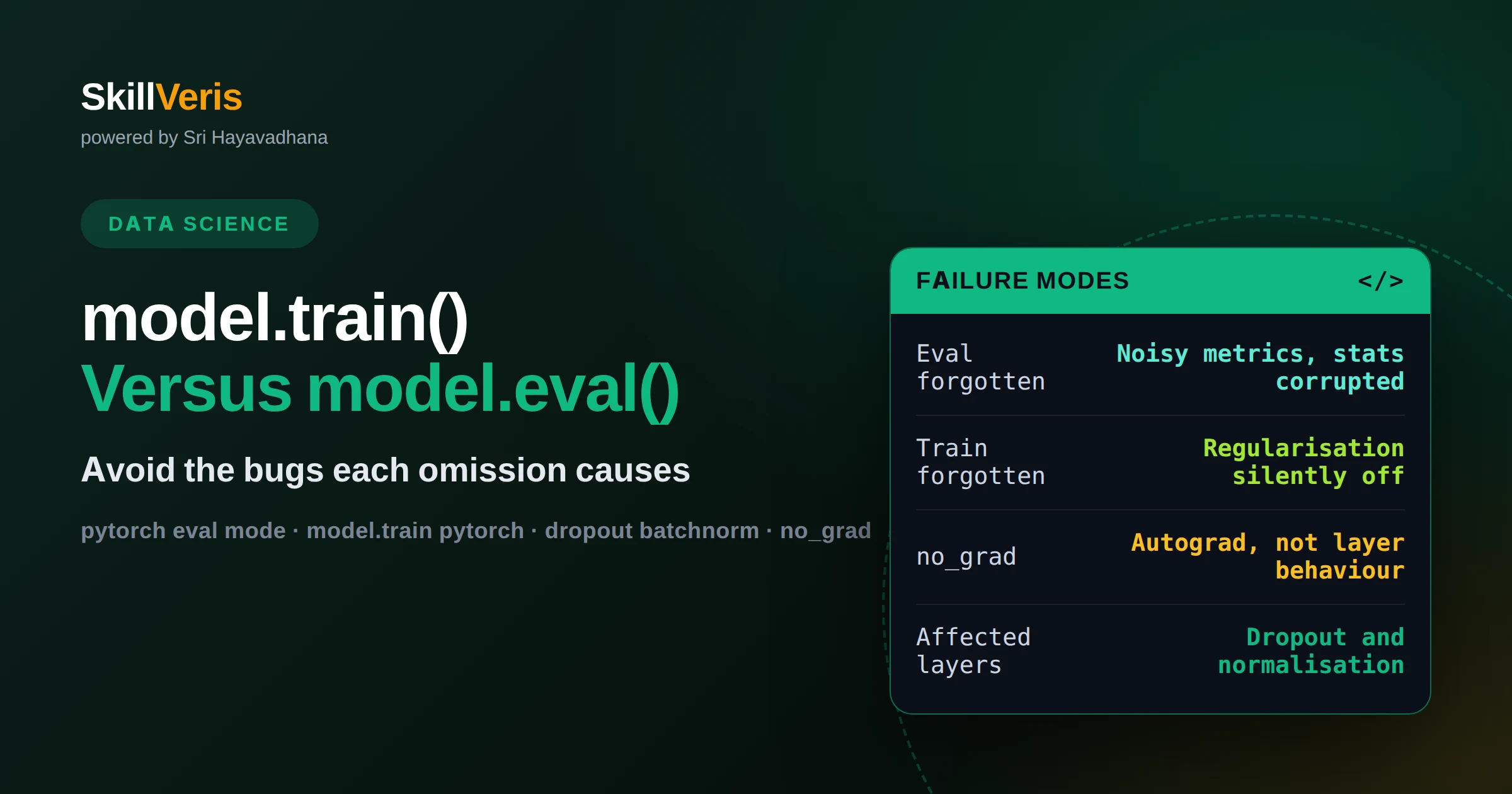
model.train() vs model.eval() in PyTorch: the bugs each omission causes
Only dropout and normalisation layers read the training flag, and each omission causes a distinct bug. Evaluating in train mode gives noisy metrics and corrupts running statistics; training in eval mode silently disables regularisation. Neither is the same switch as no_grad.
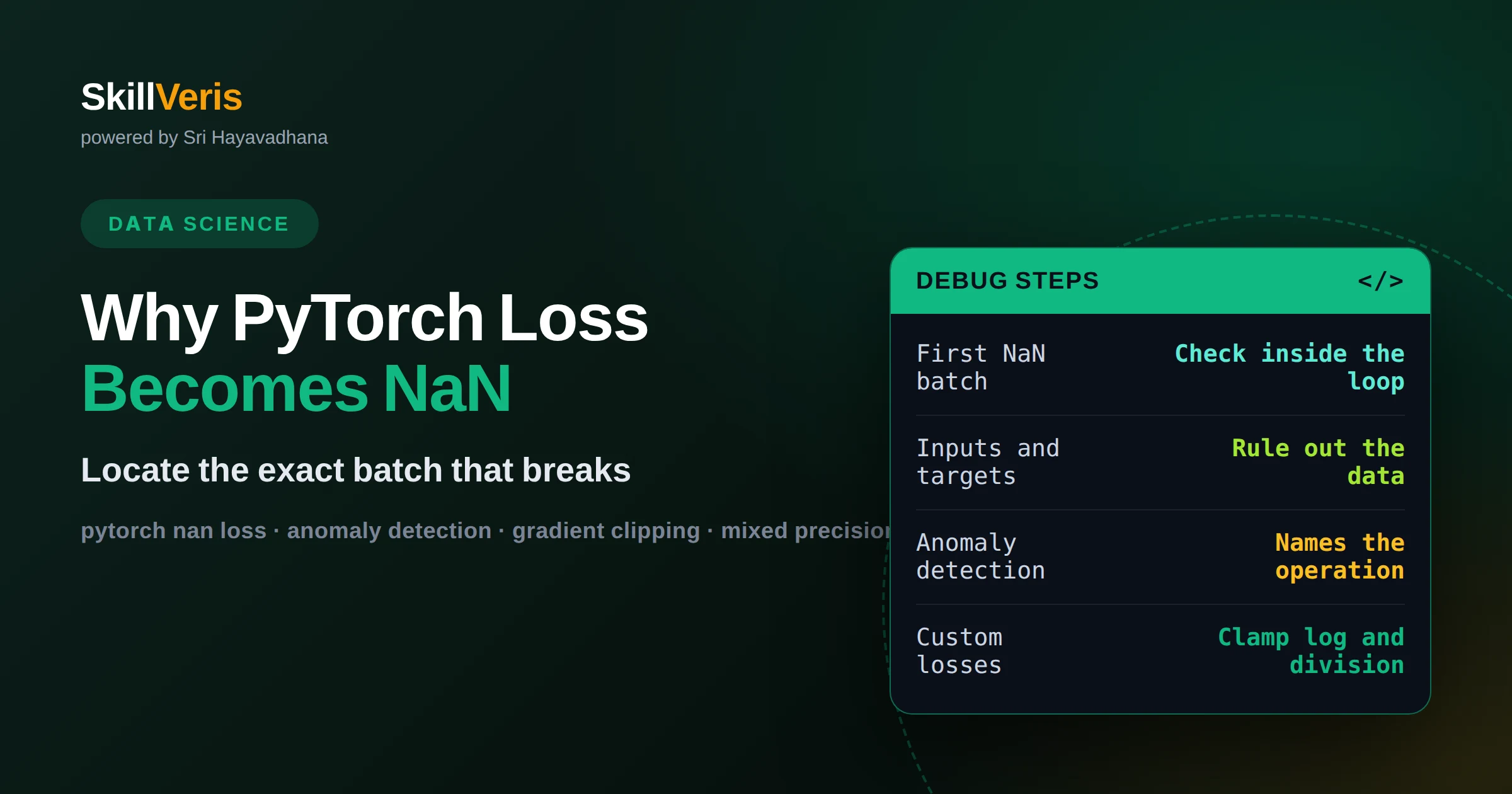
Why your PyTorch loss becomes NaN, and how to find the exact step
A NaN loss has a first occurrence, and finding that exact batch tells you the cause. Detect it with a check inside the loop, inspect the inputs and targets of that batch, then use autograd anomaly detection to locate the operation. Each cause has its own fix.