100% Free Forever
AI-Powered Learning
Industry Expert Content
Certificates & Badges
Learn At Your Own Pace
Hashtag

#React

30 articles tagged with #React
Projects & Case Studies

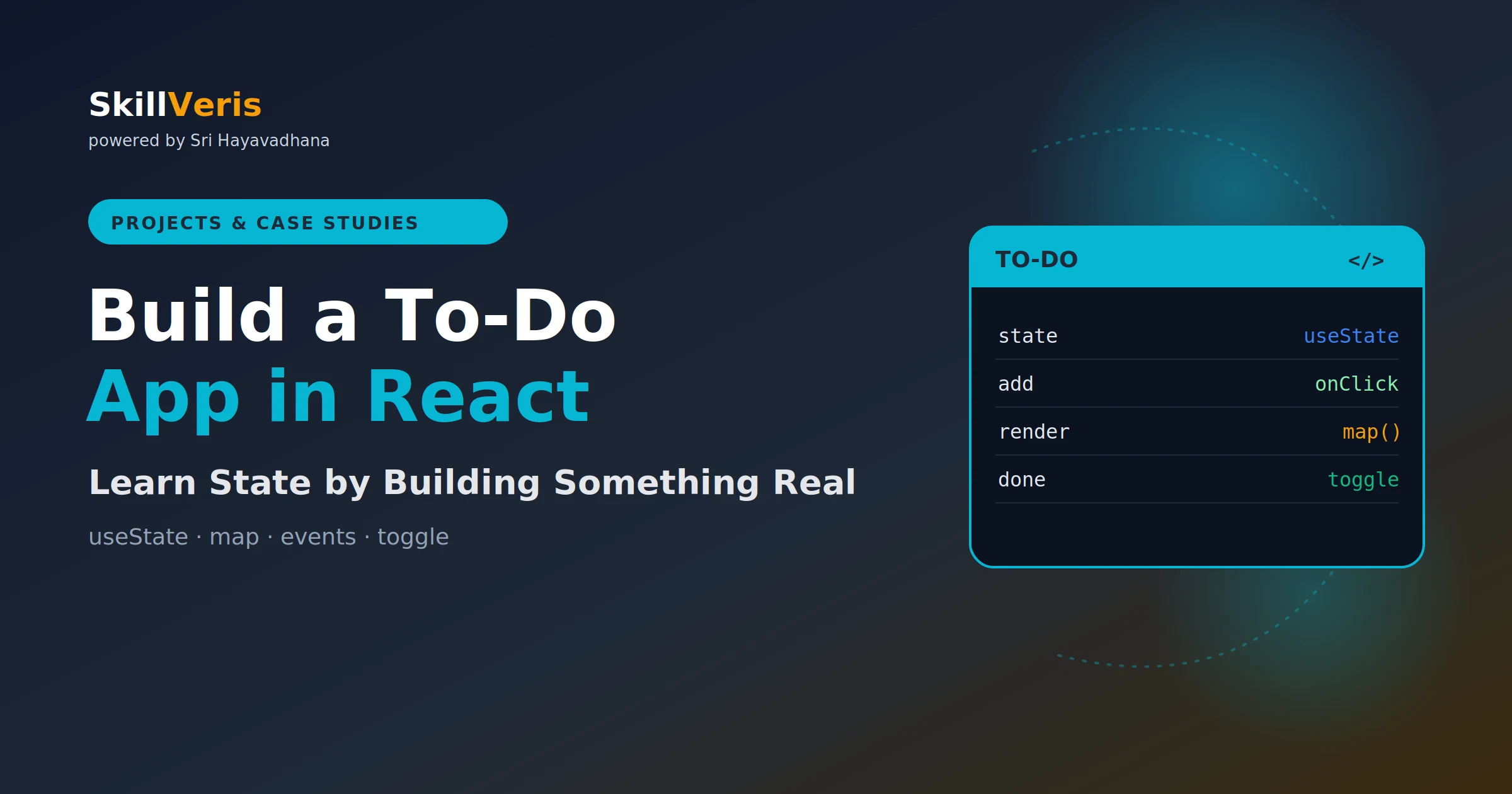
Build a To-Do List App in React

A comprehensive guide to build a to-do list app in react — written for learners at every level.
Apr 20, 2026·10 min read
Projects & Case Studies

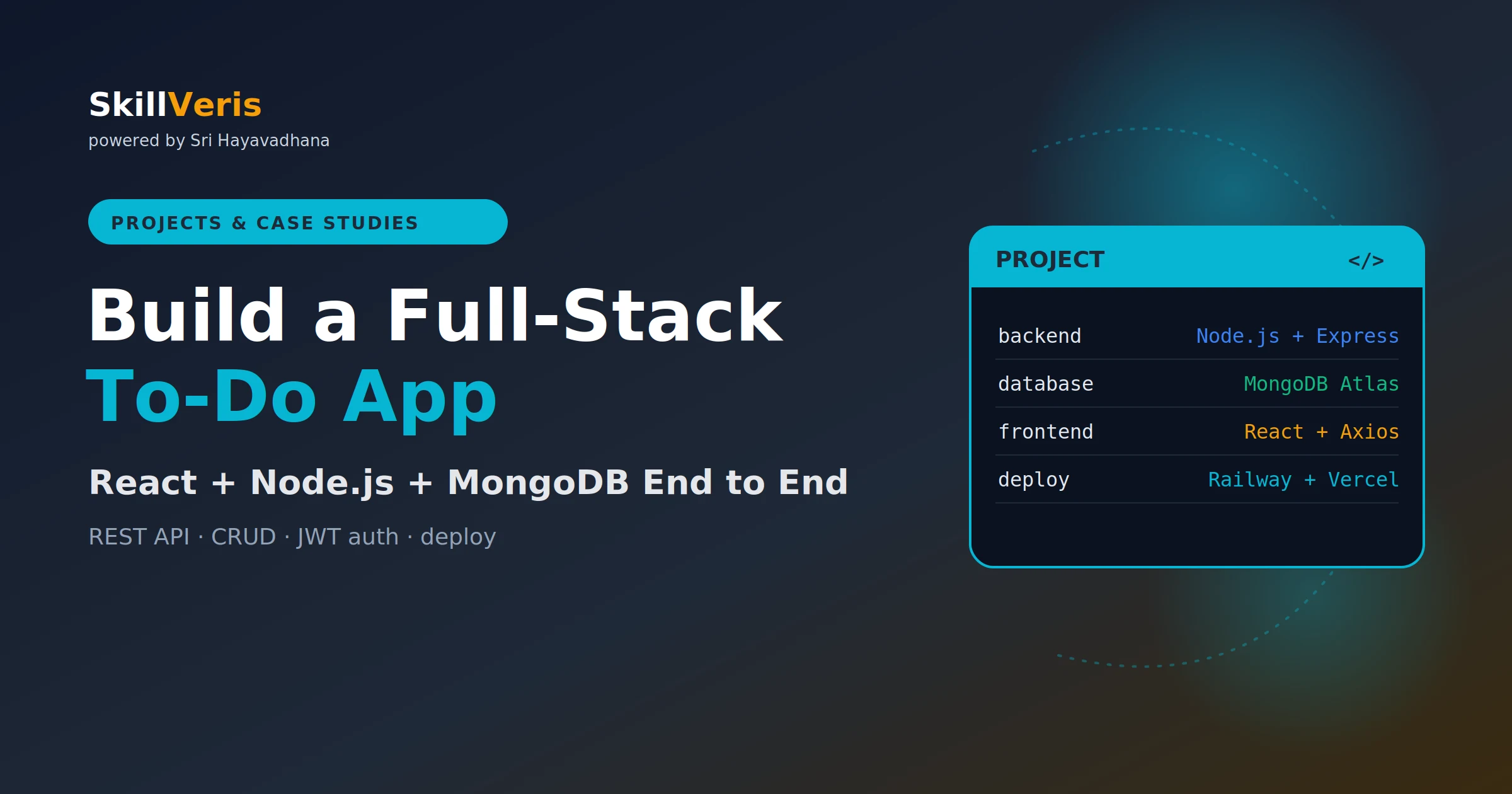
Project: Build a Full-Stack To-Do App with React, Node.js and MongoDB

A full-stack to-do app is the perfect first MERN project — it covers every concept you'll use in production: REST APIs, database CRUD operations, JWT authentication, and deploying a frontend and backend separately. Build it once, understand the full stack.
Jun 19, 2026·12 min read
Programming

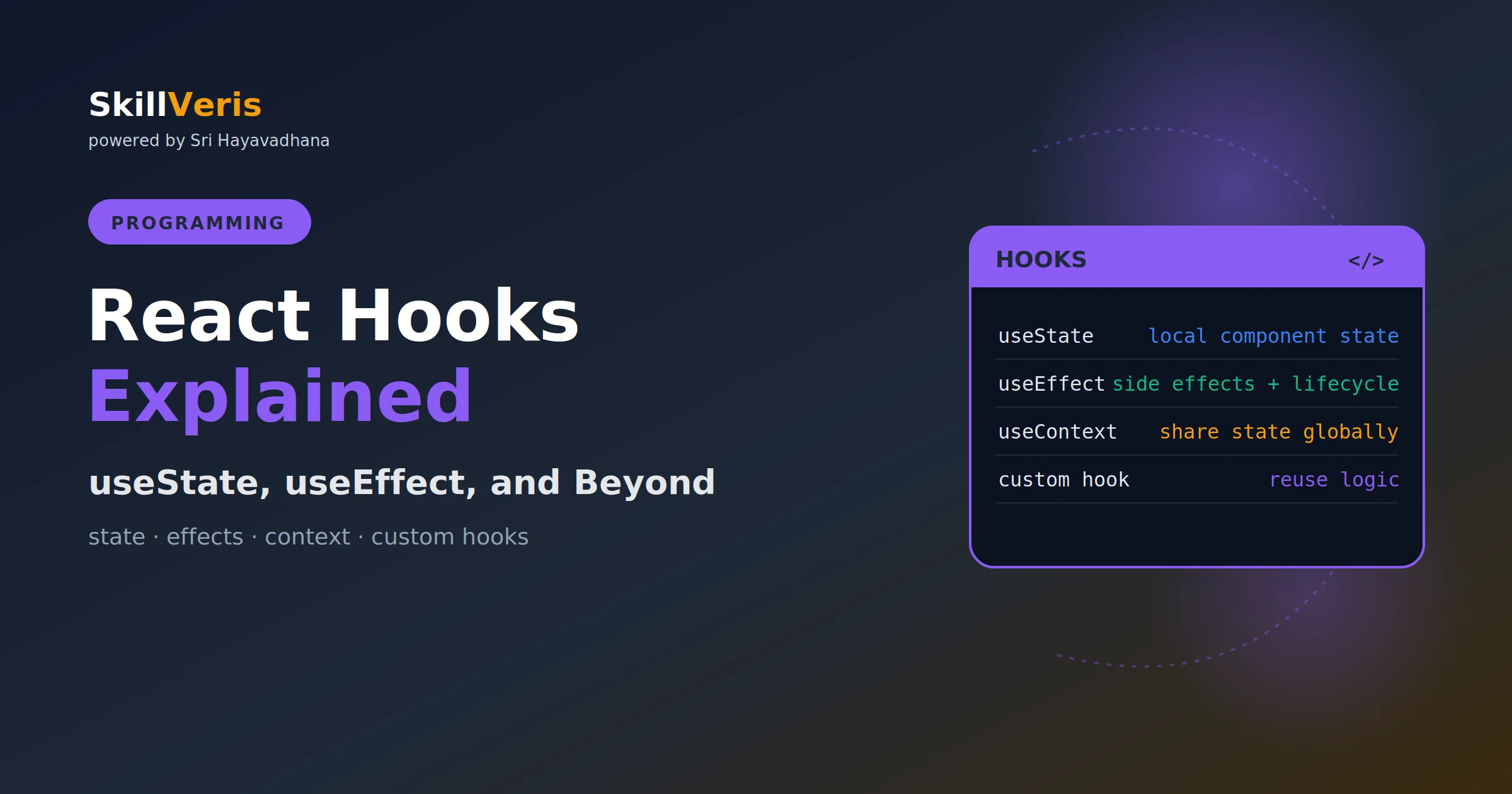
React Hooks Explained: useState, useEffect, and Beyond

React Hooks replaced class components and changed how React developers think about state and side effects. This guide explains useState, useEffect, useContext, useRef, and custom hooks clearly, with practical examples for each.
Jun 14, 2026·10 min read
Learn Through Hobbies

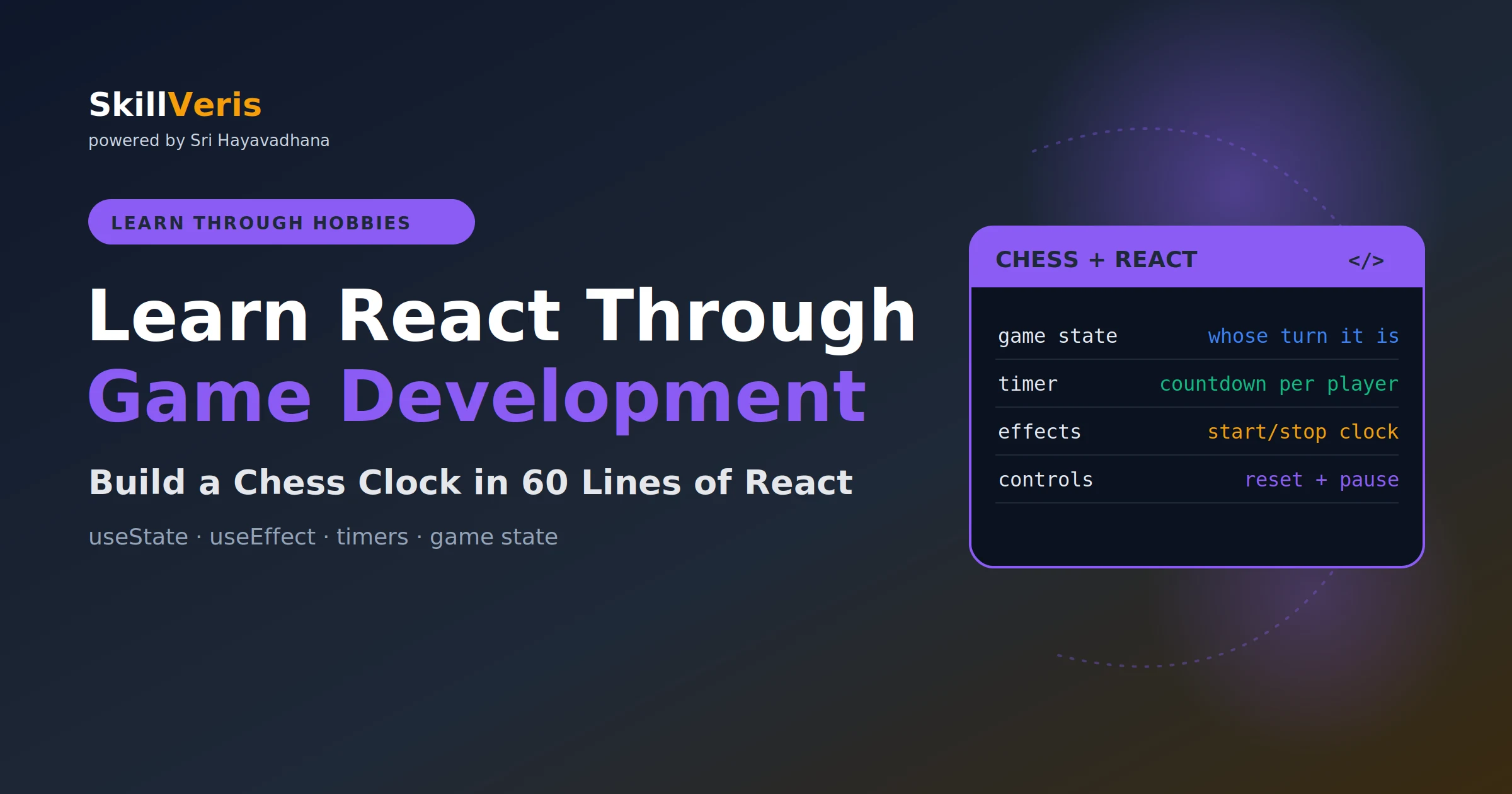
Learn React Through Game Development: Build a Chess Clock

A chess clock is the perfect React project — it's small enough to finish in an afternoon but teaches useState, useEffect, timer management, and conditional rendering in a context that makes every concept feel purposeful. No boring counter apps.
Jun 9, 2026·10 min read
Learn Through Hobbies

Learn React Through Building a Gaming Leaderboard

Gaming leaderboards are the perfect React learning project: they need real-time state updates, list rendering, sorting, filtering, forms, and optional API fetching. This guide teaches core React through building a fully functional leaderboard for your favourite game.
May 2, 2026·11 min read
Programming

React Hooks Explained: useState and useEffect

React Hooks let function components manage state and side effects: useState stores changing data, and useEffect runs code after render for fetching and timers.
Dec 15, 2025·9 min read
Programming

How to Manage State in React Applications

Managing React state means choosing the right tool for each need: local useState, shared Context, server-state libraries, or a global store like Redux or Zustand.
Dec 14, 2025·10 min read
Programming

What Is the Virtual DOM in React

The Virtual DOM is React's in-memory copy of the UI that it diffs against the real DOM so only changed nodes update. Learn how it works and why it matters.
Jul 26, 2025·7 min read
Programming

React Props and Component Composition

Props pass data from parent to child in React, and composition combines small components into rich UIs. Learn to build flexible, reusable component trees.
Jul 25, 2025·8 min read
Programming

React useContext and Context API Explained

The Context API shares state across a React tree without prop drilling, and useContext reads it. Learn when to use context and how to avoid its pitfalls.
Jul 24, 2025·9 min read
Programming

React useReducer Explained With Examples

useReducer manages complex React state with a reducer function and dispatched actions. Learn when it beats useState and how to structure predictable updates.
Jul 23, 2025·10 min read
Programming

How to Fetch Data in React With useEffect

Fetch data in React by calling your API inside useEffect, tracking loading and error state, and cleaning up to avoid updates on unmounted components safely.
Jul 22, 2025·7 min read
Programming

React Router Basics for Beginners

React Router adds client-side navigation to React apps, mapping URLs to components without full page reloads. Learn routes, links, params, and nested layouts.
Jul 21, 2025·8 min read
Programming

Understanding Controlled vs Uncontrolled Inputs in React

Controlled inputs store form values in React state; uncontrolled inputs keep them in the DOM read via refs. Learn the trade-offs and when to use each.
Jul 20, 2025·9 min read
Programming

How to Optimize React Performance

Optimize React performance by preventing needless re-renders, memoizing wisely, splitting bundles, and virtualizing long lists. Measure before you tune.
Jul 19, 2025·10 min read
Projects & Case Studies

Build a Notes App With React and LocalStorage

Build a notes app with React and localStorage to persist data in the browser. A hands-on project covering state, effects, and CRUD without any backend.
Apr 8, 2025·8 min read
Projects & Case Studies

Build a Kanban Board With React

Build a Kanban board in React with columns, draggable cards, and drag-and-drop between lists. Learn component structure, state lifting, and persistence for a real productivity app.
Mar 31, 2025·8 min read
Programming

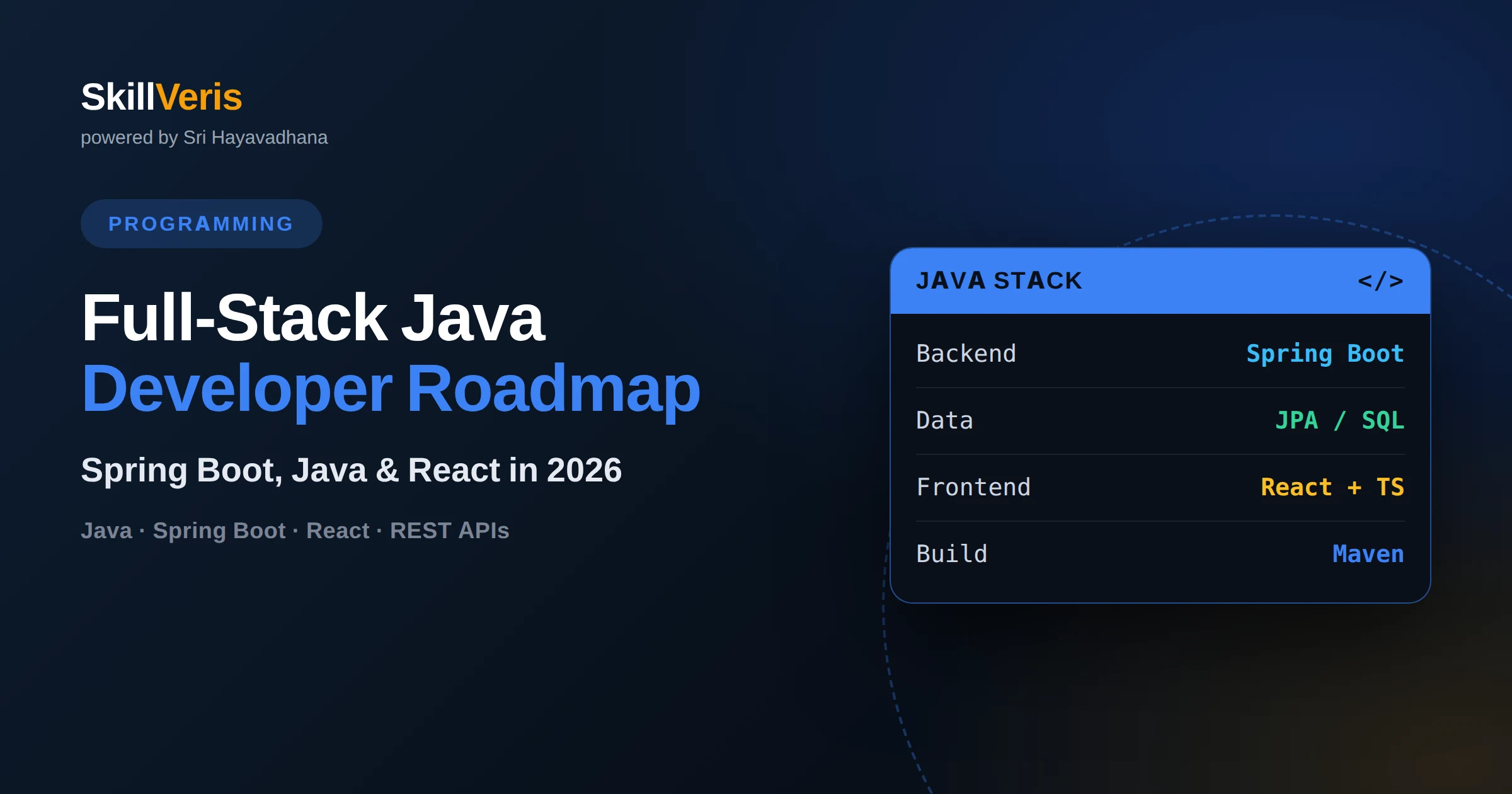
Full-Stack Java Developer Roadmap 2026

Becoming a full stack Java developer in 2026 means mastering core Java, Spring Boot, SQL, and React in that order, over roughly six months.
Dec 16, 2024·14 min read
Programming

Build a React Chatbot with the OpenAI API

Build a React chatbot with the OpenAI API using a backend proxy, streaming responses, and conversation state — full step-by-step walkthrough.
Dec 8, 2024·11 min read
Programming

What Is React Native? Cross-Platform Apps Explained

React Native is a framework for building mobile apps for iOS and Android from a single JavaScript codebase using native UI components. This guide covers how it works, its trade-offs, and when it's the right choice for a project.
Sep 19, 2024·9 min read
Programming

What Does a React Developer Actually Do?

A React developer builds and maintains user interfaces using the React JavaScript library, turning designs into interactive, component-based web applications. This guide covers the daily responsibilities, core skills, and typical career path for the role.
Jul 16, 2024·9 min read
Programming

React Native vs React JS: Which One Do You Need?

React Native builds native mobile apps for iOS and Android from one codebase, while React JS builds interactive interfaces for the web. The right choice depends entirely on whether you are targeting a browser or a phone's home screen.
May 31, 2024·9 min read
AI & Technology

What Is the MERN Stack? A Practical Overview

The MERN stack is a set of four JavaScript technologies — MongoDB, Express, React, and Node.js — used together to build full web applications with a single language across front and back end. Here's how each piece fits.
Apr 20, 2024·8 min read
Programming

How React Works: Rendering, State, and Reconciliation

React runs your components to produce a description of the UI, compares it with the previous description, and applies the differences to the DOM. Learn the render-and-commit cycle, why state updates are batched, how reconciliation uses keys, and how that explains most of the bugs you will hit.
Jul 12, 2023·11 min read
AI & Technology

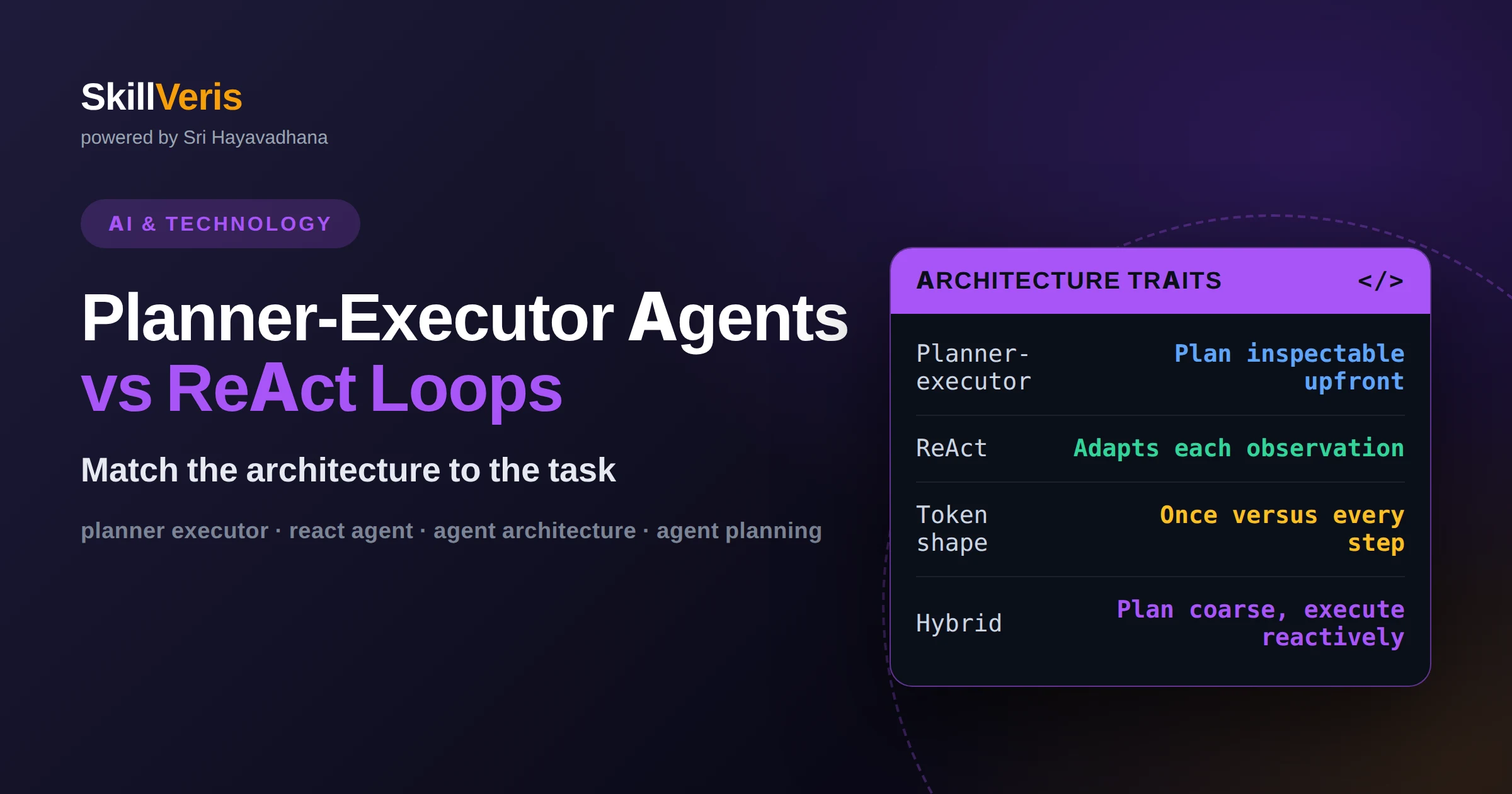
Planner-Executor Agents vs ReAct Loops

Planner-executor architectures commit to a plan up front and then carry it out; ReAct loops decide one step at a time from the latest observation. Planning suits long, decomposable tasks with stable environments; interleaved reasoning suits exploratory work where each result changes what to do next.
Apr 13, 2023·8 min read
AI & Technology

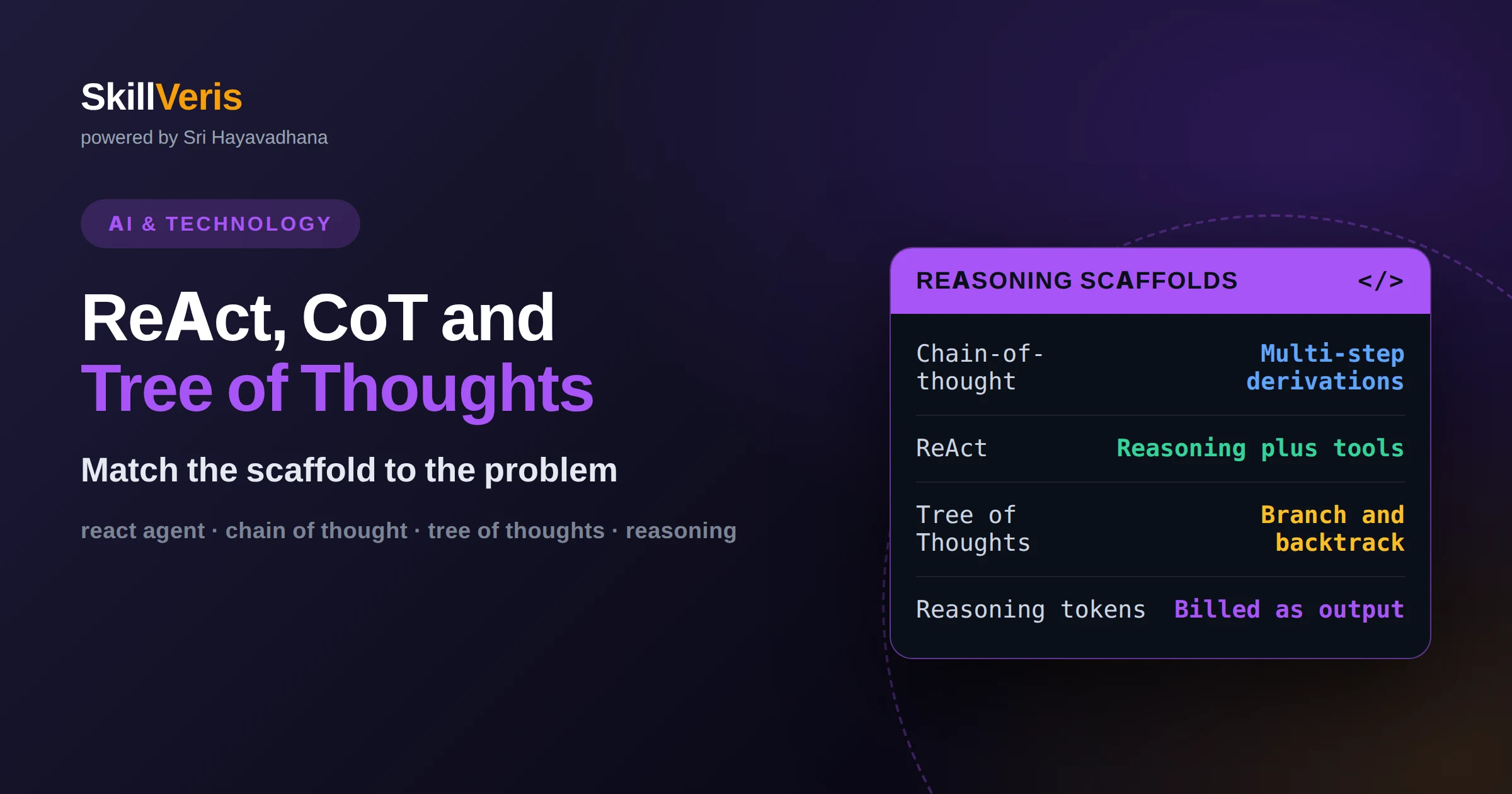
ReAct, Chain-of-Thought and Tree of Thoughts Compared

Chain-of-thought adds reasoning tokens, ReAct interleaves reasoning with tool calls, and Tree of Thoughts explores multiple reasoning branches with backtracking. This article compares the three on cost, latency and the problem shapes where each genuinely improves accuracy, and shows how to escalate between them so that easy inputs never pay for the expensive scaffold.
Apr 8, 2023·10 min read
Programming

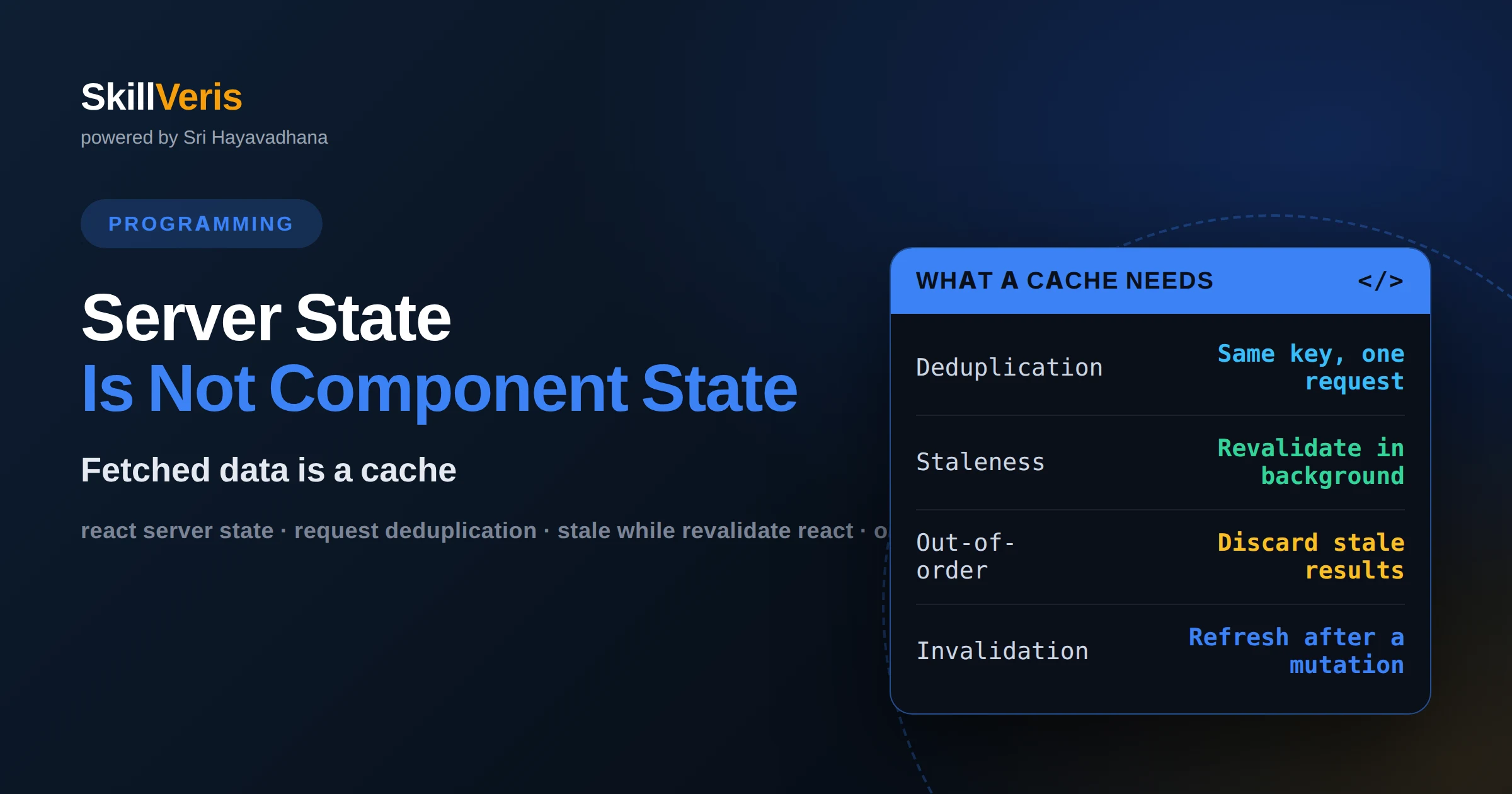
Managing server state in React: caching, refetching and staleness

Fetched data is a cache of something you do not own, and storing it in ordinary component state is what produces duplicate requests, stale views and out-of-order responses. This covers the behaviours that cache needs — deduplication, staleness, invalidation, race handling — and what you take on by hand-rolling them.
Jan 7, 2023·9 min read
Programming

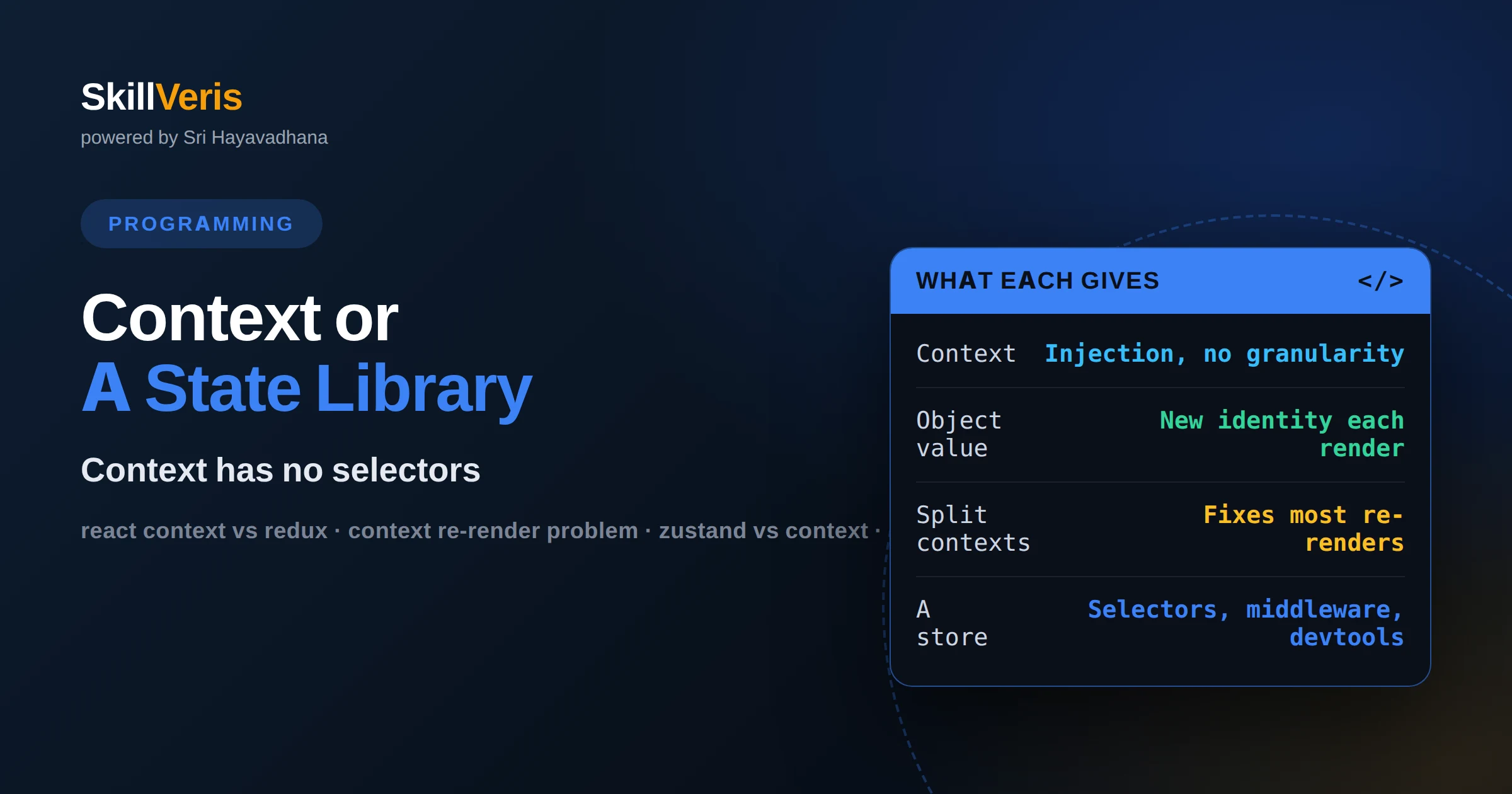
React Context vs a state management library

Context is a dependency-injection mechanism, not a state manager: it has no selector granularity, so every consumer re-renders when the value changes. This sets out when that is fine, how far splitting contexts gets you, and what a store actually adds beyond avoiding prop drilling.
Dec 28, 2022·8 min read
Programming

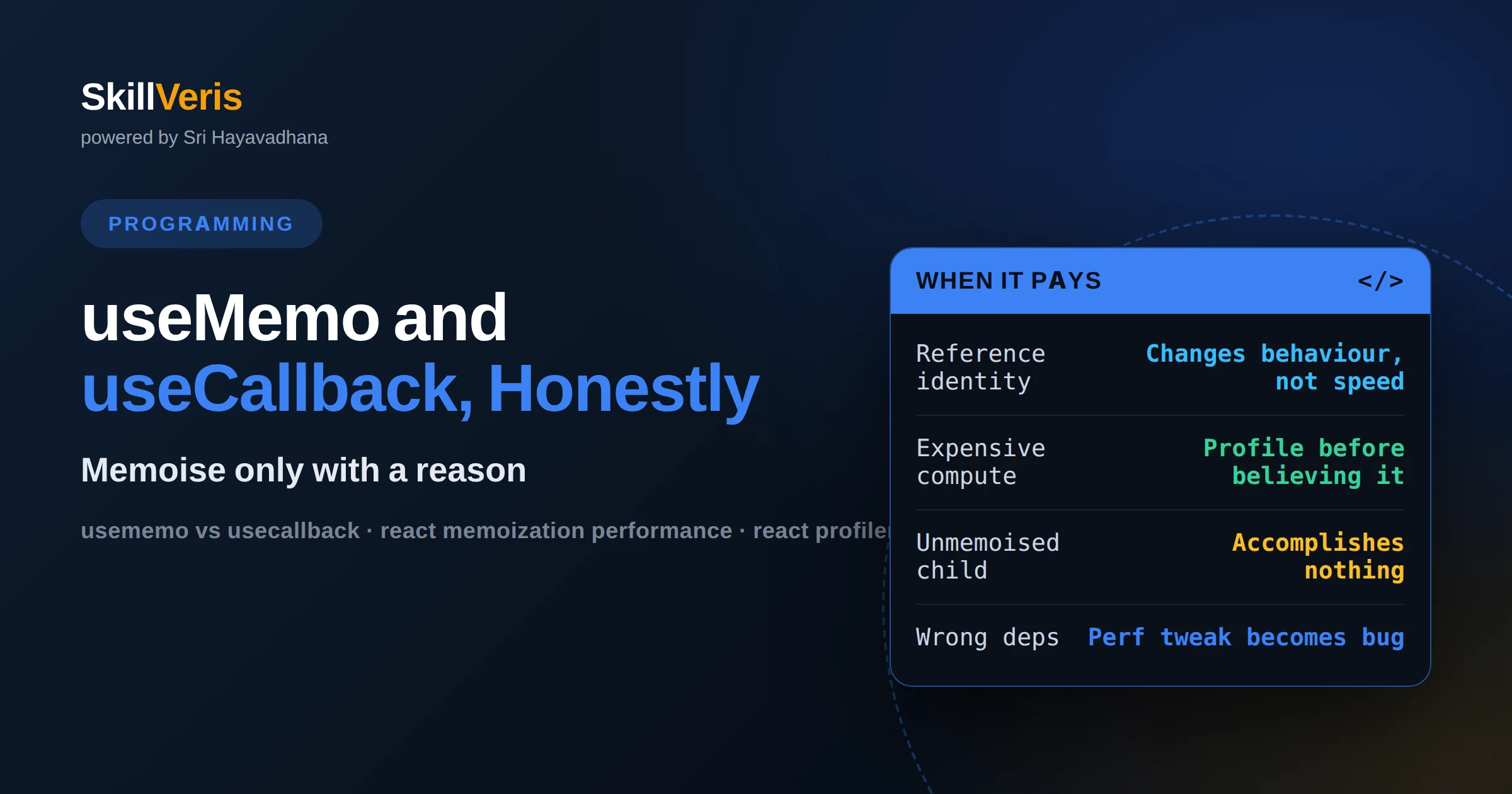
When useMemo and useCallback actually help in React

Memoisation pays only when it prevents genuinely expensive work or preserves a reference something else depends on. Everywhere else it adds allocations, dependency arrays and bugs for no benefit. Here is how to profile first, which reference-identity cases are real, and what to do instead.
Dec 12, 2022·8 min read
Programming

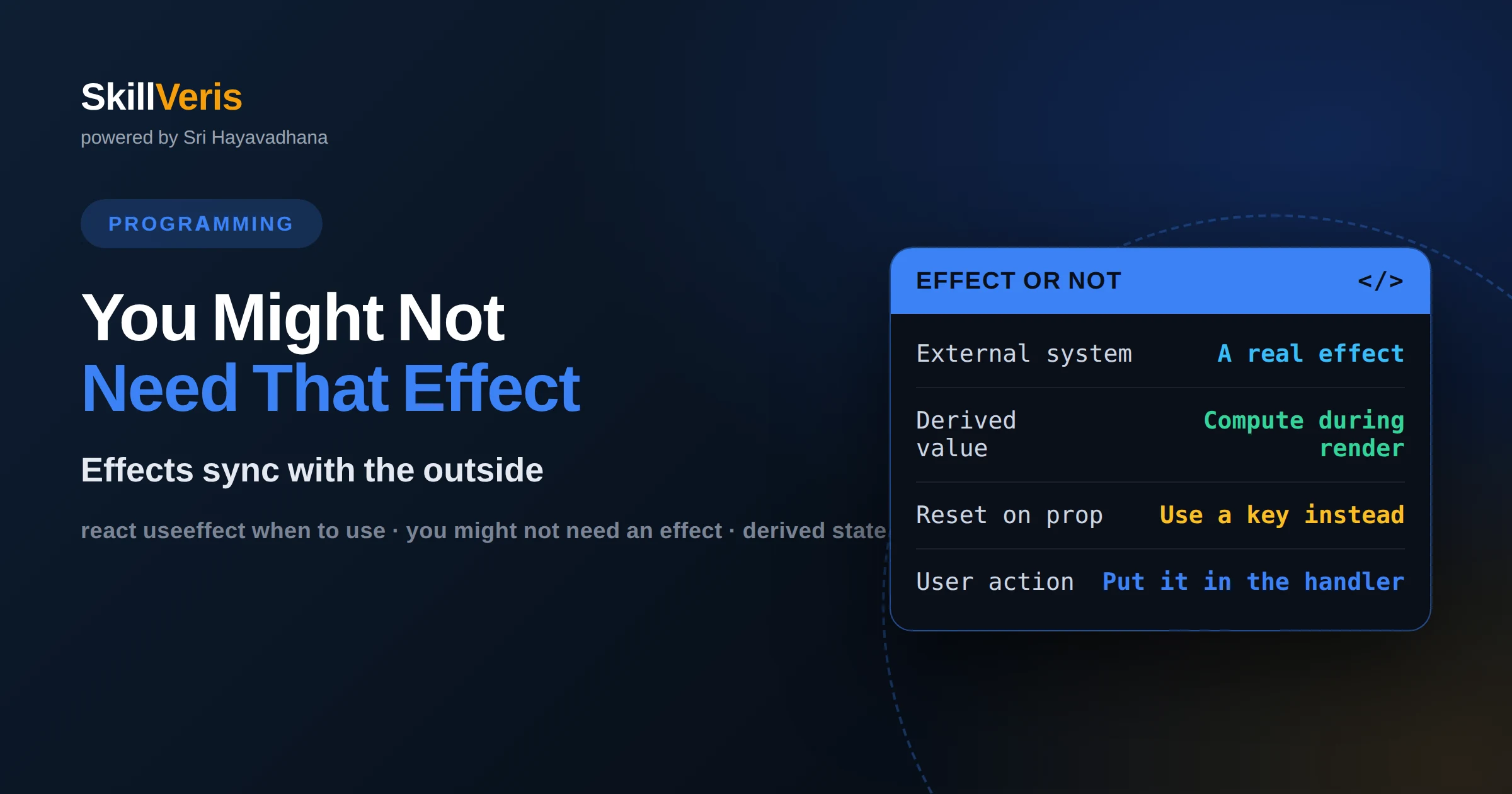
React useEffect: when you actually need it

An effect is correct only when it synchronises React with something outside React. Most effects in real codebases are computing derived values, resetting state on a prop change, or responding to events — each of which has a simpler answer. Here is how to tell them apart and delete the rest safely.

Dec 11, 2022·9 min read

Start Learning React

Frequently Asked Questions

21 categories · pick one to explore

Does SkillVeris have a tech blog, and what does it cover?
Yes, the SkillVeris blog has over 500 articles covering AI and machine learning, programming, web development, DevOps, cloud, security, databases and career guidance. Articles are practical and answer-first, and many use the Learn Through Hobbies approach, teaching technical concepts through cricket, music, gaming or cooking analogies. Everything is free to read.
What is the SkillVeris tech glossary and how big is it?
The SkillVeris glossary is a free reference of roughly 2,000-plus technology terms, each with a clear plain-language definition. It spans AI, programming, web, DevOps, cloud, security and database vocabulary, so whenever a lesson, article or job description uses jargon you do not recognise, the glossary gives you a fast, reliable answer.
Are the developer cheat sheets on SkillVeris free to download?
The cheat sheets are completely free to use, like everything else on SkillVeris. Each sheet condenses a language or tool into its essential syntax, commands and patterns for quick reference while coding. They are designed for rapid lookup during real work, complementing the deeper explanations found in study notes and courses.
Which programming references and cheat sheets are available?
Cheat sheets cover the platform's main domains, including programming languages, AI and ML tooling, web development, DevOps, cloud, security and databases, matching the topics of the 37 live courses. Each sheet lists related reading links and hashtags, so you can jump from a quick reference into fuller study notes or blog articles.
How do I find the meaning of a technical term quickly?
Search the SkillVeris glossary, which holds around 2,000-plus terms with concise, plain-language definitions. Each entry gets to the point in its first sentence, then links to related reading like blog posts or study notes for deeper context. It is faster and more consistent than sifting through scattered search results.
Is the SkillVeris blog good for beginners learning to code?
Yes, many blog articles are written specifically for beginners, and the Learn Through Hobbies style makes them unusually approachable: you might learn Python concepts through cricket or understand APIs through cooking. With 500-plus articles across skill levels, beginners can start with fundamentals and keep reading as they advance, entirely free.
Can cheat sheets replace full courses for learning a language?
No, cheat sheets are references, not teaching tools; they assume you already understand the concepts and just need syntax or commands fast. To actually learn a language, take a structured SkillVeris course with its 24–40 lessons and assessments, then keep the cheat sheet beside you while practising in Code Lab.
How often are new blog articles published on SkillVeris?
The blog grows regularly and already exceeds 500 articles, with new posts added as courses launch and technologies evolve. Topics track the platform's catalogue across AI, programming, web development, DevOps, cloud and security, so checking the Blog section periodically surfaces fresh tutorials, explainers and career-focused pieces, all free to read.
Does the glossary cover AI and machine learning terms?
Yes, AI and machine learning vocabulary is a major part of the roughly 2,000-plus term glossary, covering everything from foundational terms to modern concepts around LLMs, RAG and MLOps. Definitions are plain-language and answer-first, which helps when dense AI papers or course lessons throw unfamiliar jargon at you.
Are there cheat sheets for interview preparation?
Cheat sheets work well as interview-day refreshers because they compress syntax, commands and key concepts into scannable references. For dedicated preparation, combine them with the SkillVeris interview questions feature, which includes readiness scoring, plus study notes for depth. Reviewing a relevant cheat sheet just before an interview steadies recall under pressure.
Can I read the tech blog without signing up?
Yes, the blog is freely readable, and SkillVeris never charges for content. All 500-plus articles are open, covering tutorials, concept explainers and career advice. Creating a free account adds value elsewhere on the platform, like course progress tracking and certificates, but reading the blog requires no commitment at all.
How is the SkillVeris glossary different from Wikipedia?
The glossary is purpose-built for learners: definitions are short, plain-language and answer-first, sized for a quick lookup mid-lesson rather than a deep encyclopedic read. Entries also cross-link to related SkillVeris study notes, blog posts and courses, so a definition becomes a doorway into structured learning instead of a dead end.
Do blog articles use the Learn Through Hobbies method?
Many blog articles teach technical topics through hobby analogies, a hallmark of the SkillVeris blog, so you will find articles explaining programming through cricket, machine learning through music, or system design through cooking. The analogy is the teaching device; the article still delivers the real technical concept underneath.
Where can I find quick programming references while coding?
Open the SkillVeris cheat sheets, which are built exactly for that moment: compact, scannable references for syntax, commands and common patterns across languages and tools. Keep the relevant sheet in a browser tab while you work in Code Lab or your own editor, and dip into the glossary for terminology.
Is there a glossary entry for terms I meet in job descriptions?
Very likely yes, with roughly 2,000-plus terms across AI, programming, web, DevOps, cloud, security and databases, the glossary covers most jargon that appears in tech job descriptions. Decoding a listing this way helps you judge role fit honestly and prepares you to discuss those terms in interviews.
Are the blog articles written for the Indian tech audience?
The blog serves Indian learners plus a worldwide audience. Content stays globally relevant while acknowledging realities that matter in India, such as free access being essential for students and freshers, and career guidance that connects naturally to the SkillVeris jobs portal, which aggregates roles across India, UK, USA, Germany and Remote.
Can I suggest a topic for the blog or glossary?
SkillVeris content grows in response to what learners need, so feedback is welcome through the platform's support channels. If a term is missing from the glossary or a topic deserves an article, telling the team helps prioritise it. Meanwhile, the AI Mentor can answer the question immediately, 24/7, at any depth.
Do cheat sheets and glossary entries link to deeper learning?
Yes, every cheat sheet and glossary entry carries related reading links into study notes, blog articles and courses, plus concept hashtags for discovering similar content. This cross-linking means a thirty-second lookup can smoothly become a structured learning session whenever you decide you want more than a quick answer.
What makes SkillVeris programming references trustworthy?
The references are written to strict internal quality standards, kept consistent with the platform's 37 live courses, and never padded with invented statistics or hype. Definitions and cheat sheets are reviewed against the same content contracts that govern courses, and the answer-first style makes any inaccuracy easy to spot and correct.
How do the blog, glossary and cheat sheets fit into my learning routine?
Use them as satellites around your main course: read blog articles for context and motivation, hit the glossary the instant jargon appears, and keep cheat sheets open while coding. Together with study notes, Code Lab and the 24/7 AI Mentor, they turn passive reading into a complete, free learning system.

What Learners Say

Real journeys from the SkillVeris community — swipe for more.

SkillVeris taught me Python through Cricket. Now I’m building real projects and feeling confident!
Arjun S. · B.Tech Student
The best platform for hobby-based learning. Concepts finally stick.
Priya R. · Data Analyst
I went from zero coding to a portfolio of projects — all by learning through my love for gaming. Landed my first internship!
Kabir M. · CS Undergraduate
Trending Topics50 popular tags — tap to explore
Trending CoursesAll 37 free courses — tap to browse