#LLMs
76 articles tagged with #LLMs
How ChatGPT Works: Explained Simply
A comprehensive guide to how chatgpt works: explained simply — written for learners at every level.
Claude vs ChatGPT vs Gemini: Which Is Best?
A comprehensive guide to claude vs chatgpt vs gemini: which is best? — written for learners at every level.
Large Language Models (LLMs) Explained for Beginners
An LLM predicts the next piece of text, one token at a time — this guide explains how ChatGPT, Claude, and Gemini actually work.
20 ChatGPT Prompts to Boost Your Productivity
Great prompts share four parts: role, task, context, and format — here are 20 ready-to-use prompts for daily work.
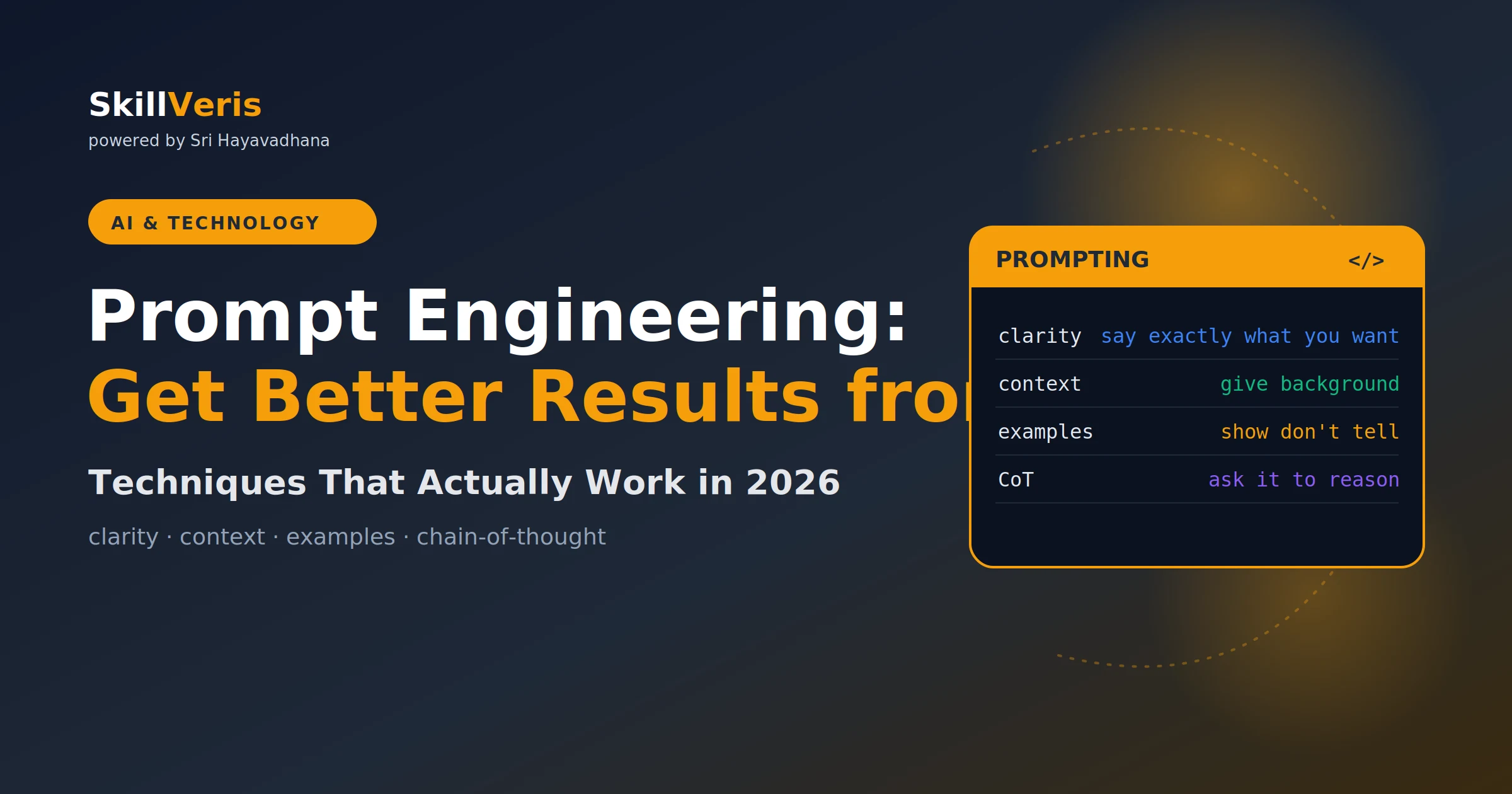
Prompt Engineering: Get Better Results from Any LLM
The difference between a mediocre AI output and an excellent one is usually the prompt. This guide covers the techniques that consistently produce better results: clarity, context, examples, chain-of-thought, system prompts, and output formatting — with real before/after examples.
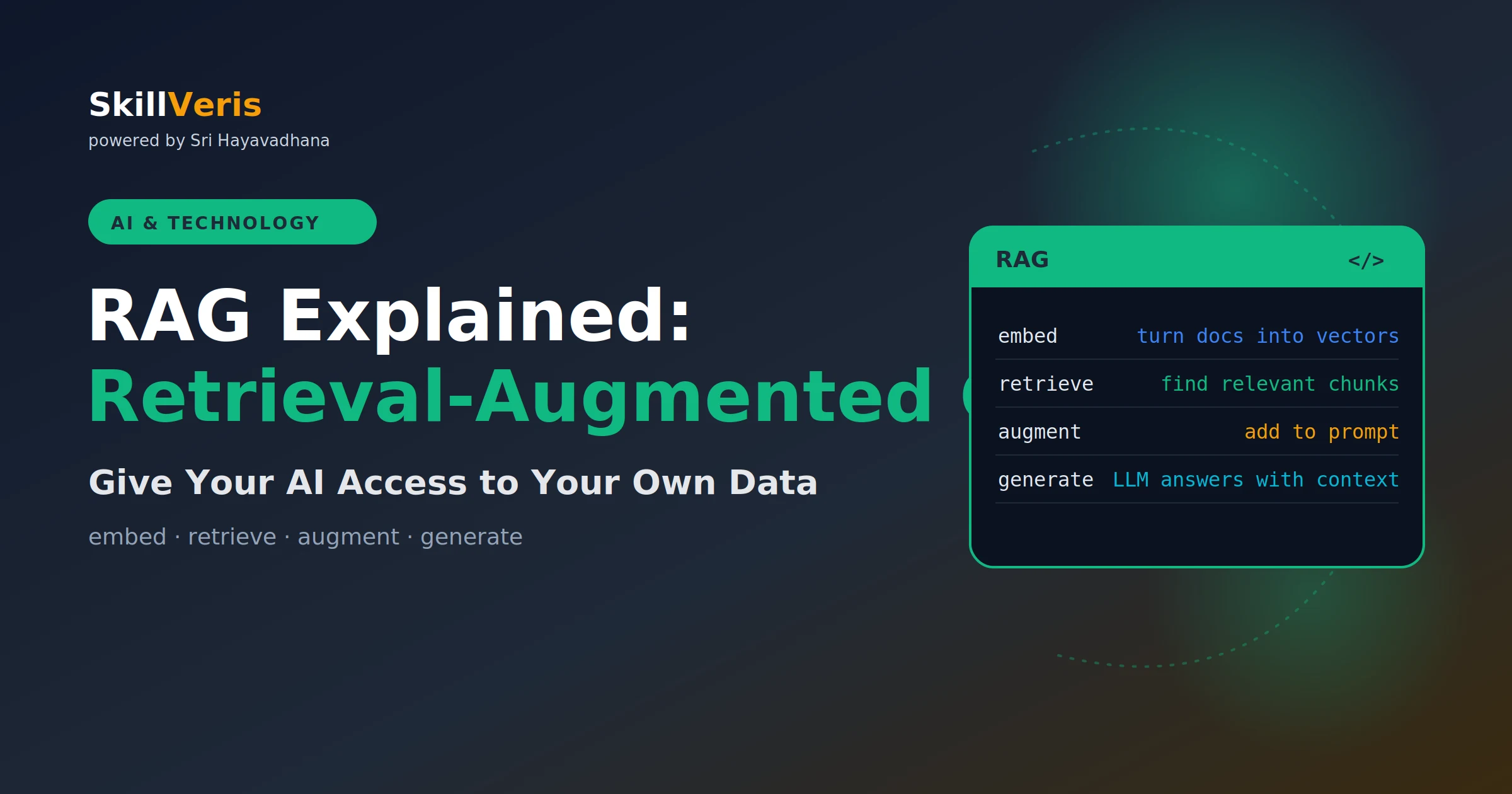
RAG Explained: Retrieval-Augmented Generation
RAG is how you give an LLM access to your own private data without training a new model. This guide explains the full pipeline — chunking, embeddings, vector search, and augmented generation — with a working Python example using open-source tools.
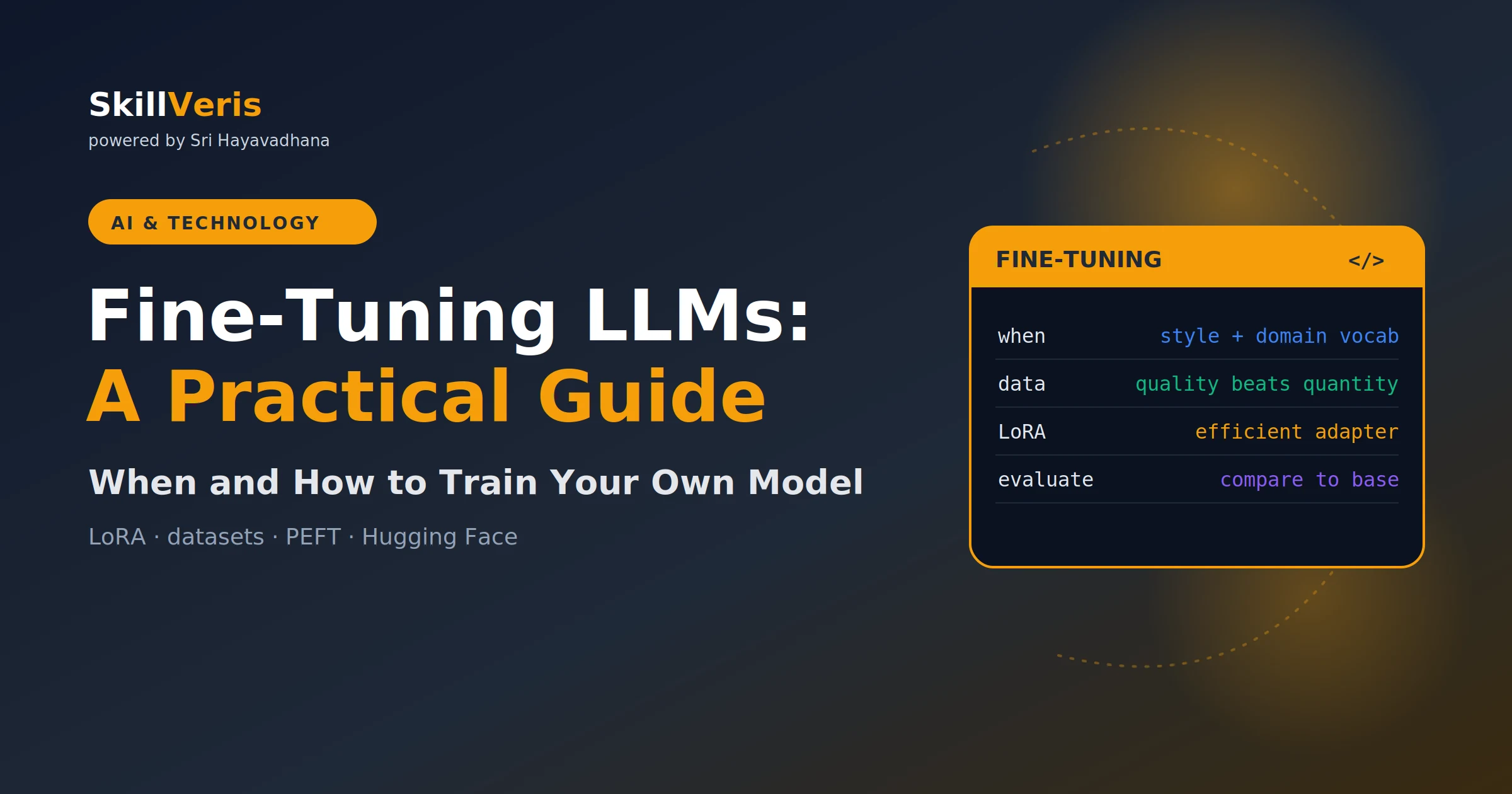
Fine-Tuning LLMs: A Practical Guide
Fine-tuning lets you adapt a pre-trained language model to your specific domain, style, or task — without training from scratch. This guide explains when fine-tuning is the right choice, how LoRA makes it affordable, and how to run a fine-tuning job with Hugging Face PEFT.
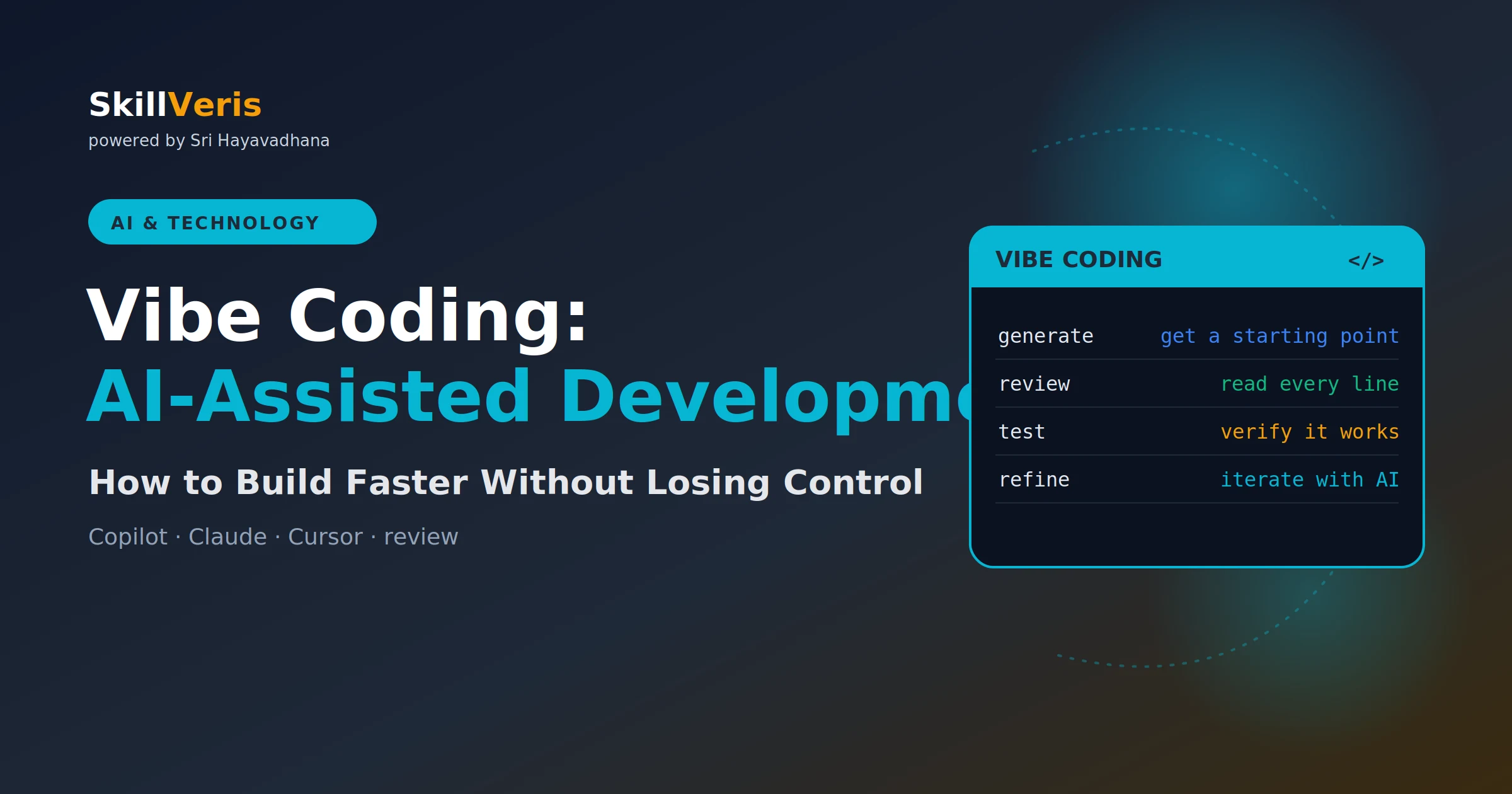
Vibe Coding: How to Build Faster with AI Without Losing Control
AI coding tools have shifted from autocomplete to full code generation, multi-file refactoring, and autonomous debugging. This guide explains how to use tools like Copilot, Cursor, and Claude Code effectively — including the critical skill of reviewing AI-generated code before shipping it.
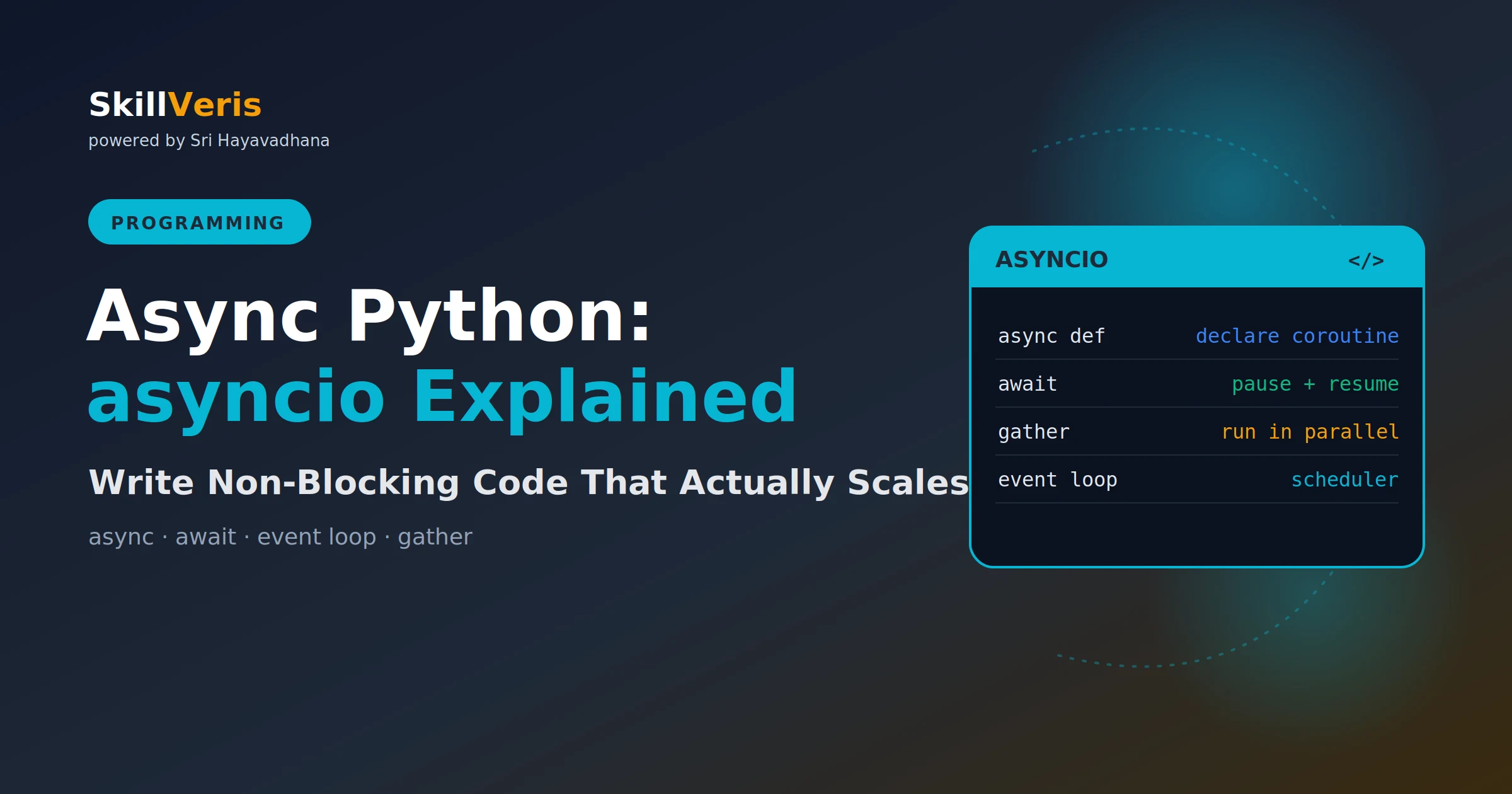
Async Python: asyncio Explained for Beginners
Async Python lets a single thread handle hundreds of concurrent I/O operations — making it essential for web APIs, database calls, and AI integrations. This guide explains coroutines, the event loop, await, gather, and real patterns you'll use in FastAPI, httpx, and LLM streaming.
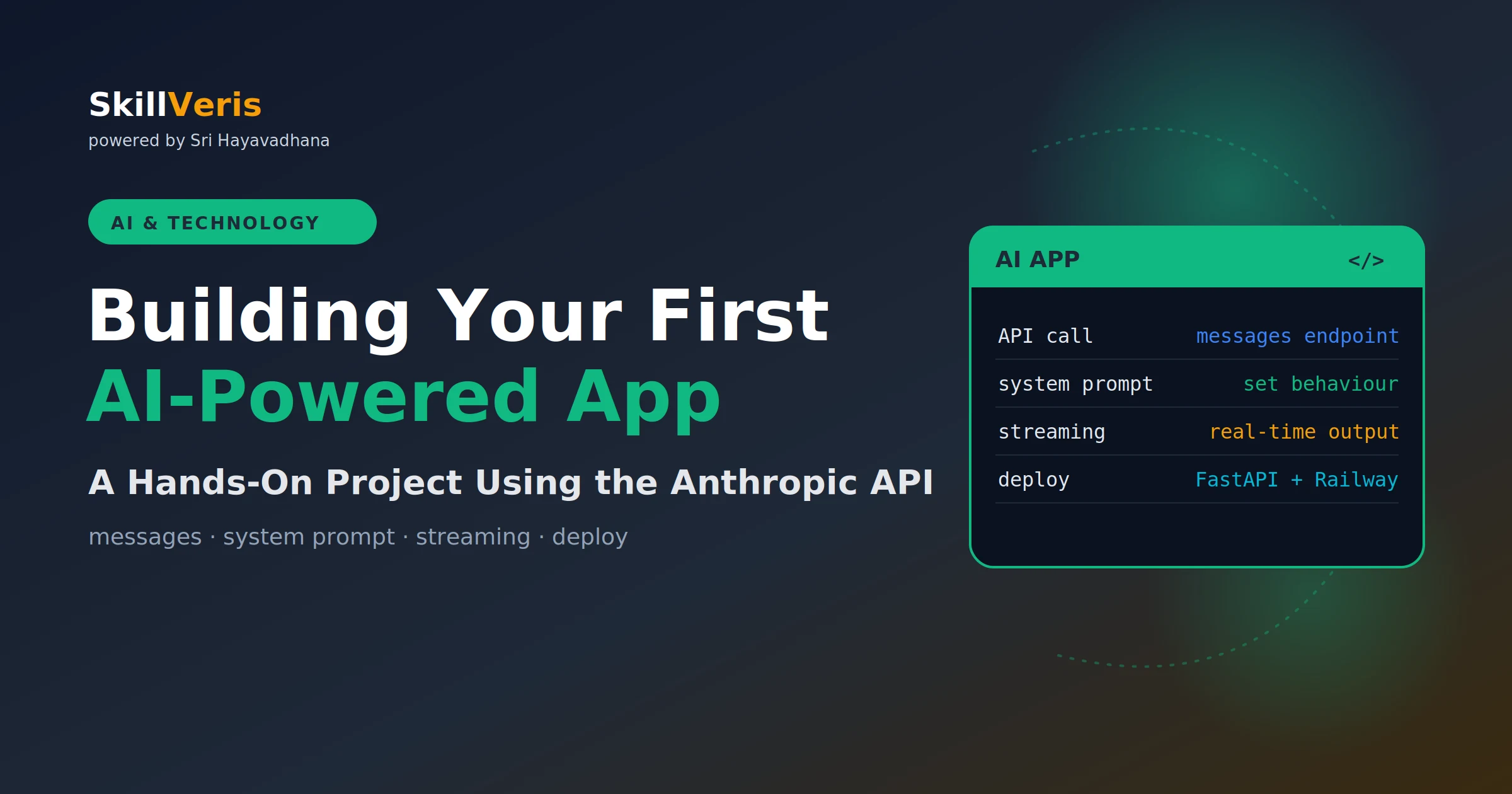
Building Your First AI-Powered App with the Anthropic API
The fastest way to understand AI engineering is to build something real. This project- based guide walks you through building a writing assistant powered by Claude — from your first API call through streaming responses, a FastAPI backend, a simple frontend, and deployment.
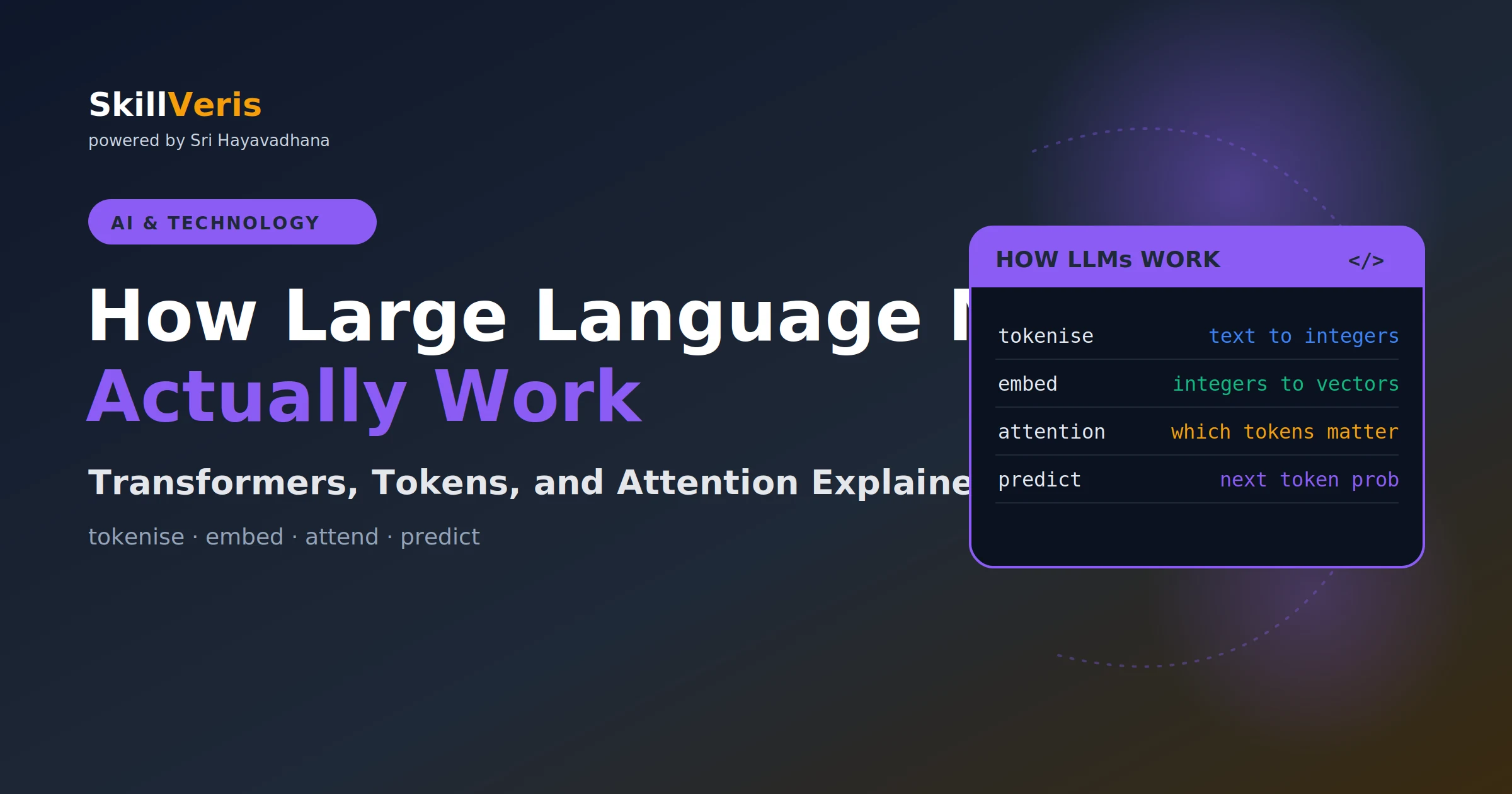
How Large Language Models Actually Work
LLMs seem magical until you understand what they are: next-token predictors trained on massive text corpora. This guide explains tokenisation, embeddings, the transformer architecture, attention mechanism, and how training works — without requiring a maths degree.
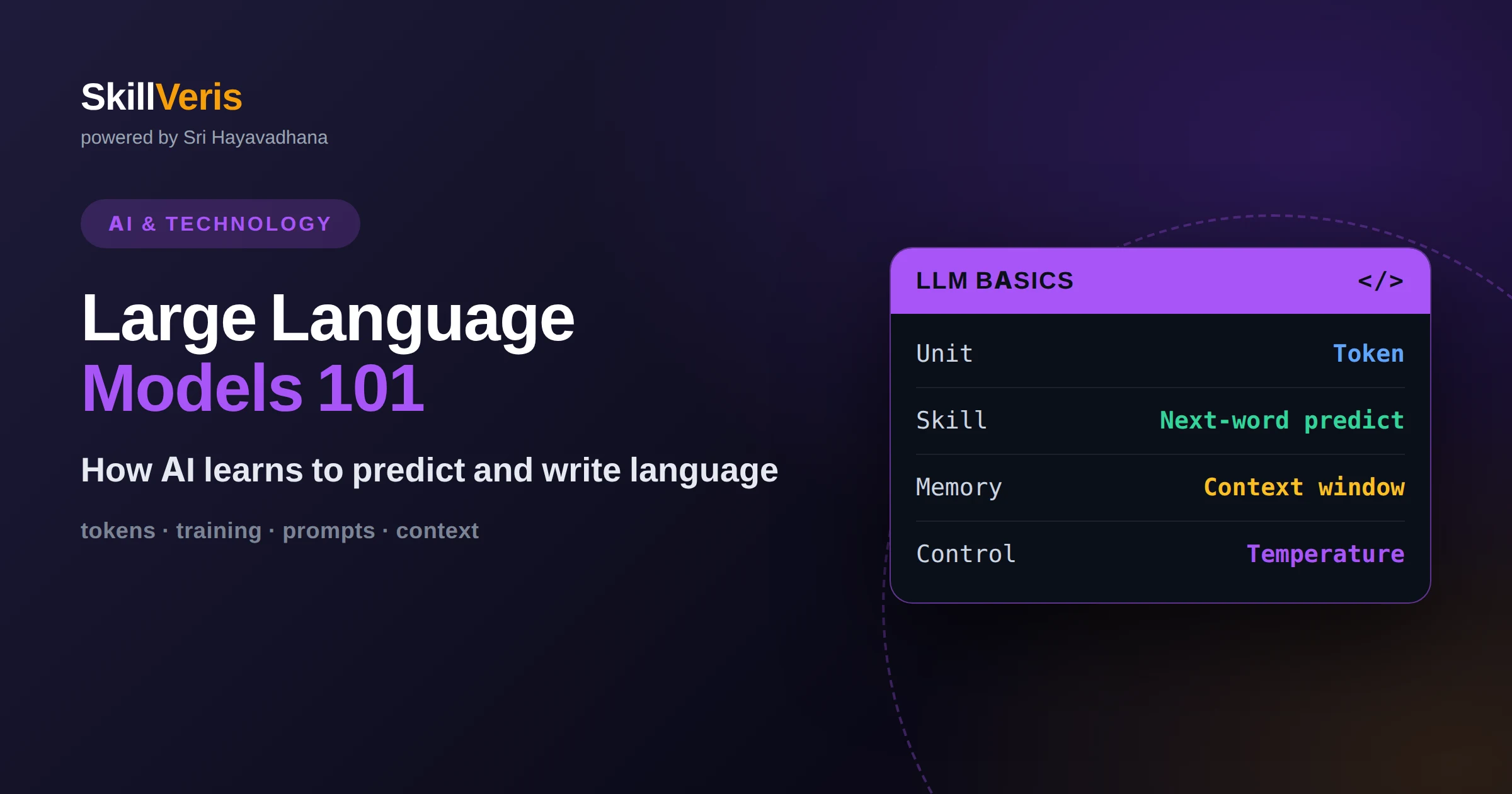
What Is a Large Language Model? A Beginner's Guide
A large language model is an AI trained on vast amounts of text to predict the next word, letting it write, summarize, translate, and answer questions fluently.
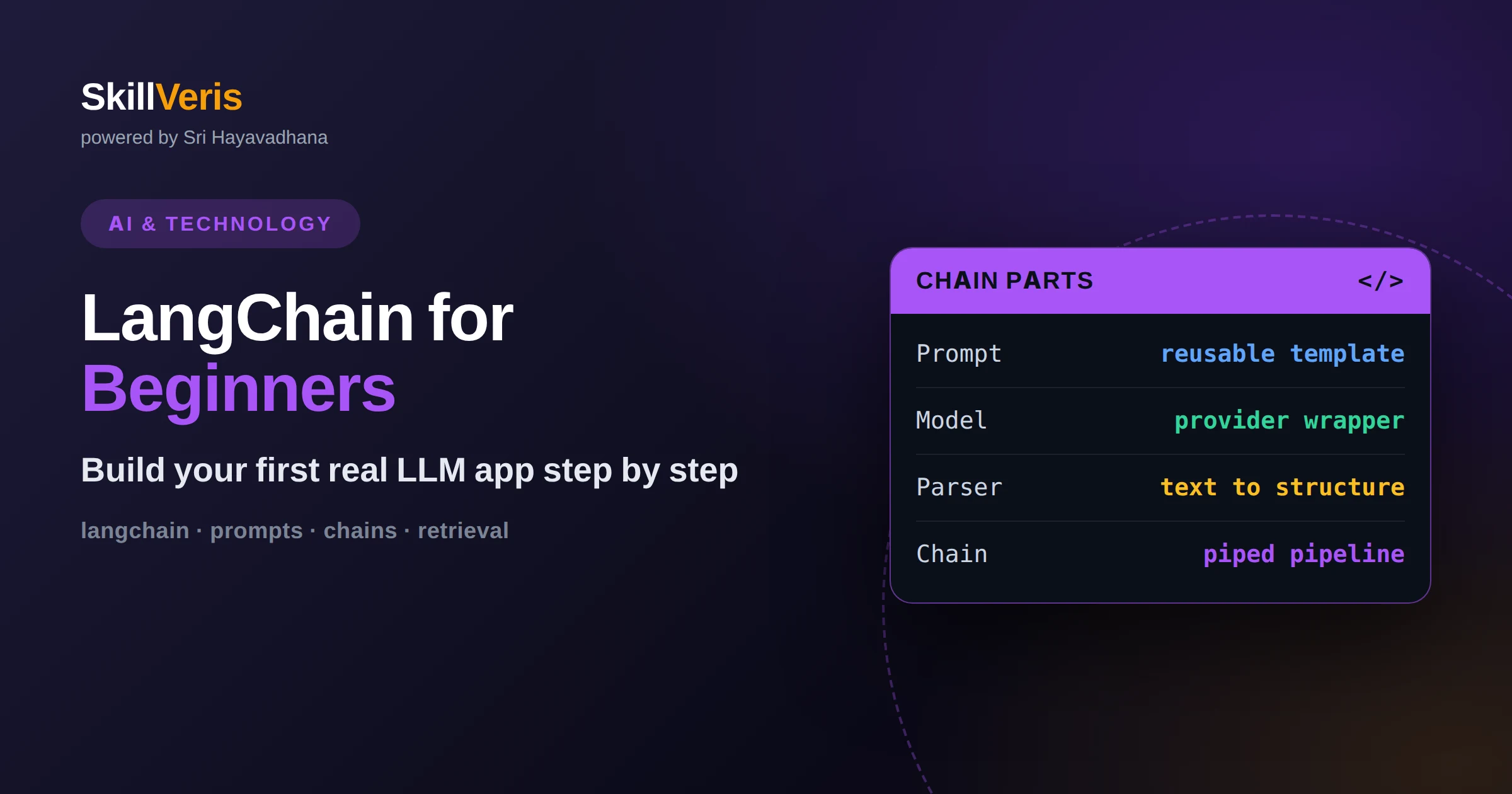
LangChain for Beginners: Build Your First LLM App
LangChain is a framework that connects language models to prompts, your data, and tools so you can build real LLM apps fast. Here is how to start today.
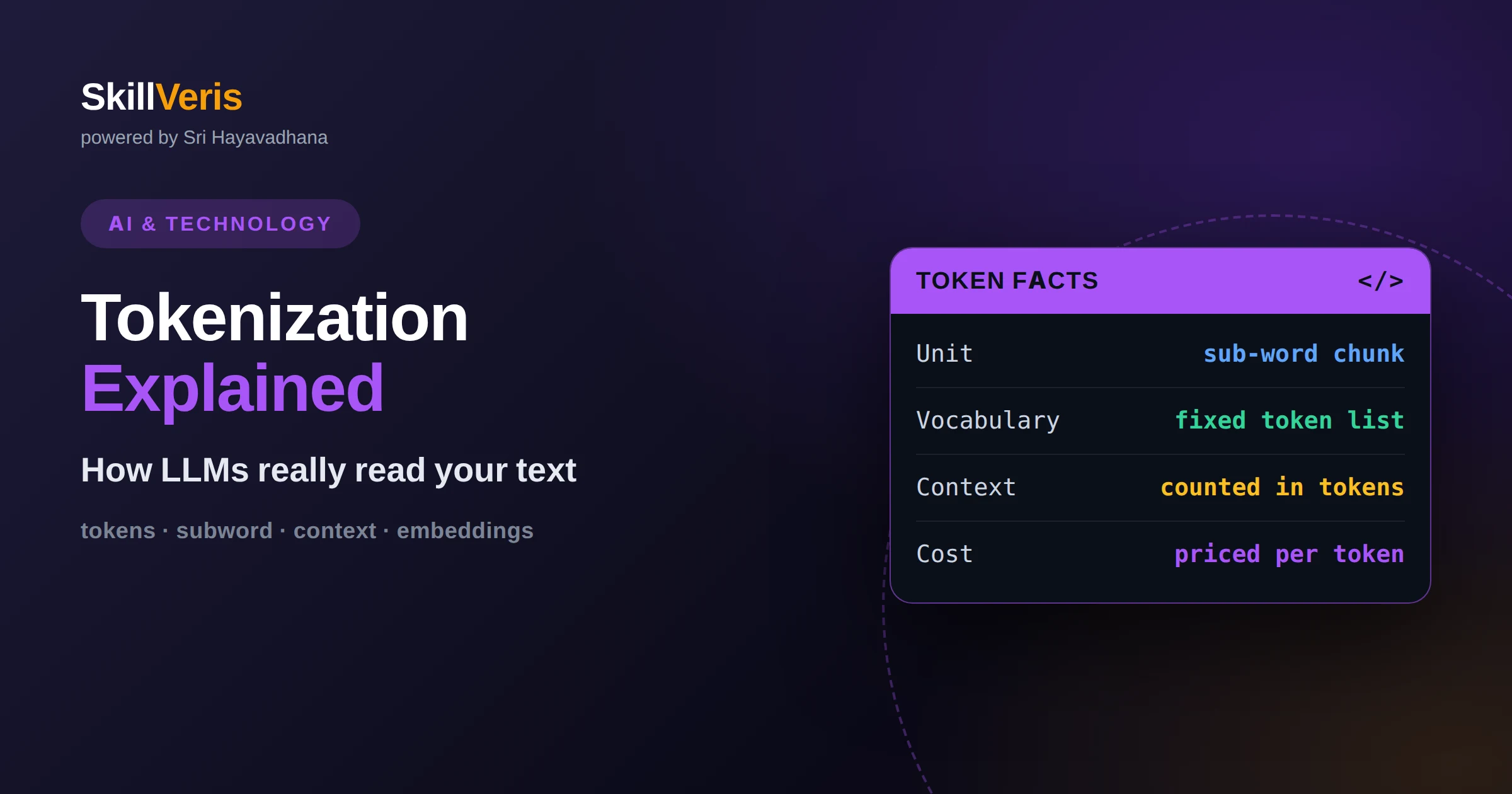
Tokenization Explained: How LLMs Read Text
LLMs do not read words or letters; they read tokens, the chunks text is split into. Learn what tokens are and why they shape cost, limits, and behavior.
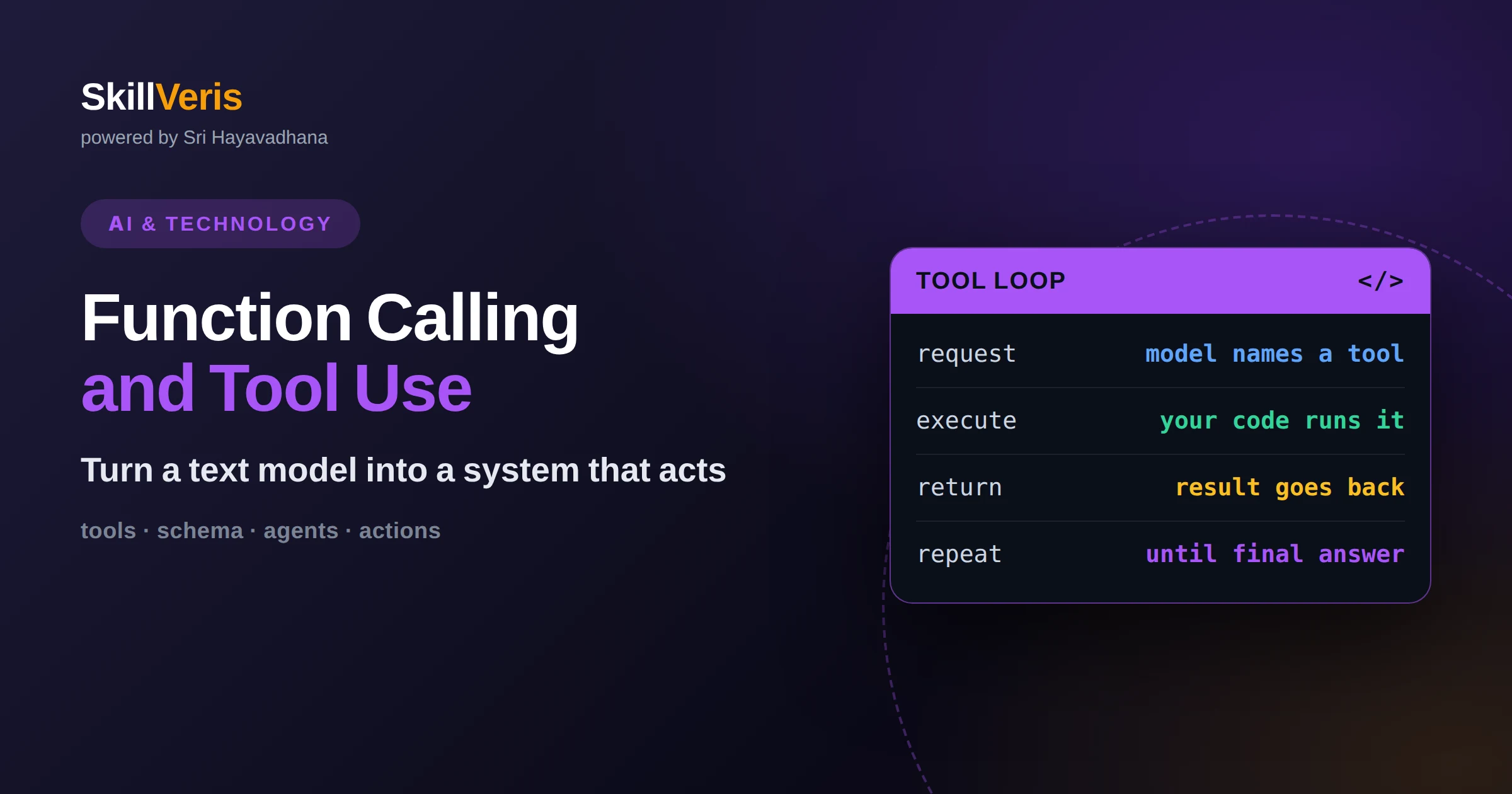
Function Calling and Tool Use in LLMs
Function calling lets a language model request real actions like API calls or database lookups, turning a text generator into a system that gets things done.
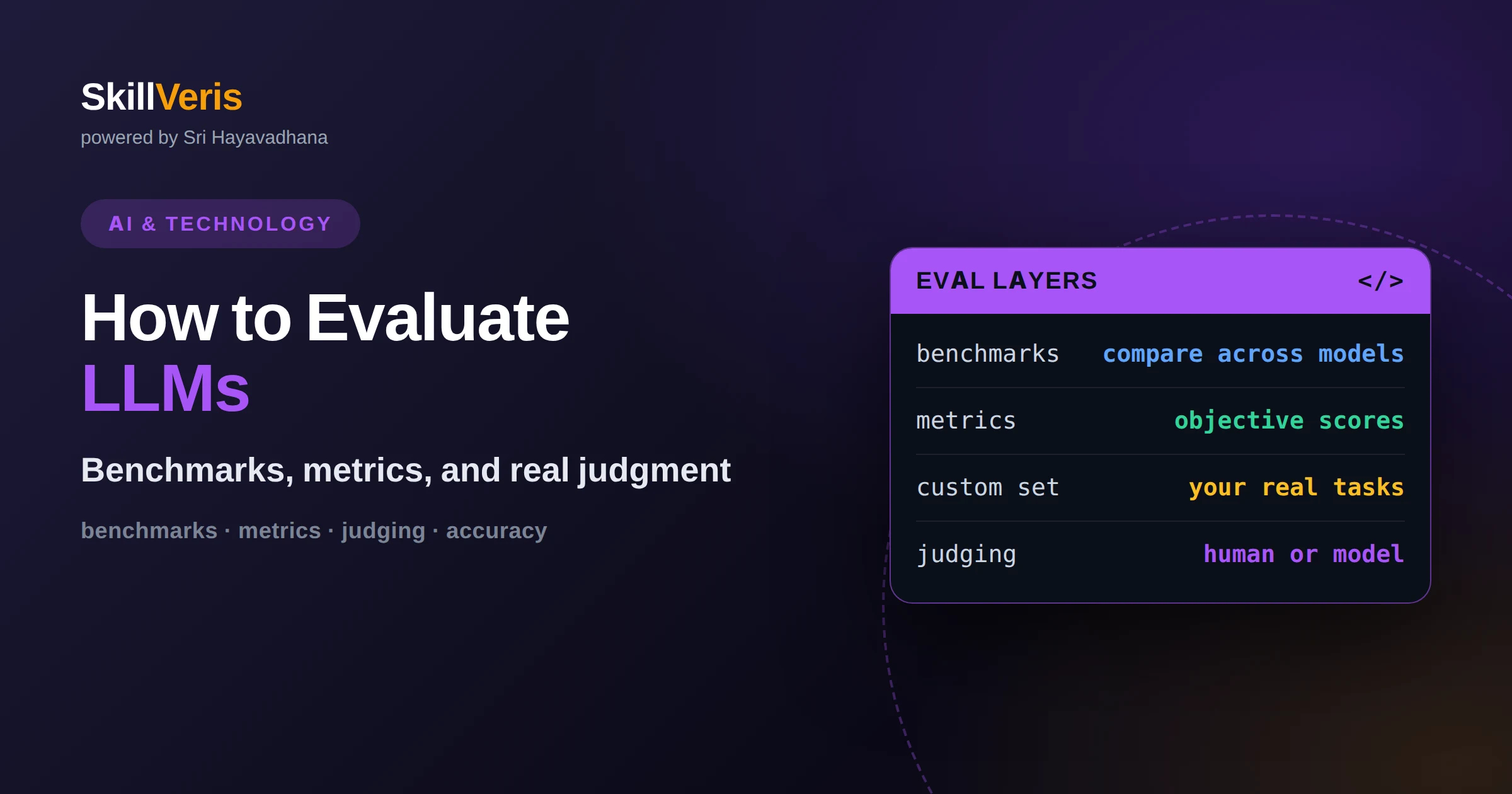
How to Evaluate LLMs: Benchmarks and Metrics
Evaluating a language model means measuring how well it does the job you need, using benchmarks, task-specific metrics, and human or model-based judgment together.
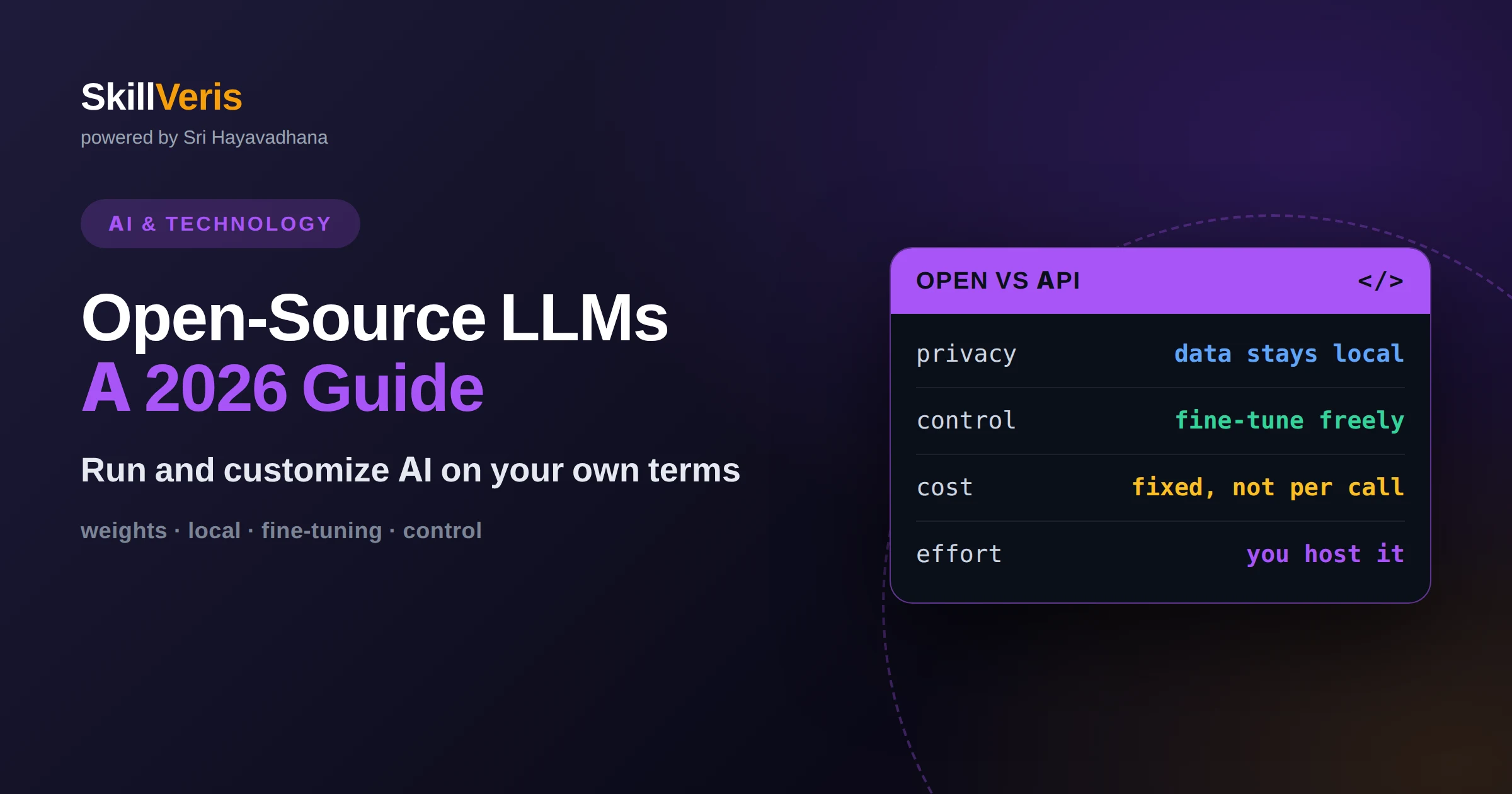
Open-Source LLMs: A Practical Guide for 2026
Open-source language models let you download, run, and customize powerful AI on your own terms, trading convenience for control, privacy, and cost predictability.
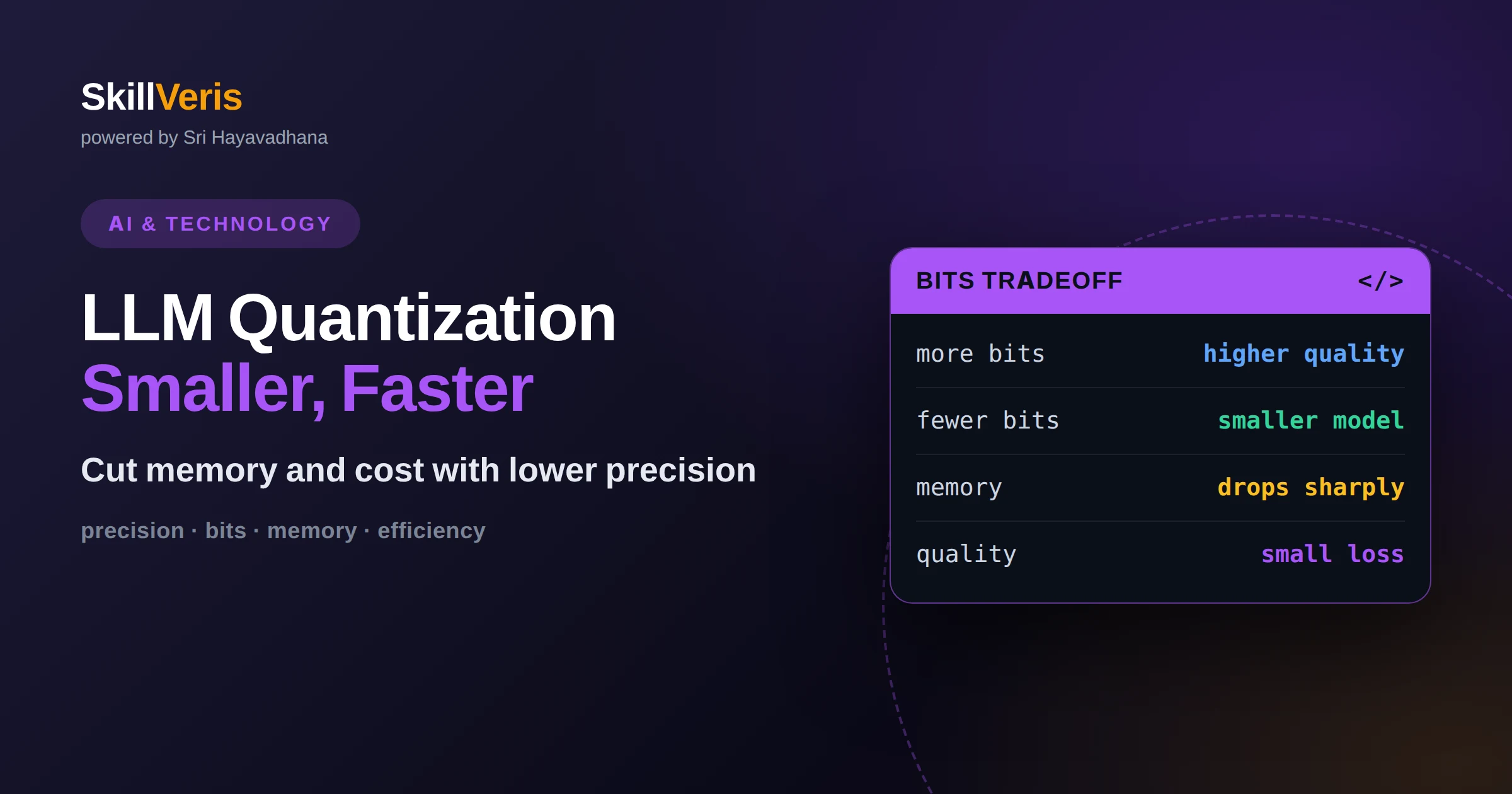
LLM Quantization Explained: Smaller, Faster Models
Quantization shrinks a language model by storing its numbers at lower precision, cutting memory and speeding it up with only a small loss in quality.
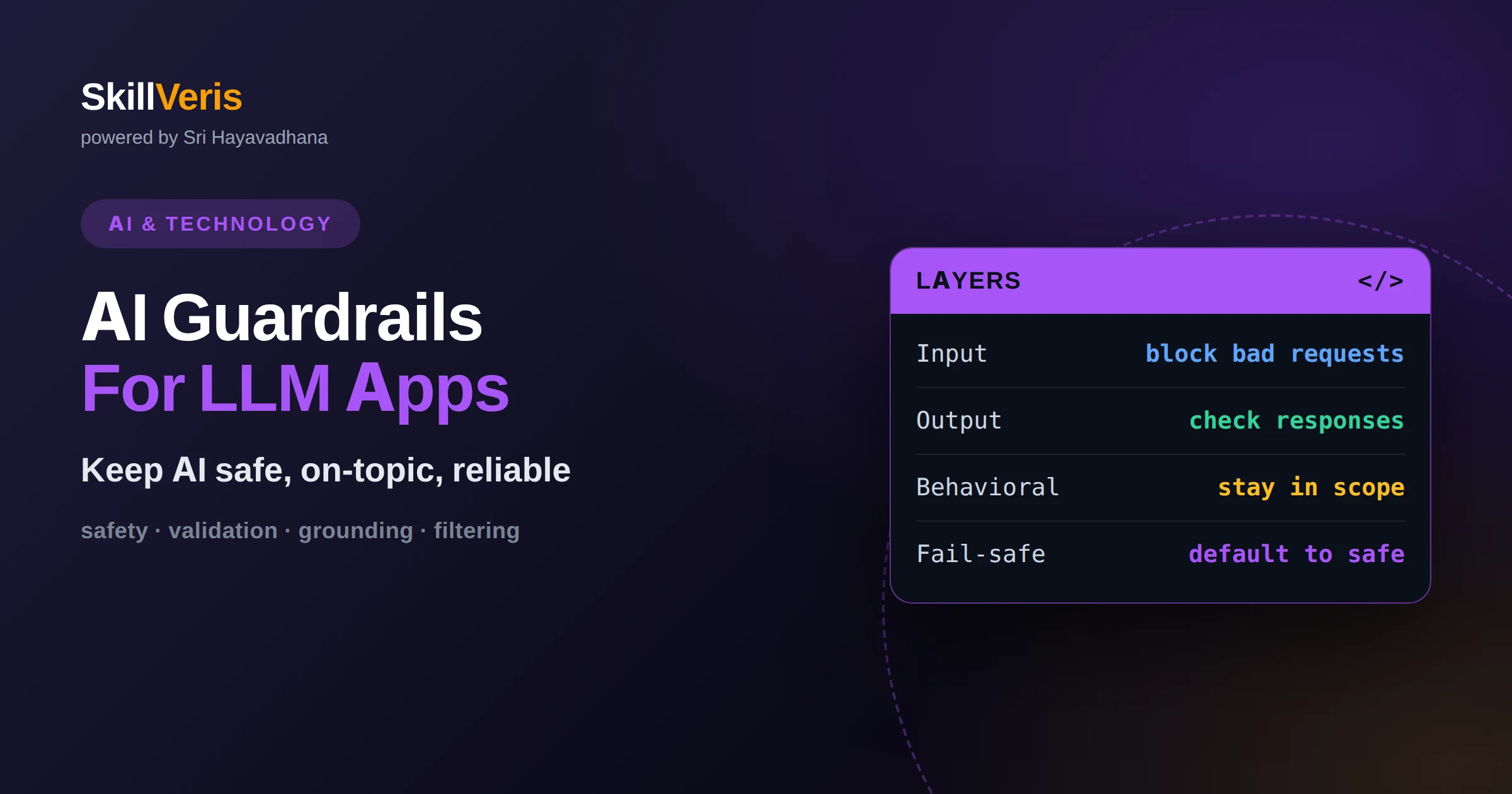
AI Guardrails: Making LLM Apps Safe and Reliable
AI guardrails are the checks that keep LLM apps safe, on-topic, and reliable. Learn what they are, the main types, and how to add them to your own app.
What Is Prompt Chaining and When to Use It
Prompt chaining splits a big task into a sequence of smaller LLM calls, where each step's output feeds the next. Learn how it works and when to use it.
AI Guardrails: How to Keep LLMs Safe in Production
AI guardrails are the checks around an LLM that validate inputs and outputs, block unsafe content, and keep responses on-topic, accurate, and policy-compliant.
AI Model Evaluation: How to Measure LLM Quality
Measuring LLM quality means combining automated benchmarks, task metrics, human review, and LLM-as-judge scoring against a representative evaluation set.
How to Build a Chatbot With an LLM API
Build a chatbot by calling an LLM API with a system prompt and message history, streaming responses, managing context, and adding tools for real capabilities.
What Are Function Calling and Tool Use in LLMs?
Function calling lets an LLM request that your code run a defined function, returning structured arguments so the model can fetch data or take actions reliably.
What Is Chain-of-Thought Prompting?
Chain-of-thought prompting asks an LLM to reason step by step before answering, which noticeably improves accuracy on math, logic, and multi-step problems.
What Is an AI Knowledge Graph?
An AI knowledge graph stores facts as connected entities and relationships, letting machines reason over data, answer complex questions, and ground LLM output.
Build a Chatbot With Python: Step-by-Step
Build a chatbot with Python by choosing rule-based or LLM-powered logic, handling user input in a loop, and connecting an API like OpenAI for real conversations.
What Is Retrieval-Augmented Generation in Practice
Retrieval-augmented generation grounds an LLM in your own documents, fetching relevant text at query time so answers stay accurate, current, and traceable to sources.
What Are AI Agents Frameworks: LangChain vs LlamaIndex
AI agent frameworks orchestrate LLM tool use, memory, and control flow. LangChain excels at general agent workflows; LlamaIndex specializes in data-heavy retrieval.
What Is Prompt Injection and How to Prevent It
Prompt injection tricks an LLM into ignoring its instructions by hiding malicious commands in user or retrieved text. Learn how the attack works and how to defend against it.
How LLM Temperature and Top-p Sampling Work
Temperature and top-p control how random an LLM's output is. Temperature reshapes the probability curve; top-p limits the candidate pool. Learn when to tune each.
What Is a System Prompt and Why It Matters
A system prompt is the hidden instruction that sets an LLM's role, rules, and tone before any user message. It shapes every response and anchors consistent behavior.
How GPT Models Are Trained: Pretraining to RLHF
GPT models are trained in stages: massive next-token pretraining, supervised fine-tuning on instructions, then RLHF to align outputs with human preferences.
What Are Guardrails and Content Filters for LLMs
Guardrails and content filters are the safety layers around an LLM that block harmful inputs and outputs, enforce policy, and keep responses on-topic and safe.
What Is a Token and How Pricing Works for LLMs
A token is the sub-word unit LLMs read and write, and API pricing is charged per token for both input and output. Learn to estimate and control your costs.
How to Cut Your LLM API Costs
Cut LLM API costs by trimming prompts, caching, routing to smaller models, and capping output. Here are the highest-impact tactics for lowering your bill.
Build a RAG Chatbot Over Your Own Documents
Build a RAG chatbot that answers from your own documents: chunk and embed your files, store vectors, retrieve relevant passages, and feed them to an LLM for grounded answers.
Using ChatGPT for Data Analysis: A Practical Guide
Learn to use ChatGPT for data analysis with proven prompt patterns, code interpreter workflows, and a clear-eyed view of where the tool fails you.
How Large Language Models Work, Explained Simply
How large language models work, explained simply: tokens, attention, training, and inference described with intuition and analogies, no heavy math required.
Natural Language Processing: A Beginner Roadmap
A free beginner roadmap to natural language processing, from tokenization and embeddings to transformers and LLMs, with a practical learning order.
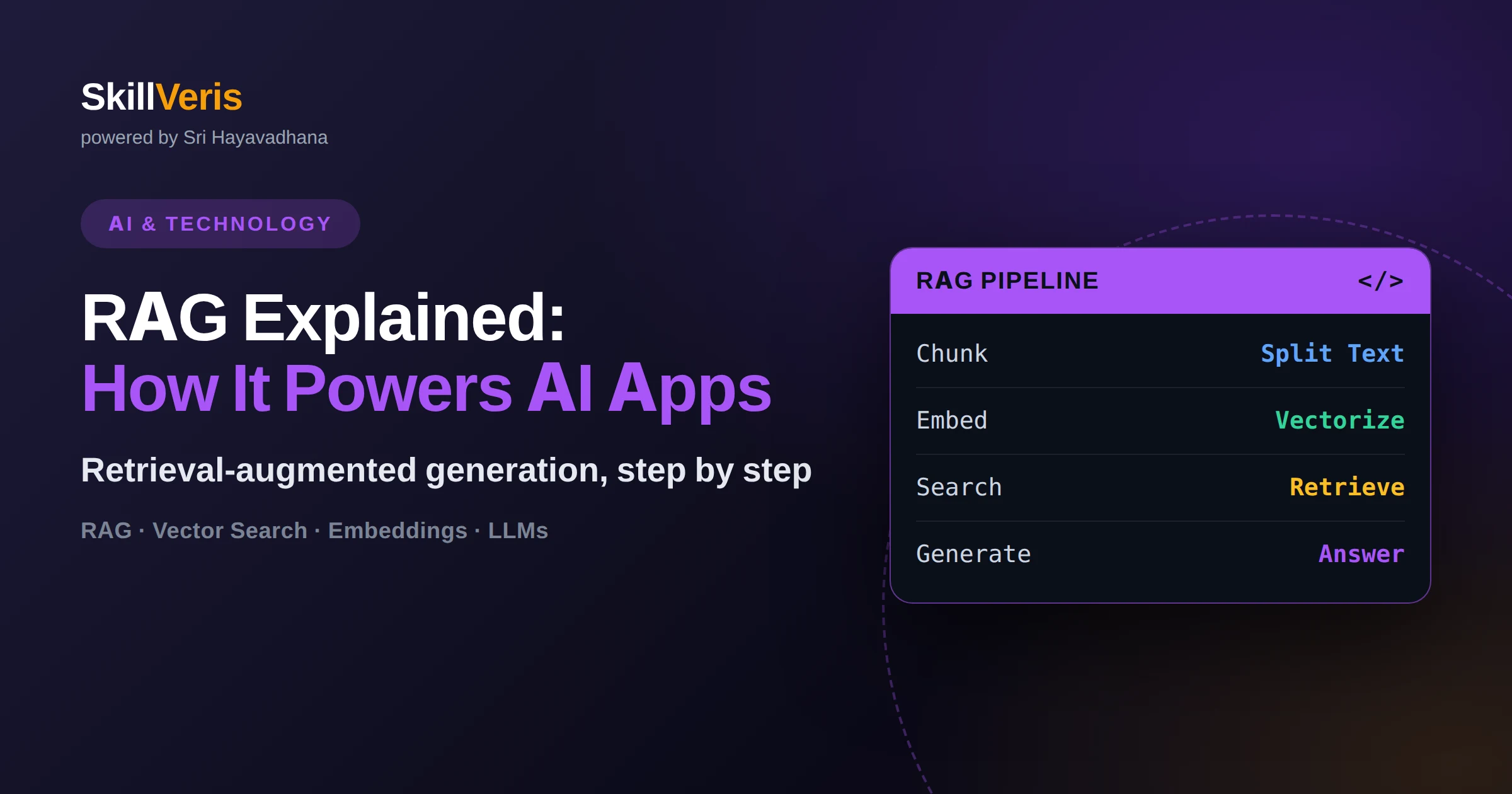
RAG Explained: How It Powers AI Apps
RAG grounds an LLM's answers in retrieved documents at query time, fixing hallucinations and stale knowledge without retraining the model.
What Is ChatGPT? A Practical Guide to the AI Chatbot
ChatGPT is an AI chatbot built on a large language model that generates human-like text from a prompt. This guide explains how it actually works, what it's good at, where it fails, and how to write prompts that get useful answers.
What Is Perplexity AI? The Answer Engine Explained
Perplexity AI is a search-and-answer tool that combines live web retrieval with a large language model to produce cited, sourced answers instead of a list of links. Here's how it works, how it differs from a chatbot, and when to use it.

What Is GPT? Understanding GPT-4 and How It Works
GPT stands for Generative Pre-trained Transformer, a type of large language model that generates text by predicting the next most likely word based on patterns learned from massive training data. This guide explains how GPT-4 works and what sets it apart.
How to Write ChatGPT Prompts That Get Better Answers
Writing better ChatGPT prompts means giving clear context, a specific task, and the format you want the answer in, rather than a vague one-line question. This guide covers the core techniques with practical examples you can reuse.
ChatGPT 3.5 vs 4: What Actually Changed
ChatGPT 4 is meaningfully more accurate, better at reasoning through multi-step problems, and able to handle images, while GPT-3.5 remains faster and cheaper for simple tasks. This guide breaks down when the difference actually matters.
What Is Grok? xAI's Chatbot Explained
Grok is xAI's conversational AI assistant, built to answer questions with real-time awareness and a more irreverent tone than most chatbots. This guide explains how it works, what sets it apart, and where it fits among large language models.

How to Use ChatGPT to Improve Your Resume
ChatGPT can rewrite bullet points, tighten wording, and tailor a resume to a specific job description, but it works best as an editor rather than the original author of your experience. This guide covers effective prompts and common pitfalls to avoid.
The ChatGPT API Explained: How to Use It
The ChatGPT API lets developers send conversation messages to a language model and receive generated responses programmatically. This guide covers how the API works, core parameters, and common use cases.

Best ChatGPT Alternatives and How to Choose One
A ChatGPT alternative is any conversational AI tool built on a different large language model that serves a similar purpose. This guide explains the main categories of alternatives, how they differ, and how to choose one for your needs.
How to Use an LLM Notebook Effectively
An LLM notebook works best when you feed it curated source material and ask specific, grounded questions rather than open-ended ones. This guide covers practical habits for getting accurate, useful answers from notebook-style AI tools.
LLM Fundamentals: How Language Models Are Built and Behave
A large language model predicts the next token from a sequence, and almost every behaviour that surprises you in production follows from that one fact. This guide connects tokenization, pretraining, fine-tuning, decoding and context limits into a single mental model you can use while debugging real systems.
LLM Inference Optimization: Latency, Throughput and Cost
Latency, throughput and cost pull against each other in LLM serving, and most optimisation advice fails because it ignores which one you are actually optimising. This guide separates the three goals, maps each technique to the goal it moves, and names the quality or memory price each one charges.
Shipping AI Features: Engineering Practices for LLM Products
Shipping an LLM feature is a delivery lifecycle, not a prompt. You scope the task so success is checkable, build an evaluation set before you tune anything, roll out behind a flag, instrument the funnel, and cap cost per user. This guide walks that lifecycle end to end and names the failure mode at each stage.
LLM Evaluation: Building a Test Suite for Generative Output
You can test non-deterministic output by fixing the inputs, grading against a rubric rather than an exact string, and gating releases on aggregate thresholds instead of per-case pass or fail. This guide shows how to assemble that suite: dataset, scorers, run harness, thresholds and the CI wiring that makes it enforceable.
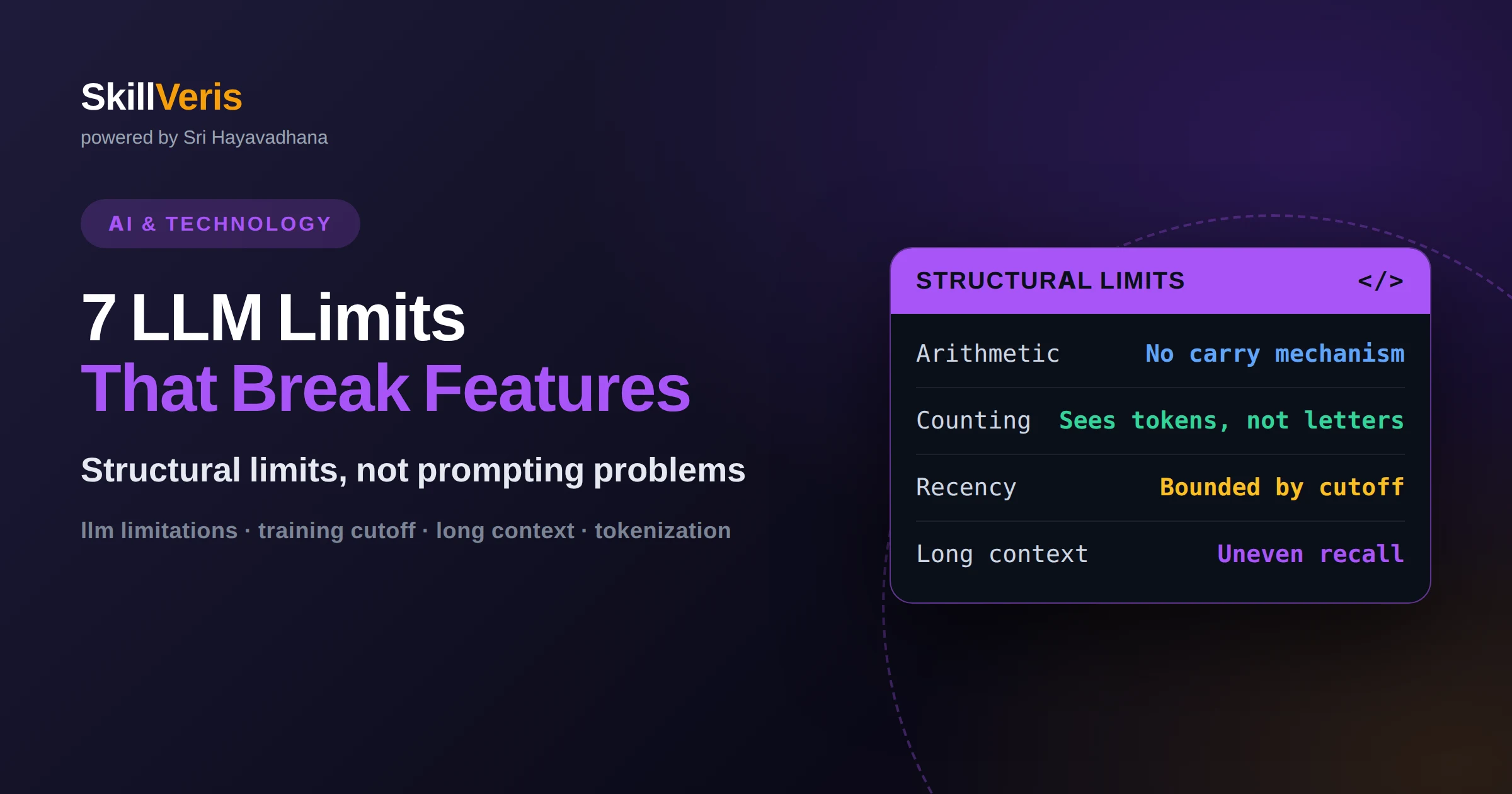
7 LLM Limitations That Break Naive Product Features
Seven limits are structural, not bugs waiting to be patched: arithmetic, counting, recency, self-knowledge, ordering, consistency and long-context recall. Read this to recognise each failure in your own product, know which workaround actually fixes it, and stop shipping features that only work in the demo.
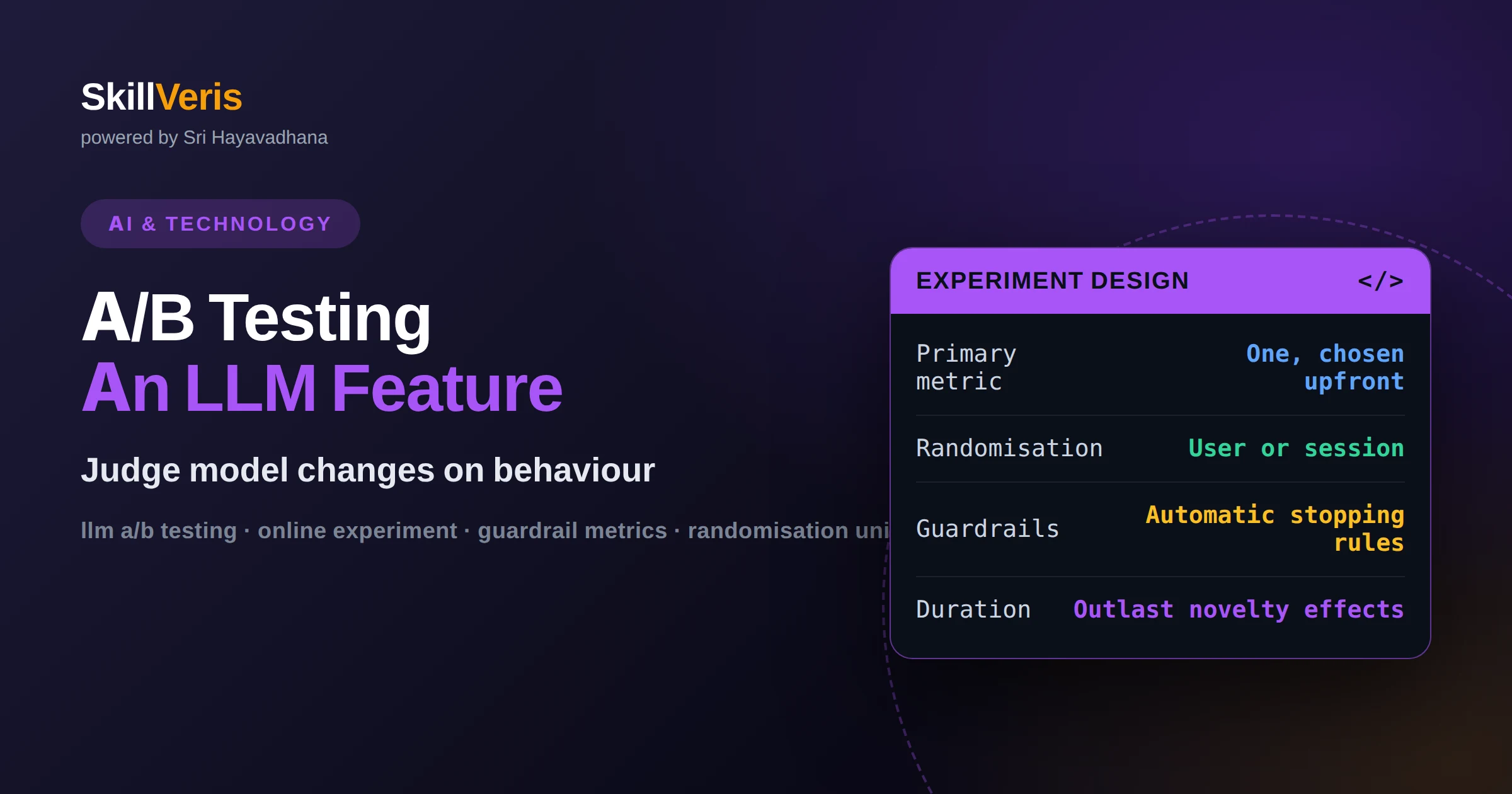
How to A/B Test an LLM Feature With Real Users
Judge model changes on behaviour, not on offline scores. Pick one primary behavioural metric, define guardrails that stop the experiment automatically, randomise at the unit users actually experience, and hold the test long enough for the slow signals — retention and follow-up rate — to arrive.
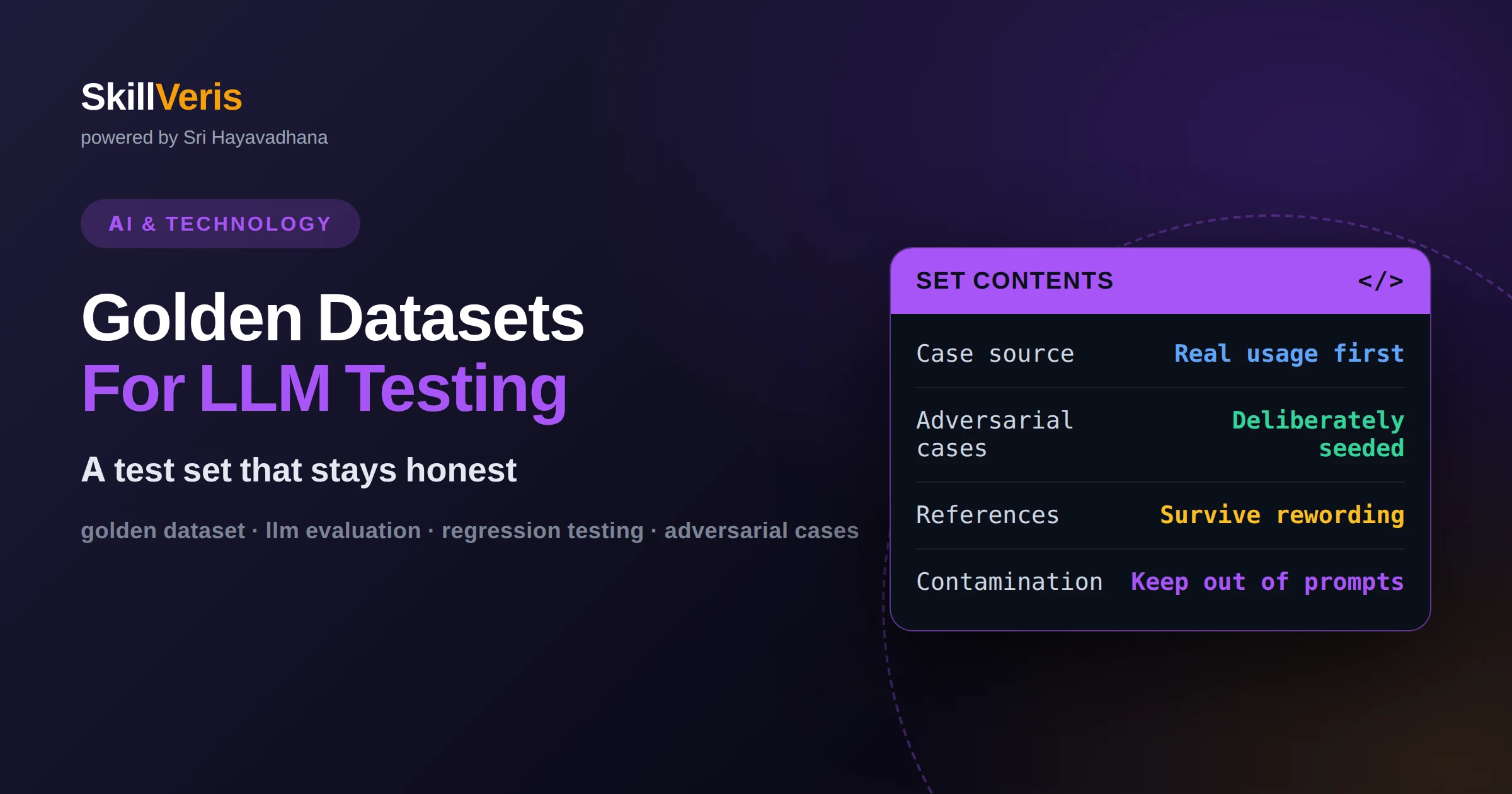
How to Build a Golden Dataset for LLM Testing
A golden dataset is a fixed, versioned set of inputs with reference answers and grading criteria, drawn from real usage and deliberately seeded with adversarial cases. This covers how to select cases, write references that survive rewording, keep the set honest as it ages, and avoid the failure of testing only what already works.
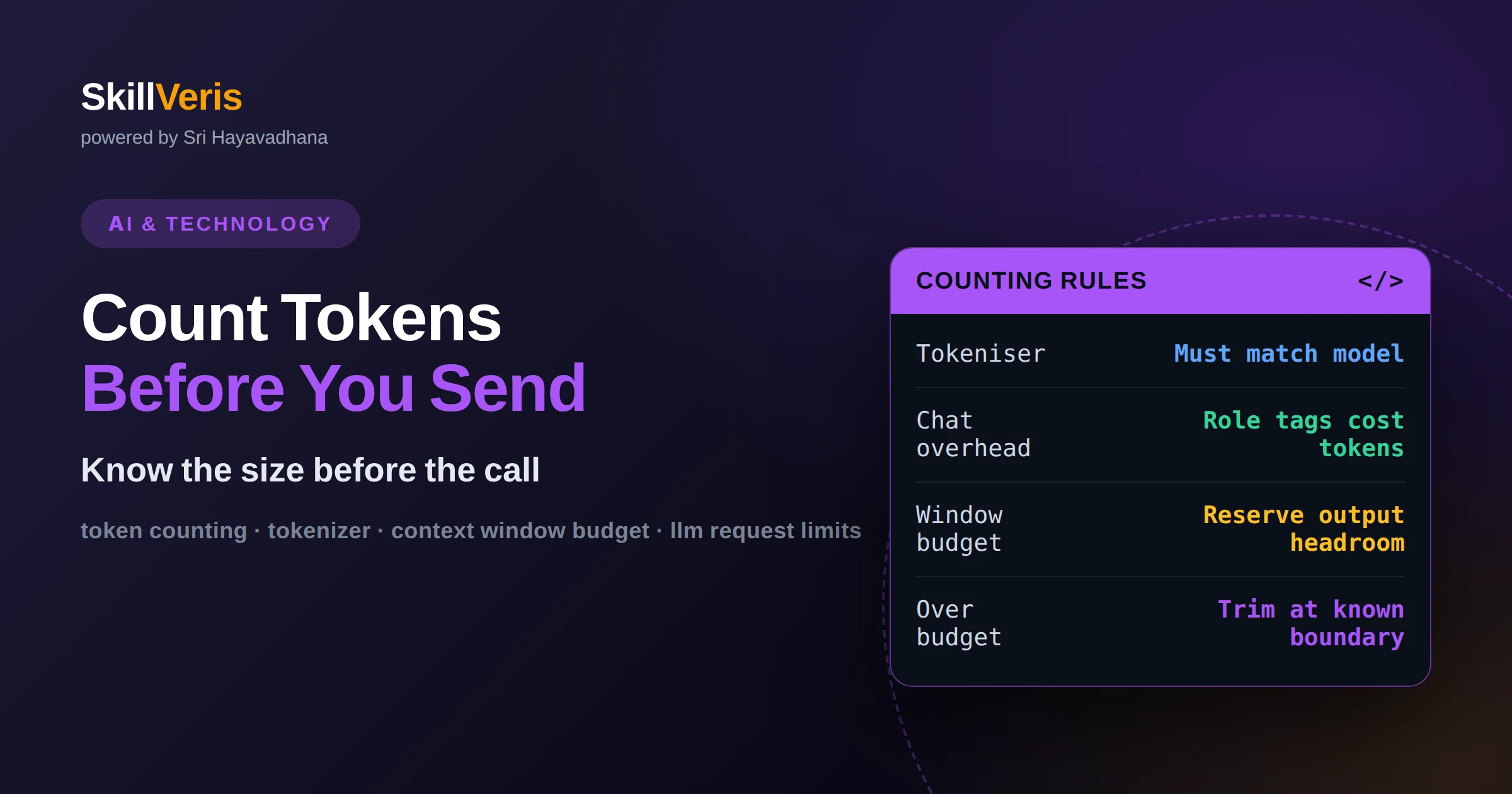
How to Count Tokens Before You Send an LLM Request
Count tokens locally with the same tokeniser the model uses, before the request leaves your process. This lets you reject or trim oversized inputs, price a call in advance, and reserve headroom for the completion instead of discovering the limit through a truncated answer or a hard API error.
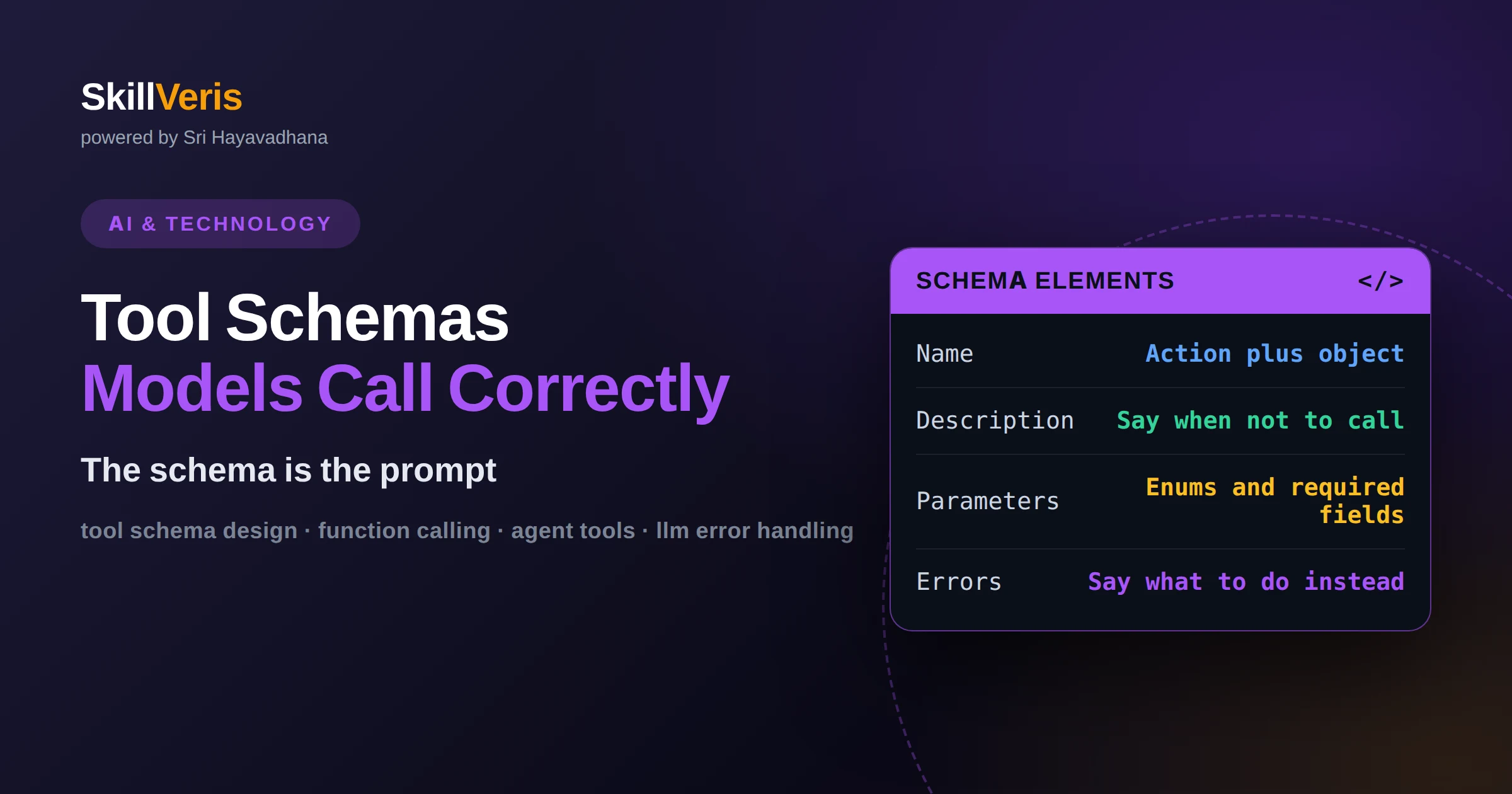
How to Design a Tool Schema an LLM Will Call Correctly
A tool schema is a prompt, not just an interface contract. This shows how to name tools for unambiguous selection, type parameters so wrong values are impossible, write descriptions that say when not to call, and design error messages the model can actually recover from.
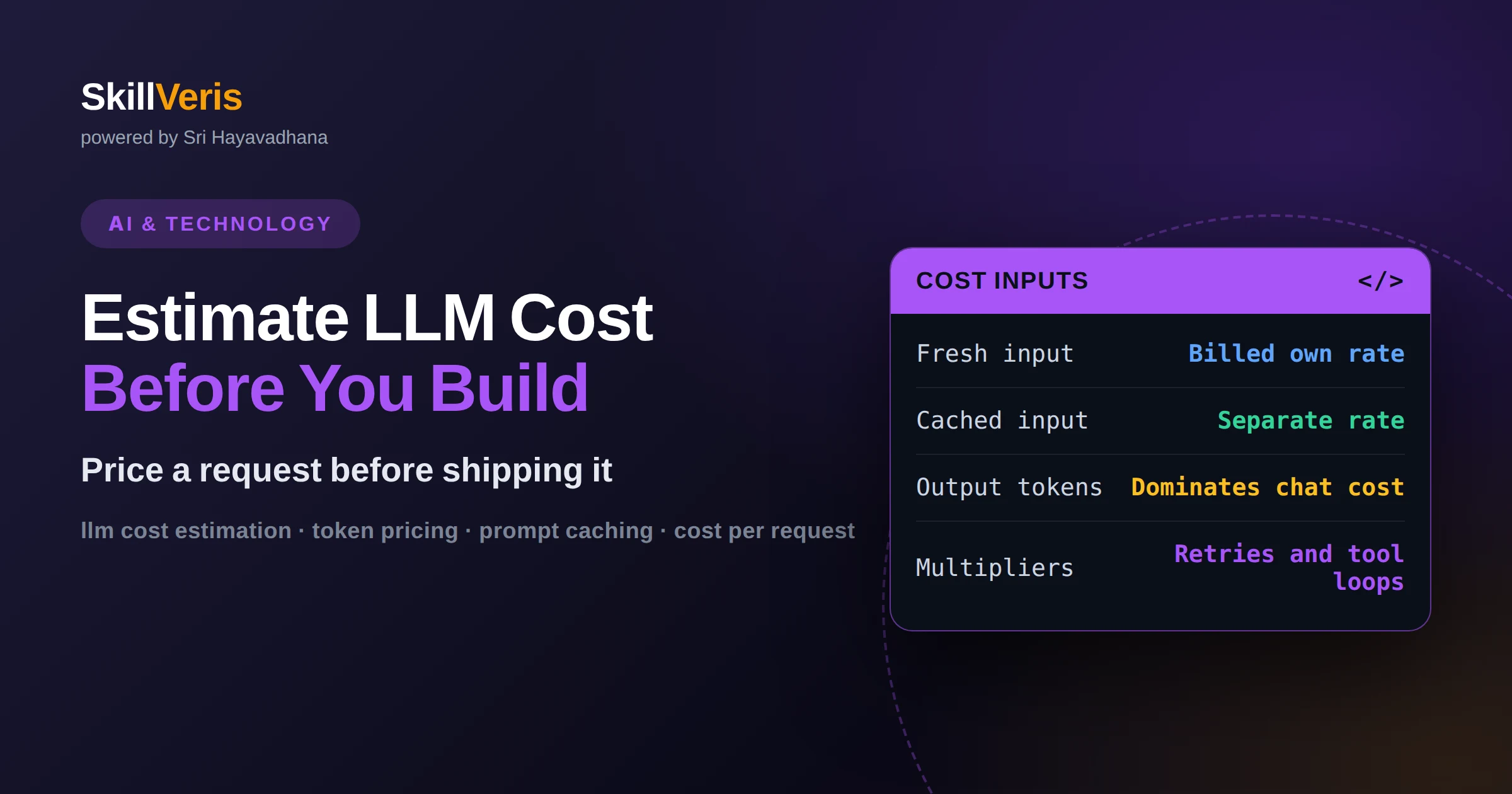
How to Estimate LLM Cost Per Request Before You Build
Estimate a request's cost by counting input tokens, expected output tokens and cached tokens separately, then multiplying each by its own published rate. This article shows how to build that model from a prompt you already have, stress it against realistic traffic, and find the levers that actually move the bill.
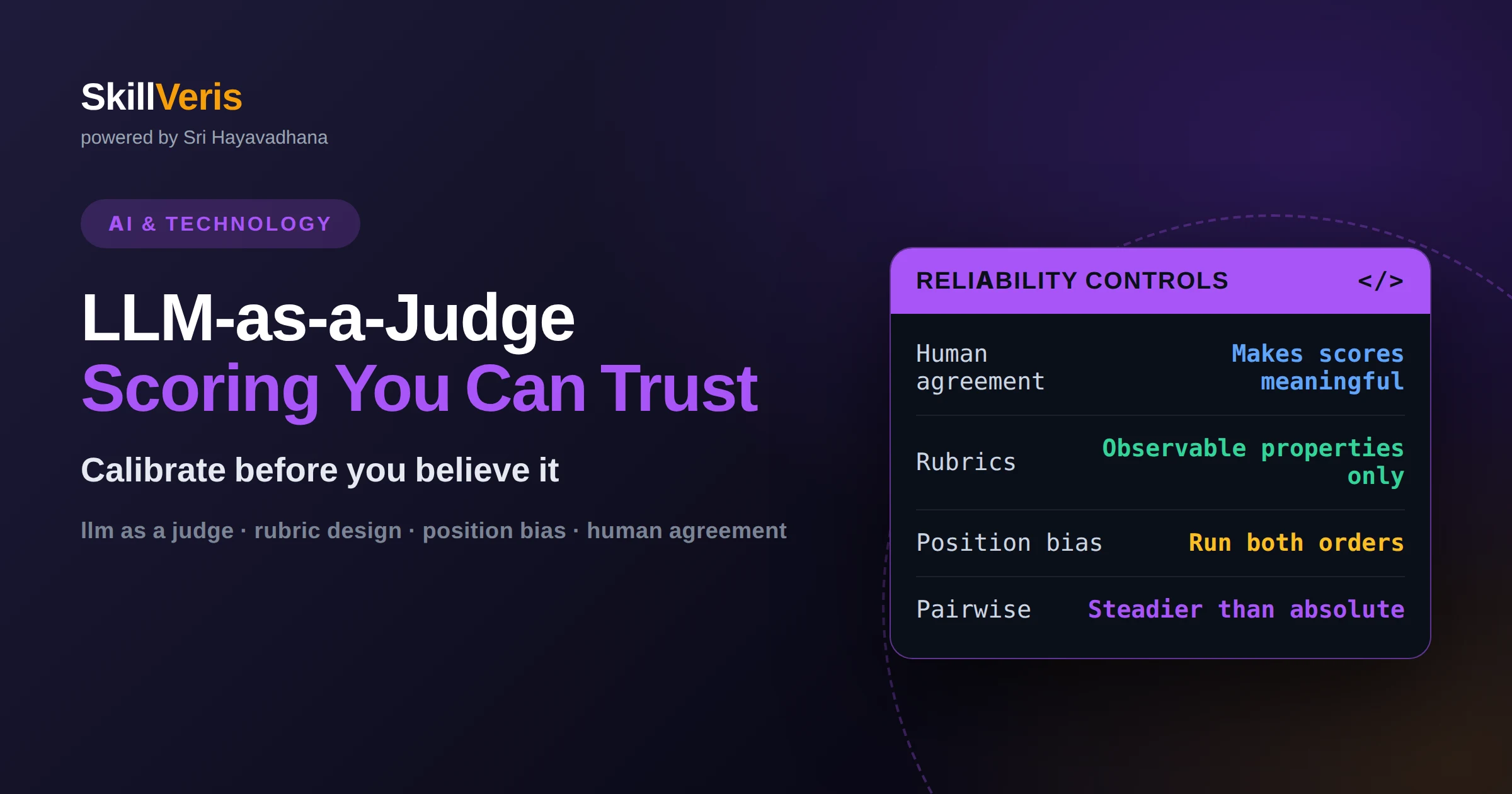
How to Make LLM-as-a-Judge Scoring Reliable
A judge model is only trustworthy once you have calibrated it against human labels and controlled for its known biases. This covers writing rubrics with observable criteria, swapping positions in pairwise comparisons, measuring agreement with humans, and knowing when not to use a judge at all.
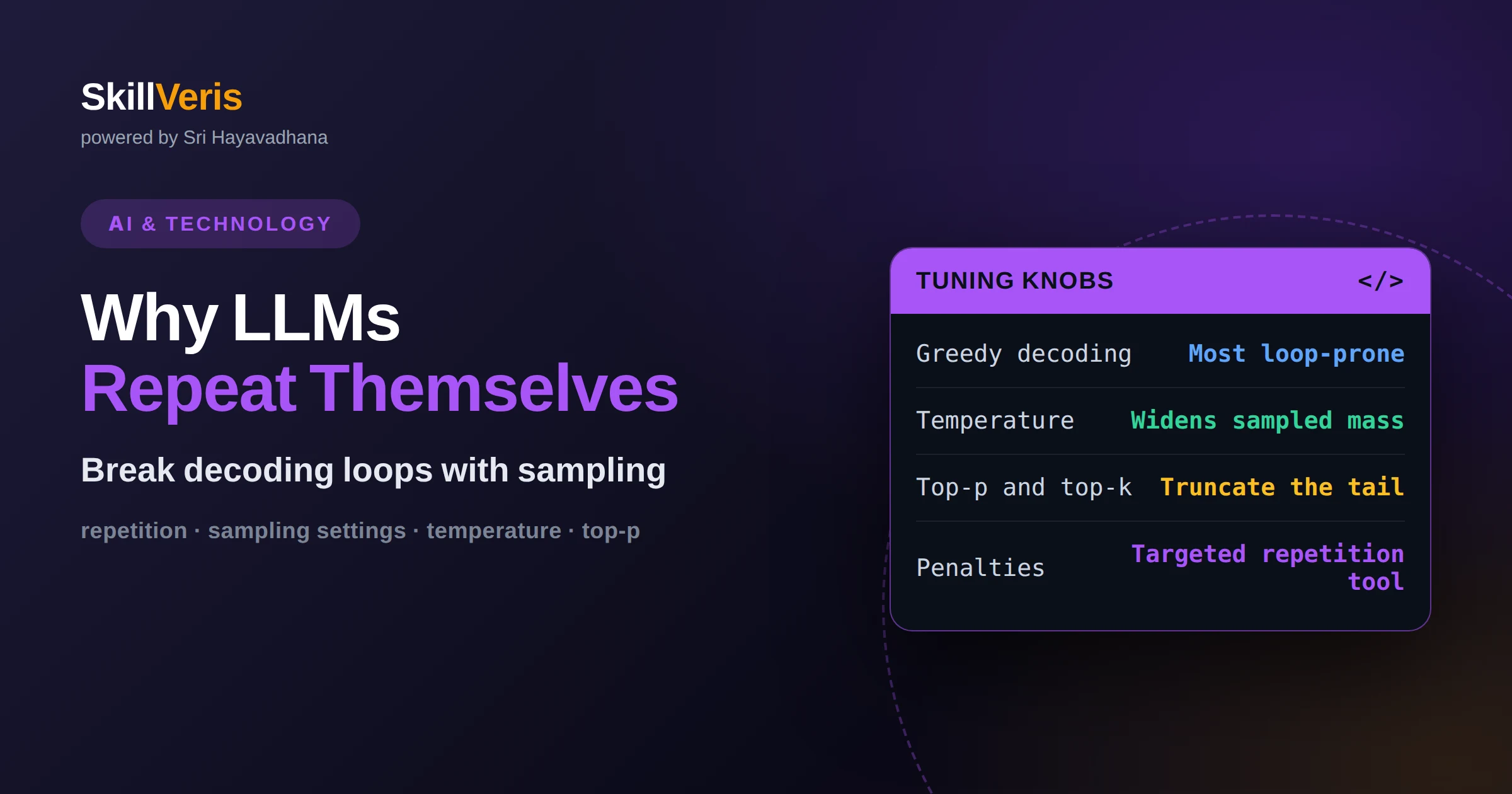
Why LLMs Repeat Themselves and How Sampling Settings Fix It
Language models repeat themselves because greedy and near-greedy decoding falls into self-reinforcing loops: each repeated phrase raises the probability of repeating it again. This article explains the mechanism and shows which sampling settings break the loop, which merely hide it, and which cause worse failures.
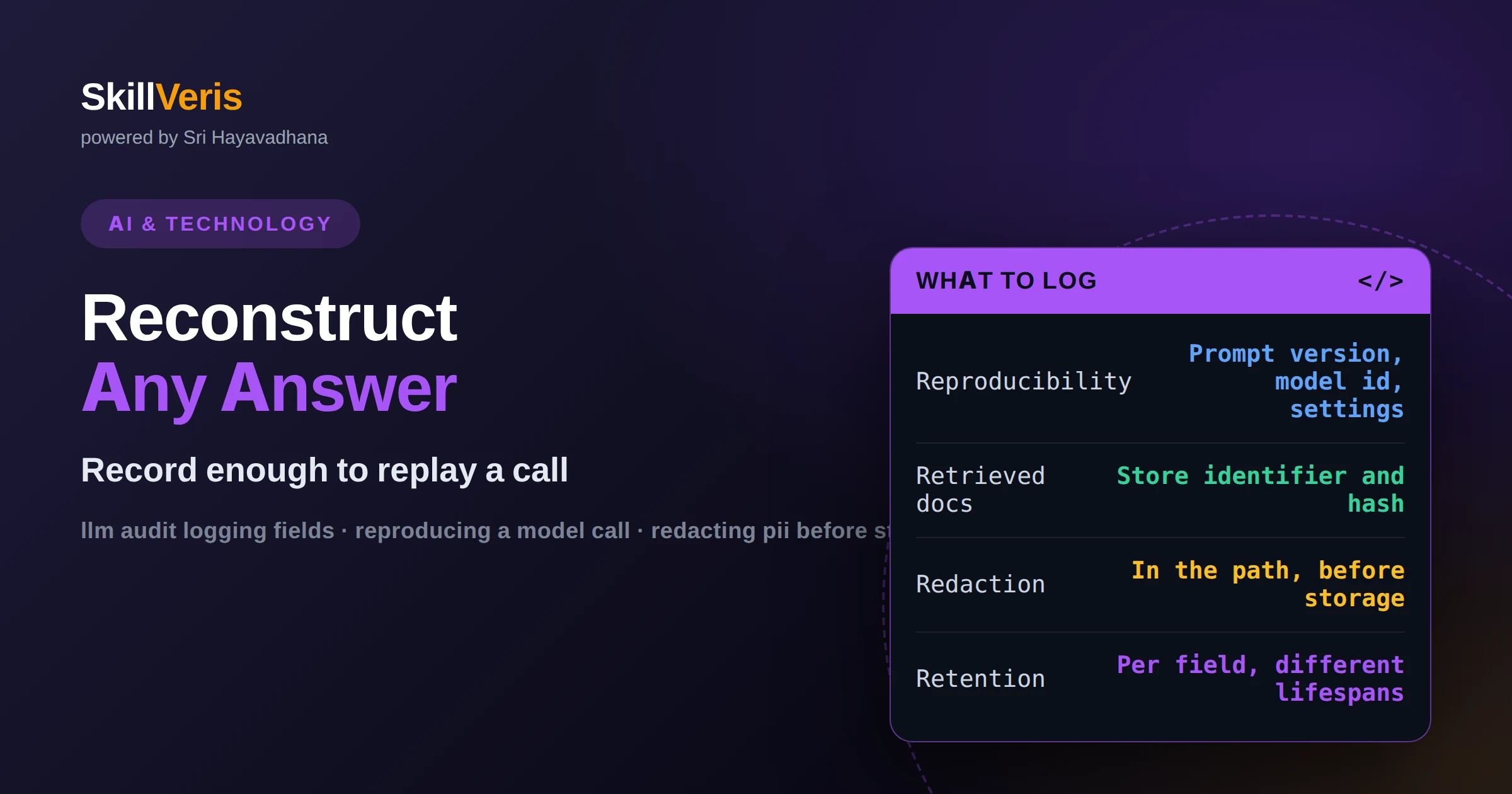
Audit logging for LLM applications: what to record and for how long
Logs are the only way to reconstruct why a model answered as it did. Learn which fields to record, how to redact them, and how retention and access should work.
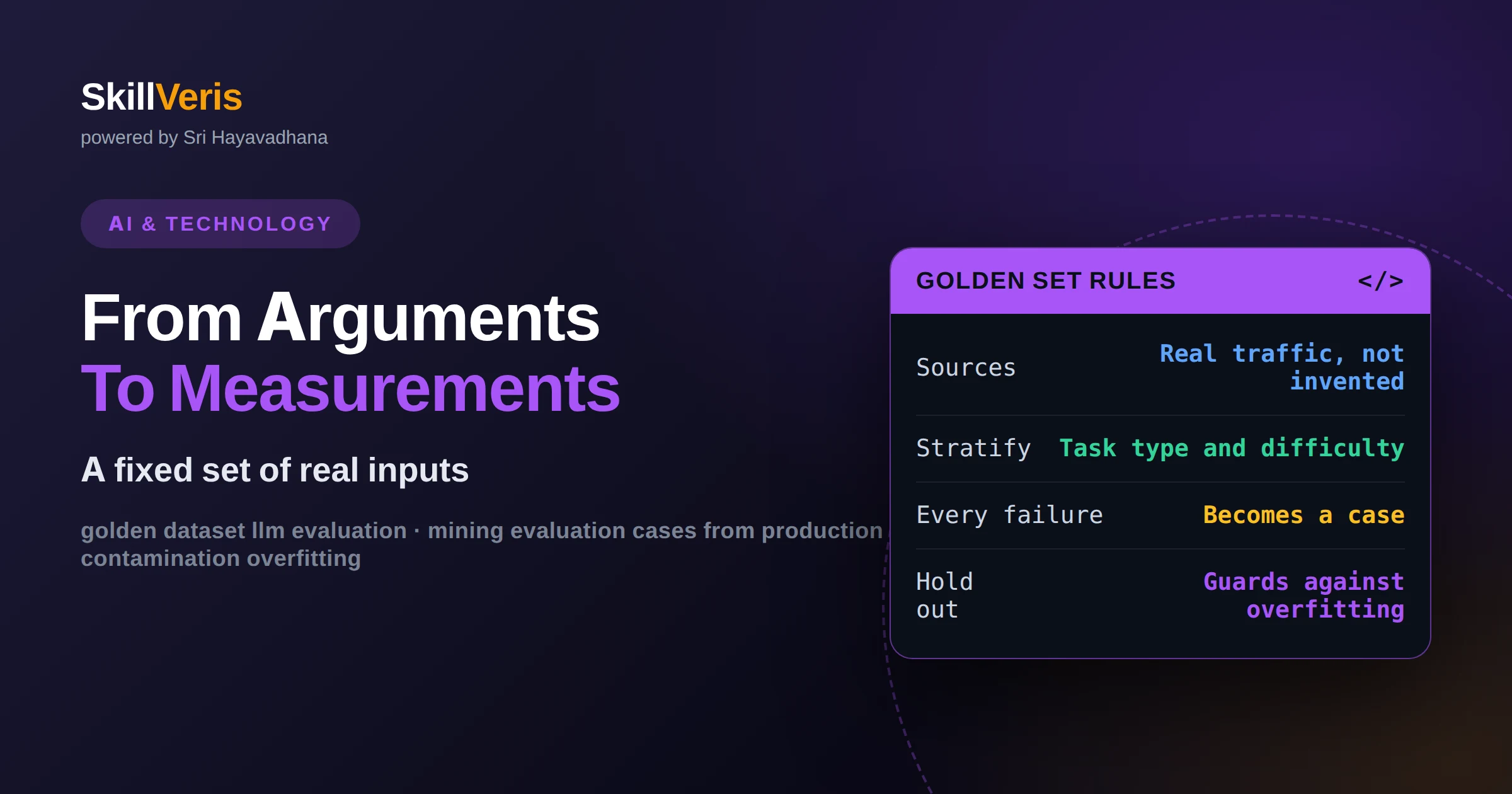
Building a golden evaluation set for an LLM feature
Your golden set makes every later decision measurable. Learn to mine real inputs and past failures, size and stratify it, and keep it honest as the product changes.
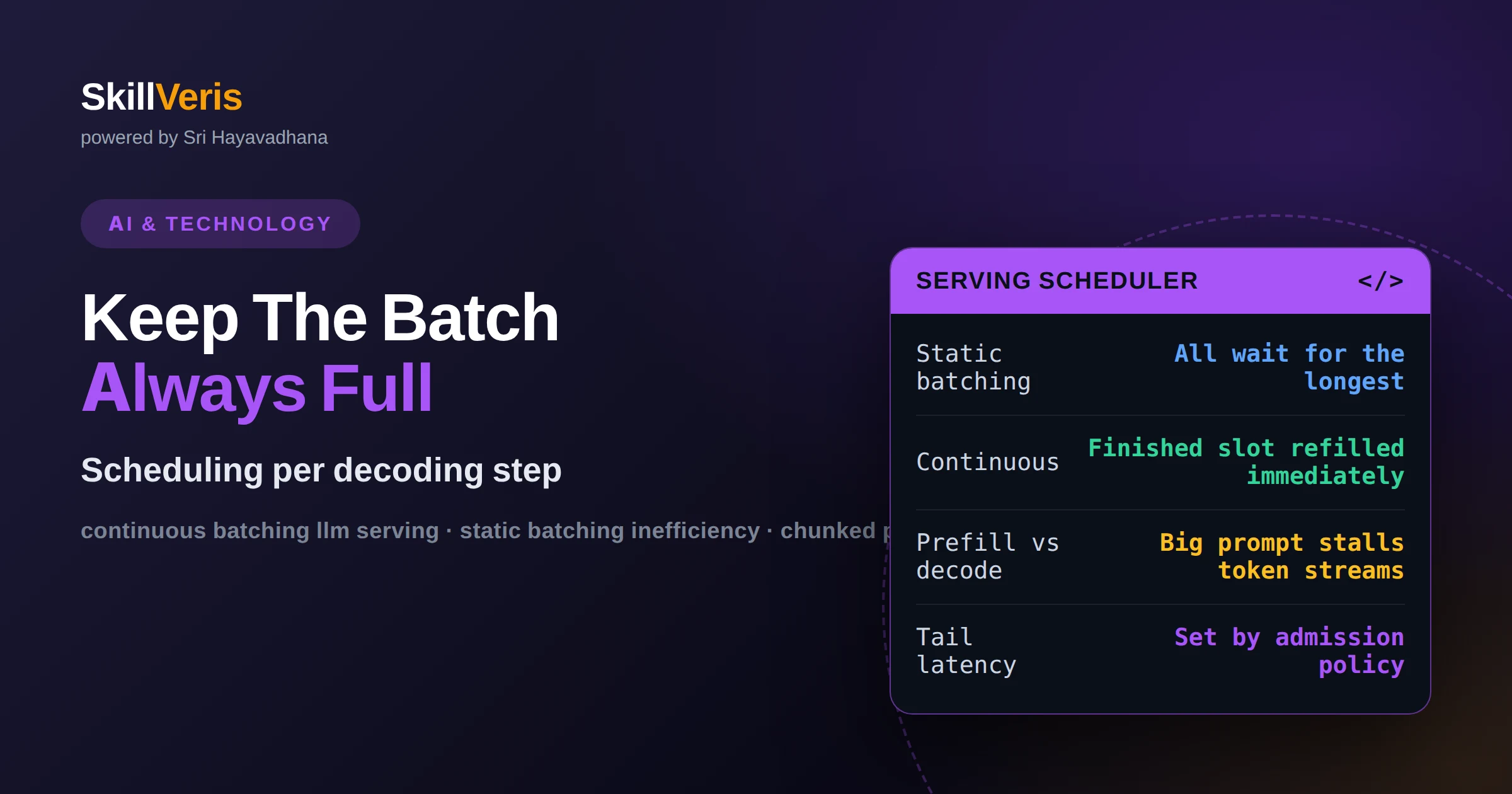
Continuous batching: raising LLM throughput without hurting latency
Continuous batching refills the batch every decoding step. Learn why it beats static batching, how queueing sets tail latency, and which knobs to tune first.
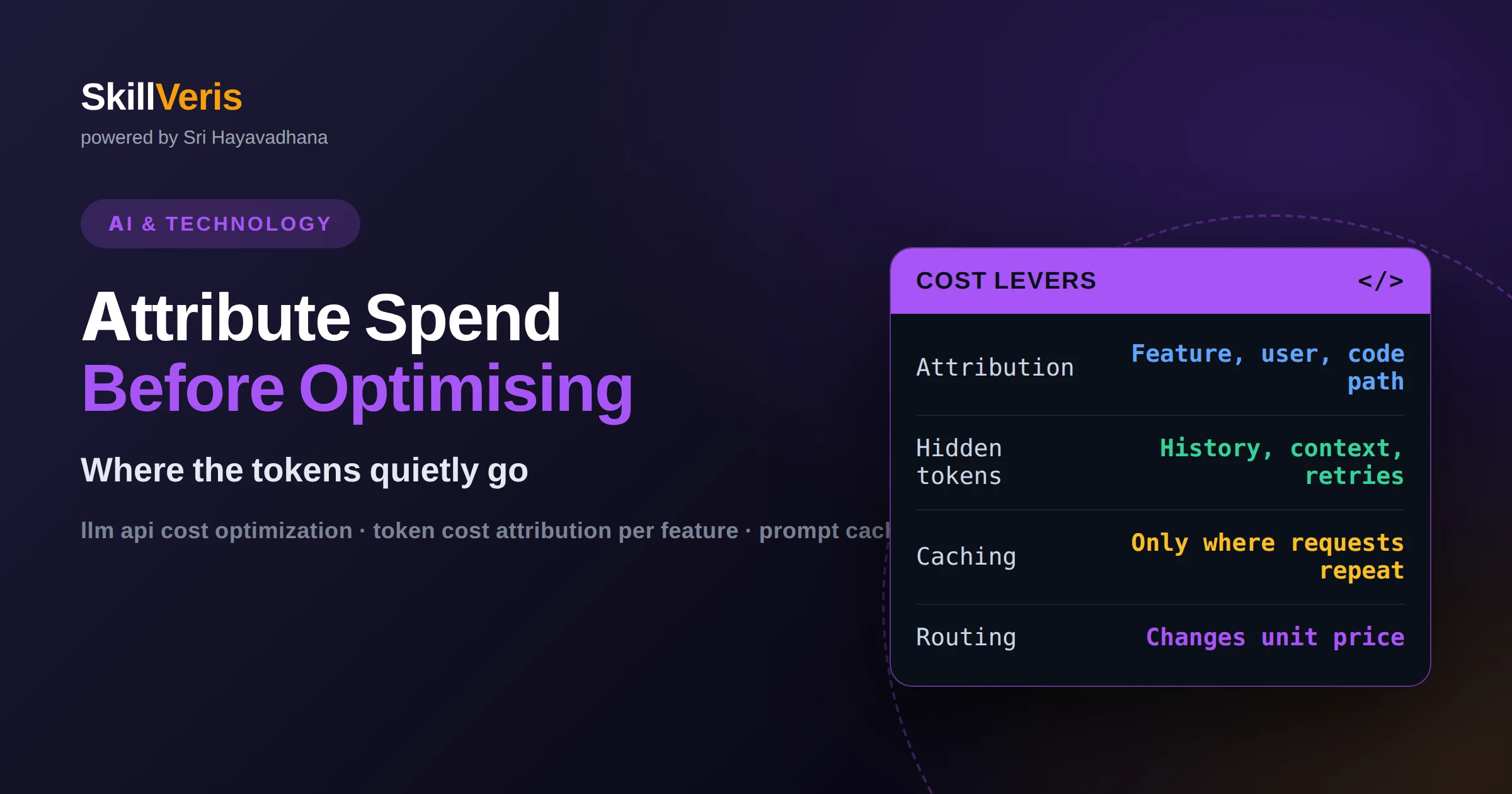
Controlling LLM costs in production: attribution, caching and budgets
You cannot control spend you cannot attribute. Learn per-feature cost accounting, then caching, routing and prompt trimming as measured decisions.
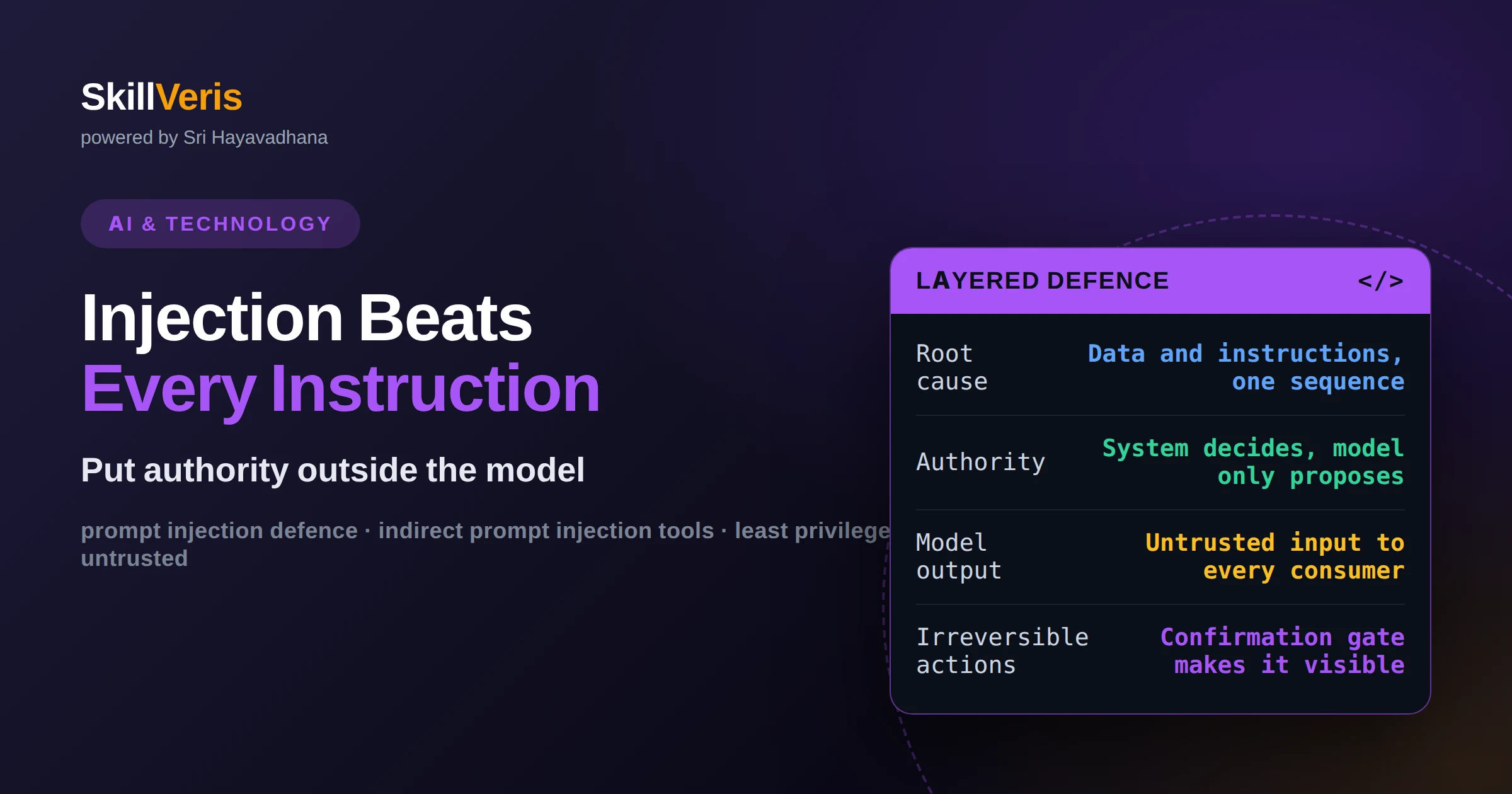
Defending LLM applications against prompt injection
Instructions cannot stop prompt injection because models cannot separate data from commands. Learn layered defences that put authority outside the model.
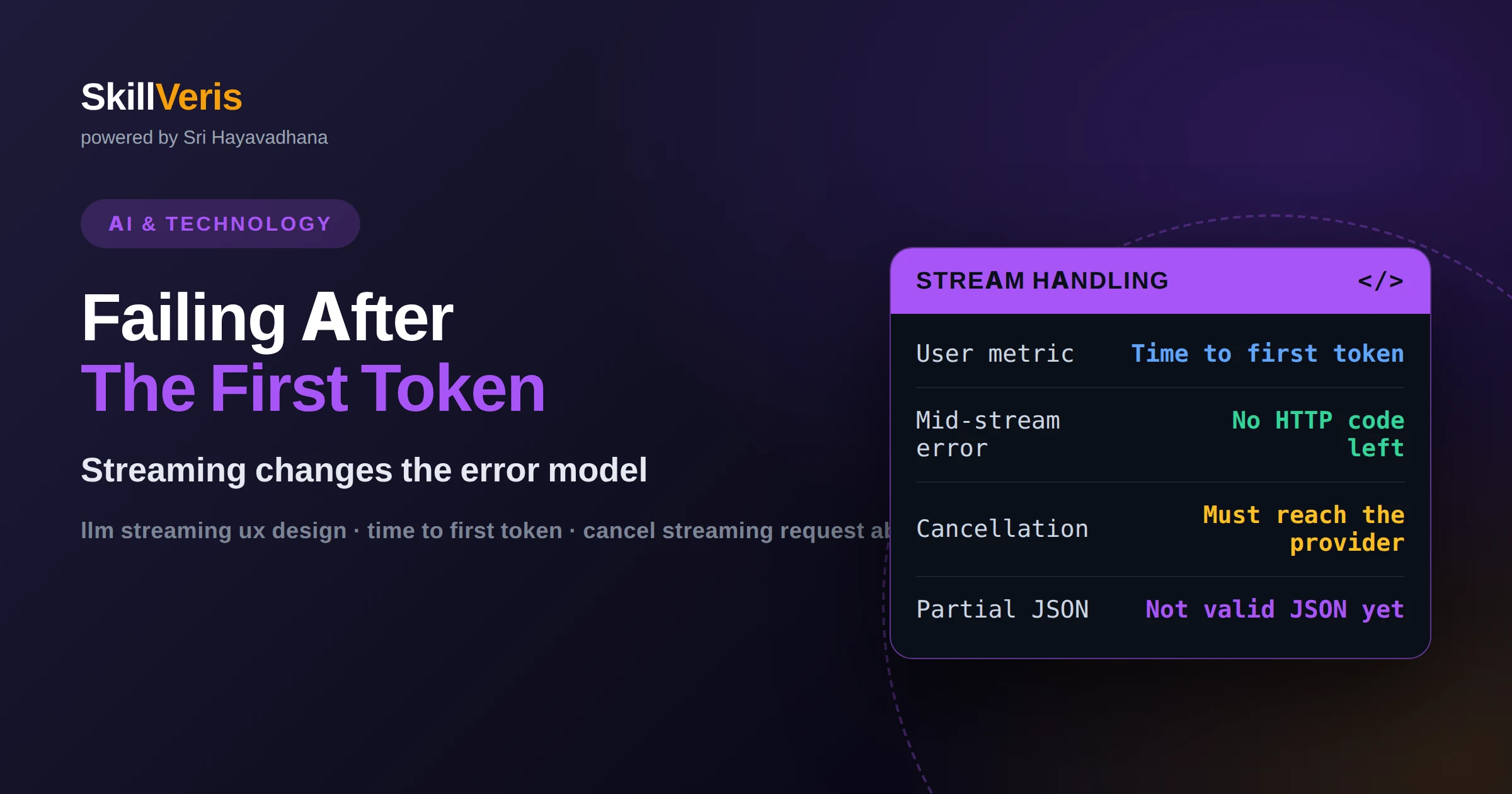
Designing streaming UX for LLM responses: latency, cancellation and errors
Streaming changes the error model: the response fails after it starts. Learn cancellation, partial state, mid-stream failure recovery and honest progress feedback.
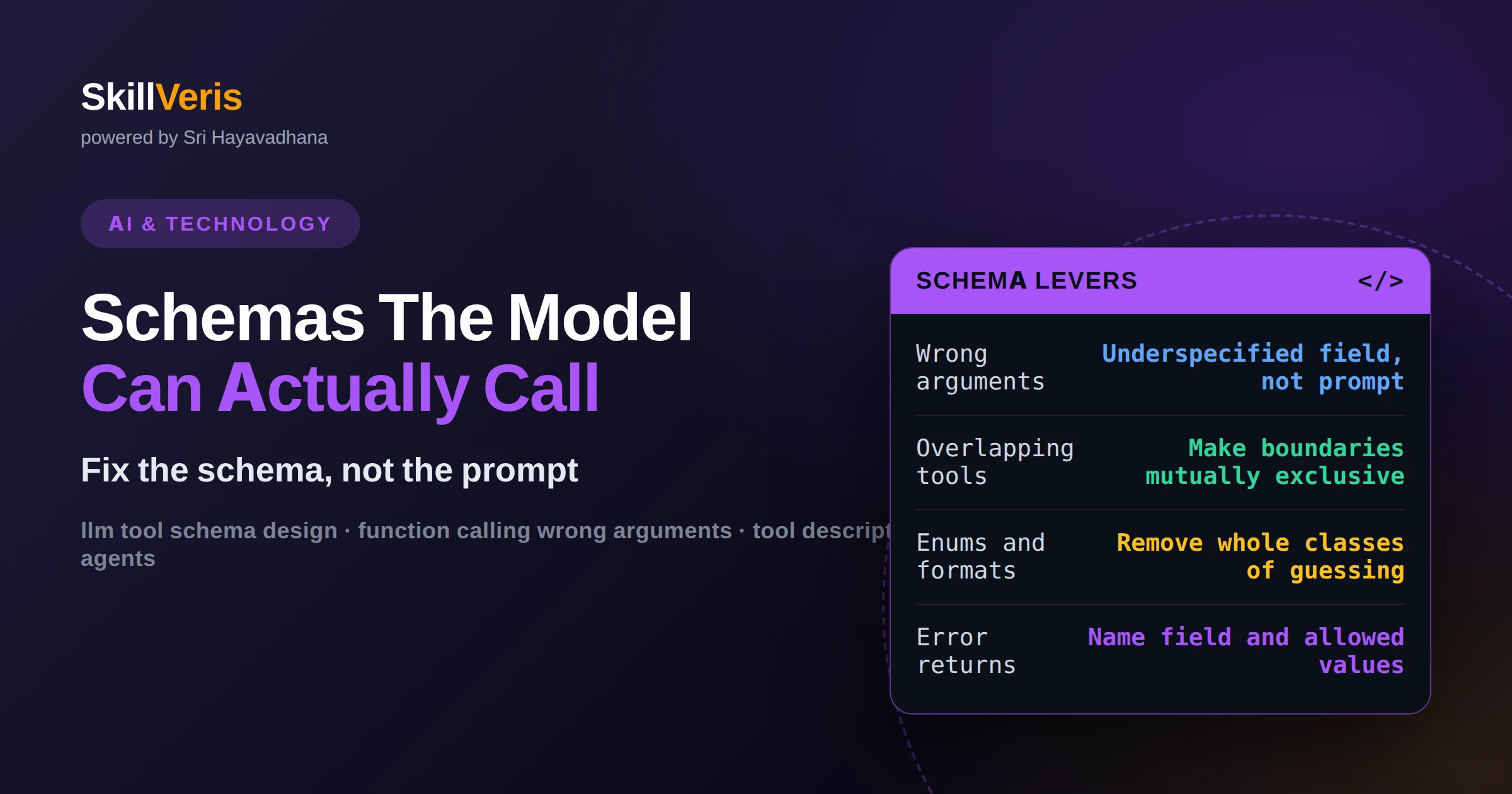
How to design tool schemas an LLM agent can call reliably
Agent tool-calling failures are usually schema failures. Learn how naming, typing, enums and error messages make the model pick the right tool and arguments.
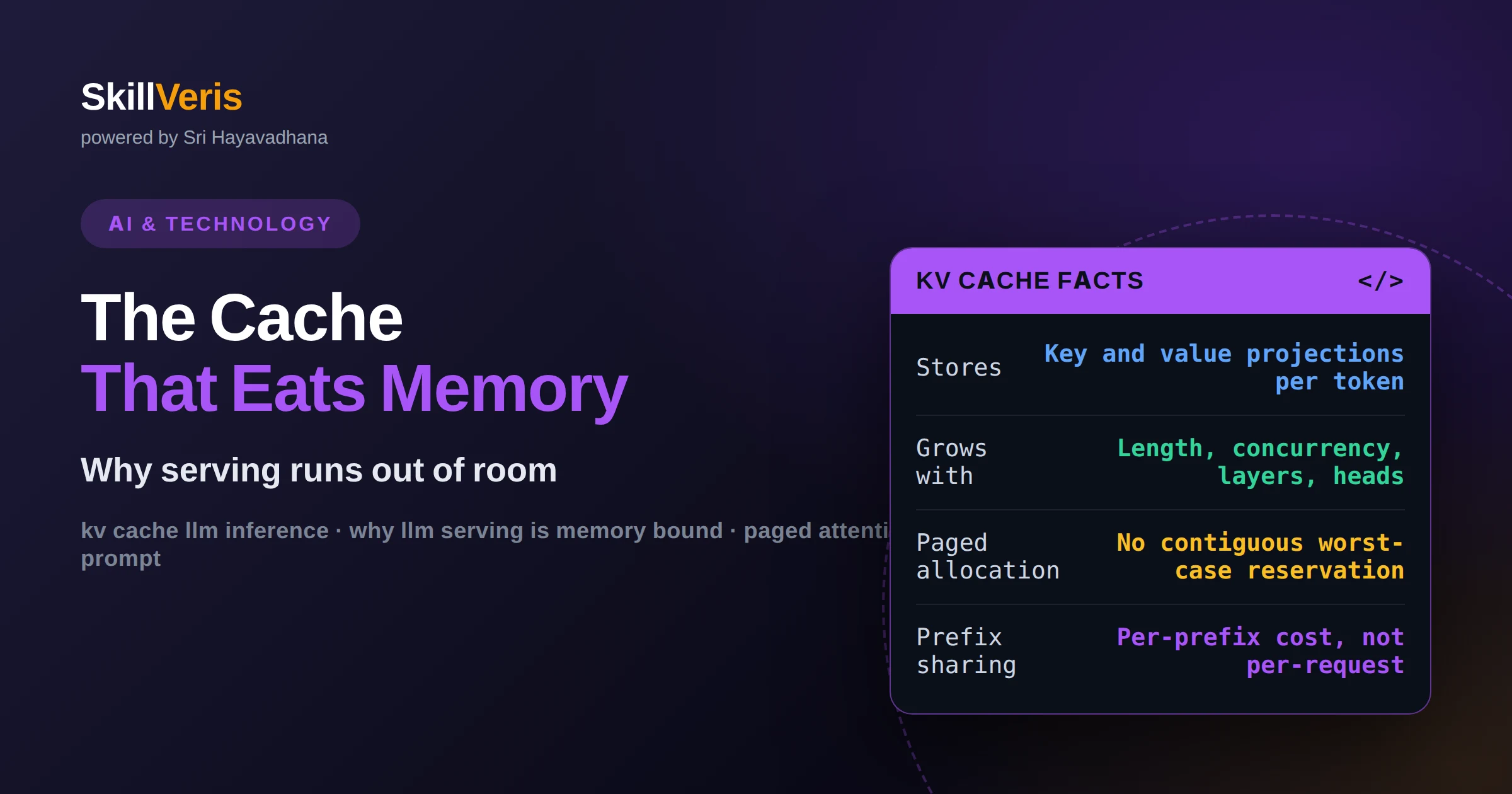
The KV cache explained: why it dominates LLM memory during serving
The KV cache makes generation fast and memory-bound at once. Learn what it stores, why it caps concurrency, and the levers that shrink it without hurting quality.
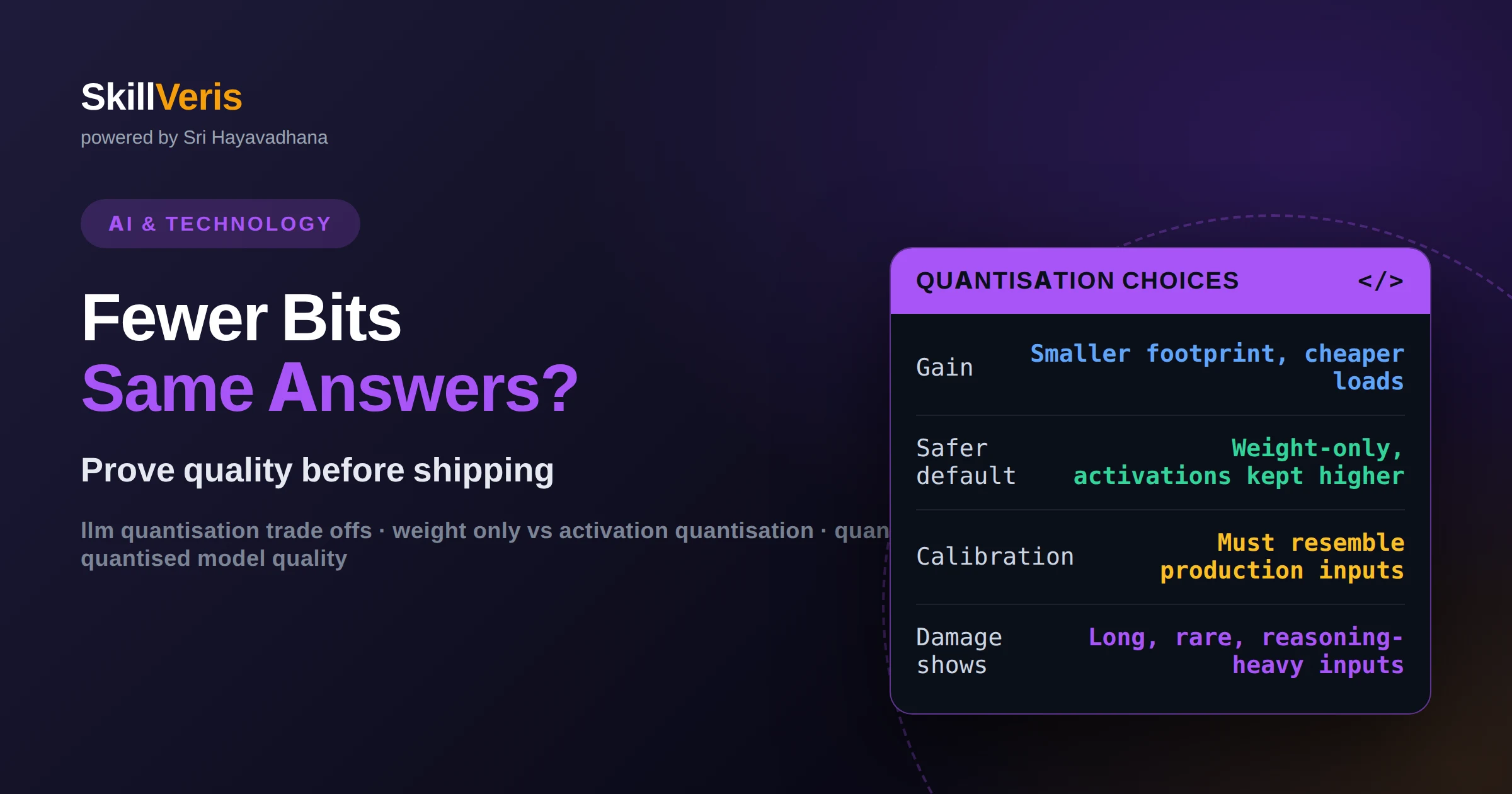
Quantising LLMs for inference: formats, trade-offs and how to validate
Quantisation trades precision for memory and speed. Learn weight-only versus activation quantisation, calibration, and how to prove quality has not degraded.
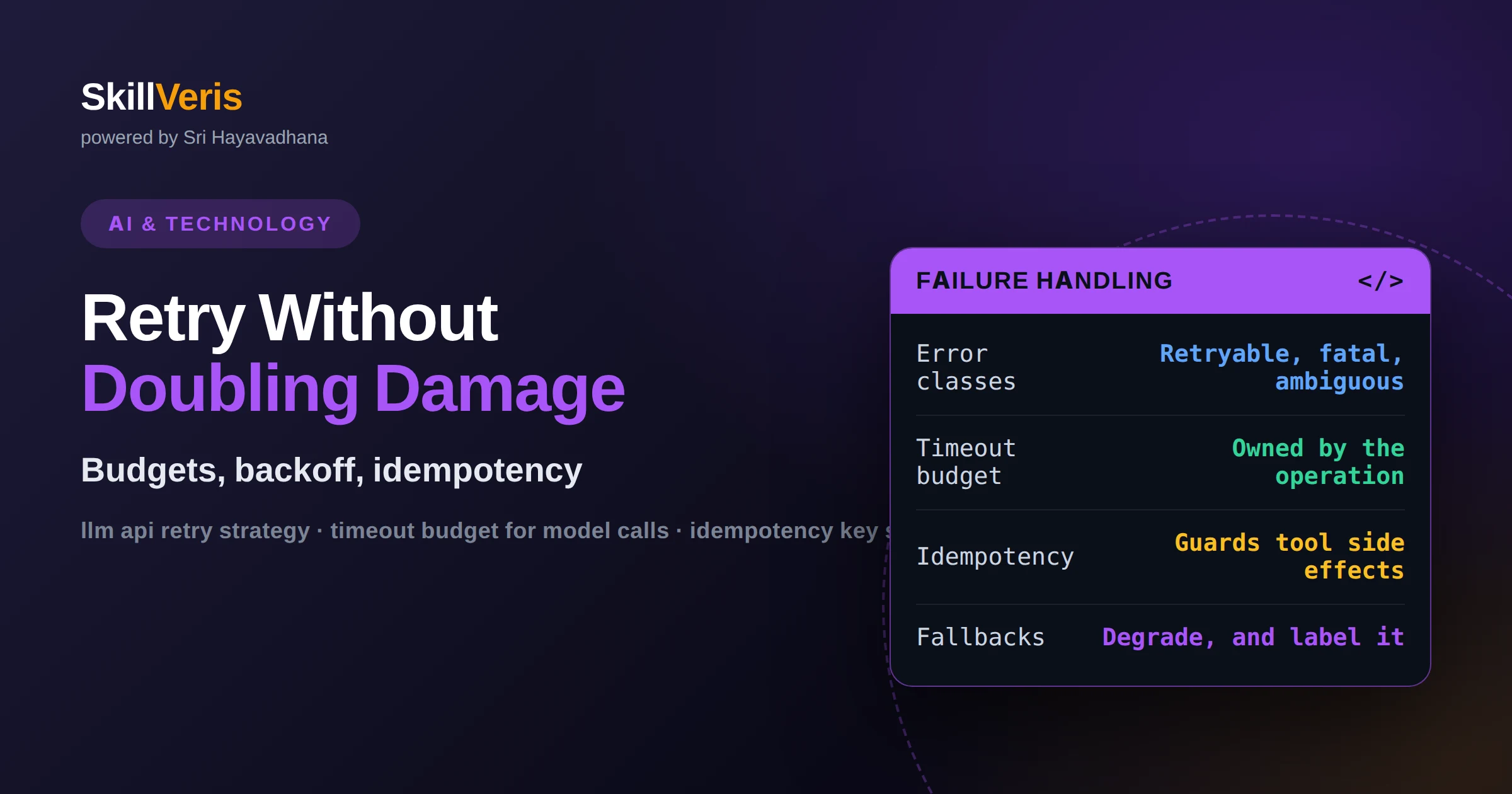
Retries, timeouts and fallbacks for LLM API calls
Naive retries on model calls multiply cost and duplicate side effects. Learn timeout budgets, backoff, idempotency keys and fallback chains that degrade gracefully.
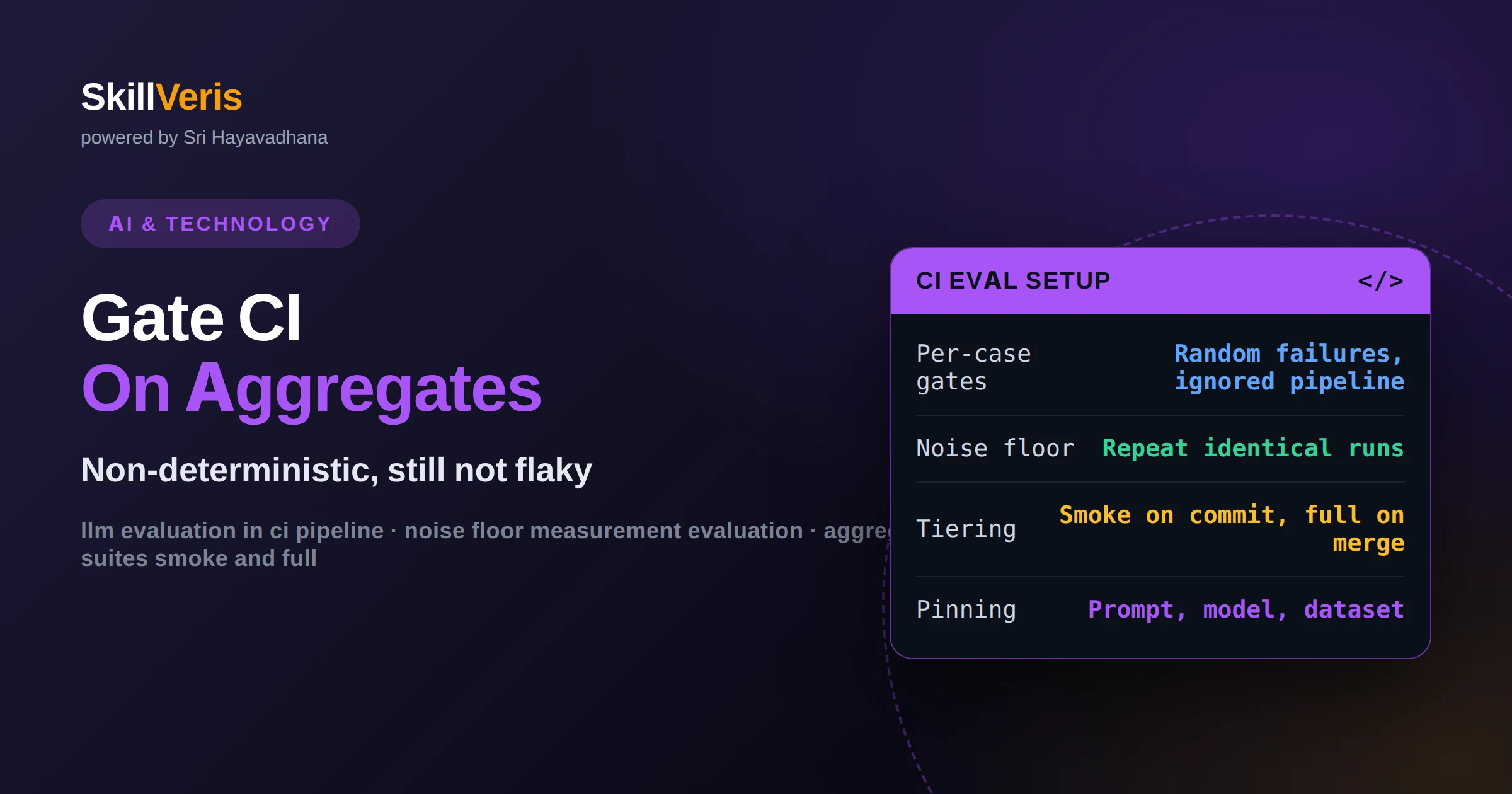
Running LLM evaluations in CI without flaky pipelines
Non-deterministic output can still gate CI. Learn aggregate thresholds, noise floors, tiered suites and caching that keep evaluation runs fast and non-flaky.
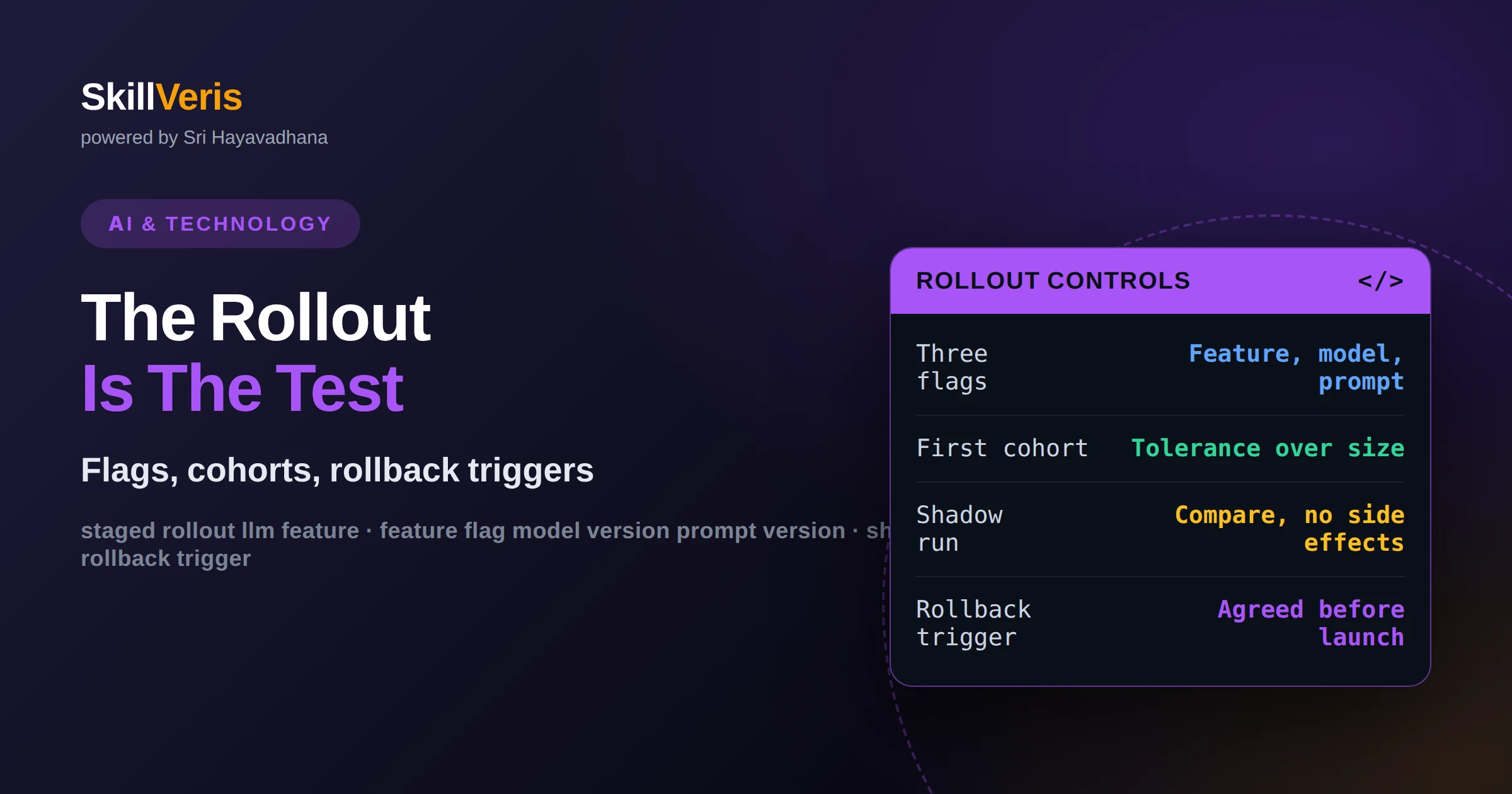
Staged rollout for an LLM feature: flags, cohorts and rollback
You cannot fully validate an LLM feature pre-launch, so the rollout is the test. Design flags, cohorts, guardrail metrics and rollback triggers before you ship.
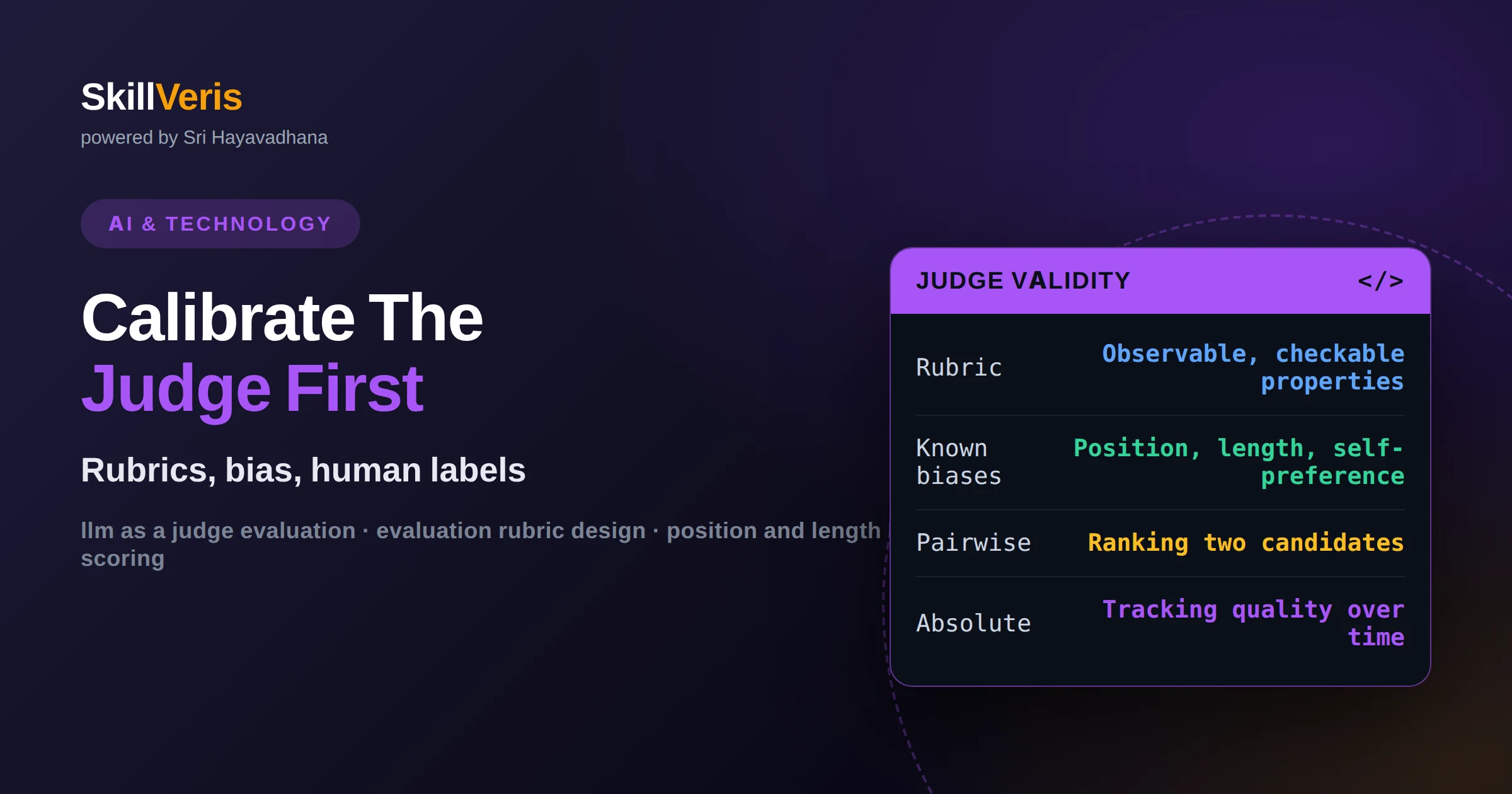
Using an LLM as a judge: rubrics, bias and validating the judge
An unvalidated judge is worse than no measurement. Learn rubric design, known judge biases, pairwise versus scalar scoring, and how to calibrate against humans.