#AnalogyLearning
26 articles tagged with #AnalogyLearning
Learn Python Through Cricket: Your Ultimate Beginner's Guide
Discover how cricket can help you understand Python programming in the most exciting way.
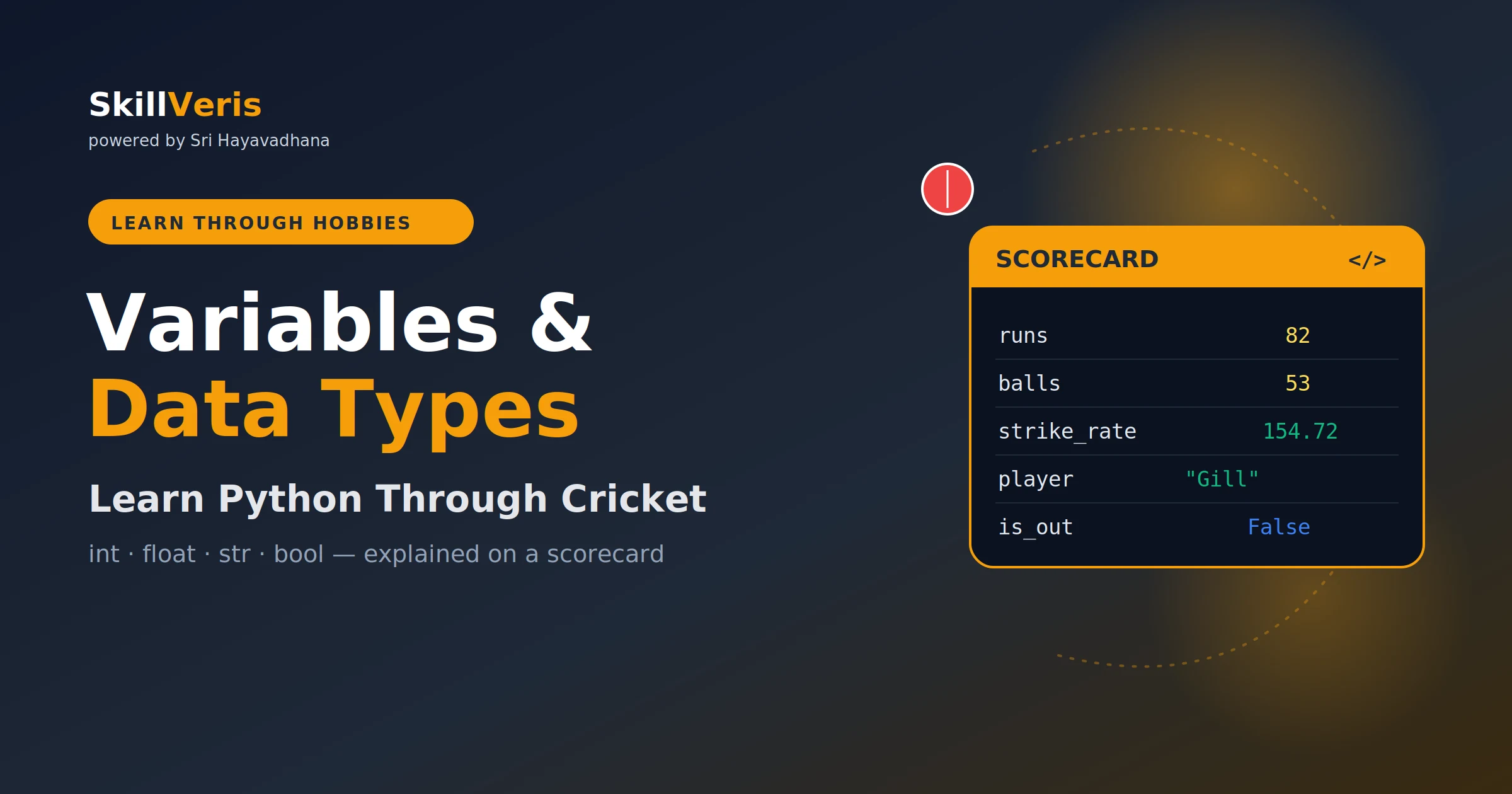
Understand Variables and Data Types Using Cricket Stats
A comprehensive guide to understand variables and data types using cricket stats — written for learners at every level.
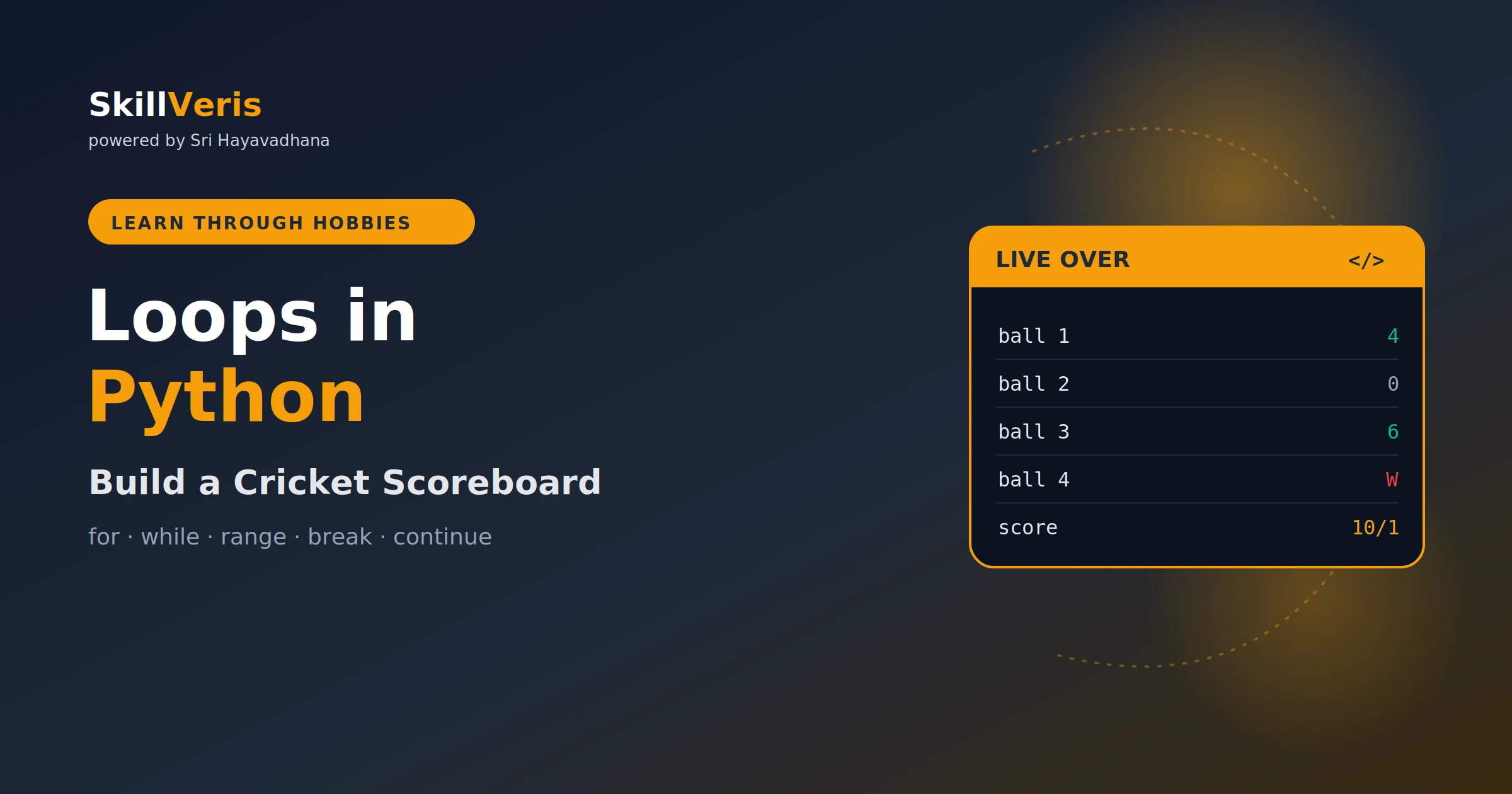
Learn Loops in Python by Building a Cricket Scoreboard
A comprehensive guide to learn loops in python by building a cricket scoreboard — written for learners at every level.
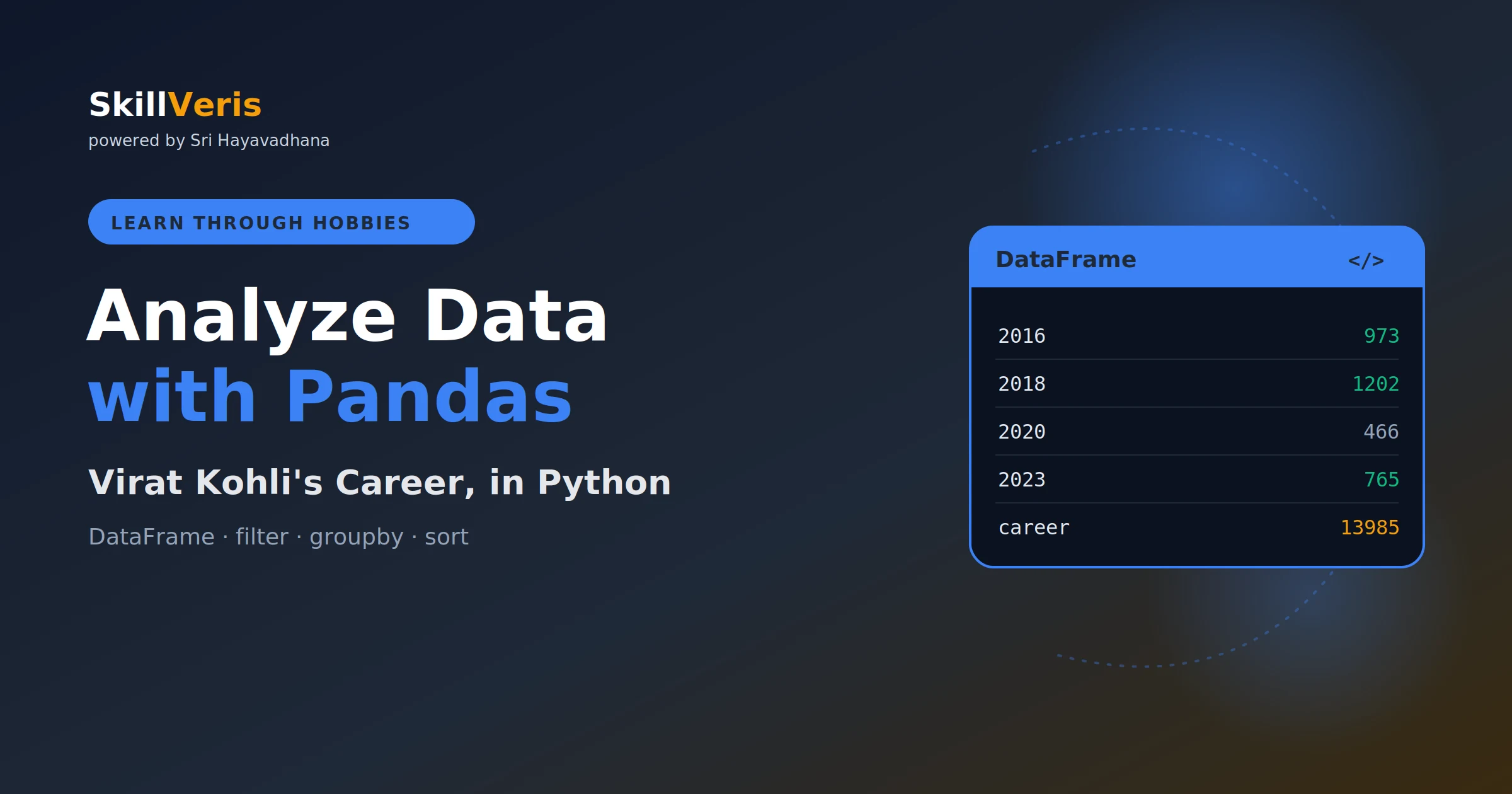
Learn Pandas by Analyzing Virat Kohli's Career Stats
A comprehensive guide to learn pandas by analyzing virat kohli's career stats — written for learners at every level.
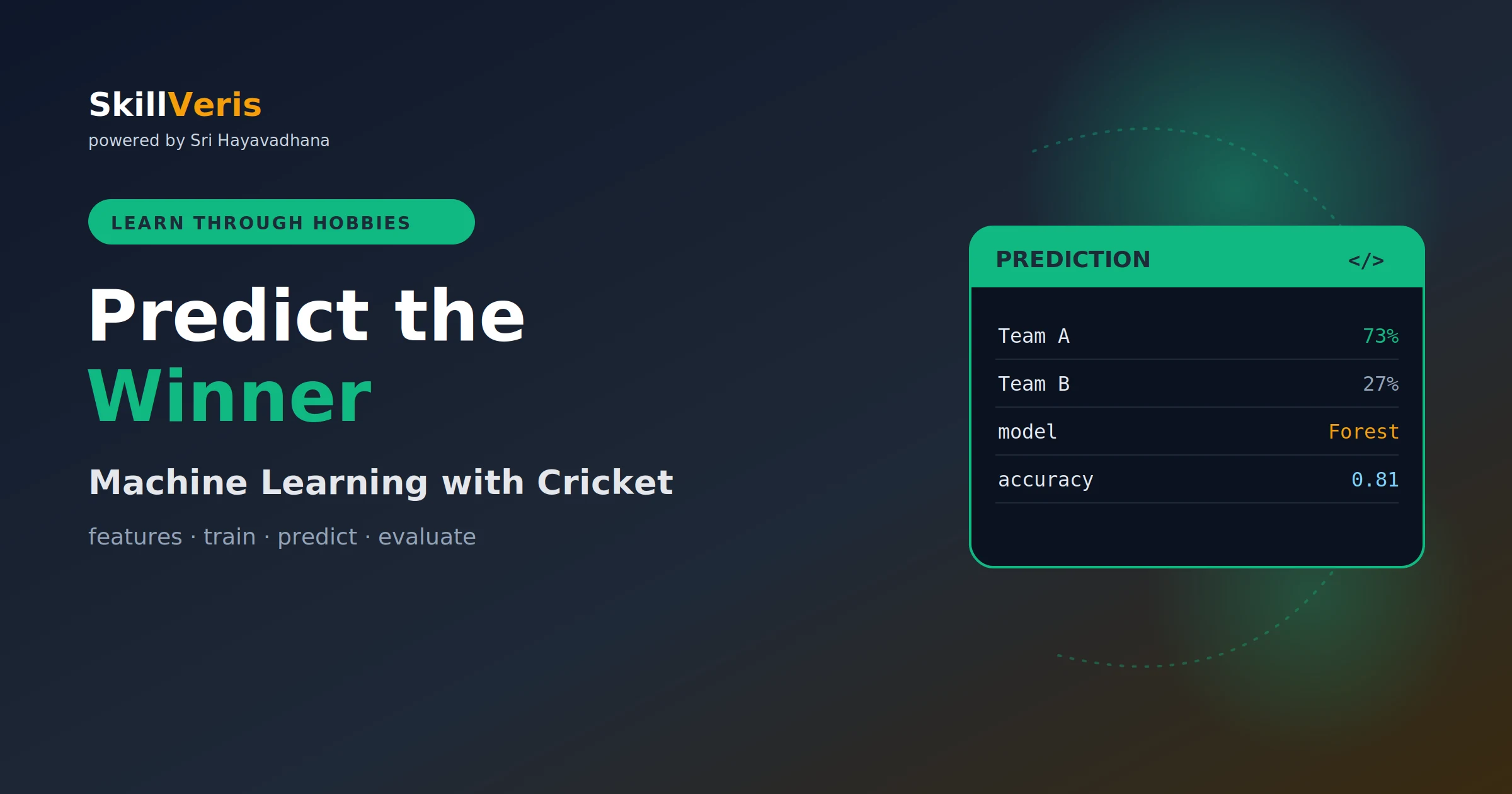
Build a Cricket Win Predictor and Learn Machine Learning
A comprehensive guide to build a cricket win predictor and learn machine learning — written for learners at every level.
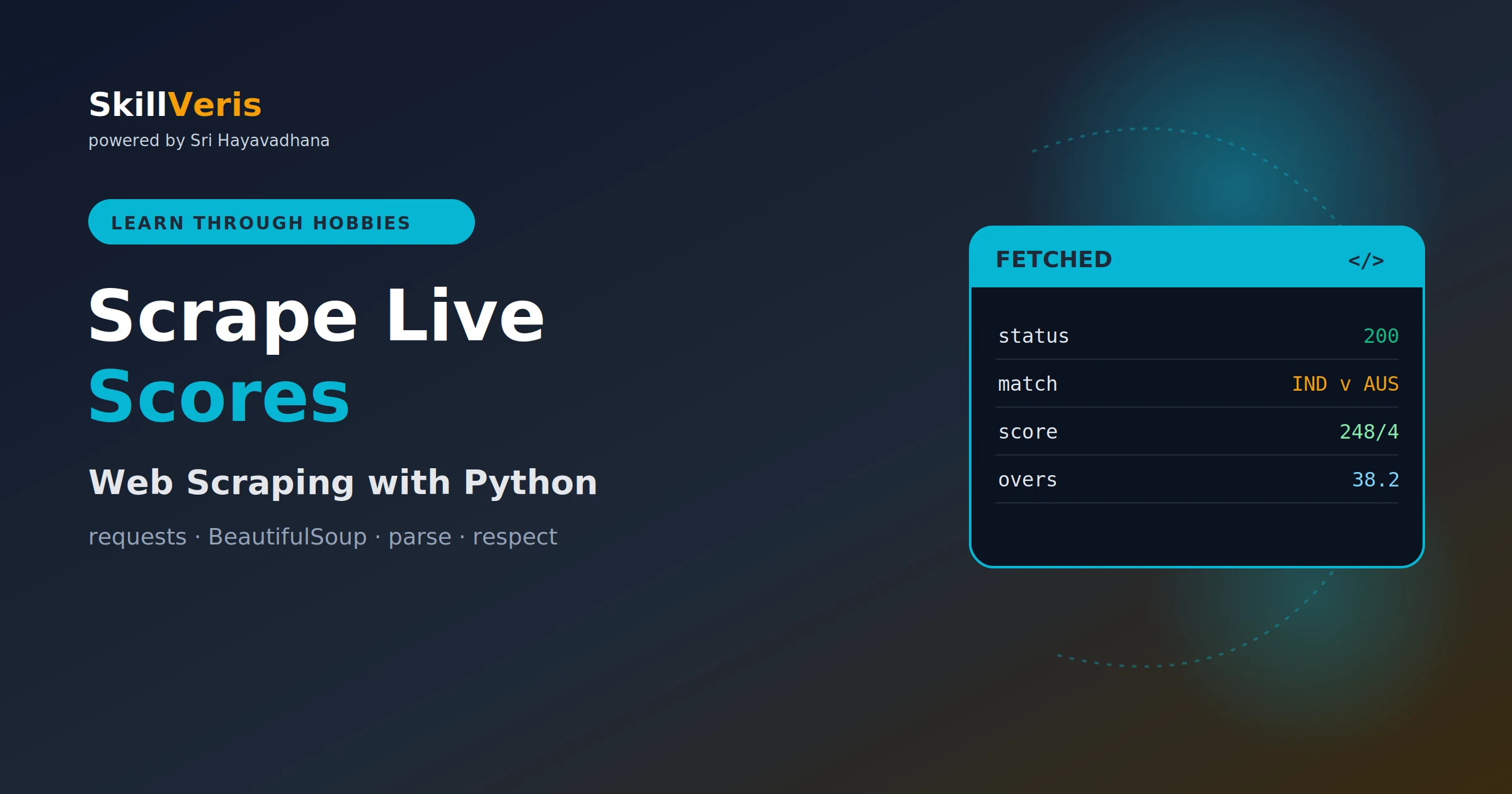
Learn Web Scraping by Fetching Live Cricket Scores
A comprehensive guide to learn web scraping by fetching live cricket scores — written for learners at every level.
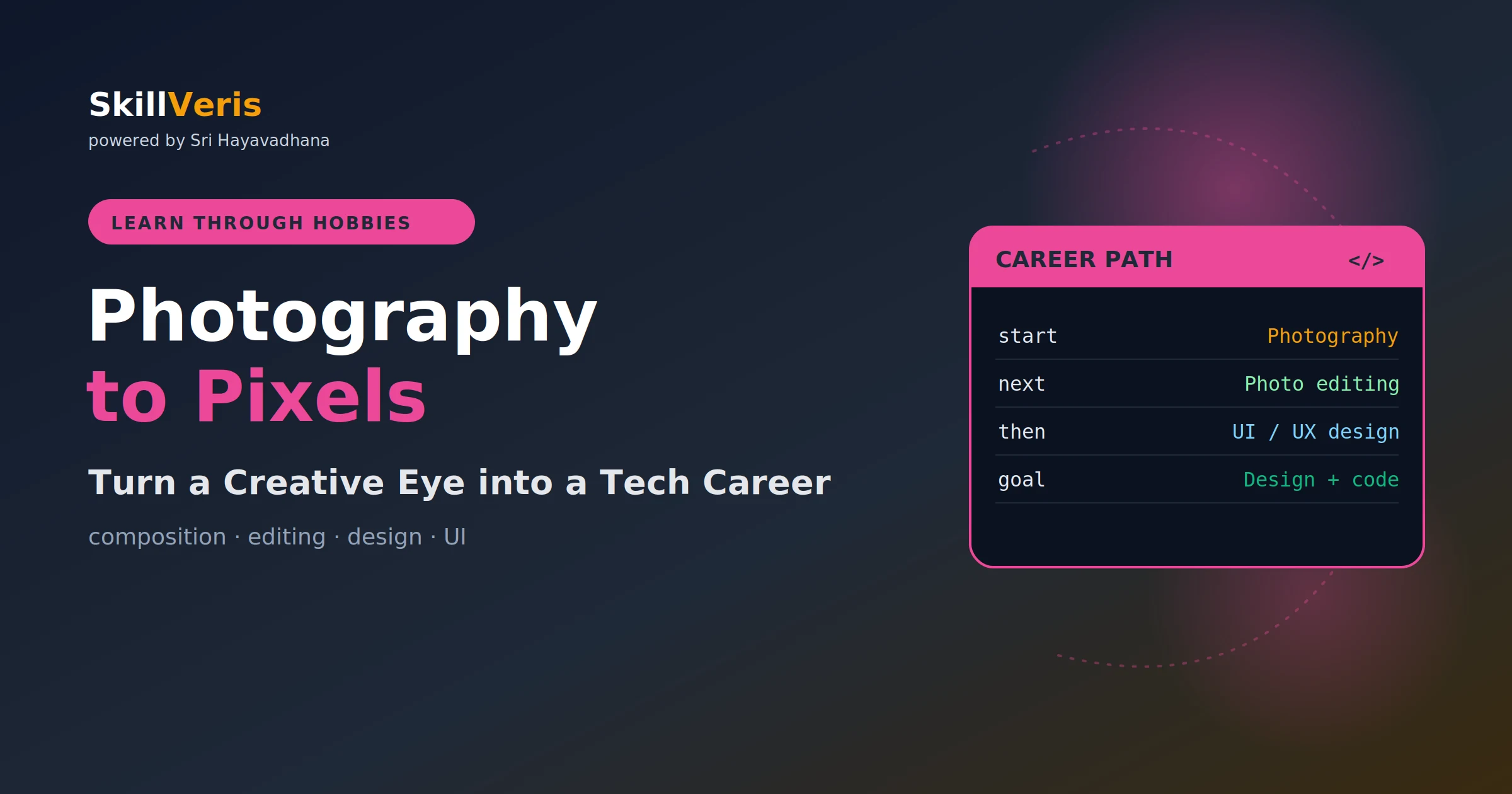
Photography to Photoshop: Your Creative Career Path
Turn your love of photography into a thriving design career with these actionable steps.
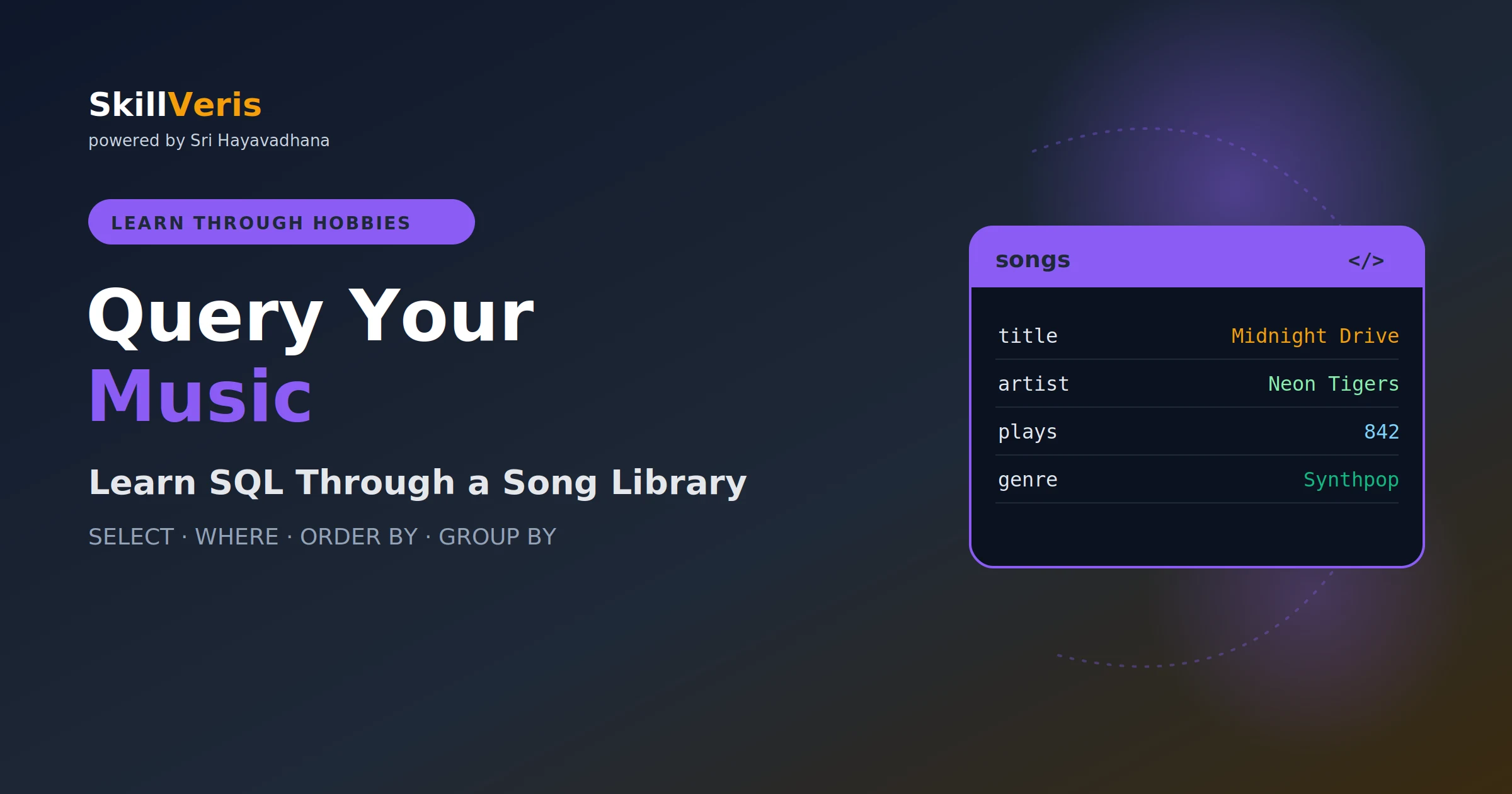
Learn SQL Through Music Data Analysis
A comprehensive guide to learn sql through music data analysis — written for learners at every level.
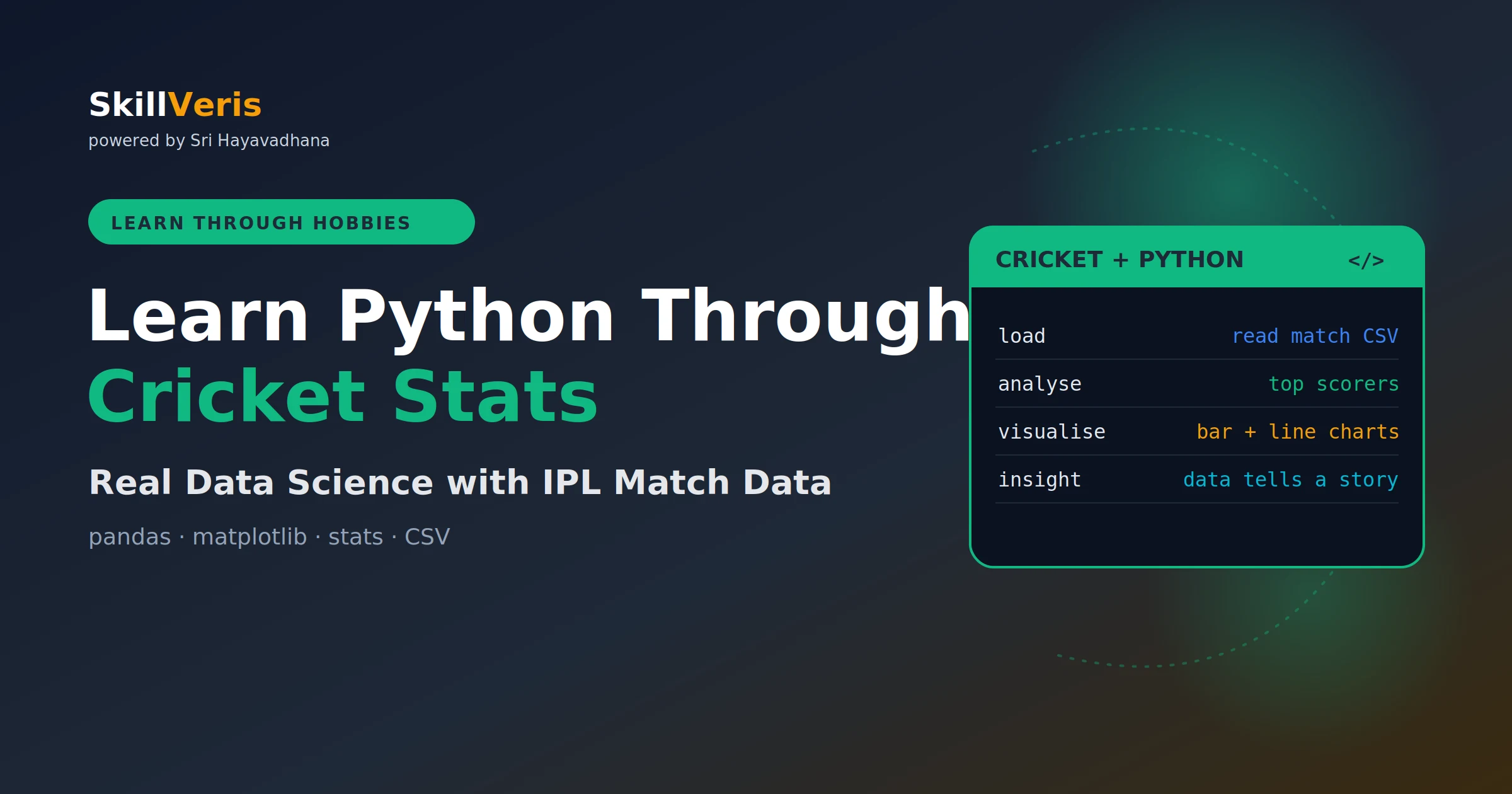
Learn Python Through Cricket Statistics
Cricket generates rich data — runs, wickets, overs, strike rates, economy rates. This project uses real IPL-style match data to teach you pandas, matplotlib, and data analysis in a context that actually interests you. No dry tutorials — just cricket and code.
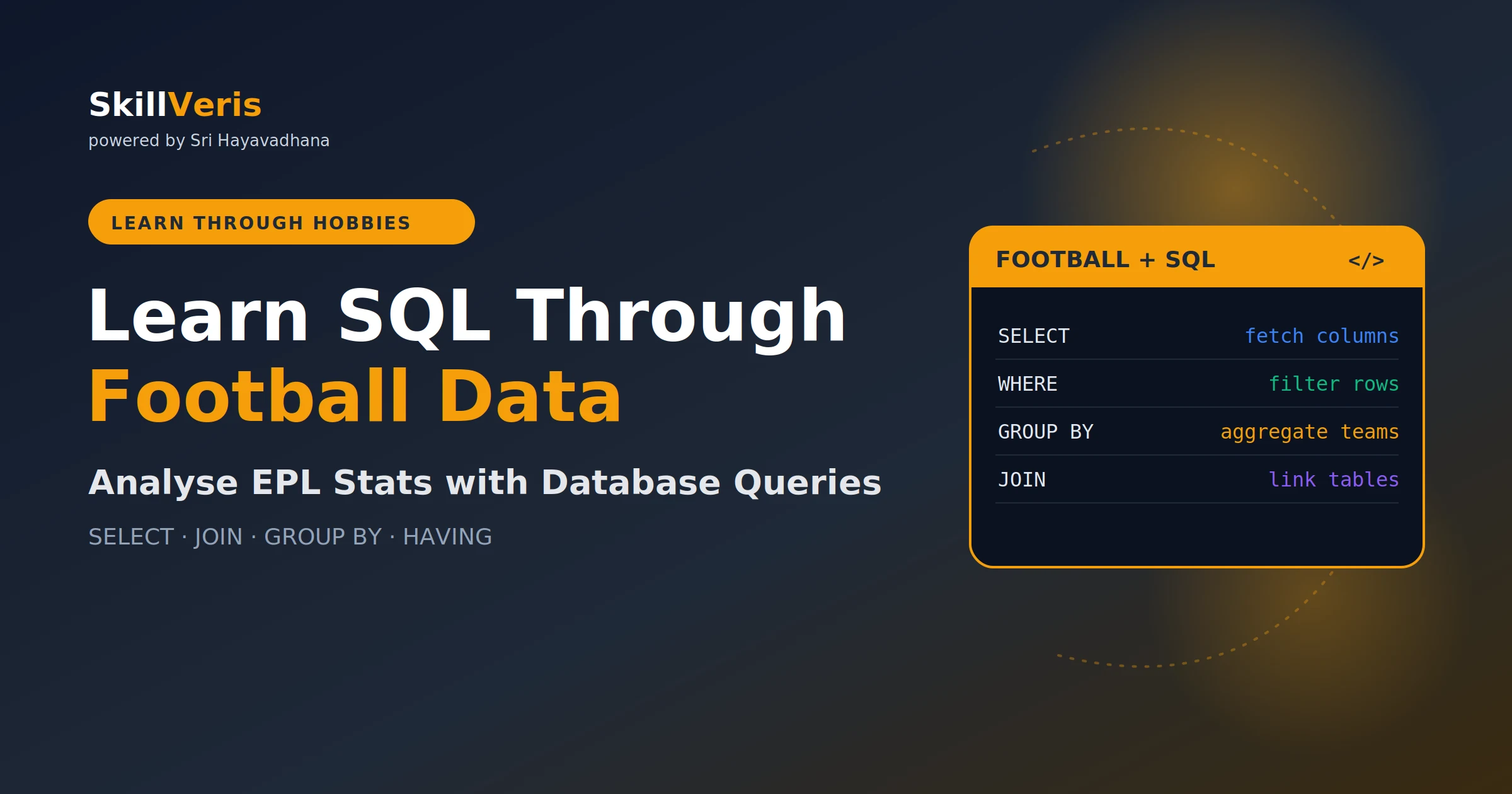
Learn SQL Through Football Data
Football generates rich match data — goals, assists, passes, xG, red cards. This project uses a Premier League dataset to teach SQL SELECT, WHERE, GROUP BY, JOIN, and HAVING in a context that makes every query meaningful rather than abstract.
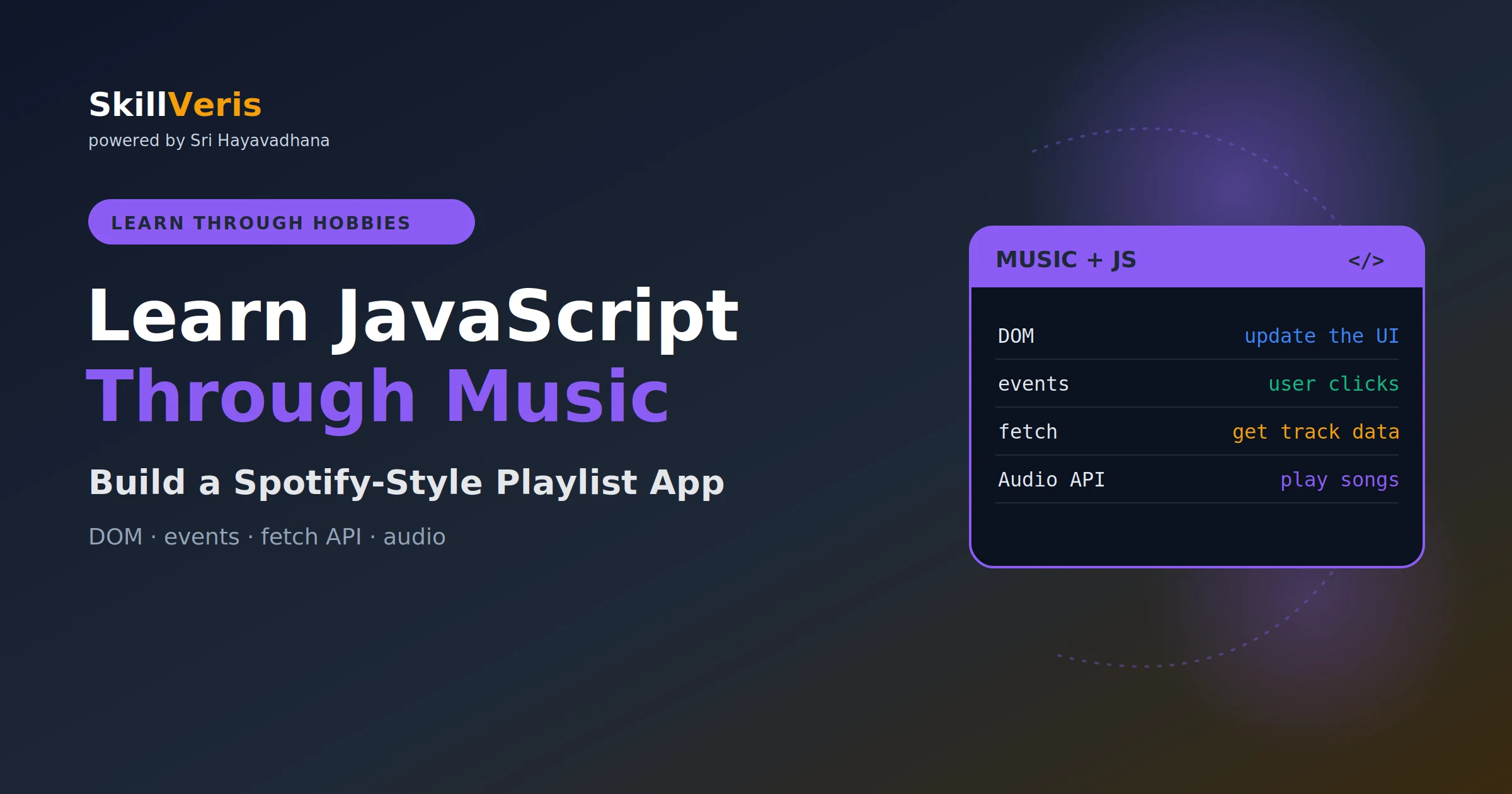
Learn JavaScript Through Music: Build a Playlist App
Building a music player is one of the best JavaScript projects for beginners — it covers DOM manipulation, event listeners, the Fetch API, and the Web Audio element in a context that's genuinely fun. By the end you'll have a working Spotify-style playlist app you can embed anywhere.
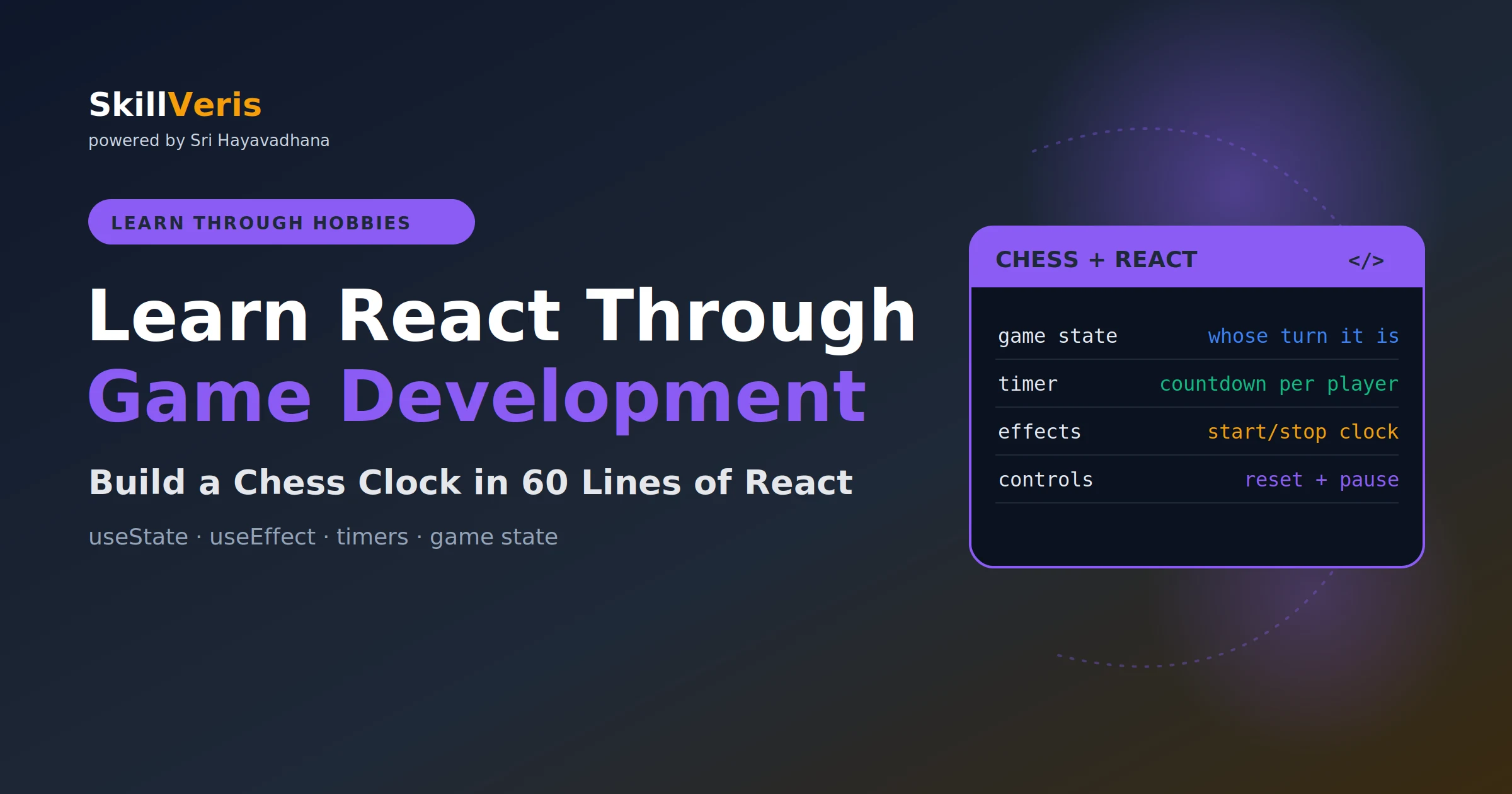
Learn React Through Game Development: Build a Chess Clock
A chess clock is the perfect React project — it's small enough to finish in an afternoon but teaches useState, useEffect, timer management, and conditional rendering in a context that makes every concept feel purposeful. No boring counter apps.
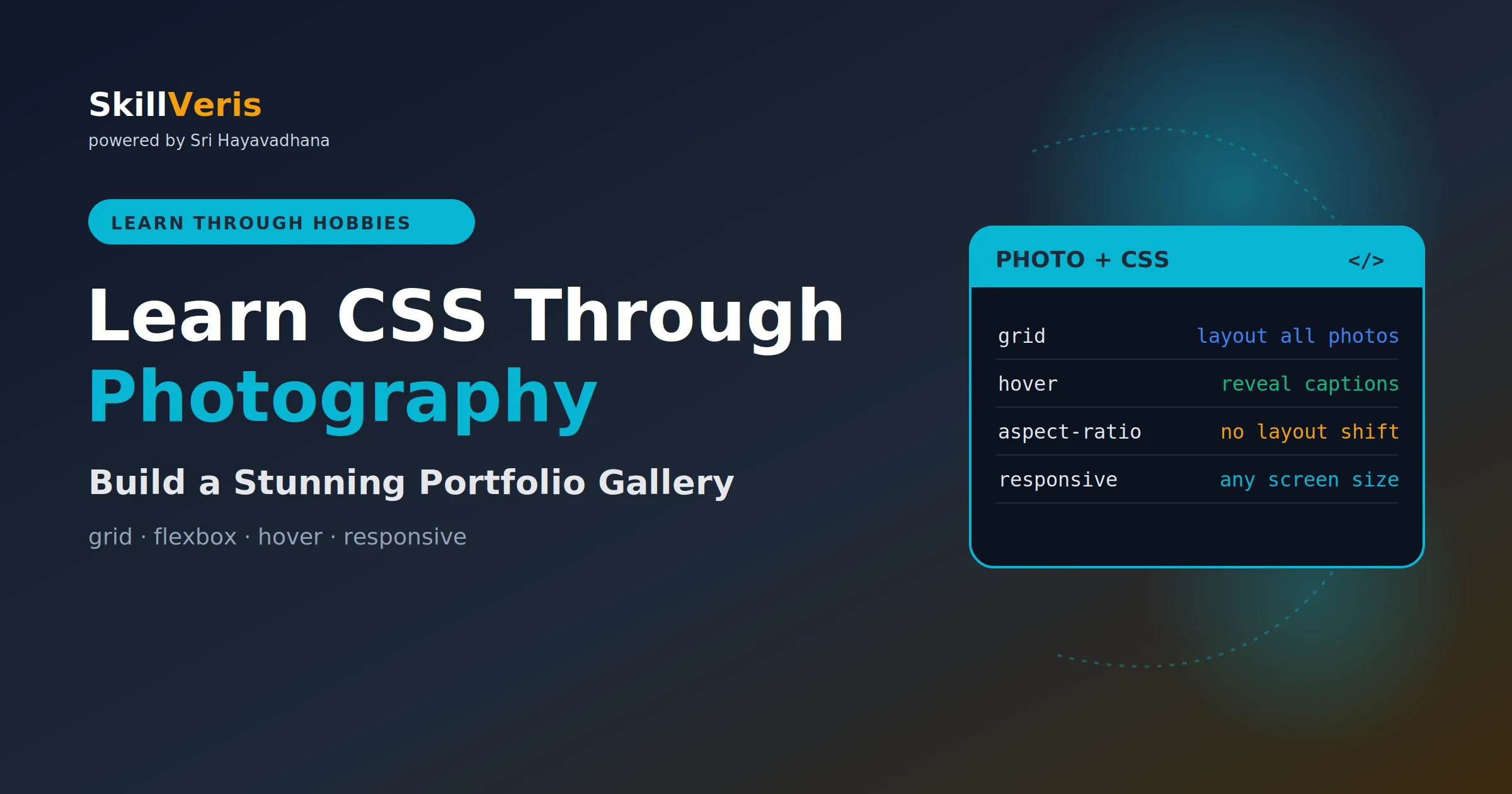
Learn CSS Through Photography: Build a Portfolio Gallery
Photography gives you an immediate visual feedback loop for CSS: change a grid column and you see it update. This project builds a professional photo portfolio — masonry layout, hover overlays, lightbox, and responsive grid — teaching CSS Grid, Flexbox, transitions, and media queries along the way.
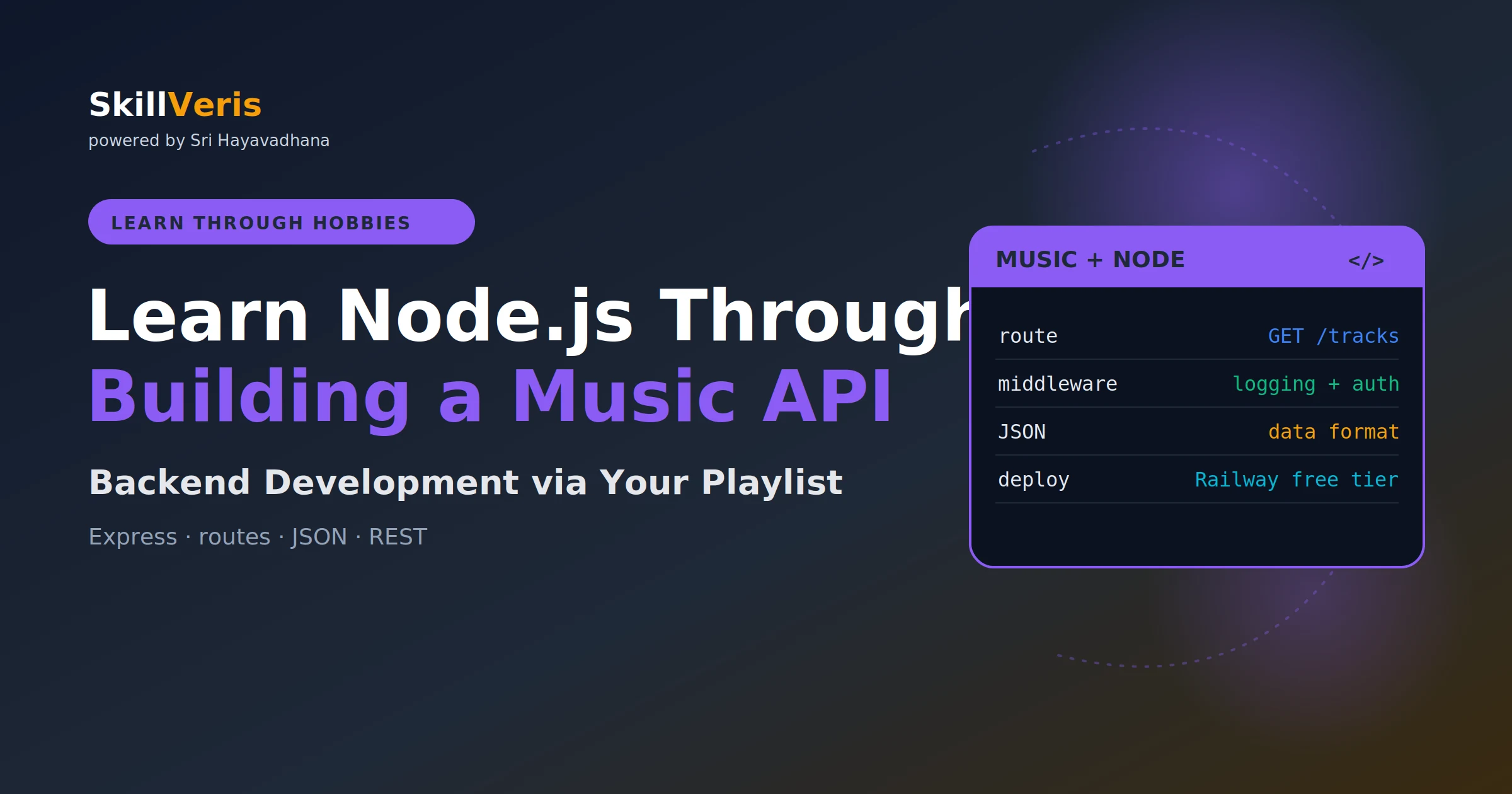
Learn Node.js Through Building a Music API
Node.js is JavaScript on the server, and building a REST API for your music collection is the perfect first project. This guide covers Express routes, middleware, JSON responses, and deploying to a free hosting service — all by building an API for a music playlist.
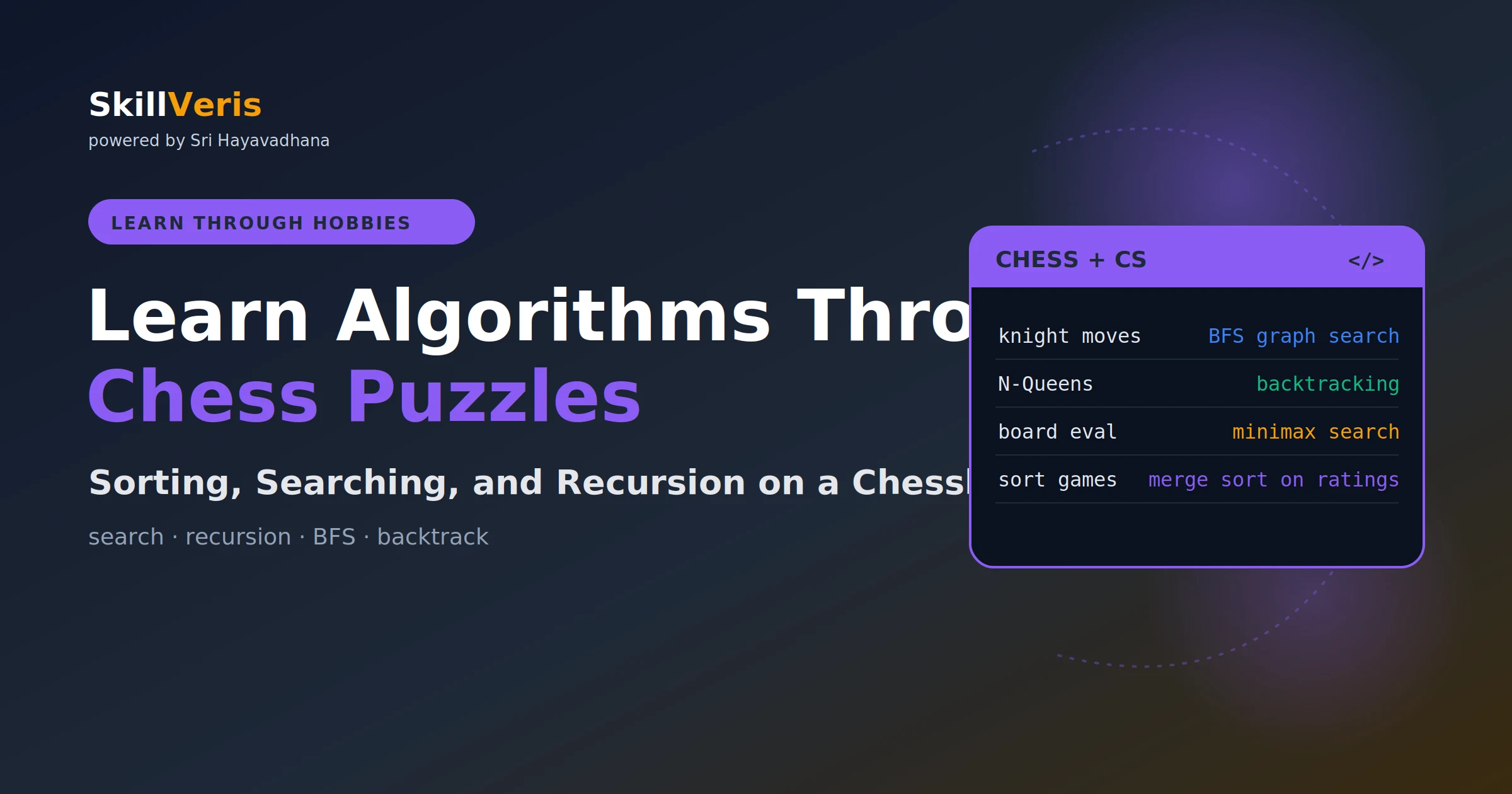
Learn Algorithms Through Chess Puzzles
Chess is a perfect algorithmic playground: the knight's tour teaches BFS, the N- Queens problem teaches backtracking, move generation teaches recursion, and game AI teaches minimax search. This guide covers four classic computer science algorithms using chess problems that make the concepts tangible.
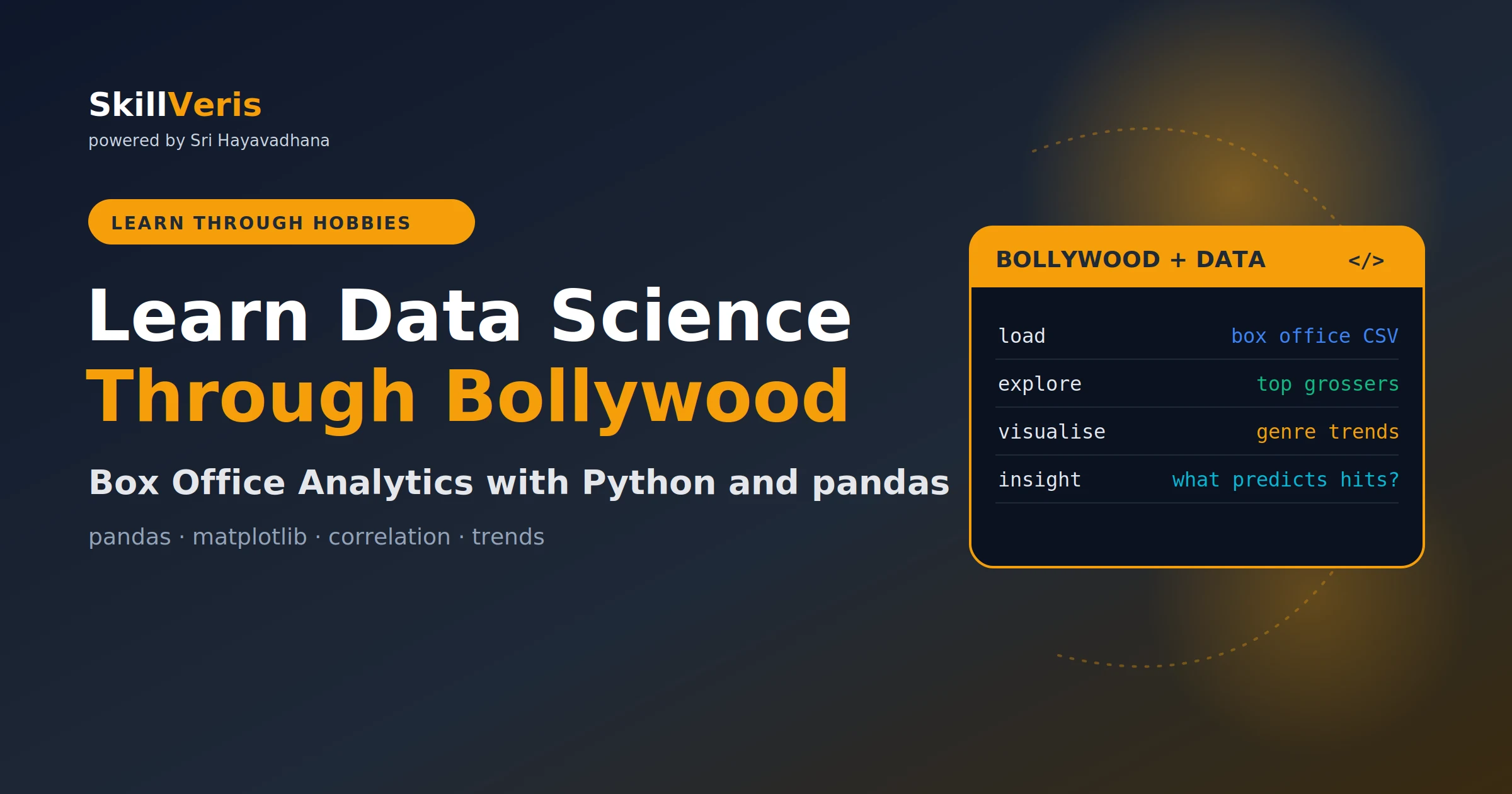
Learn Data Science Through Bollywood Box Office Analytics
Bollywood produces hundreds of films a year and generates rich box office data. This project uses real film data to teach pandas groupby, matplotlib charting, correlation analysis, and time-series trends in a context that film fans genuinely find interesting.
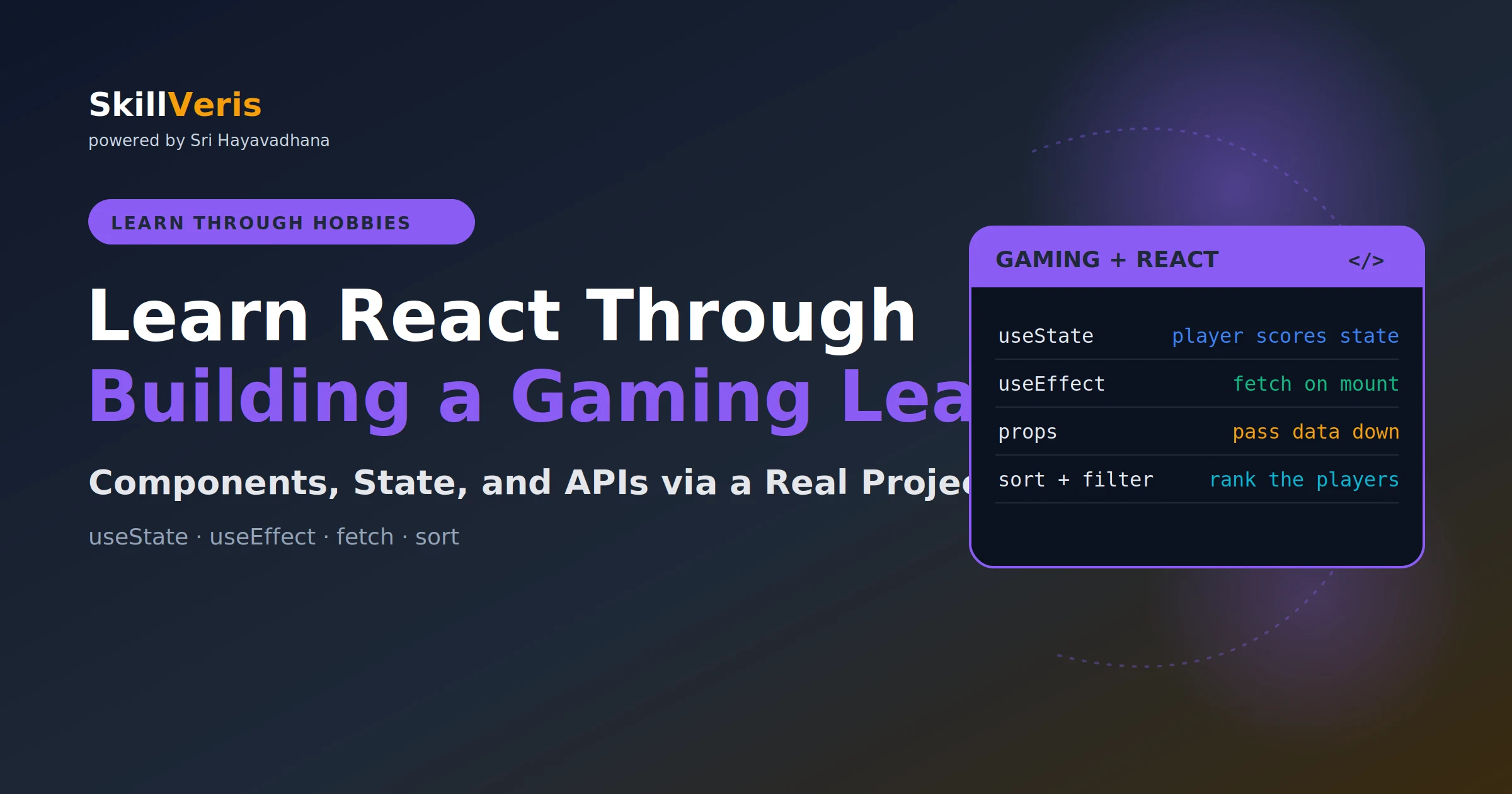
Learn React Through Building a Gaming Leaderboard
Gaming leaderboards are the perfect React learning project: they need real-time state updates, list rendering, sorting, filtering, forms, and optional API fetching. This guide teaches core React through building a fully functional leaderboard for your favourite game.
Learn Data Analysis Through Cricket Statistics
Learn data analysis through cricket statistics — use familiar match numbers to master exploratory analysis, aggregation, and visualization the intuitive way.
Learn SQL Through Your Music Library
Learn SQL through your music library — use playlists, artists, and play counts to master SELECT, JOIN, and GROUP BY the intuitive, memorable way.
Understand Averages and Distributions Through Sports
Understand averages and distributions through sports — use familiar player numbers to build real statistical intuition about mean, spread, and shape.
Learn Pandas by Analyzing Your Fitness Data
Learn pandas by analyzing your fitness data — turn steps, heart rate, and workouts into a practice dataset that teaches real data-wrangling skills.
Data Visualization Through Movie Box Office Numbers
Learn data visualization through movie box office numbers — use familiar entertainment data to build charts that reveal trends and tell a clear story.
Learn Probability Through Board Games
Learn probability through board games: dice odds, card draws, and expected value made concrete so you can reason about randomness with real confidence.
Analyze Cooking Recipes to Learn Data Structuring
Analyze cooking recipes to learn data structuring: turn messy recipe text into clean, queryable tables and master schemas, normalization, and joins.
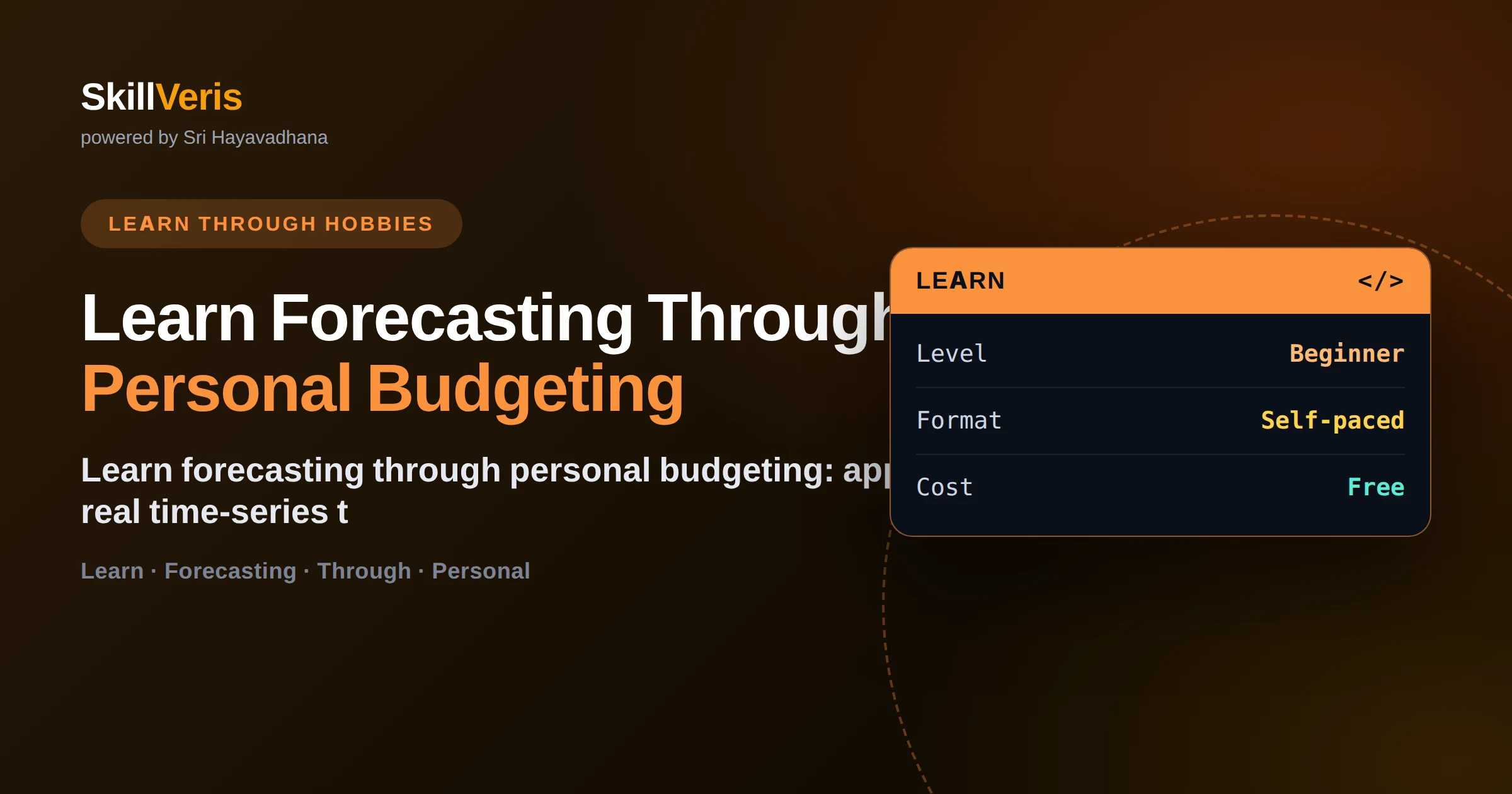
Learn Forecasting Through Personal Budgeting
Learn forecasting through personal budgeting: apply real time-series thinking - trends, seasonality, and moving averages - to predict your own finances.
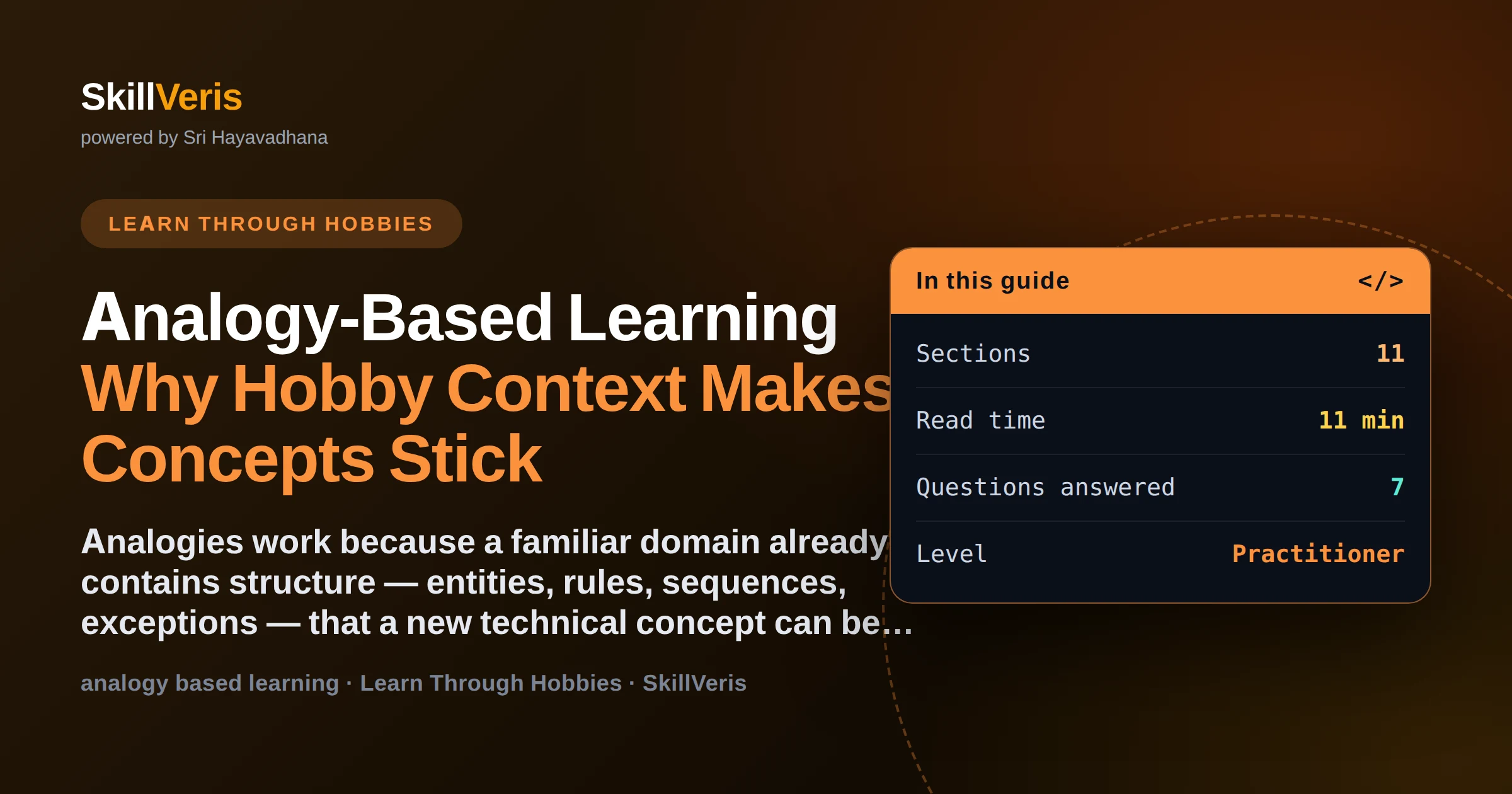
Analogy-Based Learning: Why Hobby Context Makes Concepts Stick
Analogies work because a familiar domain already contains structure — entities, rules, sequences, exceptions — that a new technical concept can be mapped onto, so you learn a correspondence instead of building understanding from nothing. This guide explains the mechanism, how to build good mappings, and when to retire the analogy before it becomes a ceiling.