How to Keep Your Tech Skills Current
SkillVeris Team
Careers Team
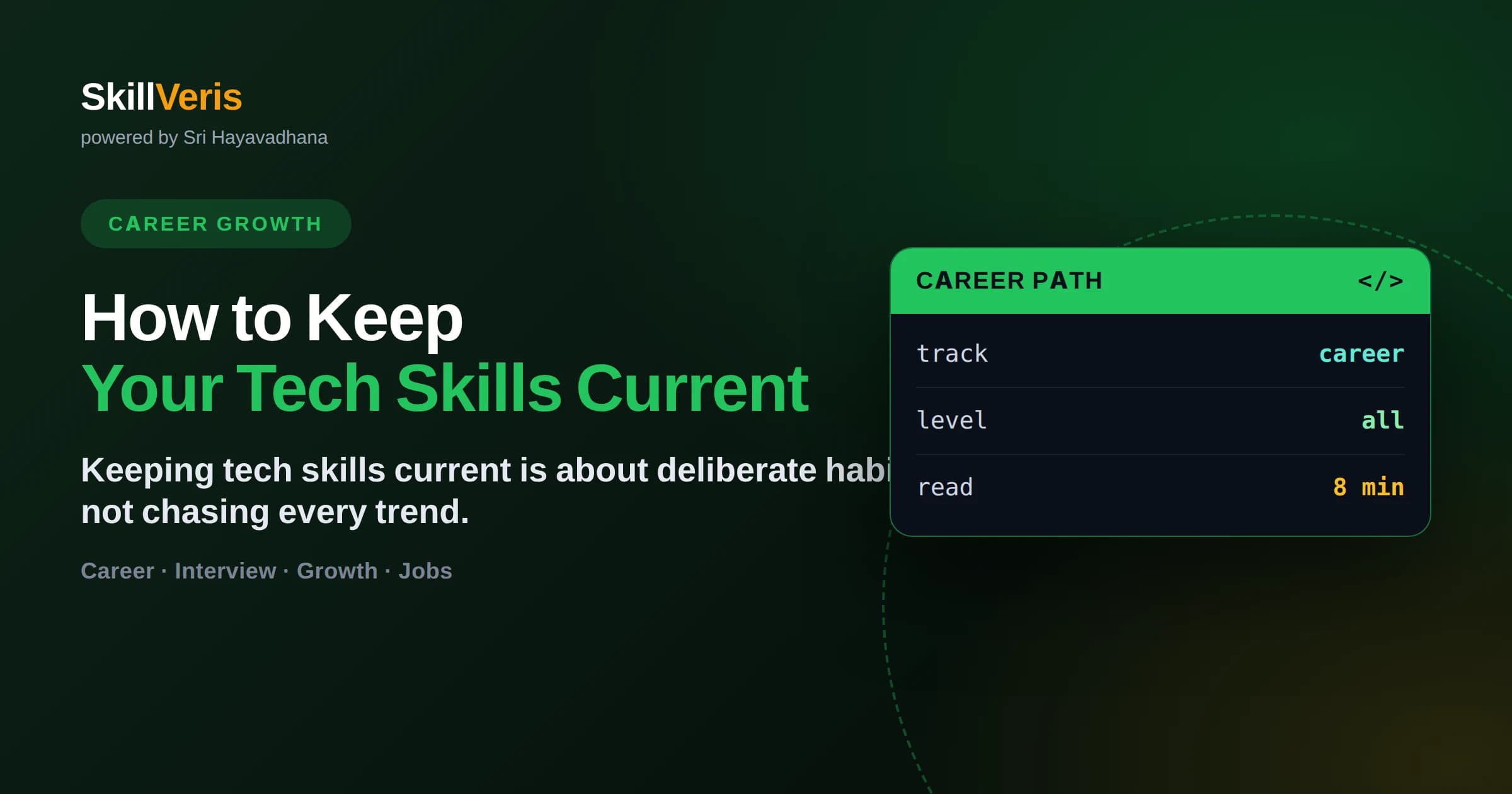
Keep your tech skills current by building steady learning habits, focusing on durable fundamentals over hype, and learning by building real projects rather than passively consuming content.
In this guide, you'll learn:
- Fundamentals like data structures, networking, and system design age slowly and transfer across every new tool.
- You cannot learn everything — filter aggressively and go deep on what matters to your goals.
- Learning by building beats passive tutorials; you retain what you apply.
- Follow a few trusted sources instead of drowning in every newsletter and hot take.
1How Do You Keep Tech Skills Current?
You keep tech skills current by building consistent learning habits, prioritizing durable fundamentals over passing trends, and learning through real projects rather than passive consumption. The goal is steady, sustainable growth, not chasing every framework that trends this month.
Technology moves fast, but not everything moves at the same speed. Frameworks and tools churn constantly while the underlying principles change slowly. Knowing the difference lets you invest your limited learning time where it keeps paying off, instead of exhausting yourself trying to keep up with everything.
2Invest in Durable Fundamentals
Fundamentals are the skills that stay valuable no matter which tool is popular. A new framework is far easier to learn when you already understand the concepts underneath it.
- Data structures and algorithms: the vocabulary of all software.
- How the web works: HTTP, DNS, browsers, and networking basics.
- Databases: relational modeling, indexing, and query performance.
- System design: how components scale and communicate.
- Security basics: the common vulnerability classes and how to avoid them.
🔑Learn the Layer Beneath
When a new tool appears, ask what problem it solves and how. Understanding the layer beneath the hype means each new tool is a small step, not a full restart.
3Filter the Noise Aggressively
You cannot learn everything, and trying to leads to burnout and shallow knowledge. The skill is not consuming more — it is choosing well and ignoring the rest without guilt.
Learn With Intent
Tie learning to a goal: a project you want to build, a role you want, or a problem at work. Purpose-driven learning sticks; random tutorial-watching does not.
Curate Your Sources
Follow a small set of trusted engineers, newsletters, or blogs rather than every feed. Depth from a few good sources beats a firehose you cannot process.
4Learn by Building
The most reliable way to actually retain a new skill is to build something with it. Passive tutorials create the illusion of learning; applying a concept to a real problem is what makes it stick.
When you want to learn a technology, pick a small project that forces you to use it end to end. Building a real thing surfaces the messy details tutorials skip — configuration, errors, and edge cases — which is exactly the knowledge that separates familiarity from genuine competence.
💡Teach to Learn
Writing a short blog post or explaining a new concept to a colleague exposes the gaps in your understanding fast. If you cannot explain it simply, you have not learned it yet.
5Build a Sustainable Routine
Consistency beats intensity. A little learning every week compounds far more than occasional weekend cramming that you cannot maintain.
Protect a small, regular block of time and treat it as non-negotiable. Mix formats to fit your energy: reading documentation, watching a focused talk, working through a course, or contributing to open source. The exact method matters less than showing up regularly and applying what you learn.
6Track Your Growth and Adapt
Staying current is easier when you can see where you are heading and what is actually landing. A little reflection keeps your learning aimed at skills that matter rather than random accumulation.
Periodically review what you have learned, what you have shipped, and where the gaps are relative to your goals. Notice which formats work for you and which do not, and adjust. Career direction shifts too, so revisit occasionally whether the skills you are investing in still align with the roles and problems you want to work on next.
7Best Practices for Staying Current
These habits keep your skills fresh without the anxiety of trying to know everything.
- Prioritize fundamentals that transfer across tools and years.
- Learn with a concrete goal, not out of fear of missing out.
- Build real projects instead of only watching tutorials.
- Curate a few trusted sources and ignore the rest guilt-free.
- Learn a little consistently rather than cramming occasionally.
- Teach or write about what you learn to cement it.
8Key Takeaways
Staying current is a sustainable practice, not a race against every trend.
- Durable fundamentals make every new tool faster to learn.
- Filter aggressively — you cannot and need not learn everything.
- Build real projects to turn familiarity into genuine skill.
- Curate trusted sources instead of drowning in the firehose.
- Learn consistently in small blocks; sustainability wins over cramming.
9Frequently Asked Questions
Q: How do I keep up with technology without burning out? A: Focus on durable fundamentals, curate a few trusted sources, and learn a little consistently. Accept that you cannot learn everything and filter based on your goals.
Q: Should I learn every new framework that trends? A: No. Most frameworks churn while the underlying principles stay stable. Learn the fundamentals beneath them, and pick up specific tools when a project or role actually requires them.
Q: What is the best way to actually retain new skills? A: Build real projects with the technology and teach or write about what you learn. Applying and explaining concepts cements them far better than passive tutorials.
Q: How much time should I spend learning each week? A: Consistency matters more than volume. A small, protected weekly block that you actually maintain beats occasional intense cramming you cannot sustain.
Get The Print Version
Download a PDF of this article for offline reading.
About the Publisher
SkillVeris Team
Careers Team
Our careers team helps you navigate tech job markets, build portfolios, and land the roles you want.
View all postsRelated Posts
Never miss an update
Get the latest tutorials and guides delivered to your inbox.
No spam. Unsubscribe anytime.