Python Interview Questions and Answers (2026 Edition)
SkillVeris Team
Engineering Team
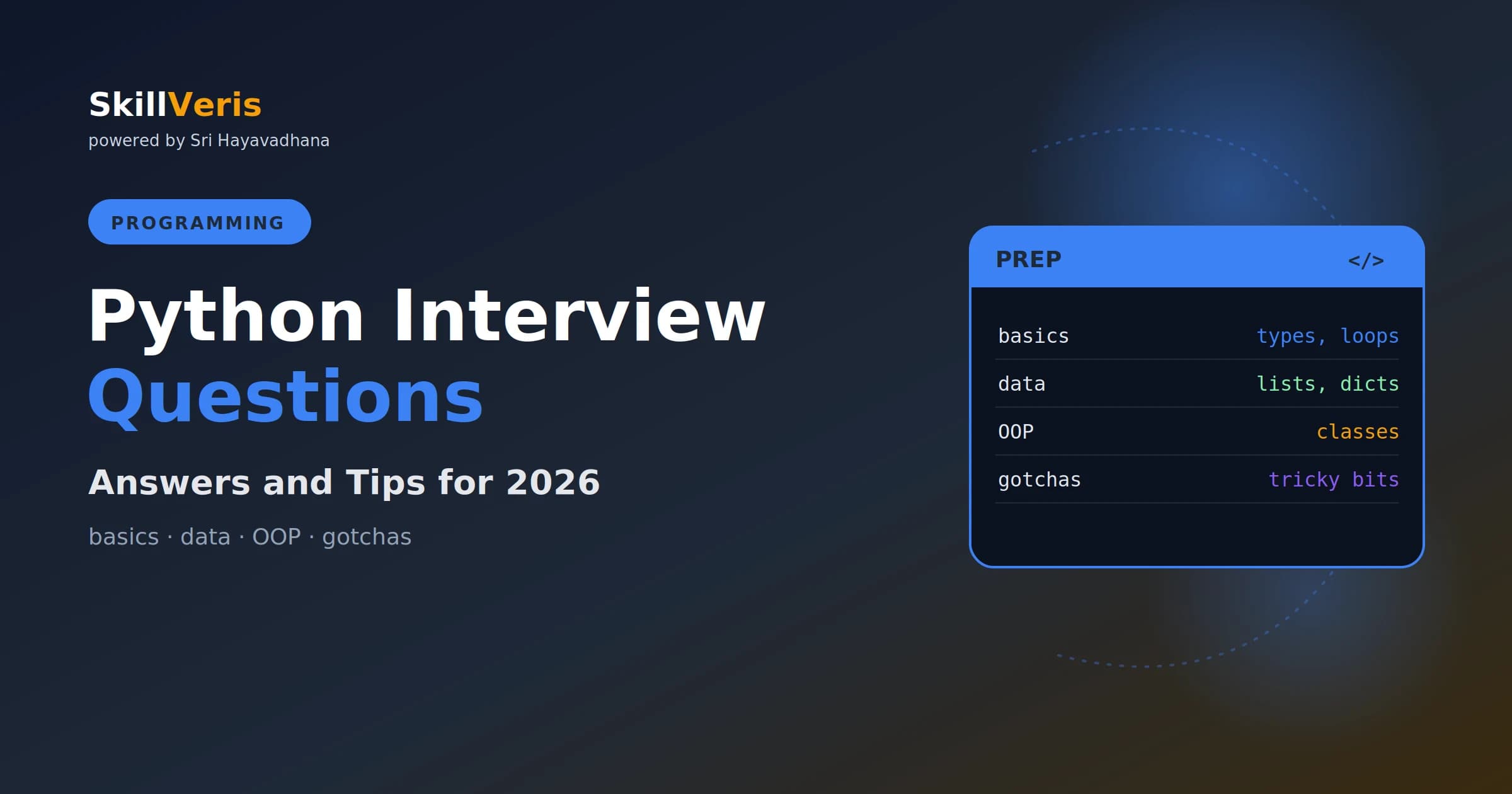
Python interviews cluster around four areas: fundamentals, data structures, OOP, and tricky gotchas (mutability, is vs == , mutable defaults)
In this guide, you'll learn:
- Don't just memorise answers — understand the why, practise explaining out loud, and have projects you can discuss.
- All concepts are explained with real-world examples and hands-on practice.
- All concepts are explained with real-world examples and hands-on practice.
- All concepts are explained with real-world examples and hands-on practice.
1About This Guide
Python interviews tend to revisit the same core ground. This guide walks through the most common
questions with clear answers — and, just as importantly, how to prepare so you can handle follow-ups.
2How to Use This
Don't memorise answers word for word — interviewers probe deeper. Understand the why behind each
answer so you can explain it in your own words and handle "what if?" follow-ups.
3Fundamentals
Numbers (int, float), strings, booleans, and collections like lists, tuples, dictionaries, and sets.
A list is mutable (changeable); a tuple is immutable (fixed once created). Use tuples for data that
4Data Structures
When you need to look things up by a key — like a name to a phone number. Lookups are fast and the
Storing unique items and doing fast membership checks or removing duplicates from a list.
5Functions and Scope
*args collects extra positional arguments into a tuple; **kwargs collects extra named arguments into a
Where a variable is accessible. Variables defined inside a function are local to it; those outside are
6OOP Questions
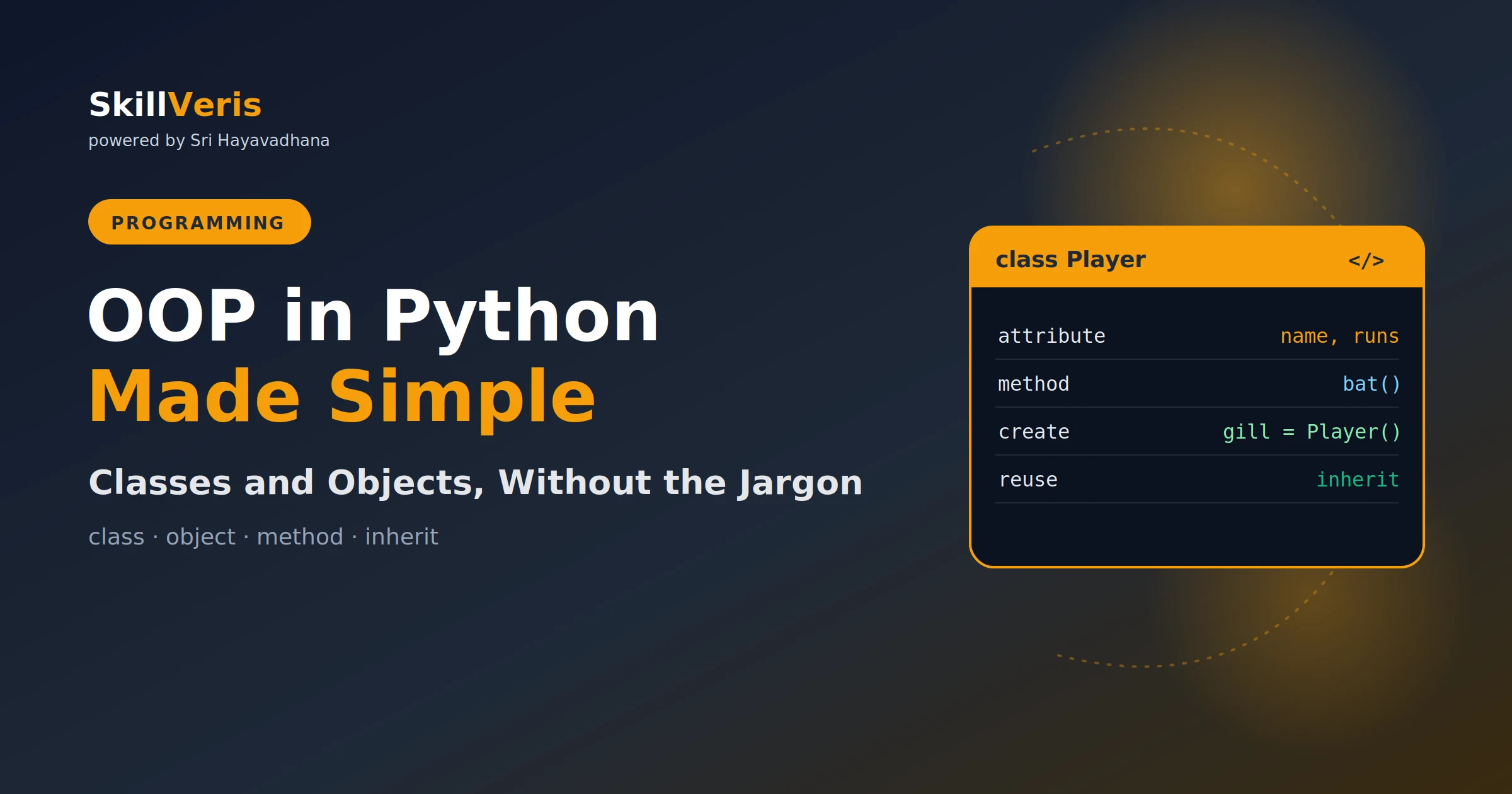
A class is a blueprint; an object is a specific thing built from it. One class can create many objects.
It refers to the specific object a method is acting on, letting the method read and change that object's own
7Tricky Gotchas
How to prepare for Python interviews: understand, practice, build, mock
== checks if two values are equal; is checks if they're the exact same object in memory. They usually
- Think out loud — interviewers want to see your reasoning.
- Clarify first — ask about edge cases before coding.
- Start simple — get a working solution, then improve it.
- Test your code — walk through an example at the end.
- Understand concepts deeply, not just answers.
Get The Print Version
Download a PDF of this article for offline reading.
About the Publisher
SkillVeris Team
Engineering Team
Our engineering writers turn abstract code concepts into hands-on, project-driven learning experiences.
View all postsRelated Posts
Never miss an update
Get the latest tutorials and guides delivered to your inbox.
No spam. Unsubscribe anytime.