Best Tech Certifications Worth Getting in 2026
SkillVeris Team
Learning Team
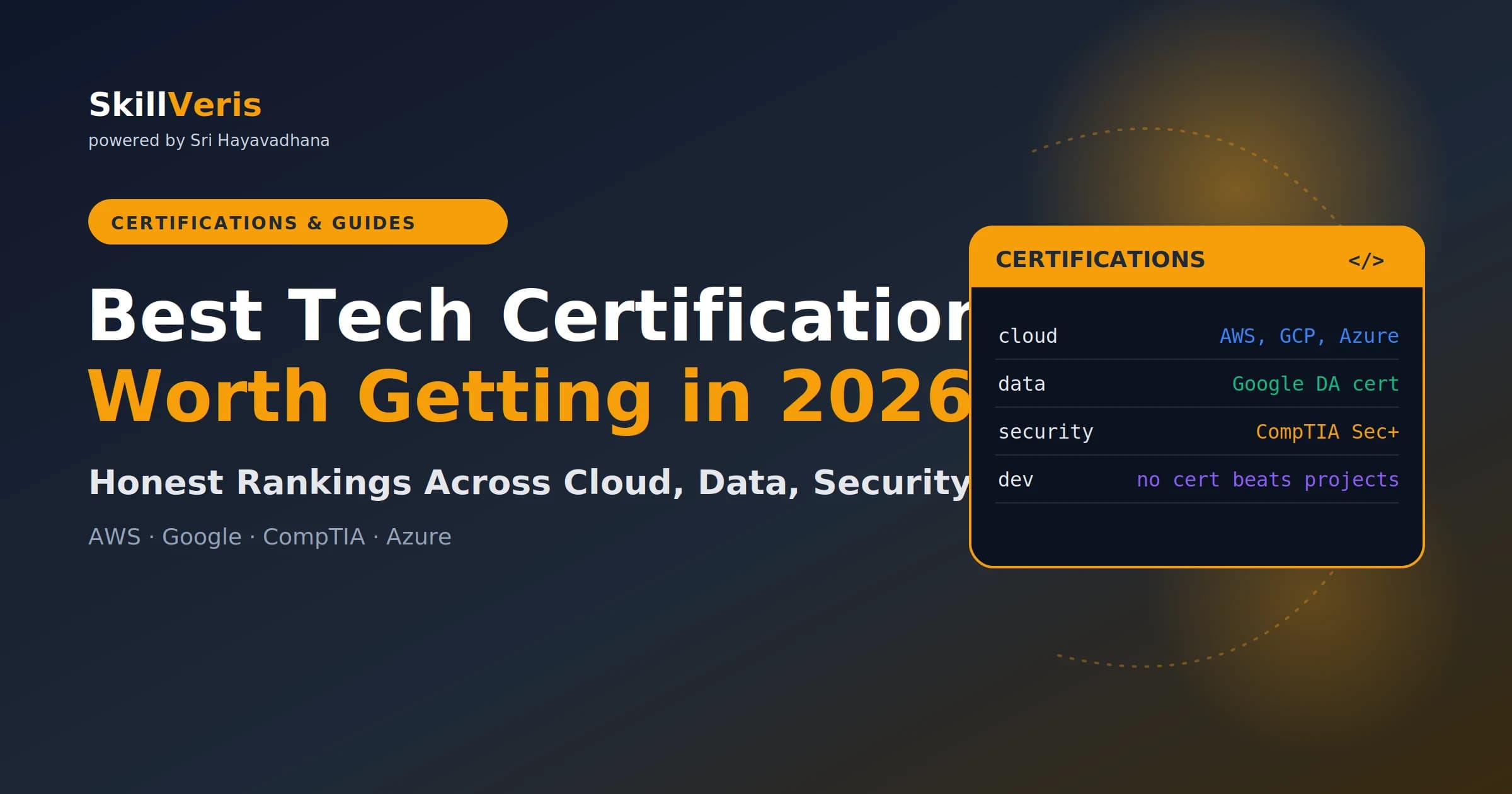
The certifications worth investing in are AWS Cloud Practitioner, CompTIA Security+, Google Data Analytics Certificate, and AWS Solutions Architect Associate.
In this guide, you'll learn:
- Certifications matter most at entry level, where they signal knowledge to employers who have no work history to evaluate.
- Beyond entry level, deployed portfolio projects consistently outweigh certificates.
- Always pair a certification with a hands-on project using that technology — a cert without a project is a qualification with no evidence.
- Cloud certifications have the best job-market signal of any category and are worth it at every level for cloud, DevOps, and backend roles.
1Are Certifications Worth It? The Honest Answer
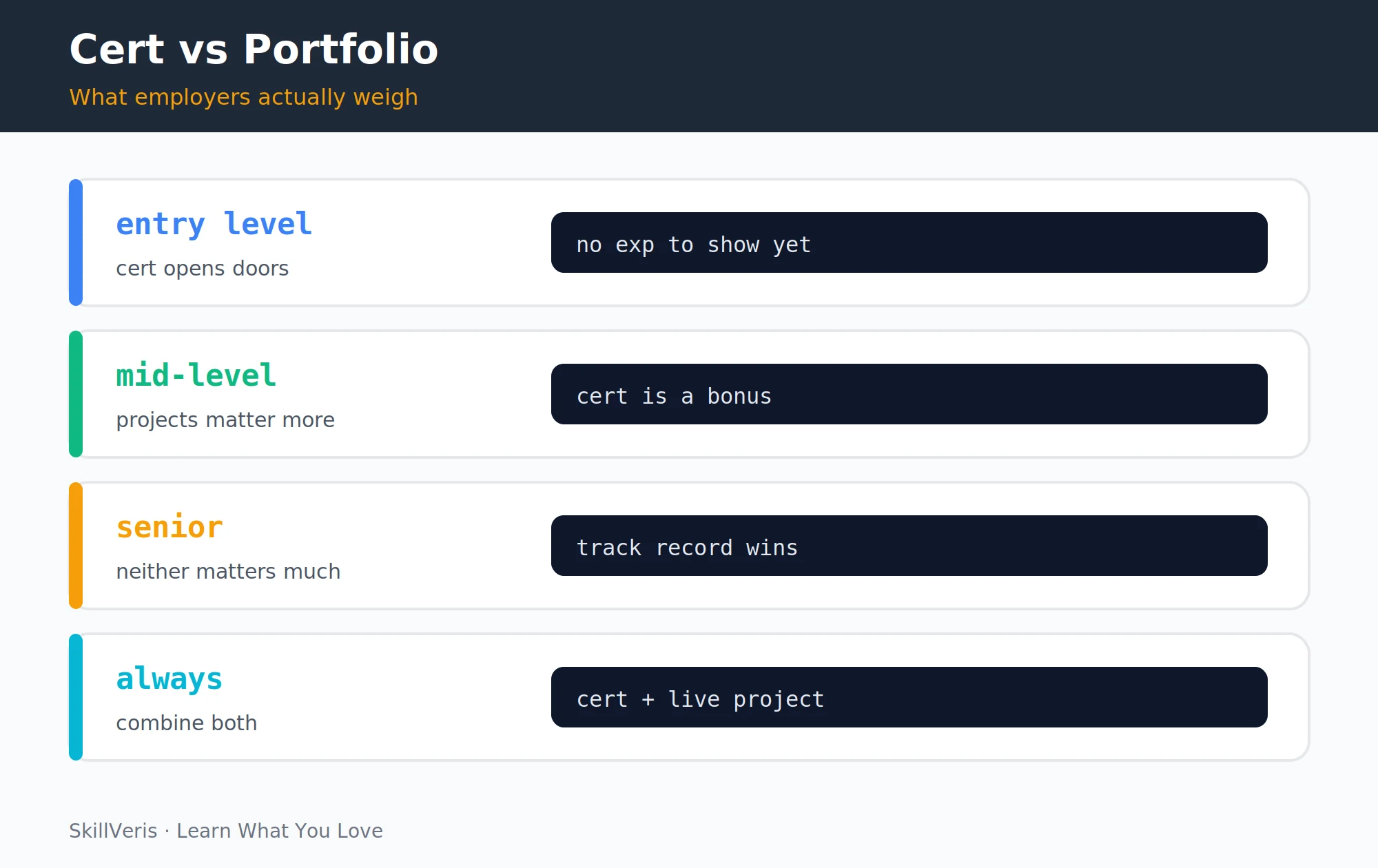
The honest answer is: it depends on where you are in your career and which certification you're considering. Certifications are most valuable at the entry level, where they signal knowledge to employers who have no work history to evaluate instead.
At mid and senior levels, deployed projects, code on GitHub, and a track record matter far more. And some certifications — regardless of level — are not worth the time or money. This guide helps you cut through the noise and identify the few that genuinely pay off.
2When Certs Help Most
The relative value of certifications shifts as your experience grows. They matter most in a few specific situations.
- Career changers and fresh graduates: a recognised certification provides a credential when you have no professional tech experience.
- Specific roles with cert requirements: some government, defence, and enterprise roles formally require specific certs (CompTIA Security+, CISSP) in job descriptions.
- Verifying knowledge systematically: studying for a structured cert can be an effective way to learn a domain like cloud architecture or cybersecurity.
⚠️Watch Out
Never get a certification without also building something with that technology. A cert without a project is a qualification with no evidence. A project without a cert is evidence with no qualification. The combination is what moves the needle.
3Cloud Certifications
Cloud certifications have the best job-market signal of any category. Cloud skills are in perennial demand, the major providers (AWS, GCP, Azure) maintain rigorous exam standards, and employers in 2026 actively filter for them in job postings.
Verdict: worth it at every level for anyone in DevOps, cloud engineering, or backend development.
4AWS: The Cloud Market Leader
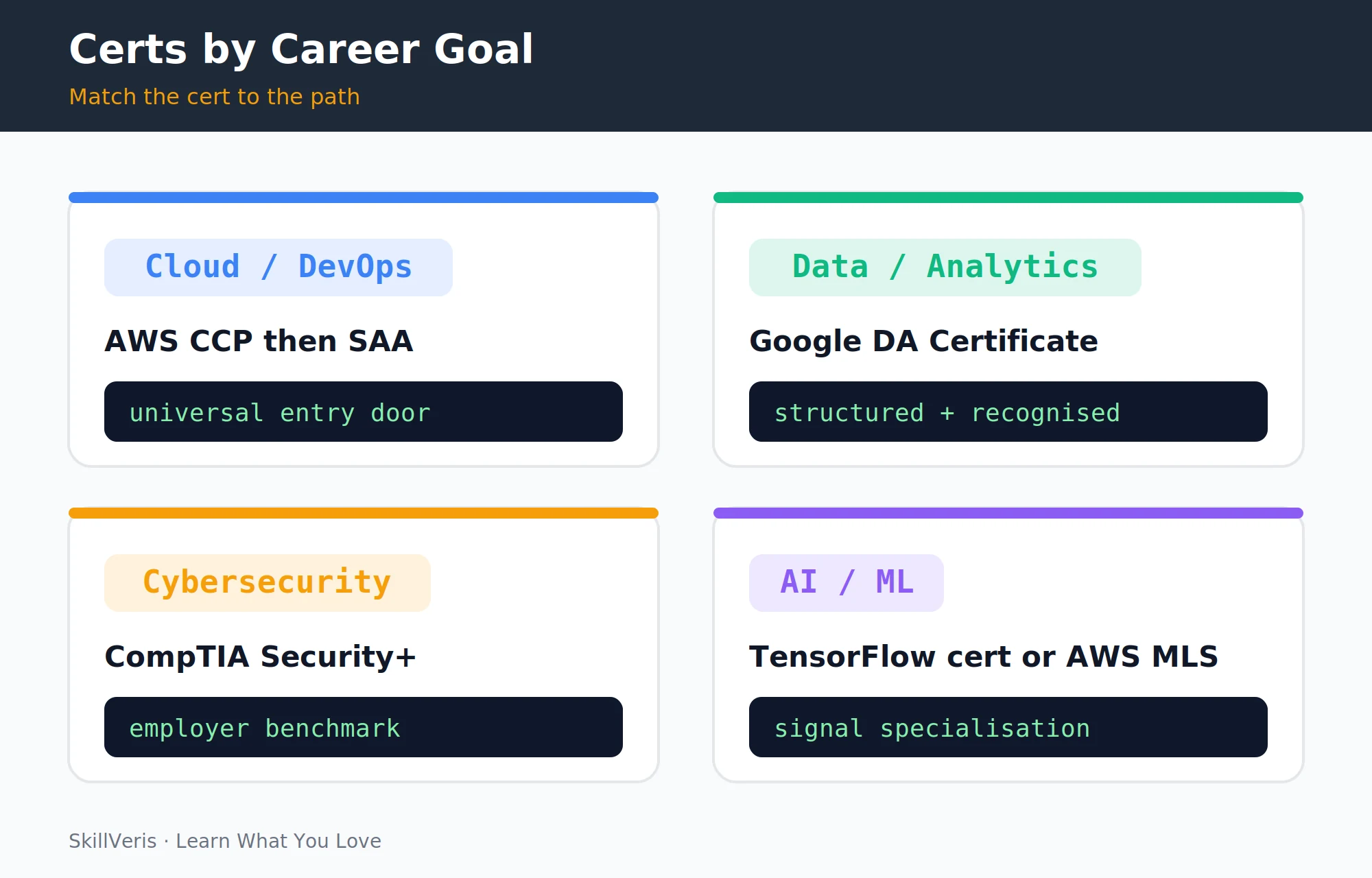
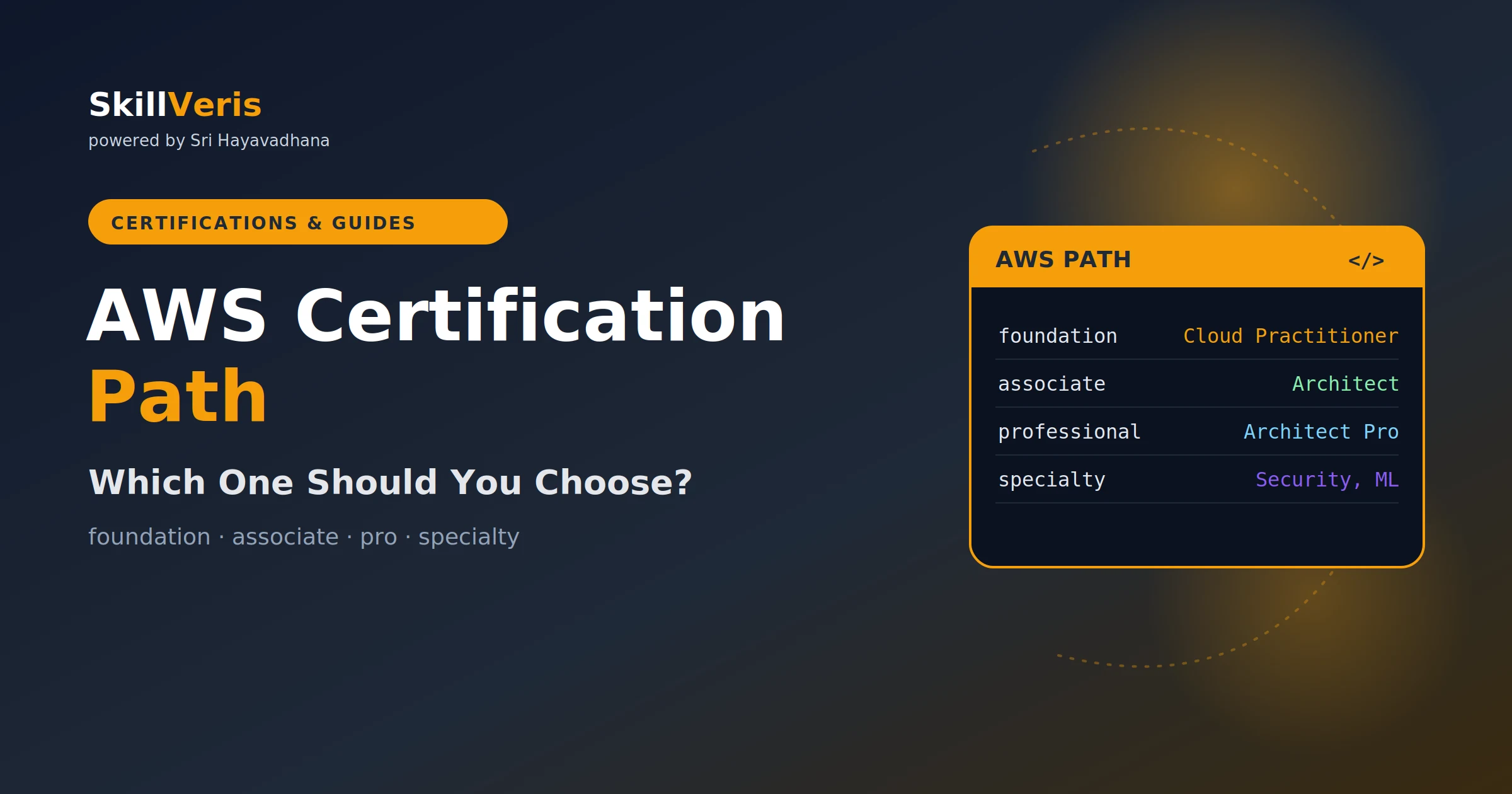
AWS is the cloud market leader, and its certifications carry the widest recognition. The recommended path is Cloud Practitioner then Solutions Architect Associate — stop there unless a specific role requires the professional or specialty level.
- AWS Cloud Practitioner (CLF-C02) — Entry; universal cloud entry signal; approx. $100 USD.
- AWS Solutions Architect Associate (SAA-C03) — Associate; most recognised cloud cert globally; approx. $150 USD.
- AWS Developer Associate (DVA-C02) — Associate; valuable for backend/serverless roles; approx. $150 USD.
- AWS SysOps Administrator — Associate; good for ops-focused roles; approx. $150 USD.
- AWS Solutions Architect Professional — Professional; strong signal, hard exam; approx. $300 USD.
- AWS Machine Learning Specialty — Specialty; useful alongside ML experience; approx. $300 USD.
5Google Cloud Certifications
GCP certifications are slightly less universally recognised than AWS but very valuable if your target employer or industry uses Google Cloud (media, e-commerce, analytics-heavy companies).
- Associate Cloud Engineer — Associate; good signal for GCP-focused roles.
- Professional Cloud Architect — Professional; strong for enterprise GCP work.
- Professional Data Engineer — Professional; valuable for data pipeline roles on GCP.
- Professional ML Engineer — Professional; useful with ML experience.
6Azure Certifications
Azure certifications are most valuable if you're targeting enterprises with existing Microsoft infrastructure or Microsoft-partner companies. For general cloud roles, AWS still has the widest recognition.
- AZ-900 Azure Fundamentals — good starting point; less impressive than AWS Cloud Practitioner to non-Microsoft employers.
- AZ-104 Azure Administrator — strong for enterprise Microsoft environments.
- AZ-204 Azure Developer — valuable for Azure-native development.
- AZ-305 Solutions Architect Expert — requires AZ-104 prerequisite; strong signal.
7Data and Analytics Certifications
Data and analytics certifications vary widely in employer recognition. The Google Data Analytics Certificate is the strongest structured entry path; some tool-specific certs only pay off when that tool is required.
- Google Data Analytics Certificate (Google / Coursera) — structured, recognised, 6 months, financial aid available.
- IBM Data Science Professional Certificate (IBM / Coursera) — comprehensive, but Google cert has better employer recognition.
- Microsoft Power BI Data Analyst (PL-300) — valuable for BI-focused analyst roles.
- Tableau Desktop Specialist (Tableau) — useful when Tableau is required; tool-specific.
- DataCamp Data Scientist (DataCamp) — industry recognition is limited; prefer Google or IBM.
8Cybersecurity Certifications
Cybersecurity has a well-defined certification ladder. For beginners, the recommended path is CompTIA Security+ first — it requires no prerequisites and opens most entry-level security doors.
- CompTIA Security+ — Entry; most recognised entry security cert; DoD 8570 approved.
- CompTIA Network+ — Entry; good foundation, often done before Security+.
- CompTIA CySA+ — Intermediate; strong for SOC/blue team roles.
- CEH (Certified Ethical Hacker) — Intermediate; recognised, but OSCP is more respected for offensive roles.
- OSCP (OffSec Certified Professional) — Advanced; the gold standard for penetration testers.
- CISSP — Advanced; top management/architect cert; requires 5 years experience.
9AI and Machine Learning Certifications
For AI engineering (as opposed to ML research), a strong portfolio of RAG systems, agent projects, and deployed LLM applications outweighs any certification. Build projects; add a cert only if a specific role requires one.
- TensorFlow Developer Certificate — validates TensorFlow skills; less recognised than AWS ML Specialty.
- AWS Machine Learning Specialty — strong signal; requires AWS and ML experience.
- Google Professional ML Engineer — strong for GCP ML pipelines.
- DeepLearning.AI specialisations (Coursera) — excellent learning; employer recognition is moderate.
10Programming Certifications: Skip Most
Most programming language certifications (Python Institute, Oracle Java, Microsoft Python) have weak employer recognition compared to the time investment. Employers evaluate programming ability through code tests and portfolios, not certificates.
Exceptions worth considering: Salesforce certifications if you're targeting Salesforce development (niche but in-demand), and Microsoft Azure Developer if you're in the .NET space. For most developers, time spent building projects produces better outcomes than time spent on programming language certifications.
11How to Study for a Cert (and Actually Pass)
Passing a certification exam comes down to the right materials, hands-on practice, and a booked exam date that forces consistent study.
- Official study guide + practice exams: for AWS, use official AWS training plus Tutorials Dojo or Jon Bonso practice exams. For CompTIA, Professor Messer's free video series is excellent.
- Hands-on labs: for cloud certs, provision real resources using the free tier. You can't pass the SAA exam memorising slides; you need to have actually built things in AWS.
- Schedule the exam before you feel ready: a booked date forces consistent study. Most people who plan to "take it when ready" never do.
- Pass-rate targeting: aim for 80%+ on practice exams before sitting the real one, since exam questions are often harder than practice.
12Key Takeaways
Choose certifications strategically and always back them with real work.
- Cloud certifications (AWS CCP, SAA-C03) and CompTIA Security+ have the clearest job-market ROI in 2026.
- Certifications matter most at entry level; projects matter more at every other level.
- Always pair a certification with a hands-on project using that technology.
- Skip most programming language certifications; your GitHub profile is a better signal.
13What to Learn Next
Start your certification journey with these companion guides.
- AWS Certification Path: Which One to Choose — a deeper dive into the AWS roadmap.
- Cybersecurity for Beginners — the CompTIA Security+ study path.
- How to Build a Developer Portfolio — the projects to pair with your cert.
14Frequently Asked Questions
How much do tech certifications cost? AWS exams range from $100 (Practitioner) to $300 (Professional/Specialty). CompTIA Security+ is around $370. Google certifications are typically $200-$300. Study materials add $50-$200. For learners on a budget, financial aid is available on Coursera certificates, and free study materials (Professor Messer, free-tier AWS labs) cover most of the cost.
Do certifications expire? Most cloud certifications (AWS, GCP, Azure) expire after 3 years and require renewal via recertification or continuing professional development. CompTIA certifications expire after 3 years and can be renewed through continuing education (CEUs). CISSP requires 120 CPE credits every 3 years. Check expiry and renewal terms before committing.
Can I get a tech job without any certification? Yes. Many developers, data analysts, and cloud engineers work without formal certifications, relying on portfolios, open-source contributions, and work experience. Certifications are one path, not the only one. For roles where certs are formally required (some government and compliance-heavy industries), they're non-negotiable.
Which certification gives the best salary boost? AWS Solutions Architect Professional and CISSP consistently appear at the top of salary surveys for their respective fields. However, salary is driven primarily by experience, location, and company size — not the certification alone. A cert accelerates the path to a role; it doesn't replace the experience that determines salary band.
Get The Print Version
Download a PDF of this article for offline reading.
About the Publisher
SkillVeris Team
Learning Team
Our learning specialists map the fastest paths to industry-recognised certifications.
View all postsRelated Posts
Never miss an update
Get the latest tutorials and guides delivered to your inbox.
No spam. Unsubscribe anytime.